THE STARTING POINT
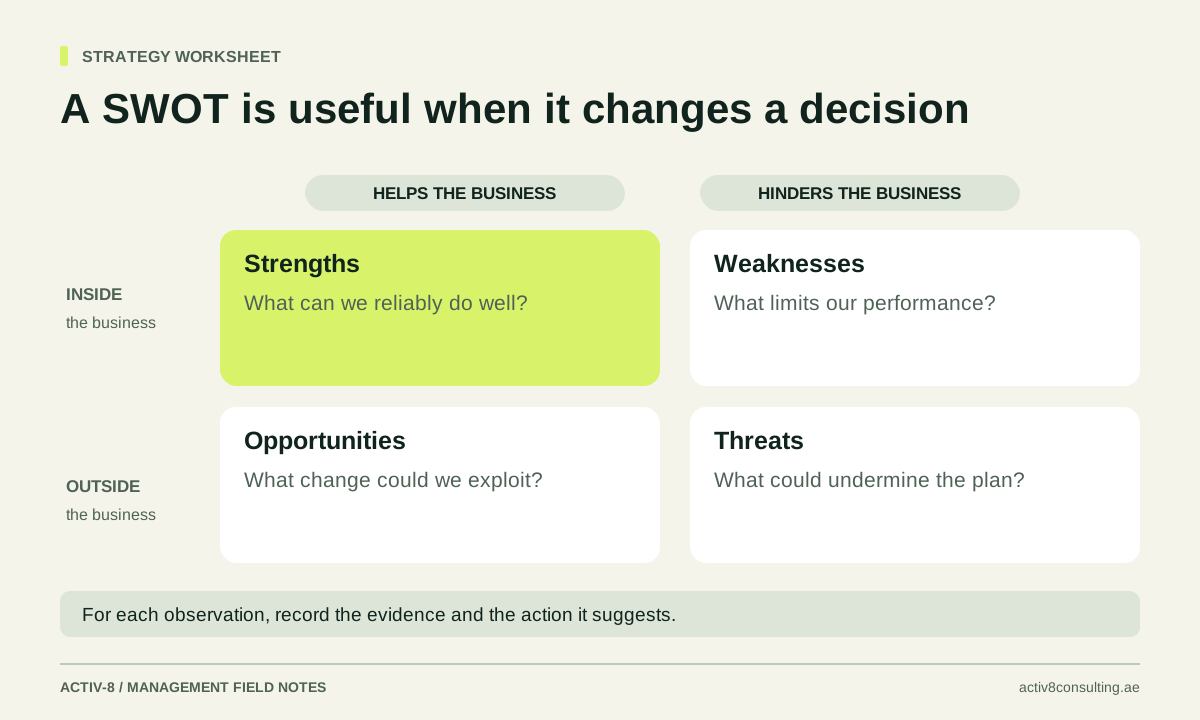
Every useful SWOT observation needs evidence, an implication and a decision.
Give the SWOT a decision to support
A SWOT analysis organises observations into strengths, weaknesses, opportunities and threats. It can help a small business make sense of its position, but the four boxes are only the beginning. A useful analysis leads to a decision about customers, services, resources or risk. A page of general statements such as “good team” and “strong competition” rarely provides that direction.
Start with a specific question. Should the business expand a service, enter a customer segment, improve delivery before growing or reduce reliance on one account? This boundary helps the team decide which observations matter. An analysis of the whole company can be useful, but it is often too broad for a first working session.
Choose an owner for the exercise and gather evidence beforehand. Bring sales and contribution by service, customer feedback, operational measures and information about alternatives available to buyers. Invite people with different views of the business. The purpose is to expose assumptions and trade-offs, not to produce a document everyone can agree with because it says very little.
Separate internal factors from external conditions
Strengths and weaknesses describe capabilities or conditions inside the business. Examples include a repeatable delivery process, specialist knowledge, unreliable cost information or dependence on the founder for approvals. Opportunities and threats describe external changes or conditions, such as a new customer requirement, a competing offer or a supplier becoming less dependable.
This distinction helps avoid confusing a desired action with an opportunity. “Launch a new website” is an action. A better opportunity statement might be that customers increasingly want to assess service options online before speaking to a supplier. The website is one possible response, whose usefulness still depends on the evidence and the buying journey.
Be precise about context. A highly customised service may be a strength for customers with unusual needs and a weakness when competing on predictable turnaround. Do not force every observation into a permanently positive or negative category. Explain when it matters and to whom. The question being investigated gives the observation its meaning and stops the exercise becoming a generic company description.
Work through an illustrative service-business example
Imagine a UAE facilities-support company considering a planned-maintenance package for smaller commercial customers. Its strengths include experienced technicians, established supplier relationships and detailed knowledge of recurring faults. Its weaknesses include inconsistent job costing, founder approval of non-standard quotes and limited visibility of upcoming workload. These are illustrative conditions, not a description of an Activ-8 client.
The opportunity might be customers wanting a more predictable maintenance arrangement, provided interviews and buying behaviour support that view. Threats could include competitors offering simpler packages, supplier price changes and customers delaying payment. Each external observation needs a source or a clear label showing that it remains an assumption.
The analysis immediately suggests a tension. The company has technical capability, but it does not yet know whether the proposed package can be priced and scheduled reliably. A marketing launch would therefore be premature. The first useful action could be to review past jobs, define the package boundary and test delivery costs with a small group of suitable customers before promoting it more widely.
Replace opinions with observable evidence
For each item, add the evidence, business implication and confidence level. “Customers value our service” could be supported by repeat purchases, specific feedback and low complaint rates, but each source has limitations. Positive comments from two friendly customers should not be treated as representative market research. Record the sample and what remains unknown.
Likewise, “our process is slow” needs a process boundary and a measure. Does the delay occur between enquiry and qualification, quote and approval, or order and completion? Compare representative cases and separate waiting from active work. A process map often reveals where the broad complaint needs to be broken into more useful questions.
Avoid using competitor claims as established facts. A rival's advertised turnaround does not prove that it consistently delivers it. You can record the claim as part of the customer's choice set, then investigate what buyers actually experience where reliable evidence is available. The aim is a disciplined view of the market, not a collection of unverified impressions arranged neatly into boxes.
Connect the boxes to create strategic options
Look across the categories rather than reviewing each in isolation. How could a real strength help the business pursue a specific opportunity? Which weakness prevents it from doing so? Which strength could reduce exposure to a threat? These connections turn the analysis into options that can be compared.
In the maintenance example, technical knowledge could support a clearly defined preventive package. However, weak job costing means the team should first establish a reliable view of effort and materials. Founder approval delays could then be reduced through standard scope and pricing boundaries. The option becomes a sequence of capability building and testing, rather than simply “grow maintenance revenue”.
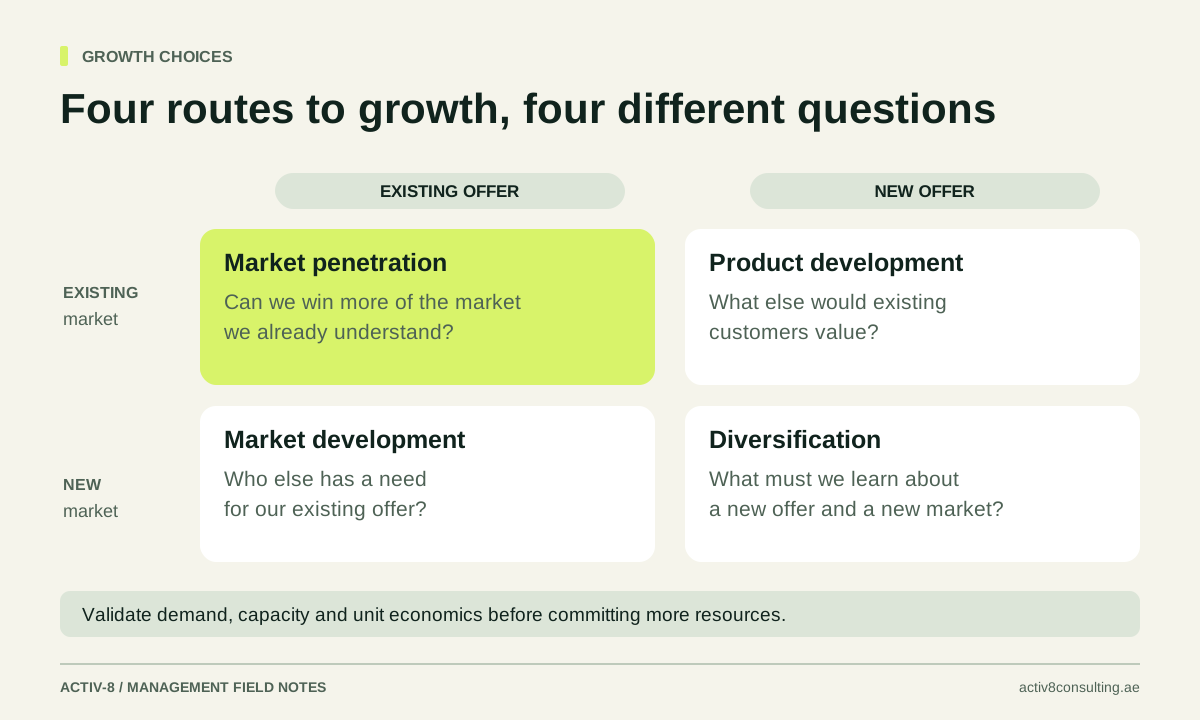
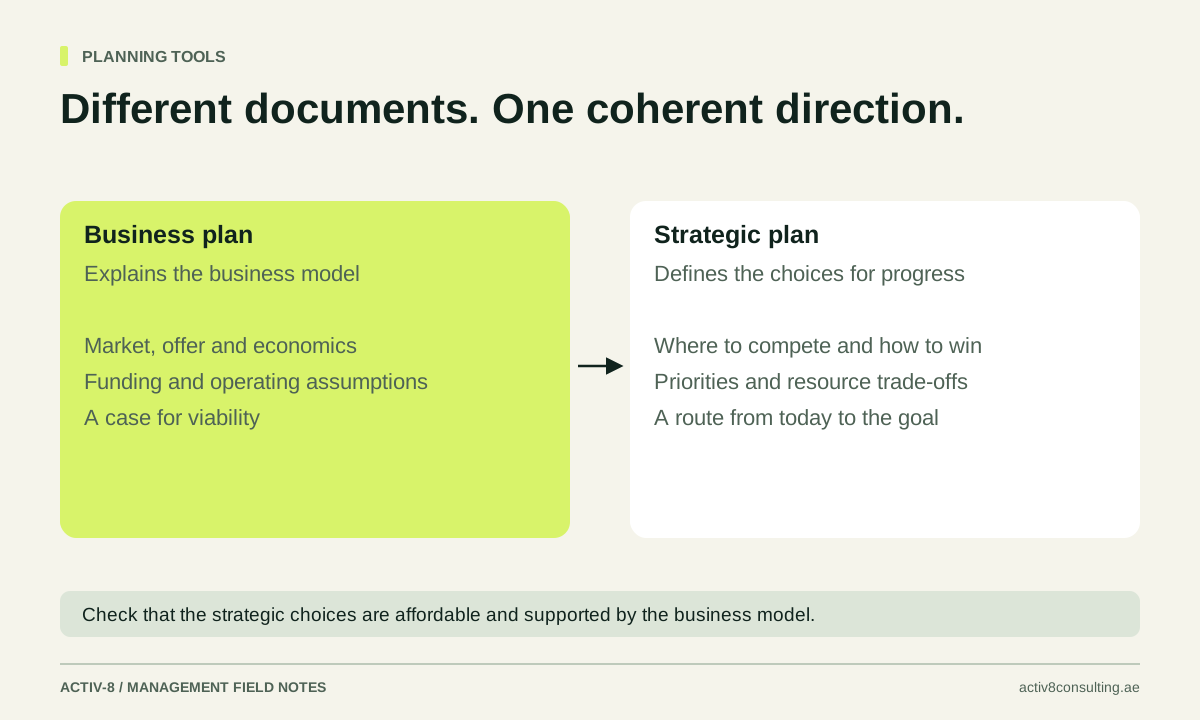
Write each option as a decision with a consequence. If the business focuses on the new package, what will receive less attention? Which customers will it stop pursuing? What investment is required, and what result would justify continuing? The strategic planning guide shows how to connect these choices to measurable outcomes and an operating plan that the team can actually resource.
Prioritise a small number of actions
Not every item in the SWOT deserves a project. Some are background conditions to monitor, some require a quick correction and others change the strategic direction. Rank potential actions by their likely effect on the decision, confidence in the evidence, effort and dependencies. Do not use a numerical score to hide uncertainty or override a serious constraint.
For the example business, three initial actions might be reviewing the cost of recent maintenance jobs, interviewing suitable customers about package requirements and defining delegated quotation rules. Each action needs one owner, a date and a useful output. A team meeting to discuss costing is an activity; a reconciled view of the main cost drivers is an output that supports a decision.
Keep the scope manageable. If the same operations manager must deliver all three actions while running the business, agree the time allocation or change the sequence. Use the prioritisation worksheet to expose these trade-offs. The quality of the analysis is demonstrated by better resource decisions, not by the number of improvement ideas it generates.
Revisit the analysis when evidence changes
Before finalising the document, ask which observation would most change the decision if it proved false. Prioritise validation of that point. A single weak assumption about customer demand or delivery capability can matter more than several well-supported but less consequential items, so the investigation effort should follow the decision’s real sensitivity.
Date the SWOT and record the question it addressed. Review it at a sensible decision point, such as the end of a pilot or before committing to expansion. Updating it every week may create unnecessary work, while leaving it unchanged for years can make it a record of a business that no longer exists.
At the review, ask which assumptions were confirmed, which were wrong and which conditions changed. A package may attract interest but produce too many exceptions to deliver profitably. That finding should update the analysis and the offer. It should not be buried because the original plan was enthusiastically approved.
Keep the finished version short enough to use, with the supporting evidence available separately. A useful SWOT gives the owner a clearer choice and the team a reason for the next actions. If your leadership team has competing interpretations of the business, Activ-8 management consultancy can help facilitate the analysis, challenge assumptions and turn it into a practical plan. Bring real examples and be prepared to change the original view when the evidence warrants it.
Sources & further reading
Primary guidance behind the methods discussed. The examples, diagrams and tools in this article are original Activ-8 material.