THE STARTING POINT
Use the document that answers the decision in front of you, and connect it to the operating plan.
Start with the question the document must answer
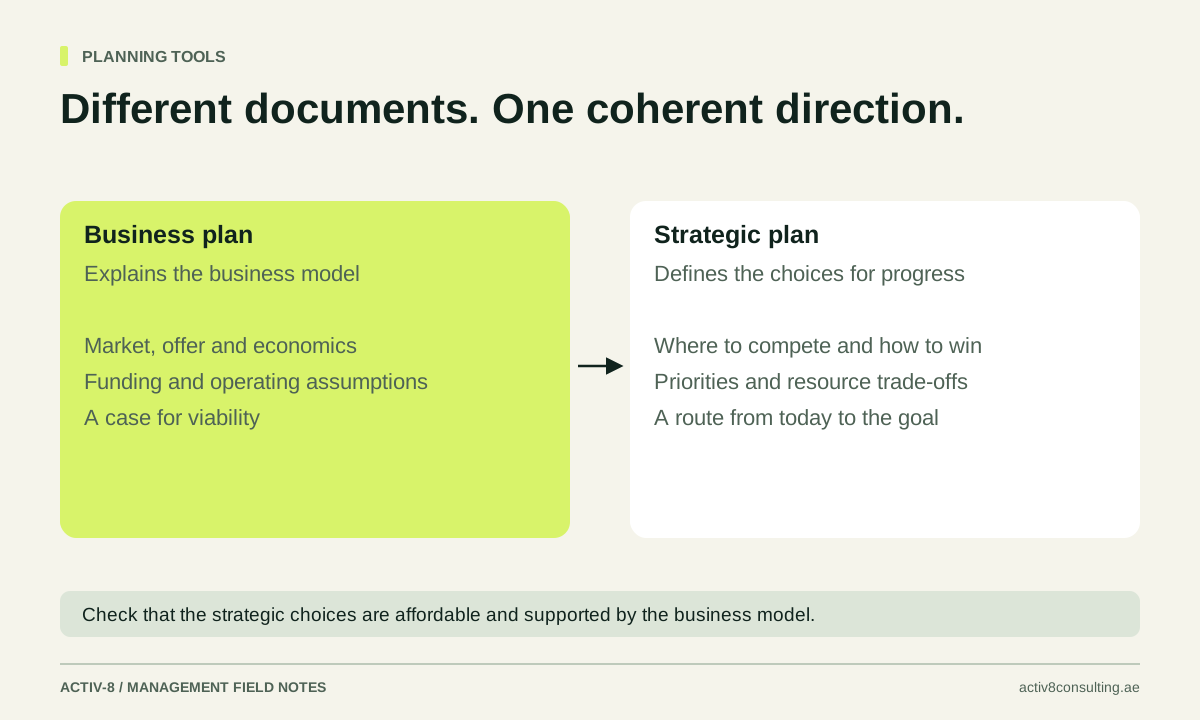
A business plan explains how a business will operate and remain viable. A strategic plan explains the choices it will make to improve its position and achieve its objectives. An operating plan turns those choices into work, budgets and responsibilities. These documents overlap, but they serve different decisions. Choosing the right one can save a small business a great deal of unnecessary writing.
If you need to explain a new venture to a potential funding partner, a business plan is likely to be relevant. If an established company needs to choose between growth opportunities, a strategic plan may be the better starting point. If the direction is already clear but implementation is drifting, another strategy document may be less useful than a practical operating plan.
The names are used inconsistently, so agree the purpose before commissioning anything. Ask who will read the document, what they need to decide and what evidence they require. A plan should be designed around that use rather than copied from a template because the headings look familiar or the finished document appears substantial.
What a business plan should explain
A business plan brings together the customer problem, offer, market, route to sales, operating model, team and financial assumptions. It should explain how the business expects to create value, deliver it and collect enough money to cover its costs and obligations. For an existing company, actual performance gives the plan a stronger starting point than unsupported projections.
The financial section should connect to the operating assumptions. If the plan forecasts more customers, show how they will be acquired and served. If it assumes better margins, explain whether that comes from price, mix, procurement or delivery efficiency. A spreadsheet that grows revenue by a fixed percentage every month without those connections is an arithmetic exercise, not a convincing business model.
Different readers require different detail. A prospective investor, bank, internal leadership team or commercial partner may each ask different questions. Confirm their requirements directly rather than assuming one document will satisfy every purpose. Professional advice may be needed for financing, legal or tax matters. The management task is to ensure that the commercial and operational story remains internally consistent.
What a strategic plan adds
A strategic plan focuses on choices. Which customers and needs will the business prioritise? What will distinguish its offer? Which capabilities must it build? Where will it invest, and what will it stop or postpone? It should explain why this direction is appropriate given the current position and the alternatives available.
For a mature service business, the central strategic question may be whether to deepen an existing specialism or enter a new market. The plan should compare the evidence, economics, operational demands and risks of those routes. It should not simply list both as ambitions while avoiding the resource trade-off.
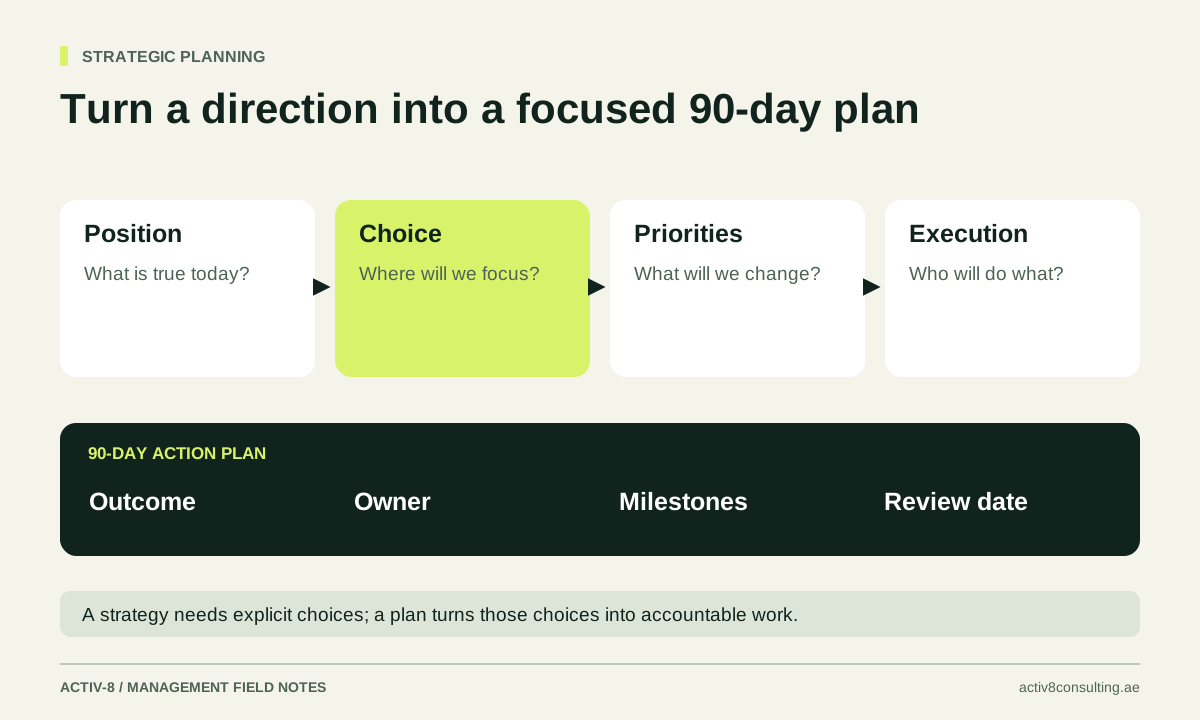
The strategic plan also defines the outcomes that indicate progress. These could concern customer mix, contribution, delivery reliability, recurring work or reduced dependence on the founder. The strategic planning guide explains how to connect these outcomes to shorter-term work. The essential test is whether the plan helps managers make a decision they previously found difficult, rather than merely describing an attractive future.
What belongs in the operating plan
The operating plan explains what happens next. It turns priorities into milestones, owners, resources, budgets and review dates. It should reflect normal business commitments as well as improvement projects. A plan that assumes managers can run the company and deliver unlimited additional change is not credible, however clear the strategic direction may be.
Dependencies matter. A new service may require standard scope, pricing, training and a reliable reporting method before demand is increased. The operating plan should make that sequence visible. It should also identify decision points where evidence from a pilot determines whether the next commitment proceeds.
Use a small set of measures to connect delivery to the intended result. Training completion can show that a session happened, but it does not show that the new process is being used effectively. Include adoption and outcome measures where possible. The weekly management meeting guide provides a cadence for reviewing progress, resolving blockers and recording decisions without recreating the entire plan every week.
See how the three plans connect in practice
Consider an illustrative UAE design studio that wants a more predictable business. Its business plan explains the customers it serves, project and recurring revenue, delivery costs, staffing and cash assumptions. That provides a view of the company's overall viability and the resources needed to operate.
Its strategic plan chooses to build a defined ongoing design service for existing commercial clients, rather than expanding into unrelated production work. The reasoning is that current clients have recurring needs, the studio understands their brands and the service could reduce dependence on irregular projects. These remain hypotheses until customer and delivery evidence support them.
The operating plan then specifies the first actions: interview suitable clients, define scope boundaries, estimate delivery capacity, test the offer and review actual contribution. It names owners and dates. The resulting evidence may change both the strategic choice and the financial assumptions in the business plan. The documents therefore form a connected decision system, not three separate presentations maintained by different people with incompatible numbers.
Avoid the most common planning mismatches
One mismatch is producing a detailed business plan when the real problem is unresolved strategic choice. The team fills pages with market description and financial forecasts while still disagreeing about the customer it should prioritise. Resolve the choice first, then model the consequences in enough detail to support the decision.
Another mismatch is calling an ambitious target a strategy. “Double revenue” does not explain the route, required capabilities or trade-offs. Conversely, a sound strategic direction can fail to change anything because no operating plan assigns work and capacity. Check which link is missing before commissioning another workshop or report.
A third problem is inconsistent assumptions. The sales forecast may assume a new offer launches in January while the operations plan schedules training in March. A hiring budget may assume productivity from the first day. Review the dates, volumes and dependencies across the documents together. A simple reconciliation session often reveals more than adding another layer of detail to each document independently.
Choose a proportionate format and review cycle
The appropriate length depends on the decision and audience. An internal strategy can often be summarised briefly with supporting analysis available separately. A funding discussion may require more detailed evidence and forecasts. There is no virtue in a short plan that omits essential reasoning, or a long plan that makes the important choices difficult to find.
Decide which parts need frequent updates. Cash and delivery forecasts may change weekly, operating priorities may be reviewed monthly or quarterly, and the broader strategic direction may be revisited when significant evidence or conditions change. Record versions and explain major assumption changes so the team can understand why the plan evolved.
Before starting, write a one-sentence brief: this document will help these people make this decision using this evidence. If that sentence is difficult, clarify the purpose. If you need help connecting the business model, strategic choices and implementation, explore Activ-8 management consultancy. Bring the existing documents, even if they are incomplete. The objective is a coherent set of decisions and actions, not a new document for its own sake.
As a final practical check, ask a manager who did not write the plan to explain the next three decisions and the work that follows them. If the answer is unclear, improve the connection between direction, numbers and ownership before adding more pages. That test reveals whether the planning work has become usable management information.
Sources & further reading
Primary guidance behind the methods discussed. The examples, diagrams and tools in this article are original Activ-8 material.