THE STARTING POINT
Use shared numbers to make decisions, then record one owner and a date for each commitment.
Give the meeting a clear job
A weekly management meeting should help the leadership team understand the immediate state of the business, make decisions and coordinate action. It is not a complete review of every department or a substitute for solving detailed problems with the people directly involved. A clear purpose keeps the meeting useful as the company grows.
Decide what belongs in this forum. Suitable topics include material KPI changes, customer or delivery risks, progress on the main priorities and decisions that require cross-team coordination. Routine updates that do not need discussion can be shared beforehand. Deep investigation can be assigned to a separate working session with a specific question and owner.
Choose attendees based on the decisions and information required. In an owner-led business, this may be a small group responsible for sales, operations and finance. Make sure someone present can decide or escalate each material issue. A room full of people who can describe the problem but cannot act on it is likely to produce another meeting rather than progress.
Use an agenda that moves from facts to decisions
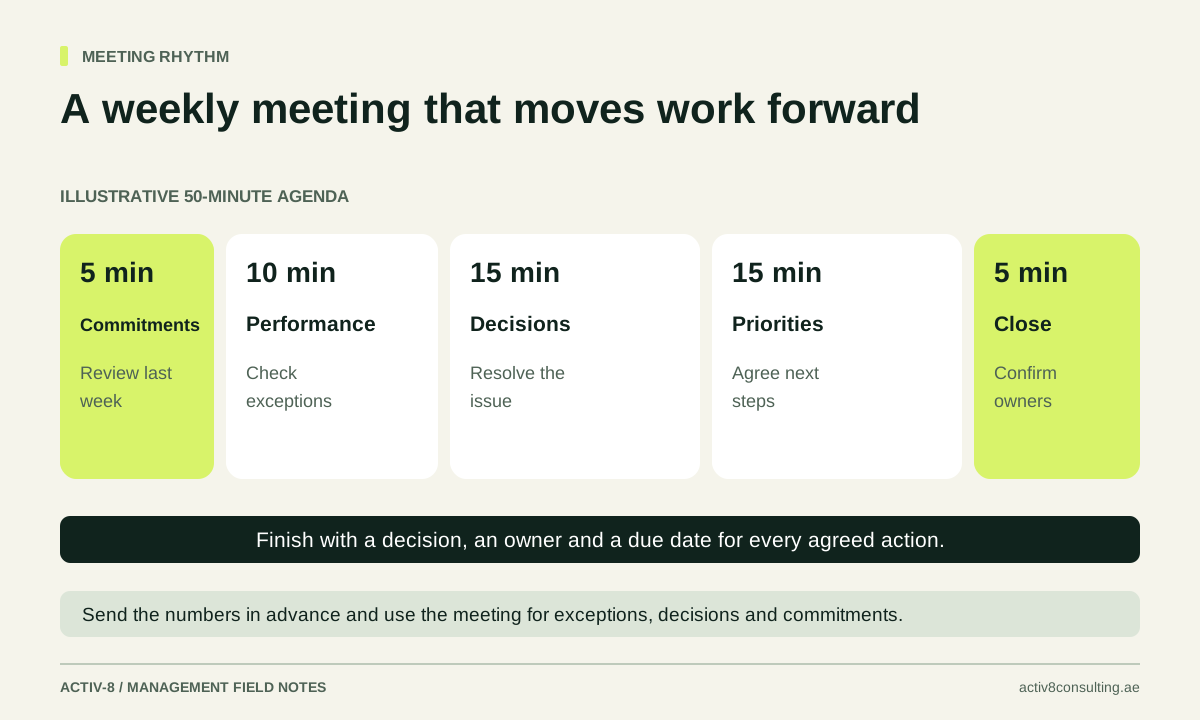
An illustrative fifty-minute agenda might allocate five minutes to previous commitments, ten to performance exceptions, fifteen to management decisions, fifteen to next priorities and five to confirming actions. The timing is a starting design, not a universal optimum. Adjust it to the business and the number of decisions that genuinely require the group.
Open with material changes rather than a round-robin account of everything each person did. Ask what has moved, why it matters and whether action is required. Then review commitments from the previous meeting, including whether completed actions produced the intended effect. This creates continuity instead of treating each meeting as a new conversation.
Reserve the main discussion time for decisions. Limit the number of major topics so they can be addressed properly. If a new urgent issue displaces an agenda item, state what is being deferred and who will handle it. The meeting should make resource trade-offs visible rather than repeatedly running over time and leaving the most difficult issue untouched.
Discuss red measures without creating defensive reporting
A measure outside its expected range is a prompt to investigate, not a complete explanation. Ask about the definition, work mix, timing and underlying cases before concluding that someone has performed poorly. A sudden change may reflect a genuine problem, a data issue or a different type of work passing through the business.
For an illustrative service company, rising overdue jobs could result from excess demand, a specialist bottleneck, incomplete customer information or unrealistic promises. Each cause requires a different response. Ask the responsible manager what the evidence shows and what decision they need. Avoid turning the meeting into a public search for blame, which can encourage people to hide problems until they become harder to resolve.
Keep the customer outcome visible. A team may complete more tasks while customers still wait because the final approval or handoff remains blocked. Review the whole process and agree a focused investigation where necessary. The process improvement guide provides a structure for testing a response after the meeting has identified the issue.
Record decisions and actions in different fields
A decision explains what has been agreed and why. An action explains the work needed to carry it out. Record both. “Review pricing” is an action with an unclear outcome; “test a defined package with a specified customer group before changing the wider price list” is a decision that can generate several concrete actions.
Every action needs one accountable owner, a due date and an observable completion condition. Other people may contribute, but shared ownership should not make responsibility disappear. Avoid dates that simply mean “before the next meeting” when the work depends on a customer response or another milestone. State the dependency and the next check.
Use the downloadable agenda and action-log worksheet below to keep the record compact. Include a place for the expected effect and the later outcome. This helps the team distinguish completing a task from resolving the problem. If an action repeatedly returns unfinished, investigate capacity, authority and clarity rather than moving the date forward indefinitely without discussion.
Manage detailed debates and unresolved disagreement
Some issues need more analysis than the weekly meeting can provide. When discussion becomes detailed without moving towards a decision, define the question, assign a working group and set a return date. Keep the right participants involved, but do not require the entire leadership team to observe every technical investigation.
Where there is disagreement, identify whether it concerns facts, assumptions, priorities or authority. Different causes need different responses. A disagreement about data may require reconciliation. A disagreement about risk appetite may require the owner to decide. A disagreement about implementation detail may be resolved by a small test rather than further argument.
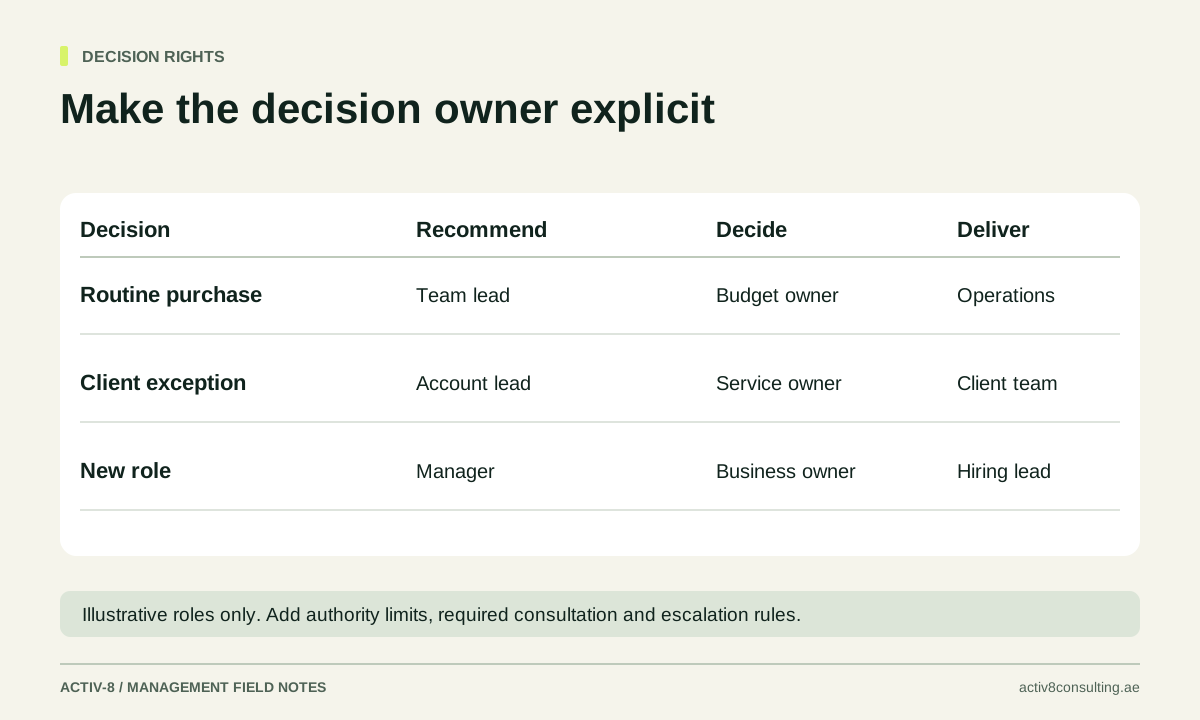
Use a delegation matrix to reduce unnecessary escalation. If a manager already has authority within agreed boundaries, the meeting can provide advice without taking the decision away from them. The chair should make the final outcome explicit: decided, delegated, deferred pending evidence or escalated to a named person. Ambiguity at the end of the discussion is expensive during the following week.
Close with commitments and improve the meeting itself
Rotate the responsibility for checking the action log where appropriate, while keeping the chair accountable for the meeting’s purpose. This can reveal ambiguous wording that the original note-taker no longer notices. The record should use ordinary language and describe a result that another manager can verify without reconstructing the entire conversation.
Reserve time to read back the decisions and actions. Confirm owners, dates and any communication required outside the room. Ask whether the agreed work fits the team's capacity. If new tasks displace existing priorities, record that choice rather than expecting everyone to absorb the additional load silently.
After several cycles, review the meeting's usefulness. Are decisions made sooner? Are repeated blockers reducing? Do actions have clear outcomes? Are people spending excessive time preparing reports that nobody uses? Remove agenda items that do not support a decision and improve the information that repeatedly causes confusion.
The worksheet below provides a starting agenda, but the discipline matters more than the format. Activ-8 leadership advisory can help a management team establish a practical review rhythm and clearer accountability. Bring a recent agenda, dashboard and action log. The goal is a meeting that makes the following week easier to run because the important choices, responsibilities and next steps are clear.
One useful final question is whether someone absent from the meeting could understand what was decided from the record alone. If not, clarify the decision before distributing the notes. This reduces conflicting interpretations and the informal follow-up conversations that otherwise consume much of the time the meeting was supposed to save.
PUT IT INTO PRACTICE
Weekly management meeting agenda
This is an illustrative 50-minute agenda. Adjust the minutes and attendees to suit the decisions. Share the numbers in advance. Record the action, owner and due date during the meeting; carry unresolved actions into the next review. Timings are examples, not a required standard.
Download the worksheetCSV file · Opens in Excel or Google Sheets · No sign-up required
Sources & further reading
Primary guidance behind the methods discussed. The examples, diagrams and tools in this article are original Activ-8 material.