THE STARTING POINT
A strategy makes choices about where to compete, how to win and what to stop doing.
A strategy should make choices easier
Strategic planning gives a small business a clear direction and a practical way to allocate limited time, money and management attention. It should explain which customers the business will serve, what it will offer them, why they should choose it and which capabilities must improve. A revenue target alone does not answer those questions.
For an owner-led UAE business, the difficulty is often choosing between plausible opportunities. A new emirate, a larger client, another service and a new system may all look attractive. Pursuing them together can overload the same people and weaken delivery. Strategy is the discipline of selecting a coherent path and accepting what will wait.
NIST's Baldrige strategy guidance connects long-term direction with actions, resources and review. The practical approach here follows that general principle, using an original worksheet suitable for a smaller team. It does not require an elaborate annual presentation. It requires explicit choices that managers can use when a customer request, hiring decision or project competes for resources.
Establish the current position honestly
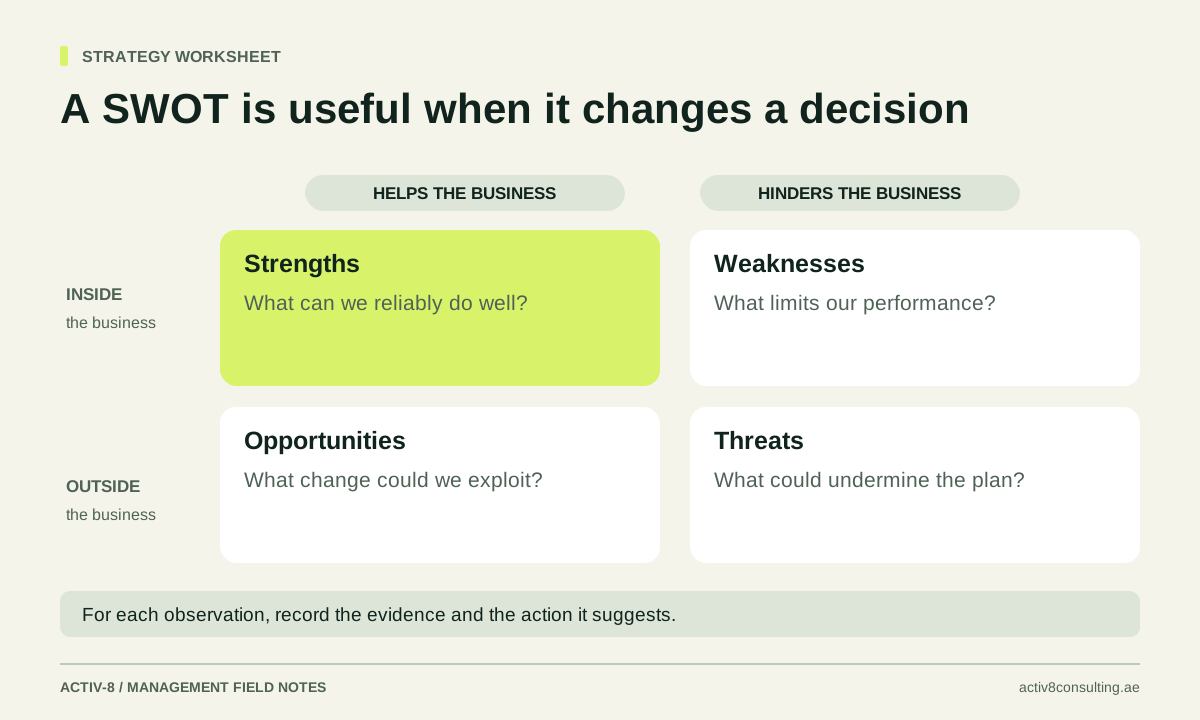
Begin with the business as it is. Review customer groups, service contribution, sales conversion, delivery capacity, cash timing and the owner's involvement. Look for patterns over a meaningful period and explain unusual events. Separate what the business does well from what the team hopes to become good at.
Collect a few customer perspectives. Ask why recent buyers chose you, what nearly stopped them and what was difficult after purchase. Include customers who did not proceed where appropriate and feasible. Avoid treating the sales team's explanation as the only evidence of the buying decision. The customer journey guide shows how to organise these observations.
Write a short statement of the current constraint. An illustrative professional-services firm might have strong demand for bespoke projects but inconsistent delivery margins and too much dependence on the founder. That is a different starting point from a firm with a reliable offer and spare capacity but weak demand. The first may need a more repeatable service model; the second may need a clearer route to market.
Choose where to compete and how to be useful
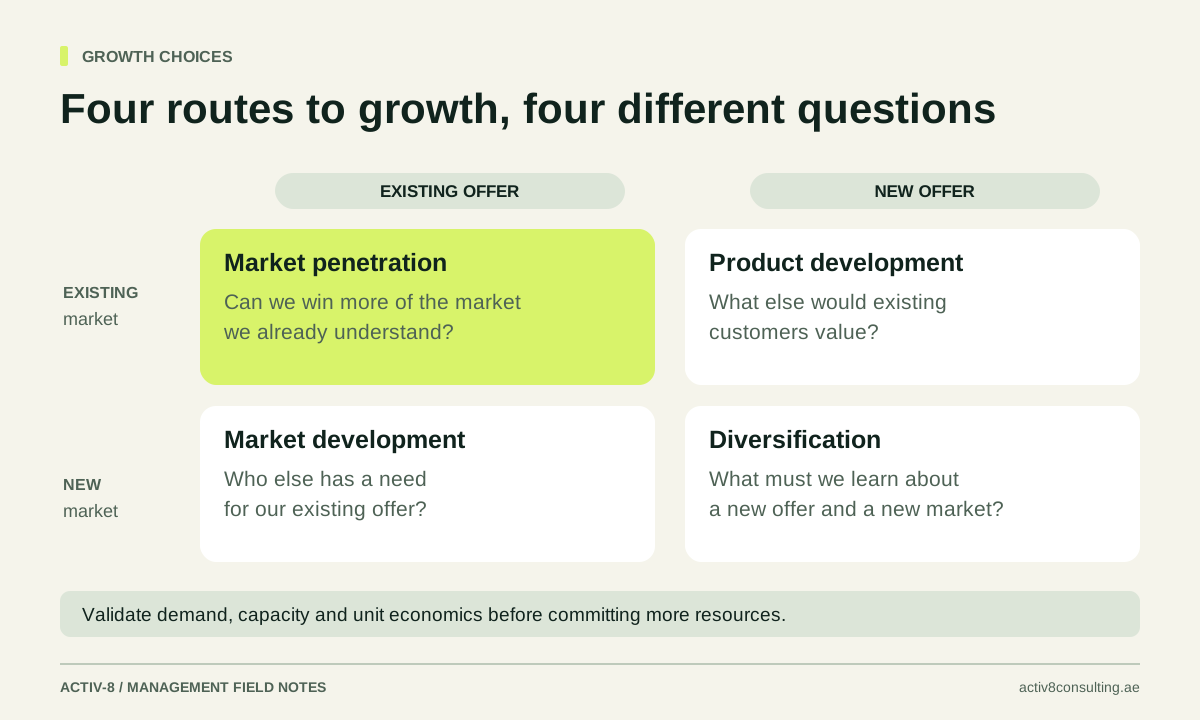
Define the priority customer in operational terms. “SMEs” is often too broad to guide a decision. Consider business size, stage, problem, buying trigger, service complexity and ability to benefit from your offer. The goal is not to exclude every other customer. It is to know which opportunity the business is designed to serve particularly well.
Next state the value you intend to provide and the evidence that makes it credible. Speed, specialist judgement, consistent delivery, integration or a simpler buying experience can each matter, but the business must be able to deliver the chosen promise. Avoid a strategy built entirely around words that every competitor could claim.
For the illustrative firm, the choice might be to focus on a defined assessment and implementation package for established service companies. This would require a clearer scope, reusable delivery methods and trained managers. It might also mean declining highly bespoke work that consumes the same senior capacity. Record that trade-off explicitly; otherwise the old behaviour can continue beneath the new strategy document.
Translate the choice into measurable outcomes
Choose a small number of outcomes that show whether the strategy is working. These might include contribution from the priority service, repeat purchase from the target customer group, delivery reliability or reduced founder involvement in routine decisions. Each measure needs a definition, baseline, owner and review frequency.
Distinguish a target from a forecast. A target describes the result you want. A forecast estimates what is likely given current evidence and assumptions. If the forecast is below the target, that gap should trigger a decision about resources, scope or the strategy itself. It should not be hidden by repeatedly changing the expected result to match the ambition.
Include measures that protect the business while it changes. A push for new sales should not obscure late delivery, weak cash collection or worsening customer complaints. The KPI dashboard guide explains how to combine a few outcome measures with indicators that reveal emerging pressure. Keep the scorecard small enough that leaders can explain why every measure is there.
Build a 90-day delivery plan with real capacity
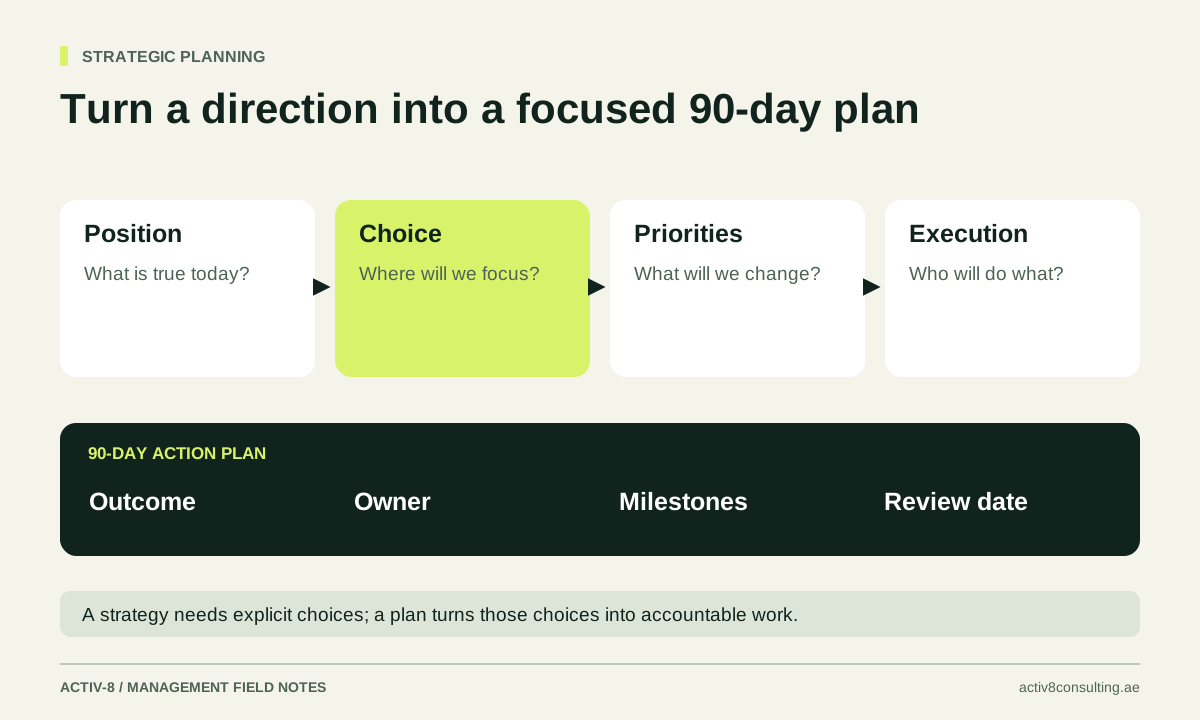
Select the changes that make the strategy possible and sequence them. Some work establishes facts, some creates capability and some tests the offer with customers. Starting everything at once can produce activity without progress. Identify dependencies before promising dates: a new service package may need pricing, training and delivery capacity before marketing increases demand.
For each priority, record the outcome, owner, first milestone, resources and decision needed. “Improve operations” is too vague. “Test a standard project scope with five suitable engagements and compare actual delivery effort with the estimate” gives the team a concrete experiment. The number of test cases should reflect the work and available volume, rather than a universal rule.
Check the plan against the team's existing commitments. If the same manager owns three major changes while also running daily delivery, decide what will stop, move or receive support. The downloadable strategy worksheet includes a place for these trade-offs. A plan becomes credible when the calendar and budget reflect it, not simply when everyone agrees with the priorities in a meeting.
Review assumptions as well as task completion
Hold a regular working review that asks what changed, what was learned and which decision is now required. Keep the original business problem visible. Completing a pricing document, training session or dashboard is useful only if it supports the intended change. Review whether the new approach is being used and whether the expected effect is emerging.
Maintain an assumption log. For example, the new package may assume that customers value a defined scope more than extensive customisation, or that managers can deliver it with limited founder input. Identify a practical test for each important assumption. If customers consistently ask for a different outcome, examine the offer rather than simply increasing promotional activity.
At the end of the planning period, decide what to continue, adjust or stop. Preserve lessons from work that did not produce the expected result. A strategy is not weakened by responding to evidence; it is weakened when every short-term request changes the direction without a reason. Use review points to distinguish learning from constant reactive switching.
Keep the strategy visible in everyday decisions
Keep a visible list of opportunities the business has deliberately declined or deferred. Add the reason and the condition that would justify revisiting each one. This gives managers a practical reference when similar requests return and makes the strategy’s resource choices easier to sustain beyond the original planning meeting.
Summarise the strategy on a page that managers can explain in ordinary language. Include the priority customer, the offer, the advantage you are building, the outcomes sought and the work currently in focus. Add the activities that will wait. This makes the document useful when new opportunities compete with the agreed plan.
Test it against a realistic decision. If a large prospect wants a heavily customised service, can the team explain whether it fits, what conditions would make it worthwhile and who can approve an exception? If the strategy provides no help, it probably needs clearer choices. The same test applies to hiring, software and market expansion.
Strategic planning should leave the business with a direction and a manageable next step. Use the worksheet below to organise an internal discussion, or explore Activ-8 management consultancy if you need support challenging the options and turning the decision into delivery. Bring the competing opportunities as well as the current constraint; choosing what to postpone is often as valuable as choosing what to start.
PUT IT INTO PRACTICE
Strategy worksheet
Agree the current position, target customer and the choices the business will make. Turn the most important choice into a short delivery plan with a measure, owner and review date. Record assumptions to test. The example is illustrative, not a recommendation for every business.
Download the worksheetCSV file · Opens in Excel or Google Sheets · No sign-up required
Sources & further reading
Primary guidance behind the methods discussed. The examples, diagrams and tools in this article are original Activ-8 material.