THE STARTING POINT
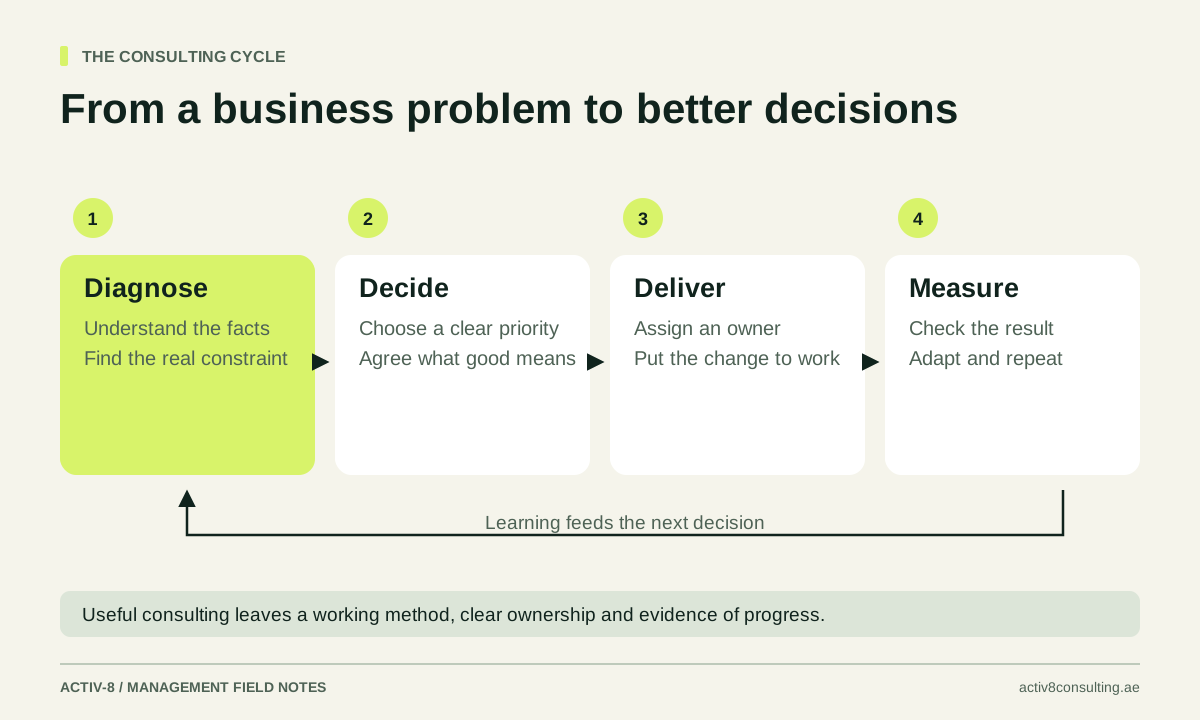
A consultant should help you make and implement a better business decision, with clear ownership and evidence of progress.
Start with the decision the business cannot make
A management consultant helps a business understand a problem, choose a response and put that response into practice. The work can cover strategy, operations, reporting, organisation or commercial performance. The useful question is not how impressive the presentation looks. It is whether the engagement helps the owner and team make a better decision, deliver a change and understand the result.
For a UAE service business, the trigger might be familiar. Revenue is growing, but the owner is still approving every exception. The sales team wants more marketing, operations wants more staff and the monthly accounts arrive too late to explain the pressure. These are connected symptoms. Buying a new system or hiring another manager before understanding the connection can make the business more expensive without making it easier to run.
Consultancy creates a structured way to investigate that situation. It should leave the company with clearer choices, responsibilities and working practices. It does not remove the need for leadership, reliable information or follow-through. The business still owns its decisions and the consequences of making them.
Diagnose the cause rather than repeat the complaint
The first phase is usually an assessment of what is happening now. A consultant may review management accounts, interview the people doing the work, trace customer enquiries, observe handoffs and compare stated processes with actual behaviour. The amount of investigation should match the decision. A narrow quotation problem should not automatically become a company-wide transformation programme.
Consider an illustrative maintenance business receiving enough enquiries but missing its monthly sales target. The initial explanation is poor sales performance. A review of recent enquiries shows that quotations wait several days for technical approval. Some customers buy elsewhere before the salesperson can respond. The constraint is partly the approval process, so simply increasing lead volume could enlarge the queue.
A useful diagnostic distinguishes facts from assumptions. “Six of the last ten quotations waited for approval” is an observation. “The approval rule causes most lost sales” is a hypothesis that needs more evidence. The consultant should explain what is known, what remains uncertain and which additional evidence would change the recommendation. Our business diagnostic checklist provides a starting structure for this work.
Turn the findings into a small number of choices
Good analysis creates options. In the quotation example, the business could delegate approval within defined limits, build a standard pricing library, simplify its service packages or add technical capacity. Each option has a different cost, risk and effect on the team. The consultant's role is to make those trade-offs understandable and recommend a practical sequence.
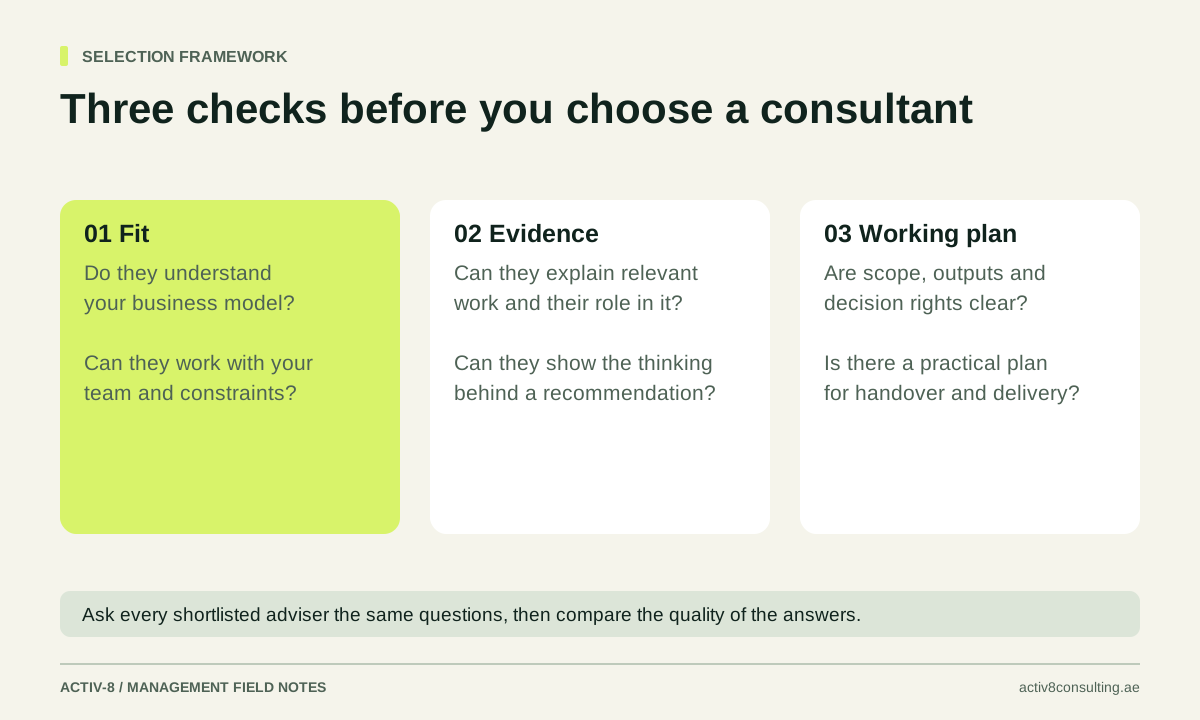
Ask for the reasoning behind the recommendation. Which customer problem does it address? What evidence supports it? What would make it the wrong choice? A recommendation that depends on information the business cannot collect, or on time the team does not have, is not yet a workable plan.
The output might be a strategy, an operating model, a prioritised improvement plan or a decision paper. Its format matters less than its usefulness. It should identify an accountable owner, the resources required, important dependencies and a way to judge progress. For wider strategy work, NIST's Baldrige guidance similarly connects organisational direction with shorter-term action and resource decisions. A small business can apply that discipline without adopting a large-company planning apparatus.
Agree how much implementation is included
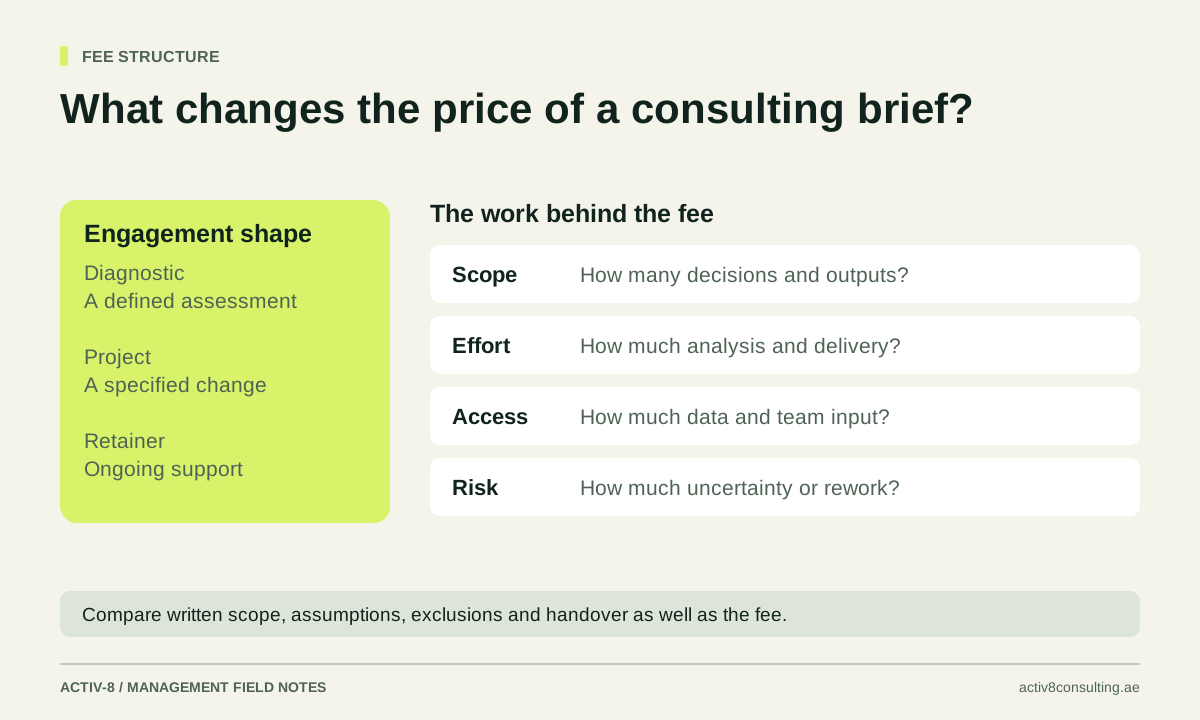
Consultants work in different ways. Some provide an independent assessment and recommendations. Others help design processes, facilitate decisions, configure reporting, coach managers or support implementation over time. None of these models is automatically better. The important point is to buy the level of support the business actually needs.
If your team can implement a clear plan, a defined diagnostic may be sufficient. If managers are already stretched or the change crosses departments, ongoing support may be more useful. Ask who will produce each output and who will do the day-to-day work. “We will support implementation” is too vague unless the proposal explains the meetings, working sessions, tasks and handover involved.
In the maintenance example, implementation could mean testing a new quotation approval rule with one service category, training two managers and reviewing turnaround time weekly. The consultant might facilitate the test and analyse results while the operations manager owns daily decisions. This division avoids the common problem of everyone attending the project meeting while nobody owns the changed process between meetings.
Define the evidence of progress before starting
Consulting deliverables and business outcomes are related, but they are not the same. A dashboard being delivered is an output. Managers using it to identify overdue work and resolve the causes is a behaviour. A sustained reduction in overdue work is an outcome. Agree which of these the engagement will measure and what the consultant can reasonably influence.
For the quotation example, a sensible baseline might include median quotation turnaround, the number awaiting approval, quote-to-order conversion and the share requiring correction. Review all four together. A faster quote that contains mistakes may increase rework or damage customer trust. A higher conversion rate can also be misleading if the team has stopped recording difficult enquiries.
Keep comparisons consistent. Use the same definition, comparable service categories and a clear observation period. Record changes in staffing, demand or pricing that could explain part of the result. The consulting ROI calculator helps translate potential benefits into a business case, but a modelled return should remain an estimate until the underlying benefit is observed.
Know when a different specialist is needed
Management consultancy is broad, which makes scope boundaries particularly important. A consultant can help organise a business decision, but legal interpretation, regulated financial advice, specialist tax treatment, engineering sign-off or employment advice may require appropriately qualified professionals. The proposal should identify these dependencies rather than quietly absorb work outside the consultant's competence.
Likewise, consultancy is not a substitute for a permanent role when the business needs continuous operational ownership. If someone must schedule staff, approve purchases and manage service delivery every day, an internal manager may be the right answer. A consultant could still help define that role, design the reporting or support the transition, but the engagement should not disguise an unresolved staffing requirement.
There are also times to postpone consulting. If the owner cannot make time for decisions, essential records are inaccessible or the business cannot resource any implementation, a large engagement is unlikely to work well. A smaller initial brief may be more sensible: establish the baseline, resolve access and identify one affordable improvement before committing to a broader programme.
Prepare a brief that makes the first conversation useful
You do not need to arrive with a finished solution. Bring a clear description of the problem, a few examples and the decision you need to make. Explain what has already been tried, where the business is under pressure and what would make the engagement worthwhile. Include constraints such as available management time, budget, required timing and existing systems.
Request concrete outputs and agree how they will be accepted. For example, “a weekly management dashboard with named data owners, agreed definitions and two completed review cycles” is more testable than “improved business visibility”. Also ask what information the consultant needs and how the work will be handed over so the team can maintain it.
The first conversation should help both sides establish fit. A credible consultant can explain the proposed method, challenge the original diagnosis respectfully and identify where another specialist is needed. If your business needs that combination of independent assessment and practical support, explore Activ-8's management consultancy service or use the enquiry section below to describe the situation. Start with the problem you want to solve and the decision that would move the business forward.