THE STARTING POINT
Follow the evidence across the business before deciding which symptom to treat.
Begin with evidence from an ordinary working week
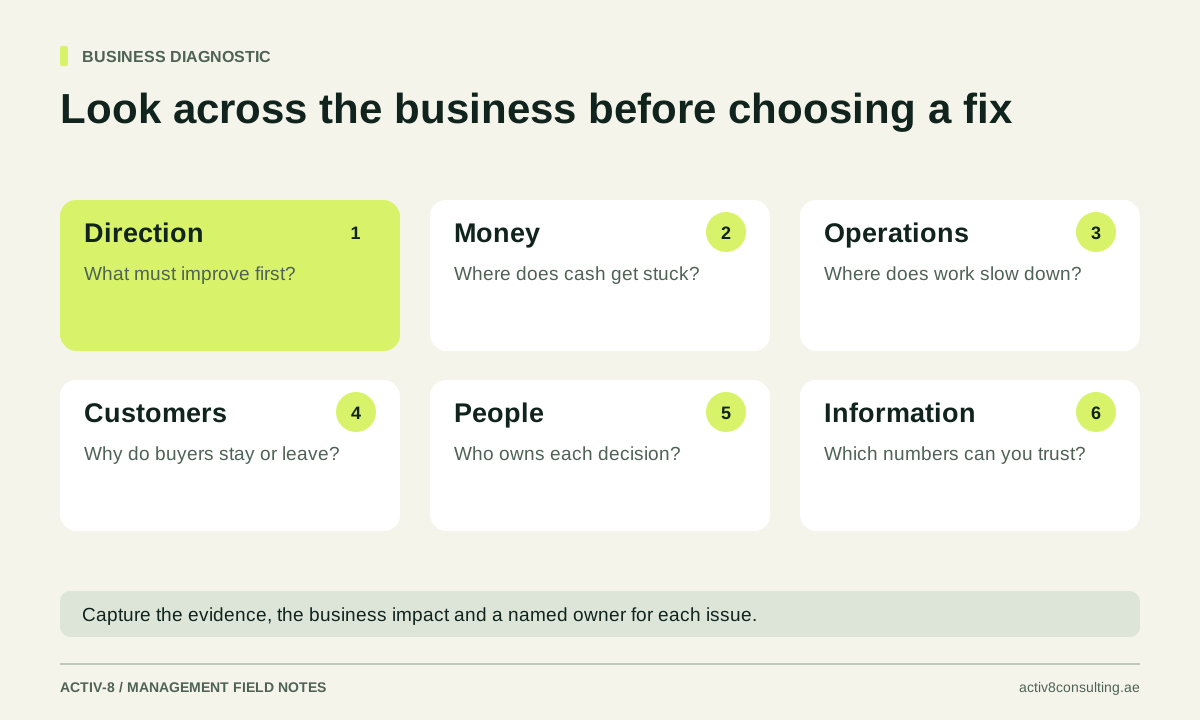
A business diagnostic is a structured review of how the company earns money, serves customers and makes decisions. It is useful when the owner can feel that something is wrong but several explanations compete for attention. The purpose is to identify the constraint worth addressing first, rather than to create a long list of everything that could be improved.
Choose a recent, reasonably representative period. Collect a small set of records: sales by service, customer enquiries, work completed, overdue invoices, recurring costs, complaints and current priorities. Note unusual events that affect interpretation. A holiday period, a large one-off order or the absence of a key manager can distort the picture if treated as normal performance.
Talk to the people doing the work as well as those reviewing reports. Ask for a recent example whenever an answer becomes general. “Communication is poor” is hard to investigate. “The delivery team received the changed scope after the customer had agreed a date” gives you a specific handoff to trace. Record what happened, its impact and the evidence available.
Check demand and the route from enquiry to sale
Start with the customer. Which customer groups are buying, what problem are they paying you to solve and which services are attracting genuine demand? Separate enquiries, qualified opportunities, proposals and completed sales. A rise in raw leads can conceal a fall in suitability or conversion. Definitions must stay consistent across the period you compare.
Trace a sample of recent enquiries from arrival to outcome. Look for ownership, response time, qualification, proposal quality and a dated next action. Include lost and unanswered enquiries, not only successful ones. The purpose is to distinguish a demand problem from a follow-up, offer or delivery-confidence problem.
For an illustrative training company, weak sales might initially suggest insufficient marketing. The review could instead show that larger prospects request custom programmes but proposals wait for the founder to design them. That finding changes the likely intervention. A clearer package, pricing boundary or delegated proposal process may be more relevant than buying additional leads. Keep alternative explanations open until the evidence supports a decision.
Examine contribution, cost and cash separately
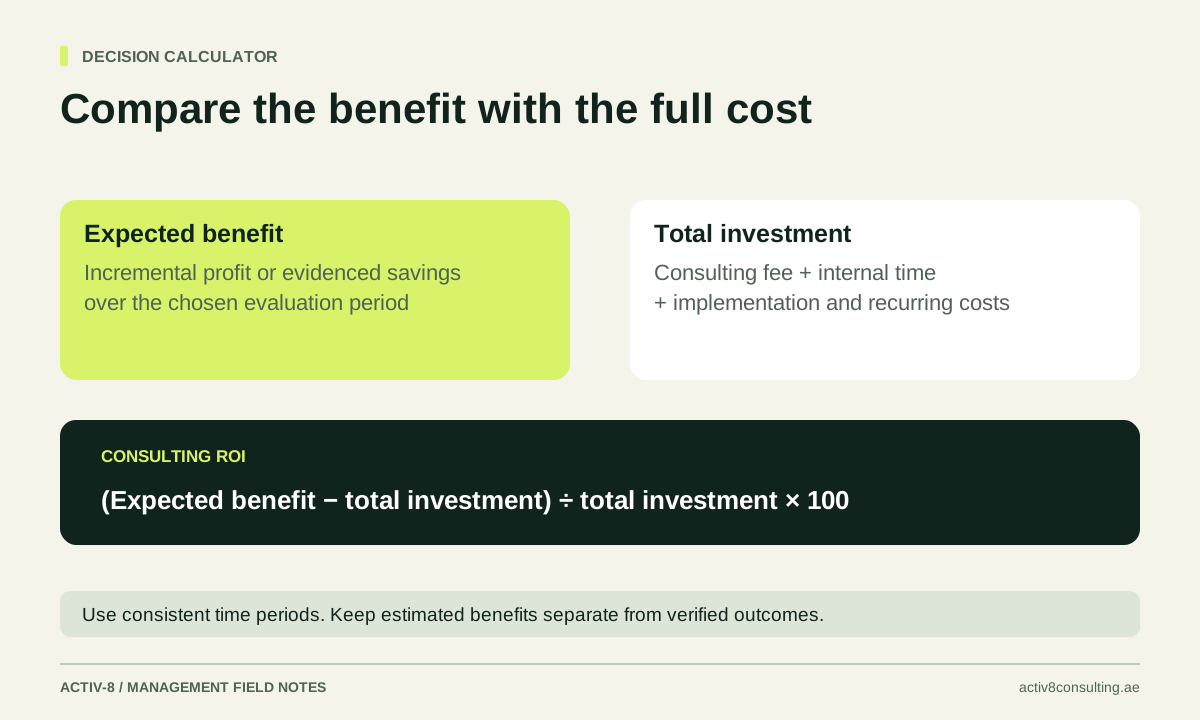
Revenue alone cannot tell you whether the business is becoming stronger. Review the direct cost of delivering each major service and the contribution left to cover overheads. Check discounts, subcontractor charges, rework and unpaid scope additions. A popular service can consume management attention while contributing less than expected once these costs are visible.
Next inspect the timing of money. Review overdue invoices, payment terms, deposits, supplier commitments and large upcoming payments. A profitable sale may still create a cash gap if costs are paid before the customer settles. Use the 13-week cash-flow guide when timing needs closer attention, and involve your finance professional where the records or treatment require it.
Avoid turning every issue into a pricing problem. Low contribution might reflect an underpriced offer, excessive delivery effort, poorly controlled scope or an unsuitable customer mix. Each cause calls for different action. Write the initial explanation as a hypothesis and identify which job records, invoices or time samples would help distinguish it from the alternatives.
Follow work through operations and handoffs
Pick one important service and map what happens from confirmed order to completed delivery and payment. Include waiting, approvals, missing information and corrections. Ask where work queues build up and who can resolve the exceptions. A department can appear productive while creating delays or rework for the next department.
Compare promised and actual delivery dates, first-time completion, backlog age and the volume of work arriving. Check whether capacity is constrained by total hours or a specific skill, approval or piece of equipment. The capacity planning calculator can help estimate the hours gap, but observation is needed to identify the real bottleneck.
Look at how the process behaves when something goes wrong. Who deals with a missing customer document, a supplier delay or an urgent change? If every exception reaches the founder, the problem may be unclear decision authority rather than insufficient headcount. Record the most common exception types and their frequency before redesigning roles or buying automation.
Review roles, decisions and management routines
Ask each manager which outcomes they own, which decisions they can make and when they must escalate. Compare the answers with what actually happens. An organisation chart can show a reporting line while leaving commercial and operational authority unresolved. This creates repeated checking, slow decisions and frustration on both sides.
Review the current management meeting. Does it use reliable numbers? Are decisions recorded? Do actions have one owner and a realistic date? Check the previous meeting's commitments against what happened afterwards. A meeting that repeatedly revisits the same unresolved issue may need better information, clearer authority or a smaller number of priorities.
Also inspect workload and capability. A capable manager may be overloaded with routine approvals, while another has responsibility without training or access to information. The diagnostic should distinguish these situations. Do not infer motivation or individual performance from one metric without understanding the process, resources and expectations surrounding it. The objective is to improve the way the business works, using fair and specific evidence.
Test the information behind the conclusions
For every important number, record its definition, source, owner and update frequency. Reconcile a small sample to the underlying records. If the sales report counts invoices while the delivery report counts completed jobs, the totals may differ for legitimate timing reasons. Understand the difference before treating it as an error.
Mark missing information as unknown. Do not quietly replace it with zero or a confident estimate. It may be reasonable to use a temporary sample, but label its period, size and limits. A week's time study can guide a pilot; it should not automatically become a permanent annual savings claim.
The downloadable diagnostic worksheet below is designed for this discipline. For each area, write the observed issue, evidence, business impact, proposed owner and next investigation. Add a confidence level in plain language: confirmed, partly supported or untested. This makes the review more useful than a single overall score, which can hide the one serious constraint inside an otherwise healthy business.
Choose one constraint and define the next experiment
Make the review repeatable by retaining the original evidence and date. When you revisit the issue, compare the same process boundary and customer group. If the definition changes, record why. Otherwise an apparent improvement can simply reflect moving difficult work outside the measure or changing which cases are counted.
Bring the findings together before selecting action. Look for a cause that explains several symptoms. Slow quotation approvals, founder overload and missed sales may be connected. Poorly defined scope, delivery overruns and weak contribution may form another pattern. Ask which change could improve the whole system without creating a larger problem elsewhere.
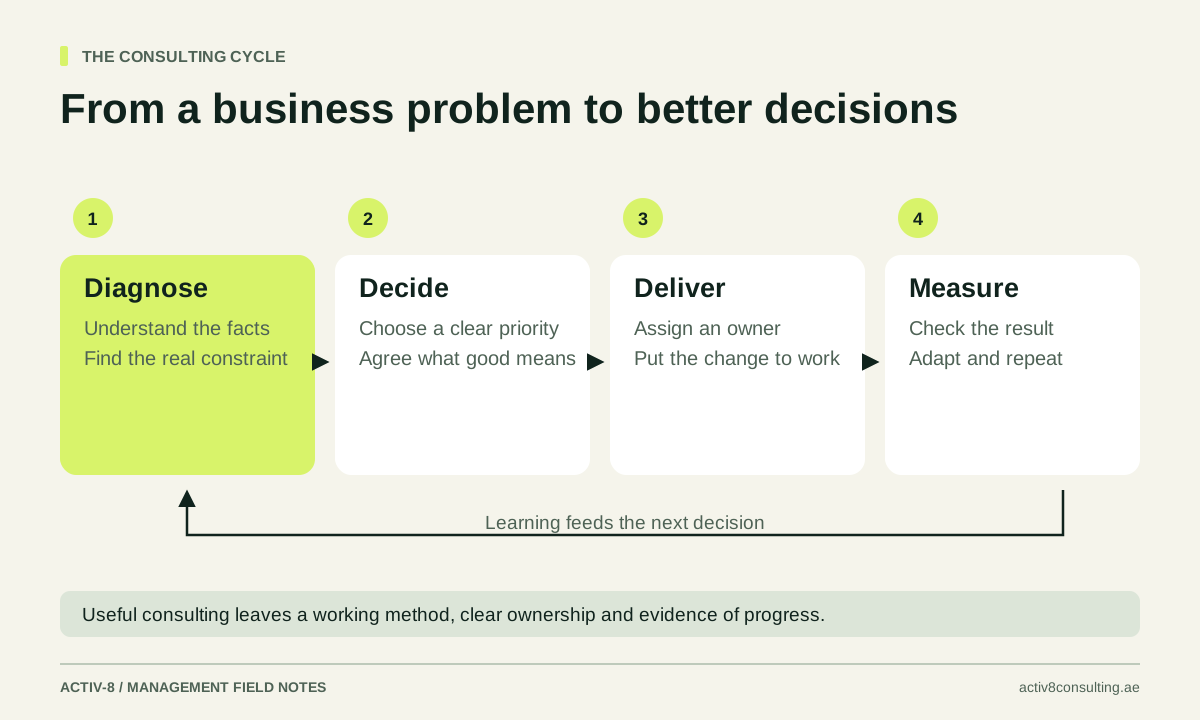
Choose a small, testable intervention with a named owner and a review date. For the training company, that might be a standard proposal package for one course type, with clear customisation limits and delegated approval. Measure turnaround, conversion and correction rates before expanding it. Record what would lead you to keep, adjust or stop the test.
A diagnostic is complete when it creates a better decision and a feasible next step. If the evidence remains contradictory, that is a reason to investigate further rather than force a confident conclusion. Activ-8 management consultancy can help structure the review and translate the findings into an improvement plan. Bring a few real examples, your current numbers and the business decision you most need to resolve.
PUT IT INTO PRACTICE
Business diagnostic worksheet
Work through the prompts with the people responsible for each area. Enter observed facts and dated evidence before proposing an action. Keep unknowns blank and assign someone to investigate them. The example row is illustrative and should be replaced or removed.
Download the worksheetCSV file · Opens in Excel or Google Sheets · No sign-up required