THE STARTING POINT
Price the full engagement, including your team’s time and implementation costs, against a defined outcome.
There is no useful price without a defined assignment
Management consultancy fees are difficult to compare because the label covers very different purchases. A workshop, a diagnostic, a detailed strategy project and several months of implementation support may all be described as consultancy. A single average fee would hide the differences that matter to the buyer. This guide therefore explains how to build and compare a budget rather than presenting an unsupported UAE market price list.
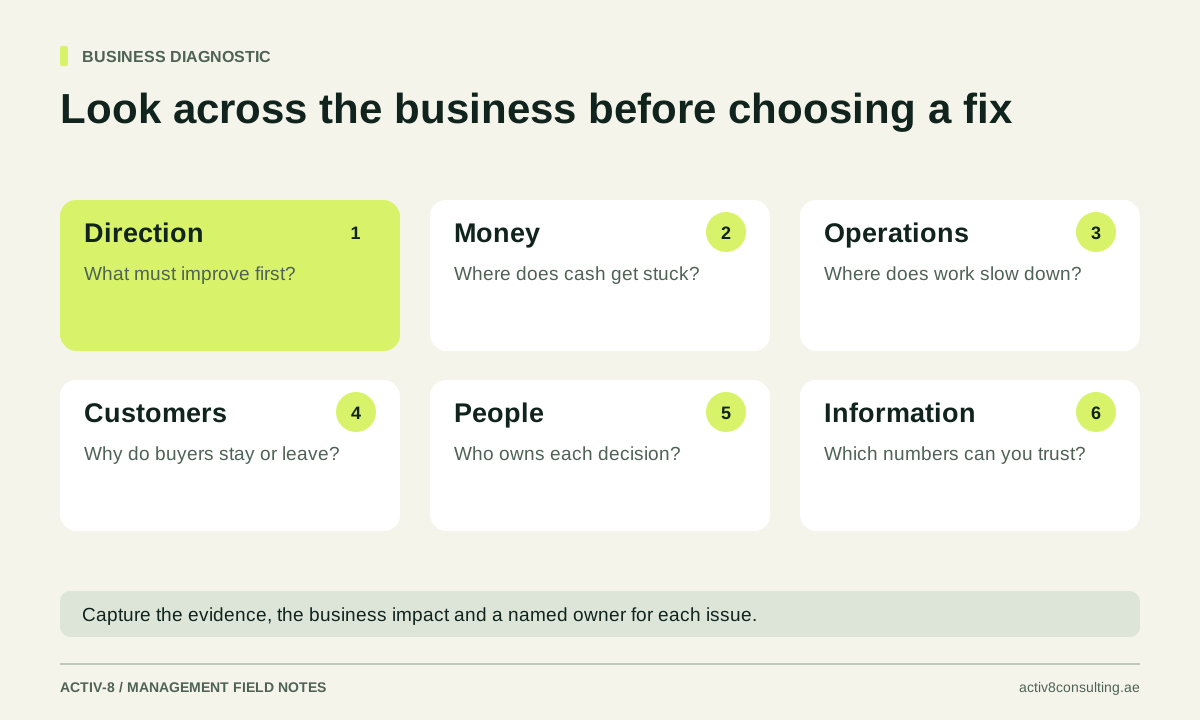
Begin by defining the decision or change you want help with. Describe the scope, expected outputs, timing and people involved. The consultant should then explain how the proposed work addresses that brief, which assumptions affect the price and what is excluded. If the scope is genuinely uncertain, a bounded diagnostic can establish it before either side commits to a larger engagement.
Your budget should include more than the consultant's invoice. Internal management time, information preparation, implementation, software and ongoing ownership can materially change the cost. A low external fee is not necessarily a low-cost project if it leaves substantial work unplanned inside the business.
Understand fixed fees, day rates and retainers
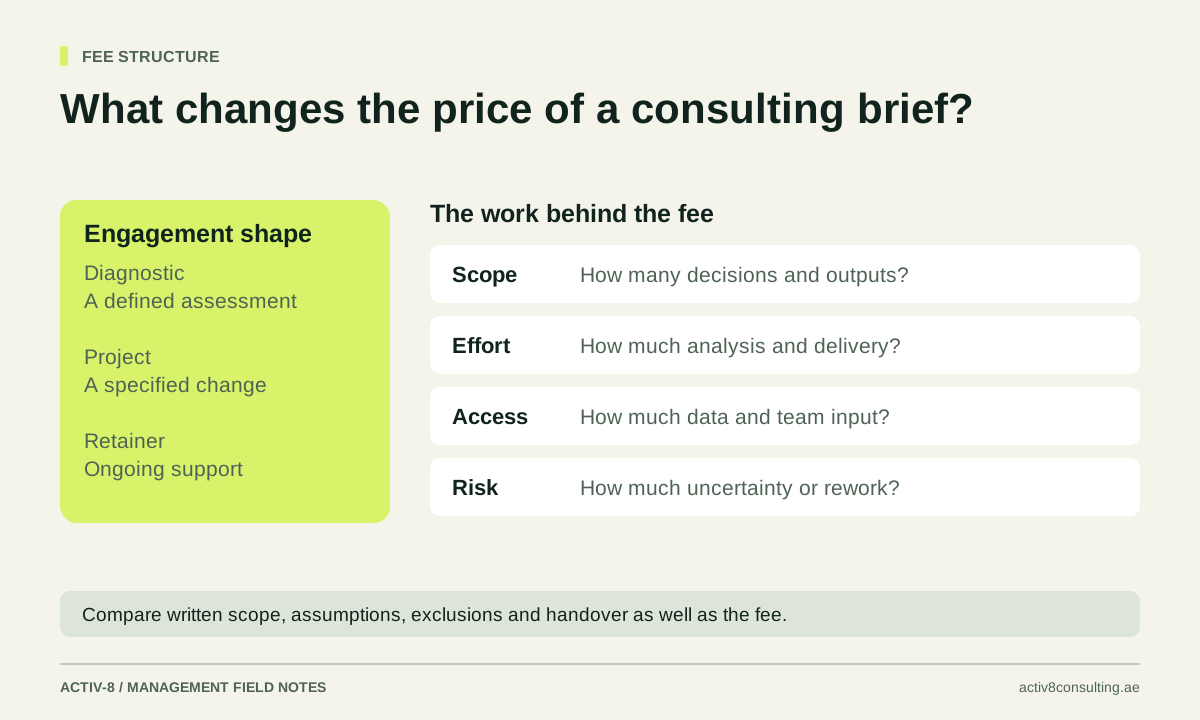
A fixed project fee attaches a price to an agreed scope. It can give useful budget certainty when deliverables, responsibilities and acceptance criteria are clear. Check the assumptions carefully. If the fee assumes clean data, three workshops and one revision, additional work may need a separate agreement. Fixed price does not mean unlimited support.
A day rate prices time. It may be appropriate for work that cannot yet be estimated precisely, but you still need a plan, spending limit and review points. Ask how days are recorded, what preparation is included and who can authorise additional time. Comparing two day rates without understanding experience, productivity and the resulting outputs tells you little about value.
A retainer provides an agreed pattern of continuing support. Clarify the capacity reserved, meeting cadence, response arrangements, project boundaries and treatment of unused time. It should be clear whether implementation work is included. A monthly fee that only buys occasional advice is a different product from a hands-on operating review with analysis, manager support and follow-through between meetings.
Identify what makes the work more demanding
The scale of the business is only one influence on effort. A smaller company with fragmented records, unclear responsibilities and multiple disconnected systems can require more investigation than a larger company with a well-defined problem and reliable information. The proposal should explain the actual sources of complexity rather than use company size as the only pricing logic.
Other factors include the number of business units, locations, customer journeys, stakeholders and decisions in scope. On-site observation, specialist research, data cleaning, system configuration and training each add different work. Compressed deadlines can also affect the delivery model. Ask whether speed changes the fee, the resources available or the depth of investigation.
Be clear about access. If an internal analyst can prepare agreed data and a manager can coordinate interviews, that may reduce external effort. It can also introduce a dependency: if those people become unavailable, the project may stall. A credible budget records the dependency and the response, rather than assuming that internal work is free and always available.
Build a complete cost picture
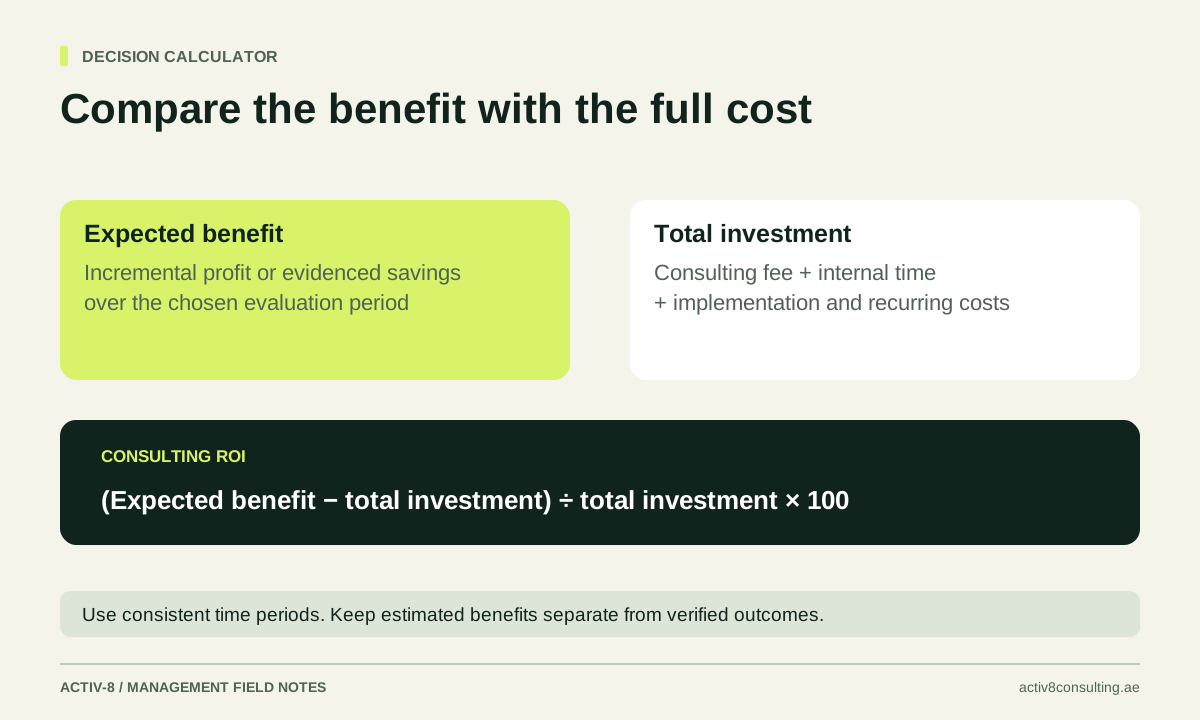
Separate one-off costs from recurring costs. One-off items might include assessment, process design, migration, training and internal setup time. Recurring items could include the retainer, software subscriptions, reporting maintenance and regular review. Use the same evaluation period for both costs and benefits, such as the first twelve months after the work begins.
Here is an illustrative budget, not an Activ-8 quote or market benchmark. A business allows AED 24,000 for consultancy, AED 6,000 of internal time, AED 8,000 for implementation and AED 500 per month for an additional tool. Over twelve months, the total is AED 44,000. Looking only at the AED 24,000 invoice would understate the resources required by AED 20,000.
Keep cash spending separate from the value of existing staff time. Both matter to the decision, but they affect the bank account differently. Also confirm whether quoted amounts include applicable taxes and expenses, with the appropriate professional advice for your situation. Avoid mixing tax-inclusive costs with tax-exclusive benefits in the same comparison. The consulting ROI calculator lets you test a consistent planning case.
Compare proposals line by line
Build a comparison using the same rows for every proposal: diagnostic work, workshops, analysis, deliverables, implementation, training, handover, follow-up and exclusions. Mark each item as included, excluded or unclear. Ask for clarification before assigning a value. An attractive headline price often becomes less meaningful once the missing work is visible.
Then compare how the engagement will be governed. Who is the delivery lead? Which decisions require your approval? What evidence is reviewed at each milestone? What happens if the underlying problem is different from the original brief? These terms influence both cost and the likelihood that the work will be useful.
Avoid negotiating only the fee while leaving an oversized scope intact. A more constructive conversation is to identify the smallest phase that resolves an important uncertainty or delivers a useful improvement. You might start with one service line, one process or one reporting cycle. The consultant selection guide provides additional questions for judging delivery quality alongside price.
Judge value using a credible business case
Potential benefits might include lower external spending, fewer errors, increased contribution from additional sales, faster cash collection or management capacity released. These should not all be added together without checking for overlap. If saved staff time is used to deliver extra sales, counting both the full value of that time and the full sales contribution may double-count the same improvement.
Use a conservative case first. In the illustrative AED 44,000 engagement, suppose the business expects AED 6,000 of monthly incremental contribution for nine months after implementation. That produces AED 54,000 of gross benefit and AED 10,000 of net benefit within the chosen year. If only half the expected benefit materialises, the same project has a negative financial return over that period.
The point is not to produce a reassuring percentage. It is to understand what must be true for the investment to make sense. Test delayed implementation, slower adoption, weaker demand and higher ongoing costs. Some worthwhile projects also reduce risk or improve decision quality in ways that are hard to price. Describe those benefits explicitly rather than converting them into invented cash savings.
Agree milestones, change control and a stopping point
Payment milestones should make commercial sense for both parties and be written clearly. They may relate to the start of work, completion of defined phases or a recurring support period. Check what constitutes acceptance and how concerns will be raised. Do not rely on an informal understanding that a report will somehow produce a particular business result.
Define change control before the project expands. A proposed addition should identify its purpose, fee, timing and effect on existing work. Name the person who can approve it. Also agree a review or stopping point where you can assess whether the engagement should continue, change direction or conclude. This is particularly useful for retainers that might otherwise renew without a clear discussion of value.
Finish by assigning an internal owner to the budget and the expected benefits. Review both during the engagement and after handover. If you are preparing a consultancy brief, Activ-8's management consultancy page explains the type of support available. Share the challenge, scope, timing and available budget so the conversation can focus on an appropriate piece of work rather than a price detached from the problem.