THE STARTING POINT
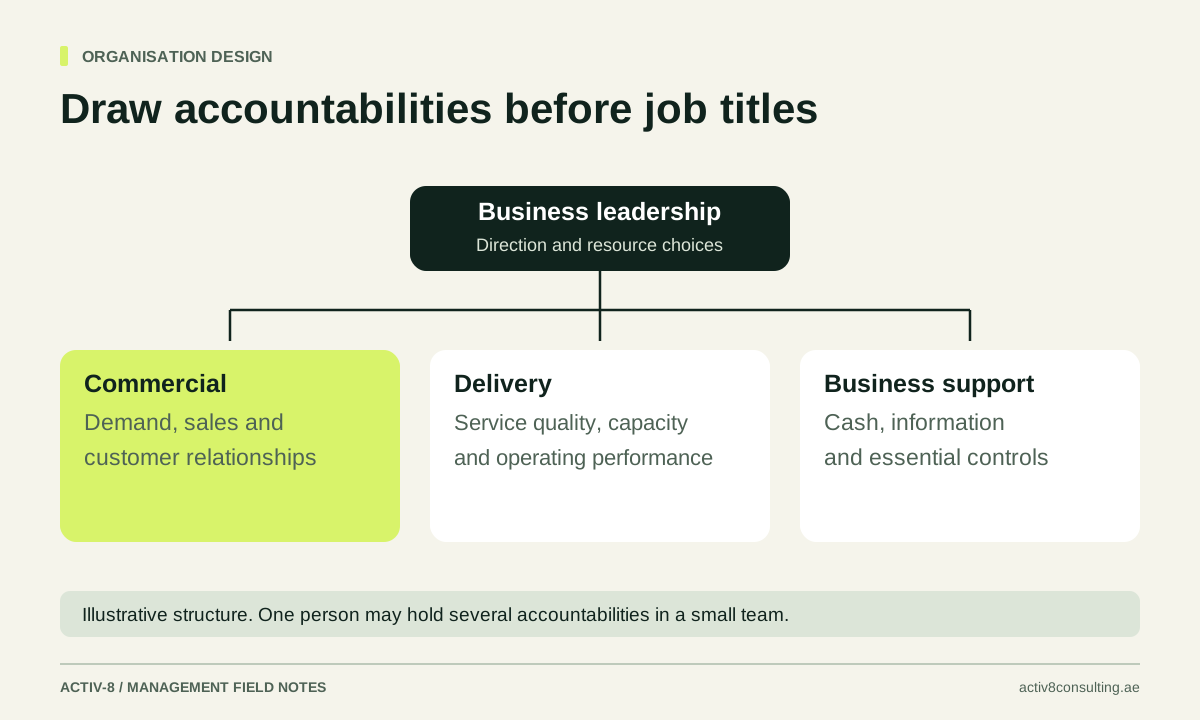
Design the work and accountability before filling boxes on an organisation chart.
Design around the work the business needs to perform
An organisational structure explains how responsibilities, reporting relationships and decision authority fit together. For a growing small business, it should make customer delivery and management easier. It should not begin as an exercise in assigning impressive titles or drawing a larger organisation chart to match an ambitious revenue target.
Start with the work. Identify the main customer journeys, recurring operational activities and decisions that keep the business running. Then ask where accountability is unclear, where work queues and which decisions repeatedly reach the founder. These observations reveal what the structure needs to solve.
A business may need a new role, but it may also need a clearer process, better information or delegated authority. Adding a manager without resolving those issues can simply create another person who asks the owner for approval. Our delegation matrix guide helps distinguish a reporting-line problem from a decision-rights problem before you commit to a structural change.
Understand the common ways to organise a team
A functional structure groups similar work, such as sales, operations and finance. It can support specialist capability and clear standards. Its challenge is managing handoffs so that each function does not optimise its own activity while the customer journey becomes fragmented.
A structure organised around services, customer groups or locations can place more end-to-end responsibility with each unit. That may improve focus where requirements differ substantially, but it can duplicate expertise and systems. A smaller company should examine whether the scale and complexity justify those trade-offs before creating several miniature businesses inside the same organisation.
A matrix structure combines dimensions, such as functional expertise and project delivery. It can be useful where people support several projects, but it requires unusually clear priorities and authority. Two reporting relationships without an agreed rule for resolving conflicts can create more confusion than flexibility. These are options to assess against the work; there is no universally best structure for every UAE SME or stage of growth.
Write role outcomes before job titles
Define what each role must achieve and which decisions it owns. An operations role might be accountable for reliable delivery, capacity planning and resolution of service exceptions. Specify the scope and boundaries rather than relying on a title whose meaning varies between companies.
Separate outcomes from activities. “Attend the weekly meeting” is an activity. “Maintain a realistic delivery plan and resolve capacity conflicts” describes a management responsibility. Include the information the role needs, the interfaces with other roles and the measures that help assess whether the work is being done effectively.
Avoid building the entire structure around the current individuals' habits. Their skills and experience matter, but the business also needs a design that can survive absence and future growth. Identify where one person currently holds several roles and whether that combination remains practical. In a small team, wearing several hats is normal; the important point is that the responsibilities are visible rather than accidentally omitted.
Assess management capacity before adding layers
A manager's capacity depends on the work, team capability, process stability and level of support required. Counting direct reports alone is insufficient. A team of experienced people performing stable work may need a different management pattern from a smaller team handling complex, changing assignments.
Review what managers actually spend time doing. If routine approvals and data chasing consume most of the week, a process or information improvement may create capacity. If the manager must provide intensive coaching, resolve technical exceptions and coordinate several projects, the role may genuinely need a narrower scope or additional support.
Do not assume a new layer automatically improves control. It can add delay and distance from the work if authority is unclear. Equally, a very flat structure can overload the founder and leave staff without timely decisions. Use observed workload, decision delays and support needs to judge the next step rather than copying a span-of-control number from another organisation with different conditions.
Plan the transition carefully
Once the design is agreed, explain what changes for each role: responsibilities, reporting, authority, information and interfaces. Identify responsibilities that move and those that remain. A transition fails easily when everyone understands the new titles but assumes someone else has taken over an important recurring task.
Use qualified advice for employment, contractual or regulatory matters where required. A management design exercise does not determine the legal process for changing an individual's terms or role. Keep those decisions with the appropriate authorised people and professionals. The operational plan should make the intended work clear so that the formal implications can be assessed properly.
Allow time for handover, training and access changes. Test the new decision routes with realistic cases before removing the old support completely. The change management guide helps plan readiness and adoption. Avoid launching several structural and system changes together without understanding how the team will maintain service while learning the new arrangements.
Review whether the structure solves the original problem
Choose measures connected to the reason for the change. These might include decision turnaround, repeated escalations, delivery reliability, manager workload or clarity of ownership in common cases. Do not judge the structure only by whether every role has been filled or the new chart has been distributed.
Ask staff and managers where responsibility remains unclear. Trace recent exceptions through the new arrangement. If decisions still reach the founder, investigate whether authority, information or confidence is missing. The answer may require a clearer boundary or more practice rather than another reorganisation.
Review after enough operating cycles to observe normal work and common exceptions. Record the adjustments made and why. A structure should evolve as the business changes, but frequent unexplained redesign can create uncertainty and distract from delivery. Keep the connection between the strategic direction, customer journey and role outcomes visible so changes have a practical rationale.
Start with one role or decision bottleneck
If the business feels disorganised, resist redrawing everything immediately. Pick one recurring issue, map the work and define the accountable role and authority required. This can reveal whether the wider structure needs to change or whether a bounded improvement is sufficient.
Prepare a simple role brief covering purpose, outcomes, decisions, interfaces, measures and escalation. Compare it with the person's actual workload and the support available. This makes a recruitment or delegation discussion much more concrete than asking for “a strong manager” without defining what the business needs that manager to own.
Activ-8 leadership advisory can help an owner-led company clarify management roles and decision authority as it grows. Bring the current chart, if one exists, and examples of decisions that regularly stall or return to the owner. The useful outcome is a team that knows who owns the work, can make appropriate decisions and can maintain reliable service as the business becomes more complex.
Sources & further reading
Primary guidance behind the methods discussed. The examples, diagrams and tools in this article are original Activ-8 material.