THE STARTING POINT
A change is implemented when people can use the new approach in real work.
Define what people will do differently
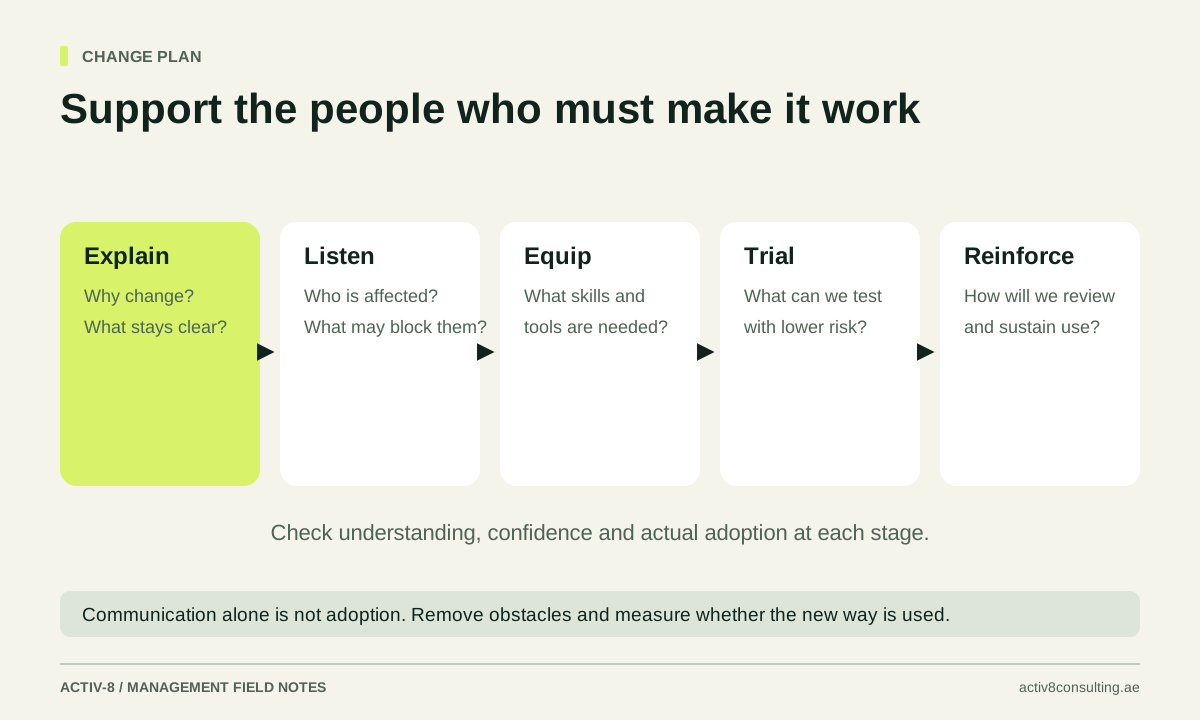
A change management plan explains how a business will help people move from the current way of working to a new one. It sits alongside the technical or project plan. Installing a system, publishing a procedure or announcing a new structure does not establish that the change is understood, practical or consistently used.
Start with the behavioural change. Who will do what differently, in which situation and using what information? For example, a CRM project may require every new enquiry to have an owner, a qualified status and a dated next action. Those behaviours are more useful to plan around than the broad statement “the team will use the new CRM”.
Explain the business reason and the expected effect on customers and staff. Be honest about effort, uncertainty and trade-offs. People may have sensible concerns about workload, access, incentives or service disruption. The plan should create a way to surface and resolve those concerns, rather than treating every question as resistance to an obviously good idea.
Identify the groups affected and their different needs
List the roles affected by the change, including people who provide inputs or receive outputs. A new sales process may affect finance, operations and customer support as well as the sales team. Ask what changes for each group, what they need to learn and which existing tasks or responsibilities will stop.
Do not assume one announcement will answer everyone's questions. A manager needs to understand decision authority and performance expectations. An administrator may need access, examples and a clear exception route. A customer-facing employee may need language for explaining the changed process to customers without making unsupported promises.
Use a simple impact assessment to record the size of the change and the support required. Include remote workers, part-time staff and people absent during the launch period. For a UAE business with a multilingual team, consider the language and clarity of instructions based on the actual workforce. Check understanding through practical use rather than assuming that receiving a document is equivalent to being ready.
Assess readiness before setting the launch date
Check whether the new process is defined, the system works for representative cases and the team has the required access. Confirm that managers can answer common questions and that ownership is clear. A launch date should reflect these conditions, not only the supplier's installation schedule.
Prosci's ADKAR model distinguishes awareness, desire, knowledge, ability and reinforcement in individual change. You do not need to adopt a proprietary assessment to use the general lesson that understanding a change and being able to perform it are different. The plan here uses original practical prompts and does not imply Activ-8 certification in that method.
Ask what could prevent adoption. Is the old method still easier? Does the new process add duplicate entry? Are targets encouraging people to bypass it? Is there enough time to practise? These questions often reveal design problems that communication alone cannot solve. The process improvement guide can help test the working method before the organisation is asked to adopt it widely.
Build communication around real decisions and questions
Create a communication plan that explains the purpose, timing, practical effect and source of help. Use the channels people actually rely on, but keep one authoritative place for the current instructions. Repeated messages across several channels can still create confusion if they contain different dates or rules.
Give managers enough context to answer questions consistently. Explain what has been decided, what remains open and how feedback can change the implementation. Avoid presenting consultation as meaningful if the relevant decision has already been fixed. People can work with a clear boundary more easily than an invitation to influence something that is not genuinely open.
For the CRM example, communication should explain which enquiries enter the system, who assigns ownership, what the minimum record contains and when the team reviews overdue actions. A general message about “improving customer experience” is insufficient. Connect the broader reason to the specific behaviour expected during the next working day, including what staff should do if information is incomplete.
Provide practice, support and a fallback
Training should resemble the work people will do. Use realistic examples, including common exceptions, and let staff practise with appropriate test information. A demonstration by an expert can look easy while leaving users unable to complete the process independently. Check whether they can perform the important steps and explain when to escalate.
Provide support during the first operating period. Name the person or route for questions, decide how issues are prioritised and keep a visible list of known problems and resolutions. Distinguish user questions from defects in the system or process. Repeated questions may indicate unclear instructions rather than a need to repeat the same training unchanged.
Agree a fallback if the new method is unavailable or causes unacceptable service disruption. Define who can activate it and how records will be reconciled afterwards. The business continuity guide covers wider disruption planning, but even a small change benefits from a practical recovery route. Staff should not have to invent a parallel process under pressure and then leave it undocumented.
Measure adoption and outcomes separately
Adoption measures show whether the new behaviour is happening. In the CRM example, these could include the share of genuine enquiries with an owner and next action, or the number of records missing required information. Login counts alone say little about whether the process is being used correctly.
Outcome measures show whether the original business problem is improving. These might include fewer missed follow-ups, faster response or clearer pipeline visibility. Review quality and customer effects as well as speed. A team can fill every required field while still failing to provide a useful response to the customer.
Set a baseline and review the results over a meaningful period. Explain other changes that may affect the outcome. If adoption is high but the benefit is absent, examine the design or original hypothesis. If adoption is low, investigate practical barriers before assuming the team is unwilling. The OKR and KPI guide helps distinguish ongoing health measures from the improvement results sought during the change.
Reinforce the change through normal management
Choose a small group of ordinary users to review the process after the launch period. Include people who found it difficult as well as enthusiastic adopters. Ask them to demonstrate a normal case and an exception. Observing the work can reveal duplicate steps or unclear decisions that a general satisfaction survey would miss.
Make the new method part of the routine review, onboarding and role expectations. Update SOPs and remove conflicting instructions. If managers continue to request the old spreadsheet while asking staff to use the new system, they create duplicate work and signal that the change is optional.
Review the workload after launch. Some temporary support can be removed once the process stabilises; other responsibilities need a permanent owner. Decide who maintains the instructions, monitors quality and approves future changes. A project should not close merely because the supplier has finished its tasks if operational ownership remains unclear.
Use the downloadable change-plan worksheet to record affected groups, required behaviours, readiness checks, communication, practice and evidence. Activ-8 leadership advisory can help align managers and support adoption, alongside relevant operational or system work. The goal is a change that people can use in real conditions and a management process that keeps it useful after the launch announcement has been forgotten.
At the end of the first cycle, ask users what still takes unnecessary effort and what helps them succeed. Retain the useful feedback in the next version of the process. This turns adoption into a continuing learning loop, while preserving clear ownership and avoiding constant uncoordinated changes to the way the business works.
PUT IT INTO PRACTICE
Change management plan worksheet
Use one copy for one defined change. Identify affected people and observable adoption, then plan the communication, training, trial and support they need. Check that the new approach is being used in practice. The prompts do not assume a particular software product or implementation timetable.
Download the worksheetCSV file · Opens in Excel or Google Sheets · No sign-up required
Sources & further reading
Primary guidance behind the methods discussed. The examples, diagrams and tools in this article are original Activ-8 material.
- Prosci: The ADKAR model ↗ADKAR is Prosci’s proprietary model. This guide and worksheet are Activ-8 originals.