THE STARTING POINT
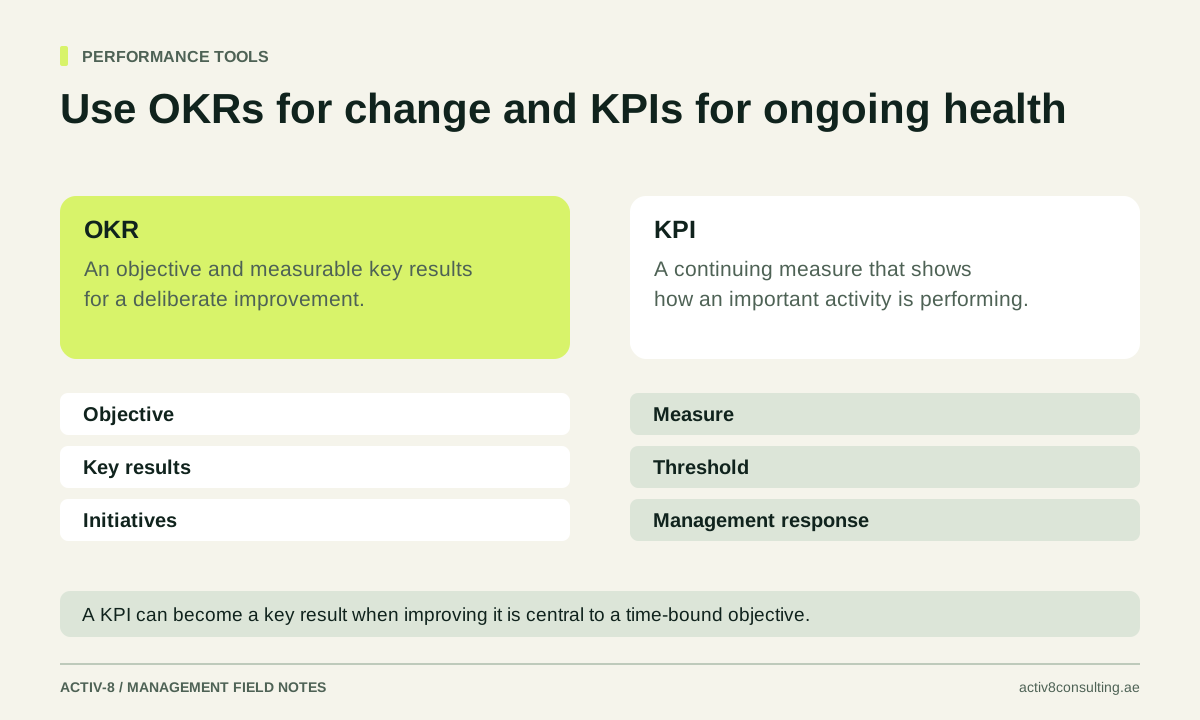
KPIs show how the business is running; OKRs describe a change you want to achieve.
The difference is the question each one answers
KPIs and OKRs can work together, but they serve different purposes. A key performance indicator tracks an important aspect of business performance. An objective and key results describe a change the team wants to achieve within a defined period. KPIs help answer how the business is running; OKRs help explain what the team is deliberately trying to improve.
For a small company, the distinction matters because reporting capacity is limited. If every KPI becomes an OKR and every project becomes a key result, the team can end up maintaining several versions of the same list. The framework should make priorities clearer, not create another layer of administration.
Start with the management need. If leaders cannot see demand, delivery or cash reliably, a small set of well-defined KPIs may be the first priority. If business health is visible but improvement work lacks focus, an OKR can help connect a chosen objective to measurable results. Neither label fixes unclear ownership, unreliable data or an unrealistic workload.
Use KPIs to monitor ongoing business health
A KPI should have a clear definition, source, owner and decision purpose. Examples might include on-time delivery, contribution per completed job, overdue proposals or repeat purchase. The appropriate measures depend on the business model and current risks. A metric is not automatically key because the software makes it easy to display.
Some KPIs describe outcomes, while others provide an earlier signal. A rising queue of overdue proposals may warn of a future sales problem. A decline in first-time completion may indicate rework pressure before it appears fully in the accounts. The relationship should be plausible and tested against experience, rather than assumed because a measure is called leading.
Use the KPI dashboard guide to establish definitions before building charts. Keep targets separate from forecasts and show the denominator for rates where low volume can create misleading swings. A stable KPI can remain useful for years if it continues to support an important decision, even when the business's improvement priorities change.
Use OKRs to describe a purposeful change
An objective describes the improvement sought in clear language. Key results define the measurable evidence that would show progress towards it. An objective such as “make standard customer onboarding dependable” gives direction. Key results might concern completion within the promised time, missing-information incidents and the level of customer effort required.
Google's preserved re:Work guide distinguishes measurable key results from a task list and from employee evaluation. That is a useful starting principle, but a smaller business should not copy every feature of Google's historic approach. Ambitious exploratory goals and firm operational commitments need different treatment. A safety requirement, payroll obligation or customer promise should not be treated casually as a stretch target that is acceptable to miss.
Keep the number of objectives manageable. Each should have an accountable owner, a defined period and enough capacity for the work required. If the team cannot explain what it will stop or postpone to pursue the objective, the OKR may be an additional wish rather than a genuine priority.
See how a KPI can inform an OKR
Consider an illustrative service company whose ongoing KPI shows that only 72% of standard onboarding cases finish within the promised period. The team investigates and finds repeated requests for missing information and unclear ownership between sales and delivery. The KPI has identified a problem, but it does not tell the team how to improve it.
The company sets an objective to make standard onboarding more predictable. It selects key results relating to on-time completion, complete handover information and reduced customer chasing. The exact targets should be based on the baseline, resources and service commitment; the example is not a benchmark for another business.
The initiatives might include a revised intake form, a readiness check and a named onboarding owner. Those are tasks supporting the results. If the form is launched but late onboarding remains unchanged, completing the task is not sufficient evidence of success. This distinction keeps the team focused on whether the customer and business experience actually improved.
Write key results that measure an outcome
A strong key result has a clear measure, starting point, intended change and time boundary. It should be understandable to the people doing the work and feasible to measure. Avoid language such as “improve collaboration” unless you specify an observable result that relates to the objective.
Be careful with activity measures. “Train all managers” can be a useful milestone, but it does not establish that managers can use the new approach. A better outcome measure might check whether routine decisions are made within agreed authority and whether unnecessary escalations fall without an increase in errors. Training completion can remain in the implementation plan as supporting evidence.
Also avoid combining several unrelated outcomes into one key result. “Increase sales, improve margin and reduce complaints” is difficult to own or assess. Separate the measures, explain their relationship and include safeguards where pursuing one could harm another. For example, faster onboarding should be reviewed alongside completeness and customer problems so speed does not become the only definition of success.
Create one review rhythm for both frameworks
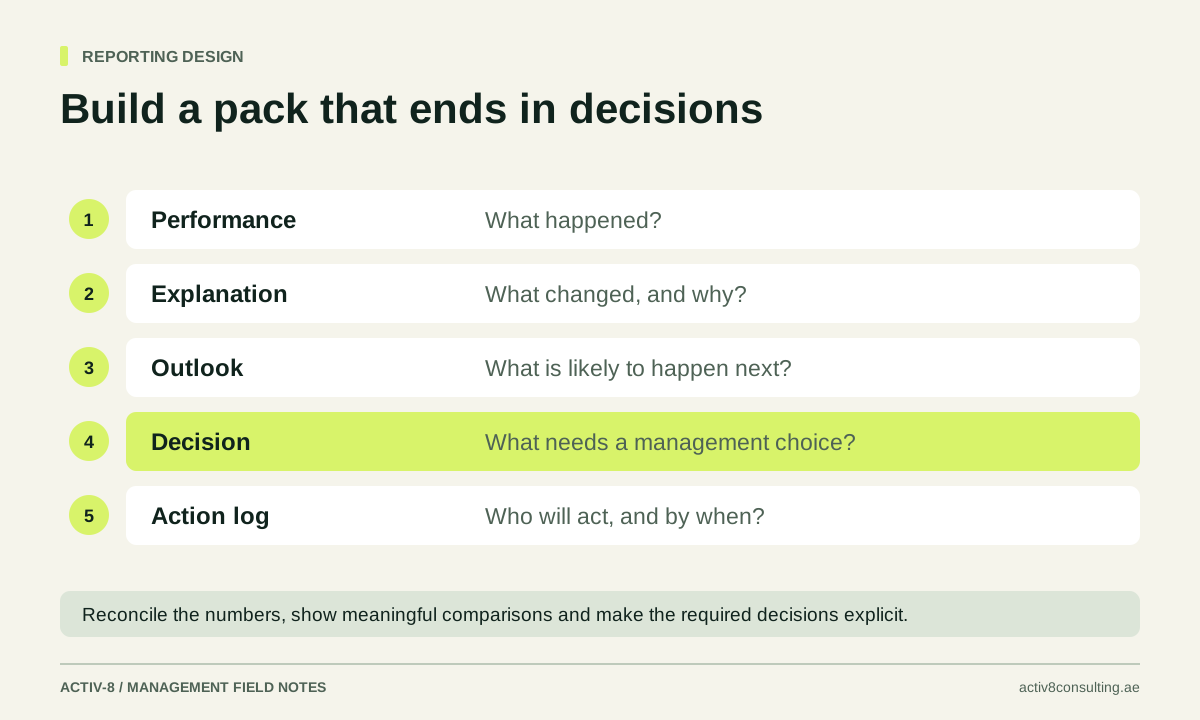
Use the same management review to look at business health and improvement priorities, while keeping their purposes visible. Begin with critical KPI changes and exceptions. Then review progress on the small number of OKRs, the evidence behind the status and the decisions needed to unblock work.
Avoid maintaining duplicate spreadsheets with slightly different definitions. If an OKR uses an existing KPI, reference the same source and calculation. Explain any change in population or period. A quarterly improvement result based on a specific customer cohort should not be compared casually with a company-wide monthly KPI.
Record decisions and ownership rather than lengthy status narration. If a key result is off track, ask whether the issue is the initiative, adoption, the original hypothesis or external conditions. A weekly management agenda can keep this discussion focused. The purpose of the review is to adjust action and resources while there is still time to influence the result.
Avoid turning OKRs into a performance ritual
Common problems include too many objectives, key results that are tasks, targets chosen without a baseline and objectives assigned without authority or capacity. Another problem is using the framework primarily to judge individuals when the result depends on several teams. This can encourage defensive reporting rather than useful learning.
Make the level of commitment explicit. Is the result a firm operating requirement, an expected improvement or an exploratory ambition? Do not allow the terminology to obscure commercial obligations. Discuss how results will be interpreted before the period starts, including what happens when assumptions or priorities materially change.
Keep the system proportionate to the company. A small team may need one shared objective and a few key results rather than a cascading hierarchy for every person. If maintaining the framework consumes more time than making the decisions it supports, simplify it. Clear priorities and evidence matter more than perfect adherence to a fashionable management vocabulary.
Start with one objective and learn from a full cycle
Choose one improvement that matters, establish the baseline and write a small set of measurable key results. Identify the initiatives, owners and resources separately. Run the review rhythm through a complete period and assess both the result and the usefulness of the method.
At the end, explain what changed and why. Continue a health KPI where it remains useful; retire an OKR when the improvement is embedded or the priority has changed. Preserve the lesson rather than automatically carrying every objective into the next quarter.
If your business needs clearer performance information or help connecting measures to action, explore Activ-8 reporting and business intelligence. Bring the current dashboard and improvement list. The practical goal is one coherent management system: reliable indicators for the ongoing business, focused objectives for change and a review that leads to decisions people can carry out.
Sources & further reading
Primary guidance behind the methods discussed. The examples, diagrams and tools in this article are original Activ-8 material.
- Google re:Work: Set goals with OKRs ↗Historical guide, originally published in 2016.
- NIST: Thinking about Performance Measurement ↗
Put the thinking into practice.
Explore reporting and business intelligence Discuss your business with Mark