THE STARTING POINT
A management pack should explain what changed, why it matters and what leaders need to decide.
Build the pack around the leadership decision
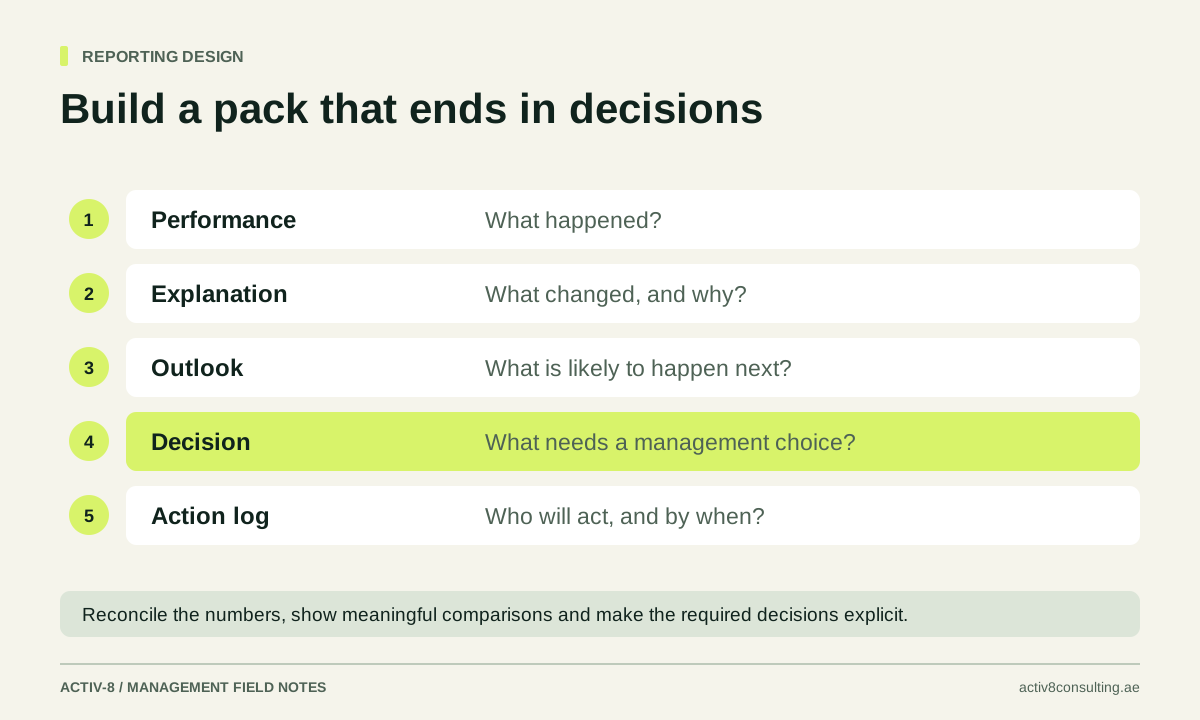
A monthly management reporting pack should explain how the business performed, what changed, what may happen next and which decisions leaders need to make. It should connect financial results with customers, delivery, people and cash. A collection of exported spreadsheets may contain the information, but it leaves the reader to discover the story and reconcile the definitions.
Start with the meeting the pack supports. Who attends, what authority do they have and which decisions are made monthly rather than weekly? A small owner-led company may need a concise pack, while a more complex business may require supporting schedules. The main narrative should remain clear enough that the leadership team can identify the material issues before the meeting.
Decide the reporting cut-off, preparation owner and review process. State whether the figures are final, provisional or based on incomplete records. Timely information with clear limitations can be useful; apparently precise information delivered too late may have little operational value. NIST's performance-measurement guidance makes the same general connection between useful decisions, accuracy and timeliness.
Open with an honest executive summary
Use the first page to explain the main changes, their business implications and the decisions required. Avoid repeating every number in the pack. Focus on material movements, unresolved risks and choices that need leadership attention. A good summary distinguishes facts, interpretation and proposed action.
For example, an illustrative service company might report that revenue increased because of a large project, while contribution fell due to subcontracting and rework. Cash collection may also be slower than planned. The summary should make these connections visible instead of opening with a celebratory revenue headline and leaving the pressure buried in later pages.
Include a short decision list with the question, recommendation, options and timing. If a decision requires more evidence, say what is missing and who will obtain it. This helps the meeting spend time on judgement and action rather than discovering basic context. The weekly management meeting guide provides a complementary rhythm for issues that cannot wait for month-end.
Explain financial performance with the right comparisons
Show actual results against the relevant budget or plan and a useful prior-period comparison. Explain significant differences in revenue, contribution and overheads. Separate volume, price, service mix and cost effects where the records support it. A variance is more actionable when managers understand the driver rather than seeing only that a line is above or below budget.
Use consistent definitions. If contribution excludes certain delivery costs, make that clear and avoid comparing it directly with another measure that includes them. Reconcile the management view to the accounting records where appropriate. Have the finance owner review the treatment rather than allowing operational reports to develop a separate version of financial reality.
Avoid treating a budget as a forecast. The budget records the agreed plan; the forecast should reflect current expectations. Showing both helps leaders see the gap and decide what to change. If an exceptional item distorts the comparison, explain it transparently and show the underlying calculation rather than removing inconvenient costs without a clear rationale.
Give cash its own view
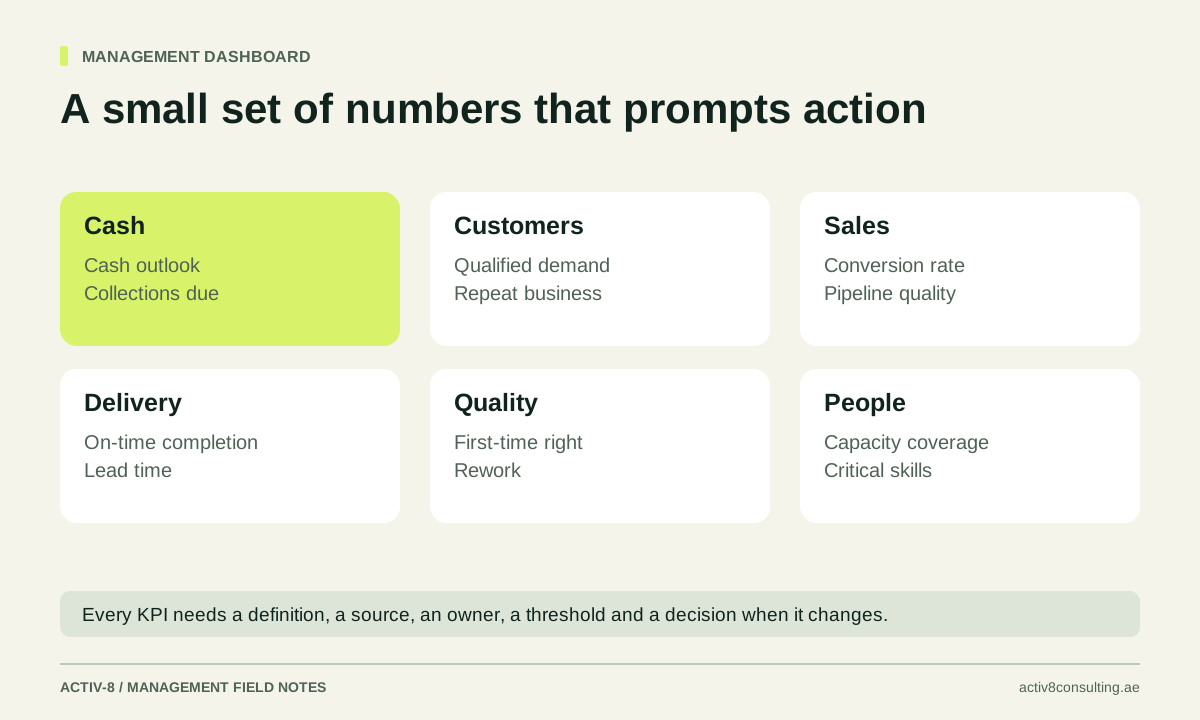
Profit and cash answer different questions. A business can report a profit while money remains tied up in unpaid invoices or while upcoming obligations create pressure. Include opening and closing cash, major receipts and payments, overdue balances and the forward cash outlook relevant to the company's decisions.
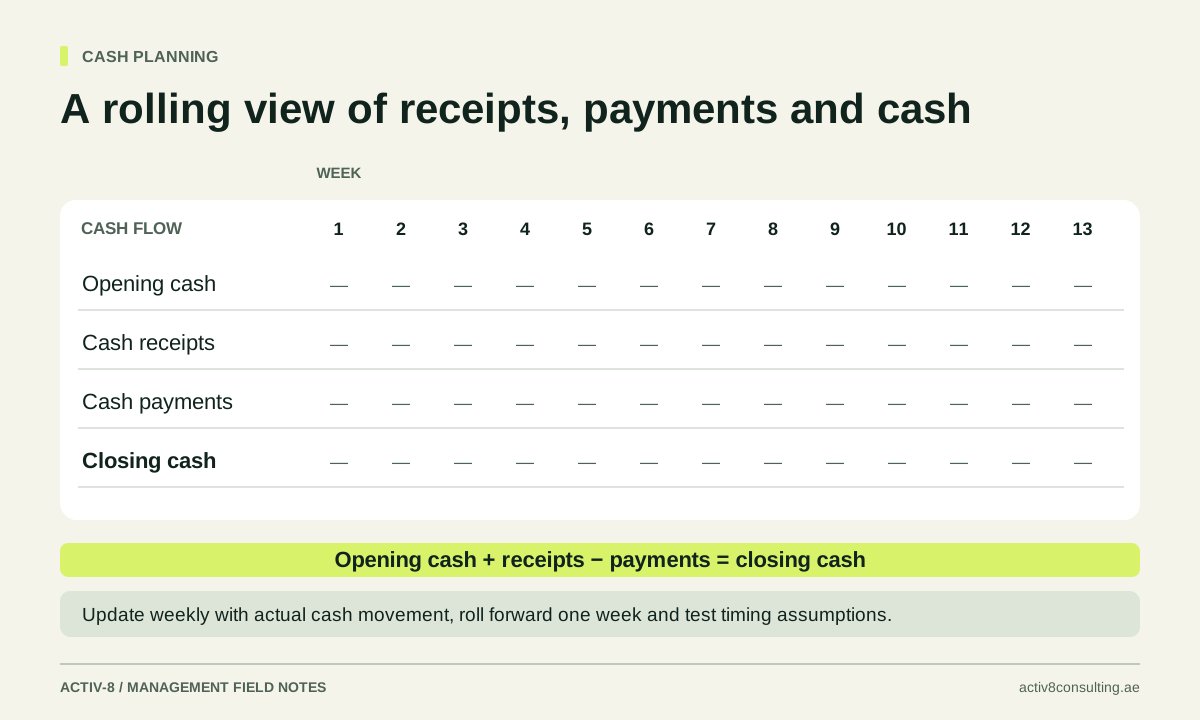
Use the 13-week cash-flow forecast for a closer view of timing. In the monthly pack, highlight the main assumptions and changes rather than reproducing every weekly row. Explain whether a low point depends on delayed customer receipts, an unusual payment or an ongoing mismatch in the business model.
Distinguish confirmed commitments from estimates. Do not assume every overdue invoice will be paid in the next week simply to improve the forecast. Assign collection actions and record the evidence behind expected dates. If the outlook raises material financing or solvency concerns, involve the appropriate qualified adviser promptly. The reporting pack should expose the issue early enough for a considered response.
Connect customers, sales and delivery
Show the commercial pipeline using definitions that reflect actual progress. Separate enquiries, qualified opportunities, proposals and won work. Explain changes in conversion, sales cycle or customer mix. Avoid treating every open opportunity as future revenue without considering stage, timing and the quality of the underlying evidence.
Then connect sold work to delivery capacity and performance. Include the backlog, overdue work, first-time completion or another measure that reflects the service promise. A strong sales month can create operational pressure if the work mix requires scarce skills or customers expect similar completion dates. The capacity planning guide helps test the hours and resource assumptions behind the outlook.
Include customer feedback and complaints where they reveal a pattern. Keep personal details out of broad reporting unless needed and appropriately authorised. A few specific, anonymised examples can explain a problem better than a vague satisfaction score. Show the action being taken and the result expected so the customer section remains part of managing the business rather than a separate marketing summary.
Report improvement work and risks proportionately
For the major improvement priorities, show the intended outcome, current evidence, next milestone, owner and decision needed. Distinguish completed activity from achieved benefit. A new system going live does not establish that staff use it correctly or that the original operational problem has improved.
Include a small number of material risks and emerging issues. Explain the potential effect, existing controls, owner and trigger for action. Link to the full risk register if more detail is required. Repeating the same red status every month without a decision or response plan adds little value.
Review the capacity required by the improvement portfolio. If projects compete with daily delivery, make the trade-off explicit. Leadership may need to defer work, allocate support or change the target. A reporting pack should help make that choice visible, rather than allow each project to report optimism independently while the same managers are expected to deliver all of them.
Create a dependable preparation and review process
Create a one-line quality sign-off for each section: source checked, period confirmed, material variance explained and decision stated. This is not an additional approval hierarchy; it is a preparation checklist that reduces avoidable questions during the meeting. Where a check cannot be completed, state the limitation and the date when it will be resolved.
Assign an owner to every section and agree when source information is available. Build a short quality check covering definitions, reconciliations, dates, units and commentary. Keep a record of material changes to measures so readers understand when comparisons are no longer directly like-for-like.
Distribute the pack with enough time for the intended review, using an appropriate access-controlled location. Ask readers to identify questions before the meeting where practical. During the meeting, focus on decisions, assumptions and actions rather than reading each slide aloud. Record the resulting commitments in one action log with an owner and due date.
After several cycles, review which pages actually supported useful decisions. Remove duplication and improve sections that repeatedly generate confusion. The downloadable pack outline below provides a starting structure, not a fixed requirement. Activ-8 reporting and business intelligence can help connect the data, definitions and management conversation. Bring the existing reports and the decisions that still feel difficult despite having plenty of information.
Before closing each reporting cycle, check whether the previous month's main actions were completed and whether they produced the intended effect. This closes the loop between reporting and management. Without that check, even a well-designed pack can become a monthly description of problems that everyone recognises but nobody resolves.
PUT IT INTO PRACTICE
Management reporting pack worksheet
Use one copy for each reporting period. Add actuals, a meaningful comparison, a short explanation and the decision required. Keep cash separate from profit. Use the final action log to track commitments. Suggested sections are prompts, not a statement about your business.
Download the worksheetCSV file · Opens in Excel or Google Sheets · No sign-up required
Sources & further reading
Primary guidance behind the methods discussed. The examples, diagrams and tools in this article are original Activ-8 material.
Put the thinking into practice.
Explore reporting and business intelligence Discuss your business with Mark