THE STARTING POINT
An allocated accounting loss does not prove that stopping improves the business. Compare what disappears, what remains and what released capacity can realistically earn.
Stop only after comparing what actually changes
A Sharjah business should consider withdrawing a service when it cannot be repaired, narrowed or repriced into a worthwhile use of resources, and the benefits of stopping exceed the costs and customer consequences. First distinguish costs that disappear from costs that remain. A service showing an accounting loss after allocated overhead can still contribute cash towards the business. Removing it without understanding that contribution can make the remaining company worse off.
The decision is about the future portfolio, not whether the service was a good idea when it launched. Review customer needs, delivery capacity, management attention and realistic alternatives. Keep existing commitments visible. A carefully planned withdrawal may be sensible, but it should follow evidence and an orderly transition rather than frustration after one difficult month.
Establish why the service looks unprofitable
Start with a defined service and a clear period. Reconcile its sales, direct delivery costs, rework and any dedicated resources. Identify how shared costs were allocated. A spreadsheet dividing the office rent equally between services may help produce a management report, but it does not mean a third of the rent disappears when one of three services stops.
Check the timing and completeness of the figures. Unbilled work, delayed supplier invoices, customer credits and jobs spanning reporting periods can distort a short snapshot. Look at a representative period and the current workload separately. Avoid using an exceptional project as the only evidence for a permanent portfolio decision.
Ask the delivery team where the work becomes difficult. A service may have a sound underlying offer but poor scope control, repeated travel, unpriced extras or avoidable rework. Those causes suggest different actions. “This service loses money” should lead to an explanation of the mechanism, not immediately to a closure announcement.
Separate avoidable and continuing costs
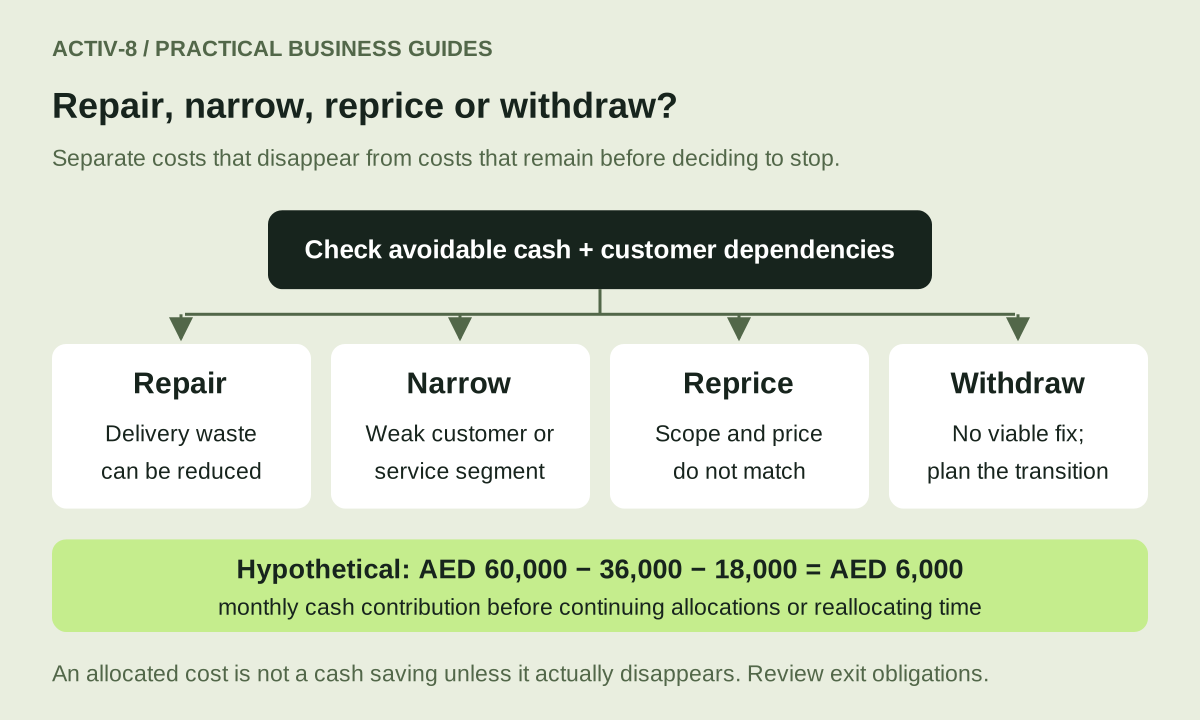
Consider a hypothetical Sharjah business providing a legacy support service. Monthly revenue is AED 60,000. Variable delivery costs are AED 36,000, leaving AED 24,000. Dedicated costs that could genuinely be removed after an orderly exit are AED 18,000. The service therefore contributes AED 6,000 before shared costs that continue regardless of the decision.
If the management report allocates another AED 12,000 of continuing overhead to that service, it shows a loss of AED 6,000. Both calculations can be arithmetically correct while answering different questions. The reported loss describes the allocation method; the AED 6,000 contribution describes what remains towards shared costs under these assumptions.
If the business stops the service, loses all AED 60,000 of revenue and removes AED 54,000 of costs, its monthly result worsens by AED 6,000 before any replacement work or transition effects. This example excludes tax and financing and is not a claim about a real client. Confirm when each cost can actually stop; an apparently avoidable cost may continue for several months.
Value the capacity that would be released
Stopping can still be the better choice if released people, equipment or management time can support more valuable work. But identify a credible use for that capacity. An empty slot in a schedule is not automatically a new sale. Record the demand, delivery requirements and additional costs behind any replacement-service forecast.
Continuing the hypothetical example, suppose the same capacity could generate AED 14,000 of monthly contribution from confirmed replacement demand. Replacing the legacy service's AED 6,000 contribution could improve the monthly result by AED 8,000 once the change is operating as assumed. If transition spending is AED 24,000, simple recovery would take three months after that improvement begins. Delay, ramp-up and collection timing could extend the cash recovery period.
Treat management attention similarly. It can be valuable to remove an offer that repeatedly interrupts more important work, but describe the actual activities released and who will use that time. Do not assign a dramatic financial value to every founder hour merely to justify a preferred decision. Keep non-financial benefits explicit rather than hiding them inside invented precision.
Check customer and service dependencies
Review which customers buy the weak service and what else they buy from you. Does it introduce them to a stronger offer, support a wider relationship or fulfil a practical requirement that they would otherwise source elsewhere? Ask whether they genuinely need the combined arrangement. Do not assume every small service is a strategic loss leader simply because some customers also buy something profitable.
Estimate the effect of withdrawal on the wider relationship using customer evidence. A customer may accept a trusted alternative provider, a narrower service or a planned end date. Another may need a complete package and reconsider the account. Keep uncertain outcomes as scenarios rather than treating all related revenue as automatically lost or automatically safe.
For a Sharjah operation serving customers in several emirates, examine the actual pattern of work. A small number of distant, bespoke jobs might consume more coordination than a repeatable local package. That is a reason to assess the relevant delivery segment, not evidence that customers in any particular emirate are inherently less worthwhile.
Compare four practical choices
Repair means addressing a specific delivery problem while retaining the service. Examples include agreeing scope before work begins, reducing rework or scheduling similar jobs together. Assign an owner and a test period. A general instruction to “be more efficient” is not a repair plan because it does not identify the behaviour or process that will change.
Narrow means serving a smaller, better-defined requirement. You might retain a standard package while declining unusual extras that repeatedly create exceptions. Check that the remaining offer is still useful and can be described honestly. Removing the difficult parts may also remove the feature that customers valued, so test the proposed scope with suitable customers.
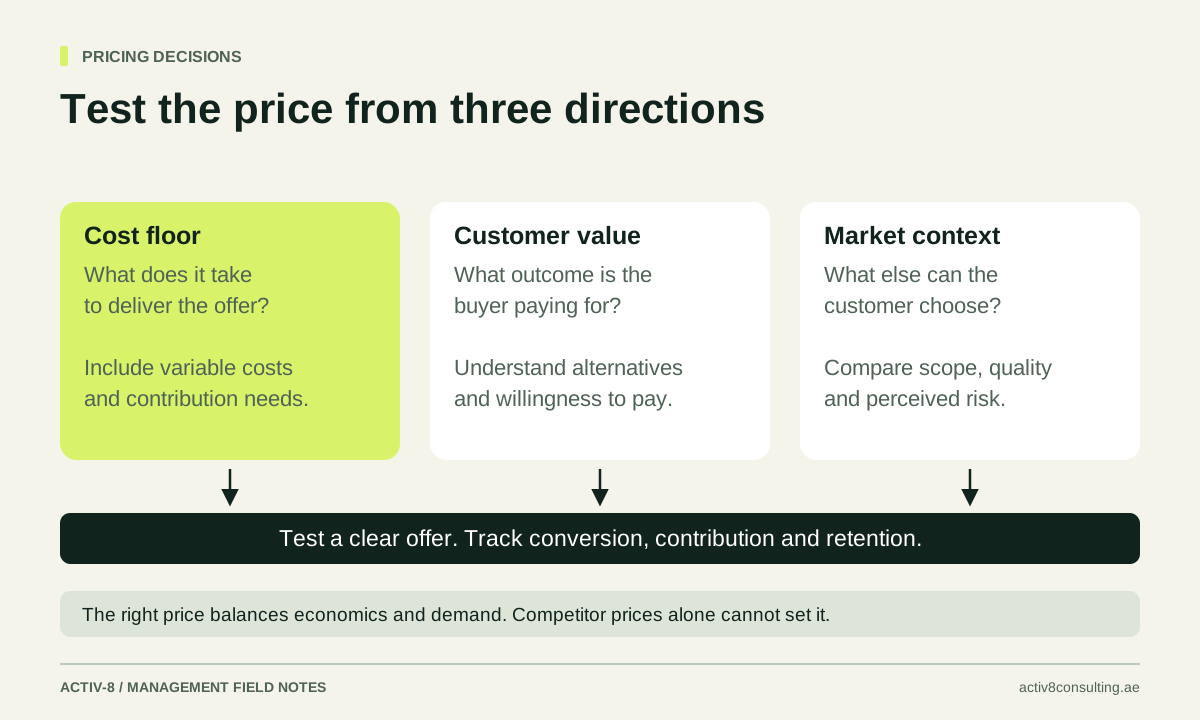
Reprice means changing the commercial terms of future work where appropriate. Explain what the price includes and how variations are handled. Our pricing strategy guide helps frame that discussion. Do not assume every customer will accept a higher price or that existing commitments can simply be rewritten.
Withdraw means ending the service through a managed transition. Compare the timing, resources, customer impact and expected result of that choice with the other three. Where contract, employment or regulatory questions arise, obtain advice for the actual commitments before acting. The portfolio analysis identifies the business decision; it does not determine legal rights or obligations.
Design a fair repair test
If there is a plausible improvement, define the minimum evidence that would justify continuing. For example, a narrower service package might need to produce the required contribution, stay within planned delivery hours and avoid recurring scope disputes. Set the review date around a meaningful set of completed jobs rather than an arbitrary short deadline.
Record the starting point, specific change and exceptions. Keep the quality standard visible. Cutting time by leaving work incomplete does not improve the service. Ask whether results would remain acceptable without the founder personally rescuing every job. A pilot that relies on unrecorded overtime or favours from suppliers may not describe a sustainable offer.
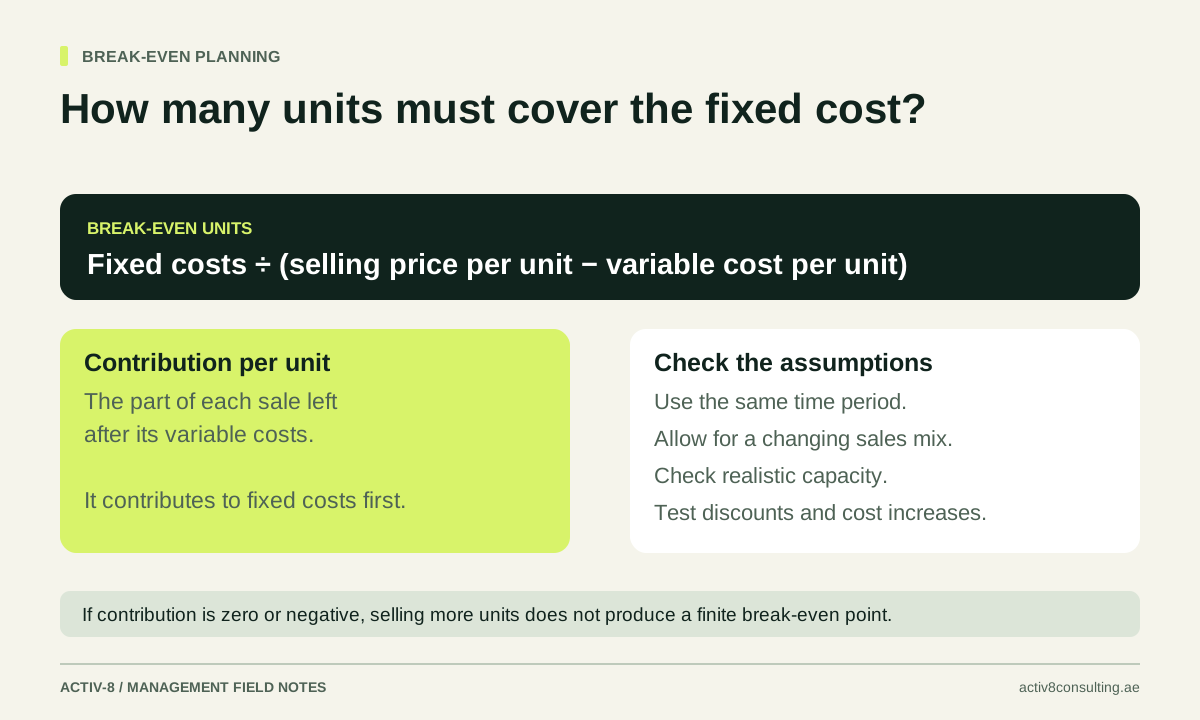
Use the break-even calculator for supporting arithmetic when its assumptions fit. Keep the exit decision broader than one threshold. Customer dependencies, scarce capacity and continuing costs still matter. Agree the test's stop rule so that a temporary experiment does not become an indefinite subsidy without a fresh decision.
Plan withdrawal as customer work
If withdrawal is the chosen route, list the open jobs, future bookings, customer commitments, supplier dependencies and records that must be retained. Assign an owner and completion evidence to each item. Decide when to stop taking new work and how remaining enquiries will be handled. Remove or revise website promises at the appropriate point so the sales process matches what delivery can provide.
Prepare clear customer communications explaining the practical change, relevant dates and available next steps. Check any alternative provider before presenting a referral as a solution. Do not promise continuity on another business's behalf. Give the team a consistent explanation and a route for handling customers whose circumstances do not fit the standard transition.
After the exit, check whether the intended costs actually stopped and whether replacement capacity was used. Compare the result with the assumptions in the decision record. Our business growth strategy guide can help connect the freed resources to the next priority. The learning matters even when the decision to stop remains correct.
Make the decision traceable
Use the downloadable service-continuation worksheet to compare repair, narrowing, repricing and withdrawal. Separate continuing overhead, avoidable costs, transition spending and replacement contribution. Add the customer dependencies, evidence gaps, decision owner and review date. Replace the hypothetical figures with your own records and retain the assumptions alongside the conclusion.
For help making the comparison, request an Activ-8 service-portfolio review. Bring the offer, recent delivery examples, customer commitments and cost assumptions. The aim is a decision the business can explain and carry out, whether that means improving a useful service or making room for something better.
PUT IT INTO PRACTICE
Service continuation review worksheet
Separate avoidable costs from continuing overhead. Compare repair, narrowing, repricing and withdrawal, including customer dependencies, transition costs, evidence and the decision owner.
Download the worksheetCSV file · Opens in Excel or Google Sheets · No sign-up required