THE STARTING POINT
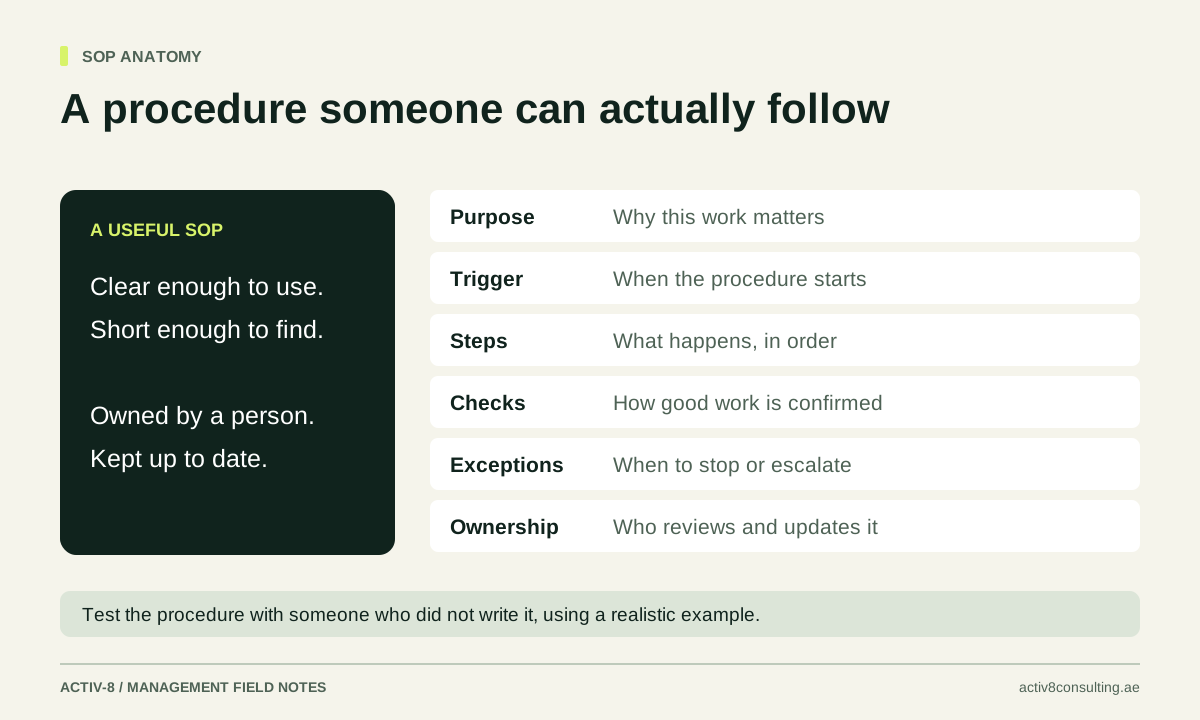
An SOP should help the next person do the work safely and consistently without guessing.
Write for the person doing the work
A standard operating procedure, or SOP, explains how a recurring task should be completed. Its purpose is to reduce guessing, make important controls clear and help people produce a consistent result. The best format is the one the intended user can follow at the point of work, not necessarily the longest or most formal document.
Start with a task that happens often enough to justify documentation and has a reasonably stable method. Examples include checking a new customer brief, preparing a quotation, approving a supplier invoice or closing a completed job. Do not try to document an entire department in one procedure. A clear start and finish make the instructions easier to write, test and maintain.
The downloadable worksheet below is an original service-business template. It includes purpose, trigger, owner, inputs, steps, checks, exceptions and review details. It is a management tool, not a claim of certification or a substitute for specialised safety, legal or regulatory procedures that your activity may require.
Define the trigger, output and responsibility
Describe what starts the task. “When a new customer enquiry arrives” may still be too broad if several enquiry types follow different routes. A more useful trigger might be a qualified request for a standard service with the required information attached. Make the boundary clear so staff know when to use this SOP and when another process applies.
Define the output and who receives it. A quotation procedure might end with an approved quotation sent to the customer and a follow-up date recorded. Simply saying “quotation completed” leaves room for important steps to be missed. State what a satisfactory result contains and where the record is stored.
Name the process owner and the role performing each step. These may be different people. The owner maintains the method and resolves recurring issues; the operator performs the task. Include a substitute or escalation route where absence would otherwise stop the process. Responsibility should be clear enough that an unusual case does not circulate between inboxes while everyone assumes someone else is dealing with it.
List the information and access required
Identify the inputs needed before work begins. These might include customer details, confirmed scope, approved pricing, a job reference or evidence of delivery. Explain where the current version is found. Avoid instructions that depend on an unnamed spreadsheet on somebody's desktop or a conversation that only one employee remembers.
Check system access and permissions. A new starter cannot follow a procedure that requires a screen they cannot see or an approval they are not authorised to give. The SOP should identify the required role and the route for requesting access, without exposing passwords or embedding sensitive information in the document.
Also describe what to do when an input is missing or unreliable. Staff should not have to choose between inventing information and silently abandoning the task. For the quotation example, the procedure might require returning an incomplete brief to the enquiry owner with the missing items listed. Record the status and next action so the customer request remains visible while the information is collected.
Write steps as observable actions
Use short, direct instructions in the order the work occurs. Each step should tell the user what to do and, where necessary, what to check before proceeding. “Ensure quality” is not an actionable instruction. “Compare the service dates and scope with the approved brief before sending the quotation” is much easier to follow and verify.
Include decision points explicitly. If a quotation falls within an approved range, the account manager may send it. If it exceeds the range or includes a non-standard commitment, it may require review. The actual boundaries must come from your authorised business rules; a template should not invent them for you.
Use screenshots sparingly and only where they resolve genuine ambiguity. Label them and remove unnecessary personal or commercial information. Screenshots become outdated when software changes, so avoid making the whole procedure dependent on them. A process description based on purpose and decisions is often more durable than a long sequence of instructions about where to click.
Build checks and exceptions into the procedure
Controls should address a real risk or recurring failure. A quotation check might confirm the recipient, scope, price, validity and approval status. Decide which checks are performed by the operator and which require another person. Requiring a second approval for every minor action can create a bottleneck without proportionate benefit.
Describe common exceptions and escalation triggers. What happens if the customer changes the scope after approval? What if a price is missing, a system is unavailable or the deadline cannot be met? Give staff a safe route and an owner for the decision. An exception section is particularly valuable when the procedure would otherwise work only for the easiest cases.
Keep evidence requirements proportionate. Record enough to show that important steps occurred and to investigate failures, but avoid unnecessary duplication. If approval is already recorded reliably in the system, another manual log may add effort without useful control. The delegation matrix guide helps clarify which decisions can remain with the operator and which need escalation.
Test the draft with real users and cases
Ask someone who did not write the SOP to follow it using a representative example. Observe where they hesitate, ask questions or use knowledge that is not in the document. This is a test of the instructions, not an examination of the employee. Their difficulties reveal where the procedure needs clarification or the process itself needs redesign.
Include at least one common exception in the test. A procedure that works for a complete standard brief may fail when a customer changes a requirement or information arrives late. Check whether the escalation route is practical and whether the receiving manager has enough context to decide.
The US EPA's SOP guidance discusses testing, approval and version control for recurring work. Those principles are useful here, although its environmental quality context is not a UAE compliance rule. Apply them proportionately: confirm the method works, approve it through the appropriate internal owner and make the current version easy to identify before expecting the whole team to rely on it.
Control the version and improve it over time
Every SOP needs a title, owner, version, approval date and review arrangement. Store it somewhere staff can access during the task. Make obsolete versions clearly unavailable for routine use while retaining any records required by your business's own obligations. A procedure cannot provide consistency if three different versions circulate in email attachments.
Define what triggers review. Changes in systems, services, approval rules or recurring errors may require an update before the scheduled review date. Keep a short change history explaining what changed and why. Inform affected users and provide practice where the new method is materially different.
After rollout, check adoption and the outcome. Are people using the procedure? Does it reduce the intended error or delay? Are workarounds signalling a practical problem? Use those observations to improve the method rather than simply adding more instructions. For help turning undocumented knowledge into workable processes, explore Activ-8 operations consultancy. Bring one recurring task and a few recent examples; that is usually a better starting point than an ambition to document everything at once.
Before publishing your first SOP internally, remove any step whose purpose nobody can explain and verify any shortcut that bypasses a necessary control. This final review often makes the document both shorter and safer. The goal is enough guidance for dependable work, with room for authorised judgement when the standard route does not fit.
PUT IT INTO PRACTICE
Standard operating procedure template
Use one copy for one procedure. Name the procedure and its owner in the document-control row. Replace prompts with practical instructions. Add or remove numbered steps as needed, then test the procedure with someone who did not write it. The sample handover step is illustrative.
Download the worksheetCSV file · Opens in Excel or Google Sheets · No sign-up required
Sources & further reading
Primary guidance behind the methods discussed. The examples, diagrams and tools in this article are original Activ-8 material.
- US EPA: Guidance for Preparing SOPs ↗2007 guidance on documenting recurring work; not a UAE regulatory requirement.