THE STARTING POINT
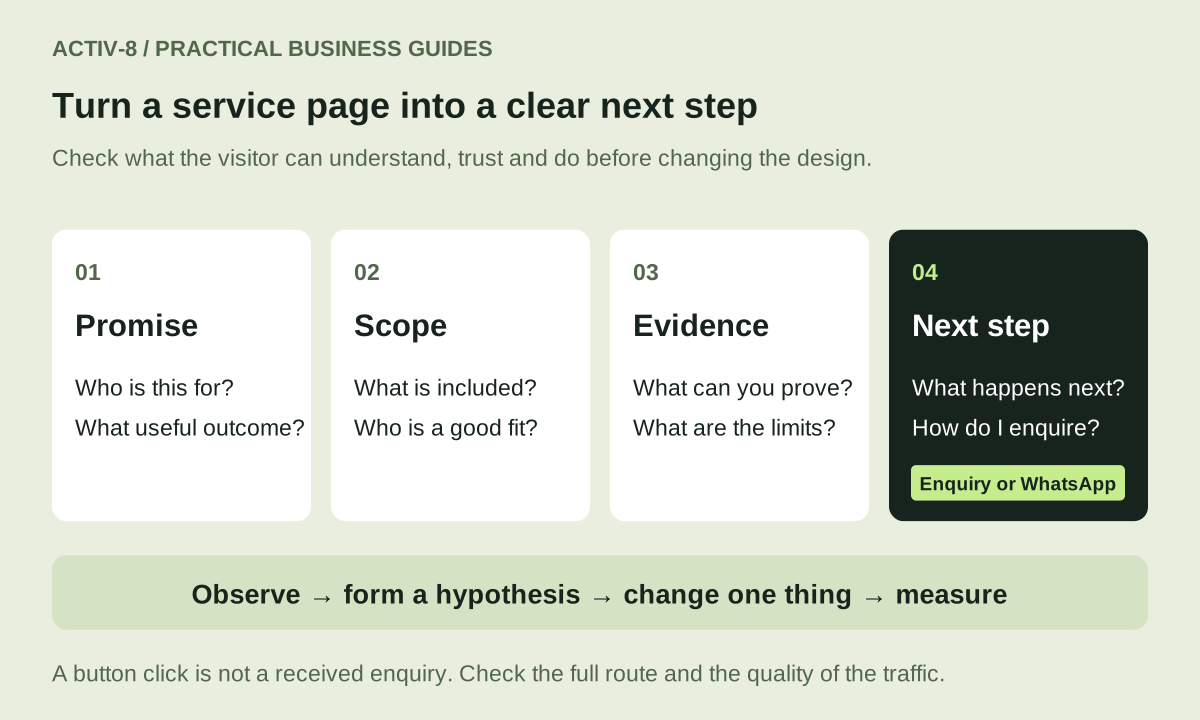
Trace one service page from its original promise to a confirmed enquiry. Fix an observed problem and measure qualified outcomes, not button clicks alone.
Diagnose the gap before buying more traffic
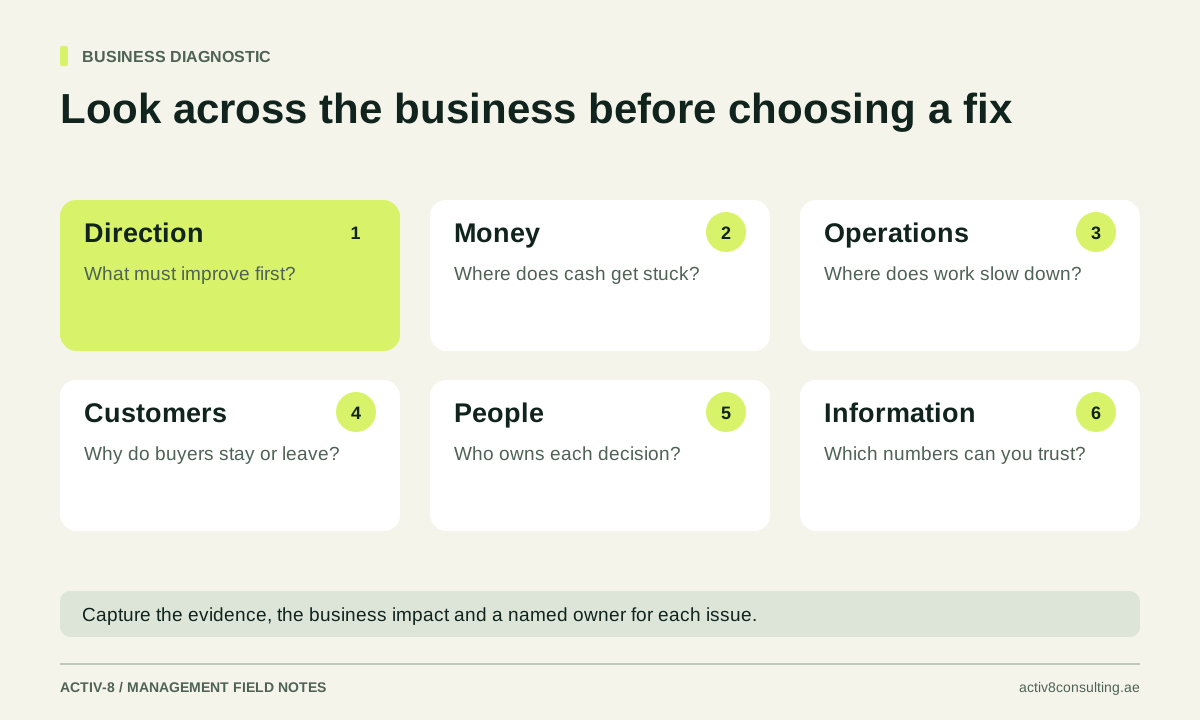
A UAE service website can attract visitors without producing suitable enquiries because the visitors want something different, the page leaves important buying questions unanswered, the evidence is weak or the contact route is difficult. Measurement can also be wrong. Start with one commercially important service page and trace a visitor's route from the original promise to a confirmed enquiry and a recorded sales outcome. Fix the earliest demonstrated problem in that chain.
Do not assume that every visit is a potential buyer or that a low enquiry count proves the design is poor. An educational guide may attract researchers. A service page may attract applicants, suppliers or customers outside the area you serve. Those visits have different implications. The useful task is to distinguish unsuitable demand from suitable buyers who encounter avoidable friction.
Check what the numbers actually count
Choose a period and define the population before calculating a rate. Visits to one service page are different from visits across the entire website. Sessions, users, page views and button clicks are different measures. Write down which one you are using and why. Keep the definition consistent when comparing the next period.
Check a genuine or clearly labelled test enquiry from the page through to the receiving system. Confirm that the message arrived, required details were retained and someone could act on it. A click on a contact button does not prove a message was sent. A WhatsApp link opening also does not establish that the visitor completed a conversation or became a qualified prospect.
Google distinguishes general form-submission measurement from events representing the particular action important to your business. Its key-event guidance explains how to focus reporting on a specific lead form. Configure your measurement around the confirmed result you intend to count, then test it. Respect consent choices and recognise that consented analytics may not represent every visitor or every enquiry.
Compare the promise with the destination
Look at the message immediately before the visit: a search result, an advert, a referral link or a social post. Then read the opening of the destination page. Does it answer the same question? A visitor expecting help with a stalled CRM implementation may struggle with a generic page about transforming businesses, even if the consultancy offers the right expertise.
Make the opening specific enough to establish relevance. Name the customer problem, the kind of business you serve and the practical outcome of the work. Explain any material geographic boundary. A Dubai-based team serving the wider UAE should distinguish work it can deliver remotely from visits that need arranging, rather than implying an identical local presence everywhere.
Review the page against real enquiry language, using anonymised examples where appropriate. Buyers may describe missed follow-up, slow quotations or unreliable reporting rather than the formal service category. Your wording should connect that problem to the service without forcing the reader to translate a list of capabilities into their own situation.
Answer the questions that block a decision
A useful service page helps a suitable buyer understand what happens next. Explain typical scope, what the client needs to provide, how the work is structured and what the first conversation is for. You do not need to publish a fixed price for a bespoke engagement, but you should explain what affects the scope and proposal.
Check whether the page leaves the visitor guessing about fit. Can a smaller owner-led business enquire? Is implementation included or does the engagement end with recommendations? Who leads the work? What information should the visitor bring? These answers reduce the effort of starting a sensible conversation without promising that every requirement can be solved.
Remove unsupported certainty. “Guaranteed growth” is less useful than a clear explanation of the work, decisions and evidence involved. If pricing depends on team size, systems or data quality, say so. The page should help someone decide whether a conversation is worthwhile, rather than generate enquiries through expectations the delivery team cannot meet.
Put relevant evidence near the claim
Evidence should explain why the reader can trust the specific service. A case study is stronger when it identifies the starting problem, work delivered, period and outcome clearly. Keep achieved results separate from future targets, and explain the basis of financial figures. Do not turn a client's ambition into a result or imply that one success guarantees another.
If there is no directly comparable case study, show the method honestly. A sample process map, an anonymised reporting structure or a clearly labelled illustrative decision framework can help the buyer understand the deliverable. Do not invent a customer testimonial to fill an empty proof section. A modest, specific example is more credible than an impressive unsupported claim.
Match evidence to the page. A sales-process enquiry may benefit from seeing how ownership, follow-up and reporting connect. A broad founder biography may support trust but still leave that delivery question unanswered. Place the most relevant explanation where the buyer encounters the corresponding promise, with an optional link to the fuller story.
Test contact friction on a real phone
Try the contact route as a visitor would, including on a small screen. Check the menu, buttons, labels, keyboard, error messages and confirmation. Ensure the visitor can understand what information is required before completing the form. A field that appears optional but rejects an empty value creates avoidable frustration.
Ask only for information that helps the first response or qualification decision. Requiring a detailed financial history before a short introductory conversation may be disproportionate. Equally, a form collecting only a name may force unnecessary follow-up. Explain the purpose of useful questions, such as company, location, challenge, timing and an appropriately framed budget range.
Offer a sensible alternative when the main route fails. If you provide WhatsApp, make the number and purpose clear, and verify the link opens the intended conversation. Explain how an enquiry will be handled without promising an instant response unless the business can deliver one. The contact route must work when optional analytics is declined.
Separate enquiry quantity from enquiry quality
Consider a hypothetical example with 1,000 comparable service-page sessions in a month. The business receives 20 confirmed enquiries, of which five meet its agreed qualification criteria. The enquiry rate is 2%, while the qualified-enquiry rate is 0.5%. Those calculations use the same session denominator; they are illustrative, not UAE benchmarks or targets.
After a page change, suppose there are another 1,000 comparable sessions, 15 enquiries and eight qualified enquiries. The overall enquiry rate falls to 1.5%, but the qualified-enquiry rate rises to 0.8%. That might be commercially useful, depending on sales outcomes and handling cost. It would be misleading to describe the change solely as a fall in conversion or solely as a proven improvement in profit.
Define qualification before evaluating the result. Service fit, location, timing and a credible buying requirement may matter, but use criteria suitable for your business. Record pending decisions separately from unsuitable enquiries. Keep the relationship between anonymous page metrics and CRM records explicit; they may not match perfectly because of consent, attribution gaps and repeated visits.
Run one clear improvement test
Write a short hypothesis: “Suitable visitors cannot tell whether implementation is included, so we will clarify delivery scope beside the primary enquiry button.” Specify the change, the observation supporting it, the comparison period and the outcome you will review. Avoid rewriting the offer, replacing images, changing the form and altering traffic sources simultaneously if you want to learn which change helped.
Use comparable periods and note changes in campaign mix, seasonality, availability or pricing. Small enquiry counts can fluctuate substantially, so treat an early result as directional rather than conclusive. Read the actual enquiries alongside the percentages. A clear misunderstanding corrected in several conversations can be useful evidence even before the dataset supports a strong numerical conclusion.
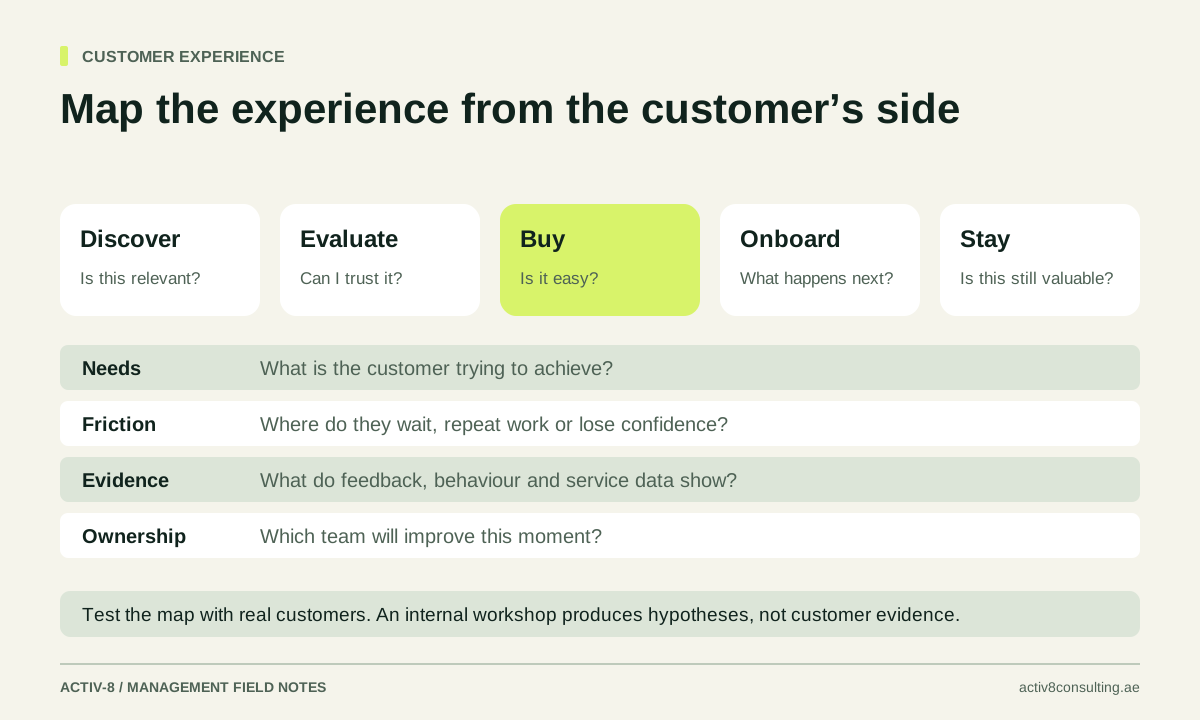
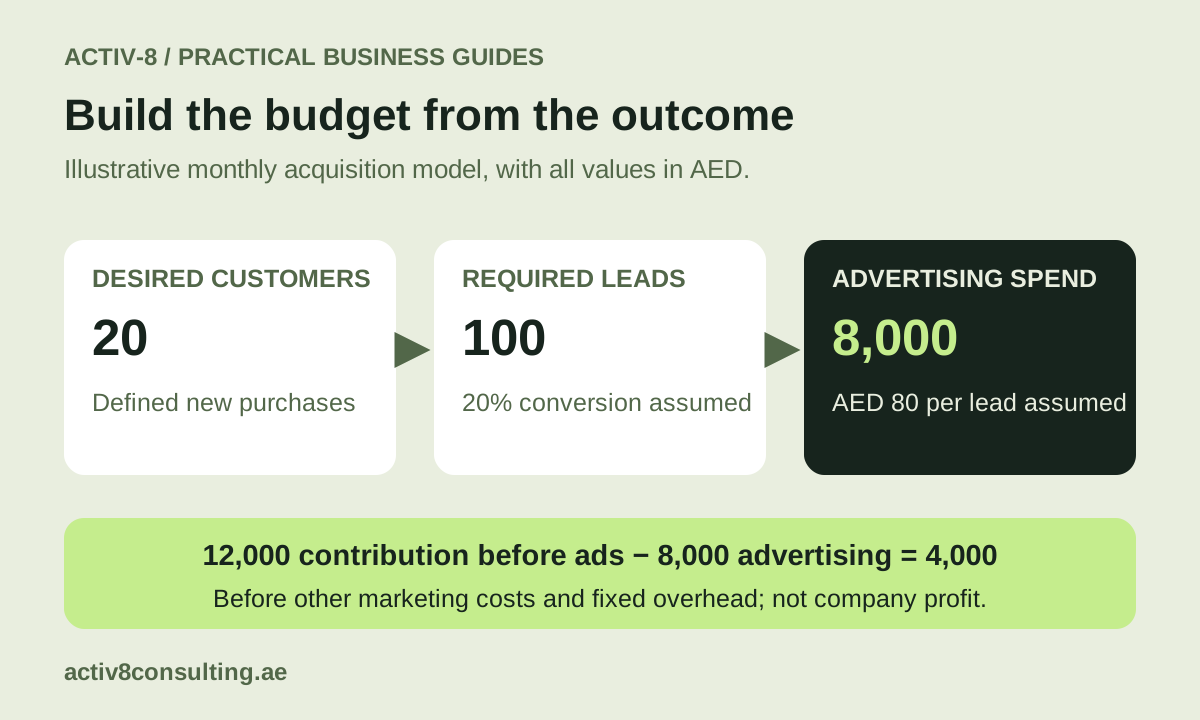
Our customer journey mapping guide helps connect the page to the steps before and after it. The Dubai service-business marketing budget guide addresses spending decisions once the route is understood. Neither replaces testing that this particular page helps the intended buyer reach your team.
Use a friction scorecard, then choose the next action
The downloadable worksheet records the page promise, buyer questions, evidence, contact route and measurement. For each issue, distinguish an observed fact from a hypothesis and identify one proposed test. Do not manufacture a precise score where nobody has inspected the journey. Leave unknowns visible and assign an owner to investigate them.
If the page continues to attract interest without suitable conversations, review it with Activ-8. Bring the specific page, its main traffic sources and a small anonymised sample of enquiry outcomes. That makes it possible to discuss relevance, trust, friction and lead quality together, without assuming that more traffic or a visual redesign is automatically the answer.
PUT IT INTO PRACTICE
Service-page friction scorecard
Inspect one service page. Separate observations from hypotheses, identify one test, and record the comparison period, confirmed enquiries and qualification criteria.
Download the worksheetCSV file · Opens in Excel or Google Sheets · No sign-up required
Sources & further reading
Primary guidance behind the methods discussed. The examples, diagrams and tools in this article are original Activ-8 material.
- Google Analytics: measuring key events ↗Official guidance checked 14 October 2026. The diagnostic framework and examples are Activ-8 editorial material.