THE STARTING POINT
Work back from a defined customer target, test the downside and fund demand the business can profitably deliver.
Work backwards from customers and contribution
A Dubai service business should set its marketing budget by connecting the number of customers it wants to acquire with conversion, acquisition cost, contribution and delivery capacity. A fixed percentage of revenue may be convenient, but it does not tell you whether the proposed spending can produce commercially useful work. Begin with the outcome and the economics of serving it.
Choose a specific period and service. “Grow the business” is too broad to budget. “Acquire twenty additional customers for this defined package next month” gives you something to model. Check that the team can serve those customers and that the package has a clear contribution after the costs of delivering it.
Then distinguish a planning assumption from evidence. Your expected cost per lead and lead-to-customer conversion rate should come from relevant observations where possible. If you are testing a new offer or audience, uncertainty is higher. Use scenarios and a limited learning budget rather than presenting one optimistic calculation as a reliable forecast.
Define the customer you want to acquire
Decide what counts as a new customer for the budget. An enquiry, a booked call, an accepted quotation and a completed paid service are different events. If your objective is completed first purchases, the conversion rate in the model must connect leads to that event, not stop at a convenient intermediate stage.
Keep the service and customer group sufficiently consistent. A low-priced introductory visit and a substantial recurring contract can have very different buying processes and contribution. Combining them into one average may hide the fact that most leads relate to the smaller offer while the budget assumes the economics of the larger one.
State whether existing customer purchases are included. For an acquisition budget, keep them separate so you can see the cost of bringing in genuinely new customers. Existing relationships can still be an important growth route, but mixing them into paid acquisition results makes it harder to judge which activity produced the outcome.
Build the basic lead and spend calculation
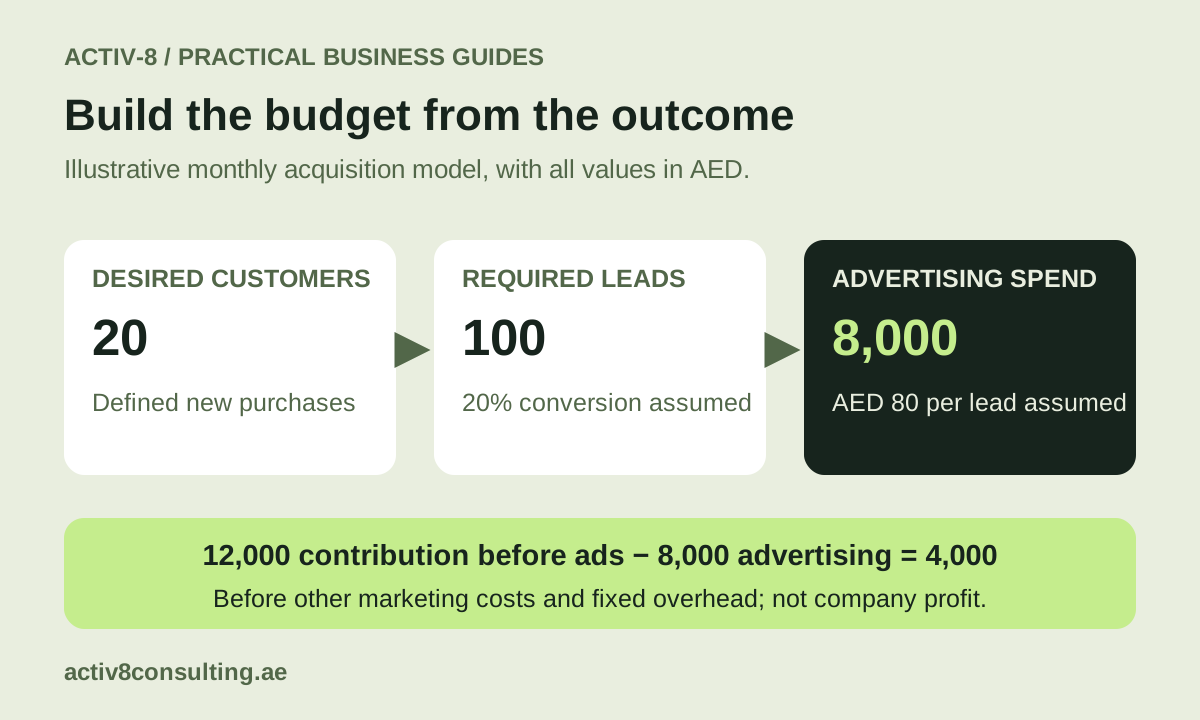
The calculator below starts with desired new customers, lead-to-customer conversion, expected cost per lead in AED and contribution per new customer before marketing. Required leads are desired customers divided by the conversion rate, rounded up to a whole lead. Indicative advertising spend is those required leads multiplied by expected cost per lead.
For an illustrative Dubai business, twenty desired customers at a 20% lead-to-customer rate require one hundred leads. At an assumed AED 80 per lead, indicative advertising spend is AED 8,000. If each new customer contributes AED 600 before marketing, twenty customers produce AED 12,000 contribution before advertising and AED 4,000 after that advertising spend.
The implied advertising cost per acquired customer is AED 400. These are planning numbers, not UAE market benchmarks or guaranteed campaign results. Rounding the required leads does not make customer outcomes certain. Real conversion varies, and the business may need to wait for the full sales cycle before knowing what a group of leads produced.
Understand what the calculator leaves out
Contribution per new customer should deduct the variable cost of delivering the assumed purchase but exclude the marketing spend being calculated. Otherwise you risk subtracting the same advertising cost twice. Use a clearly defined value for the same period and service as the acquisition objective.
The calculator shows contribution after indicative advertising spend, not company profit. Additional creative production, agency support, sales labour, systems or other campaign costs may still need to be included in your full decision. Some are incremental and some may already be part of your fixed operating base; keep the distinction visible.
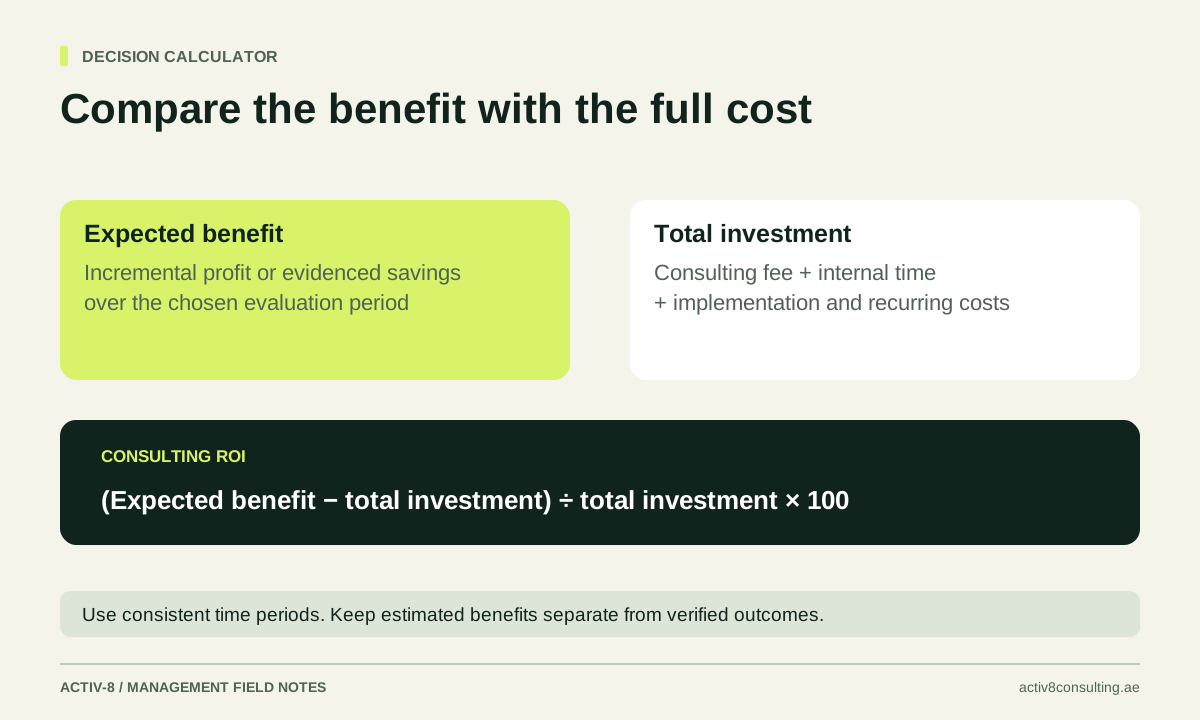
Do not insert an optimistic lifetime value when the business needs first-purchase cash to fund delivery. If future repeat purchases support the case, model their timing and uncertainty separately. The consulting ROI guide provides a broader approach to separating investment, benefits and assumptions when assessing a commercial improvement project.
Test a downside before choosing the budget
Keep the same illustrative target of twenty new customers and AED 80 cost per lead, but reduce conversion to 10%. The model now requires two hundred leads and AED 16,000 advertising spend. At AED 600 contribution per customer, the AED 12,000 contribution before advertising leaves a shortfall of AED 4,000 after the advertising cost alone.
That is a different question from holding the budget at AED 8,000. At that fixed spend and AED 80 per lead, you still expect one hundred leads. A 10% conversion assumption would produce ten customers and AED 6,000 contribution before advertising, leaving a shortfall of AED 2,000. Be clear whether you are fixing the customer target or the budget.
Test the inputs that are least certain, including lead quality, conversion timing and delivery cost. A small change in several assumptions can matter more than a large change in one. Decide what evidence would cause you to pause, revise the offer or increase spending before the campaign begins.
Check whether the business can handle the demand
Marketing can create enquiries faster than a service team can respond or deliver. Review enquiry handling, quotation capacity and the actual service schedule. If each additional customer needs three hours of scarce specialist time, twenty customers require sixty hours that must exist somewhere in the delivery plan.
Capacity constraints can also affect conversion. A prospect who cannot obtain a suitable appointment may choose another provider, even if the advertising attracted the right person. Increasing spend without addressing that constraint can raise acquisition cost while the headline lead count improves.
Review follow-up before assuming that more leads are the answer. The guide to fixing sales follow-up before buying more leads helps identify missed commercial opportunities in the current process. A better response and clearer next action may change the budget requirement without changing the advertising offer itself.
Separate learning spend from scaling spend
A new campaign may first need to answer whether the audience understands the offer, whether enquiries fit the service and whether the team can convert them. Set a bounded test with a clear learning question. Do not judge it solely against a mature campaign's economics, but do not exempt it from commercial discipline either.
Agree what data will be collected and when the decision will be reviewed. Follow the same group of leads through the sales process so late conversions are not lost. Record the time between enquiry and purchase. A campaign with a longer decision cycle cannot be evaluated fairly from the first few days of lead costs alone.
Increase spending only when the evidence and capacity support the next step. Cost per lead and conversion can change as spend expands, so a small test does not prove that a much larger budget will behave identically. Scale in reviewable stages and keep the assumptions current.
Set a spending pace that matches your review window. If the service has a lengthy sales cycle, spending the entire test budget before the first customers can complete that cycle leaves little room to learn. Reserve a defined portion for the next decision instead of treating an approved budget as an obligation to spend it immediately.
Use one budget that joins marketing and operations
Bring marketing, sales and delivery into the same budget conversation. Marketing should understand which customers and services the business wants. Sales should understand the qualification and follow-up commitments. Operations should confirm the capacity and cost assumptions behind the commercial target.
Track the movement from spend to leads, customers and contribution with consistent definitions. Where attribution is uncertain, say so. An increase in total sales after a campaign starts does not prove that every additional sale came from that campaign. Combine campaign records with the wider business view when deciding what to fund next.
Activ-8 marketing strategy support helps build a budget around a specific growth decision. Bring your service economics, available capacity and recent enquiry outcomes. The result should be a spending plan with clear assumptions and review points, so you can decide when to learn, when to improve the process and when the business is ready to scale.
TRY IT WITH YOUR NUMBERS
Marketing budget scenario calculator
Work backwards from a customer target using your own conversion, lead cost and contribution assumptions. These example inputs are not market benchmarks.
Expected outcomes are uncertain. Contribution excludes advertising here but must already deduct the variable costs of serving the customer. The remainder is before fixed costs and other acquisition costs, so it is not net profit. Check fulfilment capacity and the cash needed before spending.
How this calculation works
Required leads = customer target ÷ lead-to-customer conversion, rounded up. Advertising spend = leads × cost per lead. Contribution after advertising = customers × contribution per customer − advertising spend.
Your inputs stay in this page and are not sent to Activ-8. Download the scenario if you want to keep it.
Discuss what this means for your business ↗