THE STARTING POINT
Compare two concrete uses of the same capacity. Higher forecast revenue does not automatically make an adjacent service the better choice.
Improve the core unless the new offer passes a stronger test
For an established Dubai service business, improving the existing offer is usually the more defensible starting point when customers already buy it, delivery works and there is a specific constraint to remove. Add a new service when you can show who will buy it, why your business can deliver it well, how it uses scarce management time and what would make you stop the experiment. A larger revenue forecast alone does not settle the decision.
This is a choice between two uses of the same people, attention and cash. The adjacent service may look exciting because its costs are less familiar. The core service may look tired because you see its problems every day. Compare both with the same standard of evidence. Write down a practical improvement to the existing offer alongside the proposed launch, rather than comparing an ambitious new idea with doing nothing.
Define the two offers precisely
Imagine a Dubai business that manages workplace maintenance for smaller offices. Existing customers sometimes ask it to coordinate office moves. The owner could improve planned maintenance packages or launch a move-coordination service. Both serve office managers, but the work has different dependencies. One involves repeat visits and predictable tasks; the other may involve building access, several suppliers and a fixed handover date.
Describe the customer, buying occasion, scope, delivery promise and exclusions for each option. “More services for our clients” is not sufficiently precise. For the core option, specify what changes: a clearer package, fewer quotation steps, a better renewal process or a more reliable delivery standard. For the adjacent option, specify the smallest useful service the customer could actually purchase.
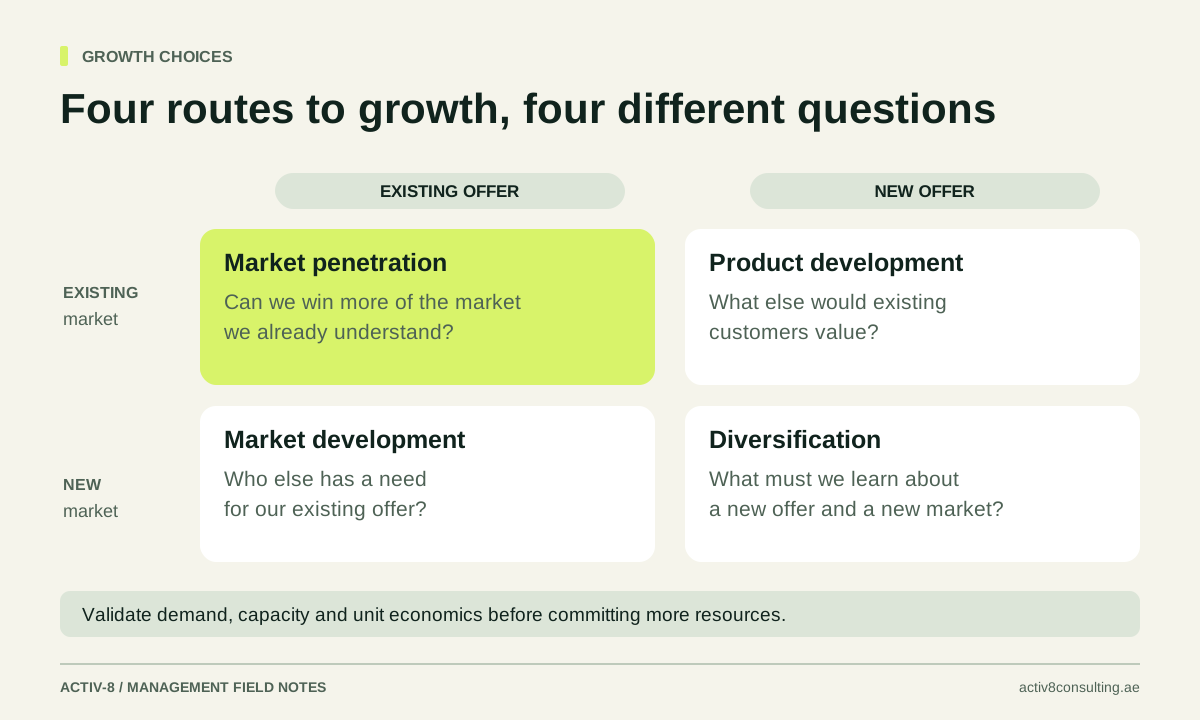
This comparison belongs within your wider business growth strategy. Keep this particular decision narrow enough to test. Launching three services, changing the brand and replacing the sales team together would make it difficult to discover which decision helped.
Separate a request from evidence of demand
A customer asking whether you offer something is a useful lead, but it is not a purchase commitment. Ask about the underlying problem, when it needs solving, how it is handled now and what a satisfactory result includes. Check whether the person making the request controls the buying decision. An enthusiastic user and an authorised buyer can be different people.
Record evidence by strength. A casual enquiry is weaker than a discussion of a specific project. An agreed paid pilot is stronger than a statement that the idea sounds good. Keep the number of distinct customers visible so that repeated comments from one vocal customer do not appear to be broad demand. Avoid treating a supplier's enthusiasm as independent evidence of customer willingness to pay.
Investigate the core offer with equal care. Review lost quotations, renewal conversations and delivery complaints. If buyers repeatedly find your packages difficult to compare, clearer scope may unlock more value than a new service. Conversely, if suitable customers already buy reliably and the current service has limited further demand, an adjacent offer deserves a serious test.
Check which capabilities really transfer
Customer overlap does not automatically mean operational overlap. List the skills, tools, supplier relationships, approvals and quality checks required by each offer. Mark each as already reliable, available with limited adaptation or genuinely new. A familiar customer relationship can open a door without making unfamiliar delivery work safe or profitable.
For the illustrative office-services business, maintenance scheduling experience may transfer. Managing a move with interdependent suppliers may require different coordination skills and contingency plans. Building entry arrangements also need confirming for the particular job. Do not infer universal Dubai access rules or journey times from one familiar property.
Identify who would handle exceptions during the first few jobs. If that answer is always the founder, include those hours explicitly. A service can make a positive gross margin while consuming the person needed to improve the rest of the business. Put the work into the actual weekly calendar rather than assuming that evenings will absorb every launch problem.
Compare contribution and attention, not just turnover
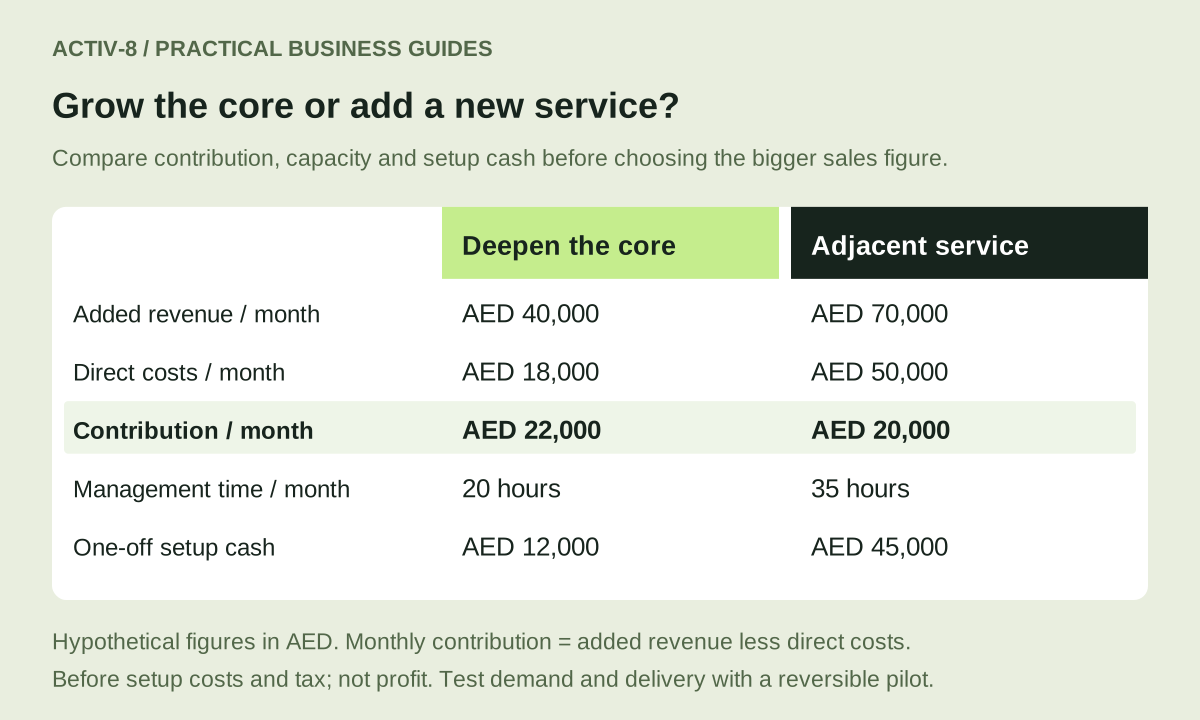
Consider this hypothetical monthly comparison after both options have reached their assumed operating volume. Improving the core offer adds AED 40,000 of revenue and AED 18,000 of direct costs, leaving AED 22,000 before any additional fixed costs. The adjacent offer adds AED 70,000 of revenue and AED 50,000 of direct costs, leaving AED 20,000 on the same basis. The higher-turnover option contributes AED 2,000 less in this illustration.
Now include the assumed management load: 20 hours a month for the core improvement and 35 hours for the adjacent service. The indicative contribution per management hour is AED 1,100 versus approximately AED 571. These figures are not hourly profit rates, market benchmarks or promises. They simply expose how differently the two options use a shared constraint. Delivery capacity and customer outcomes still need separate checks.
The assumed initial setup costs are AED 12,000 and AED 45,000 respectively. Keep these one-off amounts separate from monthly costs. Do not subtract both from every month, and do not hide them because the ongoing contribution looks attractive. Forecast the launch period, collection timing and any additional fixed commitments before deciding how much cash the experiment needs. The illustration excludes tax and financing effects.
Make the downside visible
Replace a single confident forecast with a small number of explicit assumptions. What happens if fewer customers buy, the work takes longer or a supplier's price changes? State which costs move with volume and which continue even if the launch disappoints. Be particularly careful with minimum commitments and resources that cannot readily return to the core business.
Test the same downside logic against the core improvement. New packaging may reduce quotation effort but lose customers who liked the old arrangement. A renewal process can require training and extra administration before it improves retention. A comparison is not fair if every launch risk is examined while the alternative is assumed to work perfectly.
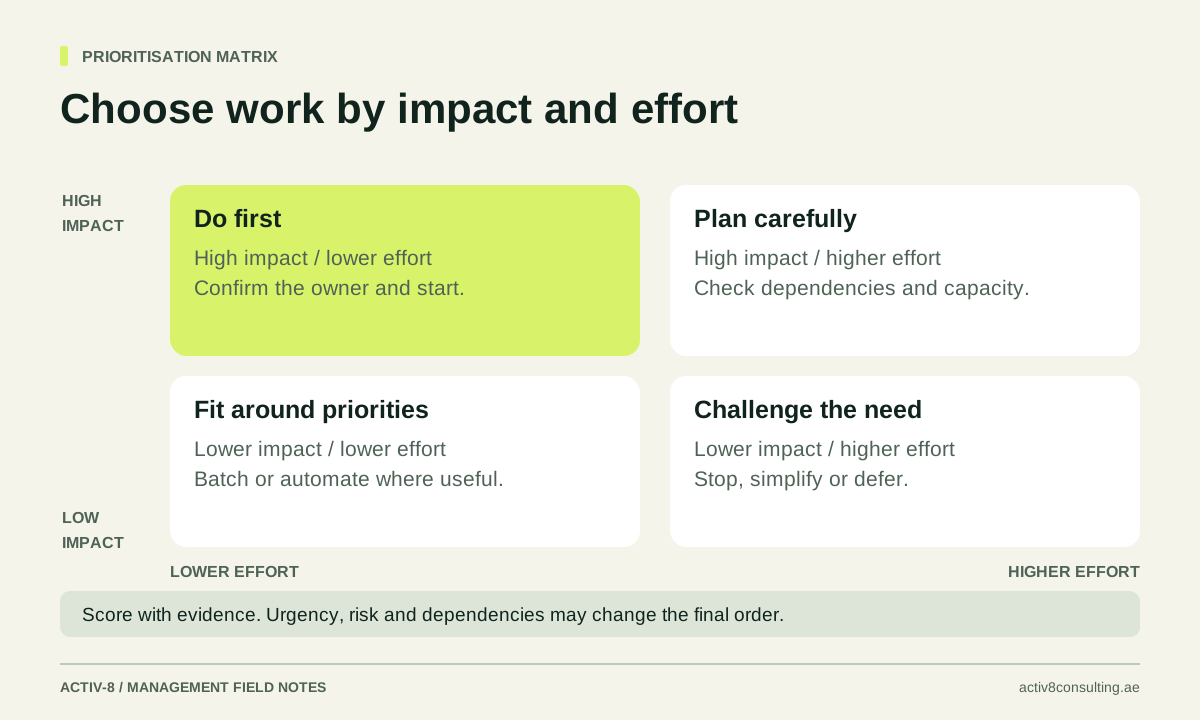
Use a prioritisation matrix to discuss evidence, effort and reversibility. Do not let a weighted score replace judgement. A low-confidence estimate carrying a large spreadsheet weight remains a low-confidence estimate. Put the uncertainty beside the score and identify the cheapest practical way to reduce it.
Run a pilot with a boundary and a stop rule
Choose a pilot that customers can understand and your team can deliver. For the adjacent offer, this might mean a limited number of paid projects within a defined scope, supported by named suppliers. For the core offer, it might mean testing a revised package with one customer segment. Set the maximum cash exposure and the management hours available before accepting work.
Agree what you need to learn: whether customers buy at the proposed scope, whether delivery hours fit the estimate, whether customers accept the result and whether the existing business remains dependable. Record exceptions as they occur. The important lesson may be that the customer wants a smaller service, or that one delivery dependency makes the original offer impractical.
Define the review date and the decision options in advance. Continue, narrow, change or stop are all legitimate outcomes. Do not keep extending the pilot simply because it has generated activity. Check existing customer commitments before changing the offer, and communicate any revised scope clearly rather than quietly lowering the promised standard.
Decide what the business will stop doing
Every new priority needs room. If the founder takes on 35 additional management hours, identify which existing responsibilities transfer, reduce or wait. A plan that adds a launch without removing anything is a workload assumption disguised as a strategy. Make the decision with the manager who will carry the delivery burden, not only the person excited by the sales opportunity.
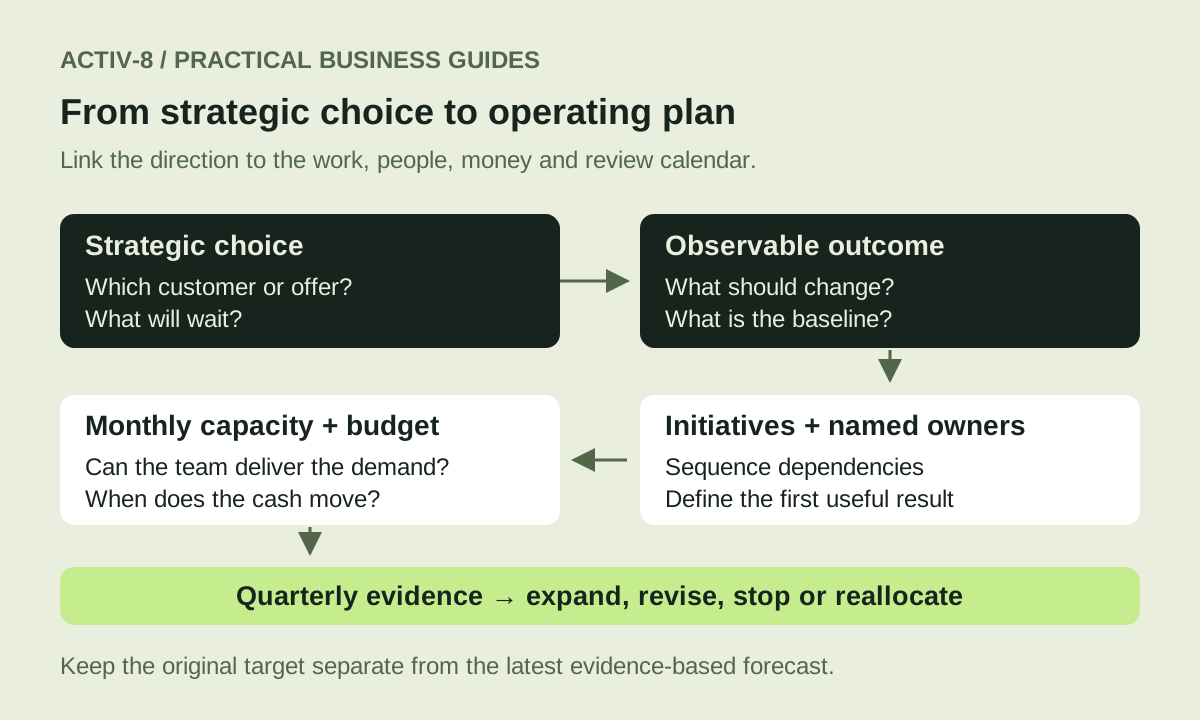
Once the evidence supports a choice, connect it to the annual operating plan. Name the owner, spending limit, capacity requirement and review measure. Keep a short decision record explaining why the chosen option is preferable under today's assumptions and what change would justify revisiting it.
Use the comparison worksheet before committing
The downloadable worksheet helps you put the two offers beside each other: buyer evidence, shared capabilities, new dependencies, monthly contribution, setup spending, management hours and a reversible first test. Its worked figures are hypothetical. Replace them with your own estimates and label every unknown instead of filling gaps with optimistic guesses.
If the decision remains close, bring the competing offers and their assumptions to an Activ-8 management consultancy discussion. The useful question is which route your business can deliver and learn from without weakening the operation that already earns customer trust. A clear comparison gives that conversation a practical starting point.
PUT IT INTO PRACTICE
Core offer versus new service worksheet
Replace the hypothetical examples with your own evidence. Compare demand, capability, monthly contribution, setup cash, management time and a reversible pilot.
Download the worksheetCSV file · Opens in Excel or Google Sheets · No sign-up required