THE STARTING POINT
An operating plan connects strategic choices to funded work, accountable owners and review decisions.
Translate choices into work, resources and decisions
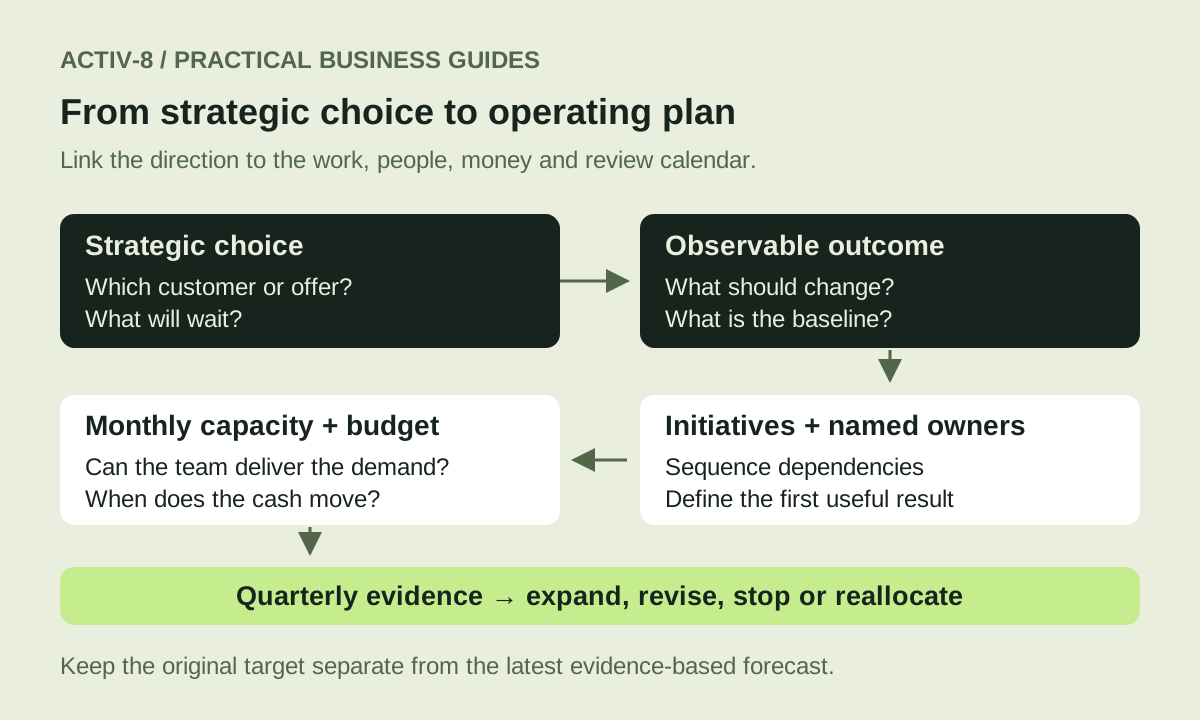
Turn a strategy into an annual operating plan by converting each strategic choice into a defined outcome, a sequence of initiatives, a capacity requirement, a budget and a named owner. Then organise those commitments into monthly activity and quarterly decision points. The plan should show how the business intends to deliver the strategy while continuing to serve existing customers. A list of ambitious targets without resources or ownership is not yet an operating plan.
For a UAE business, the planning assumptions should reflect your own demand pattern, locations, customer schedules and team availability. Do not copy a generic twelve-month growth curve simply because it produces the desired annual total. Explain why demand and delivery capacity are expected to change, and identify where the evidence is weak.
The operating plan is a management tool. Its value comes from helping the team make trade-offs throughout the year, not from looking complete on the day it is approved.
Begin with the choices already made
Write the strategic choices in plain language. These might include focusing on a particular customer segment, improving retention, introducing a standardised offer or expanding delivery capacity. Each choice should say what the business intends to prioritise and what it will deprioritise. Without the second part, every department can interpret the strategy as permission to continue everything it already wanted to do.
Check that the choices fit together. A promise of highly customised service may conflict with a plan based on standardisation and rapid delivery. A growth strategy requiring more complex customers may need stronger account management, not merely more leads. Surface these tensions before assigning targets to teams.
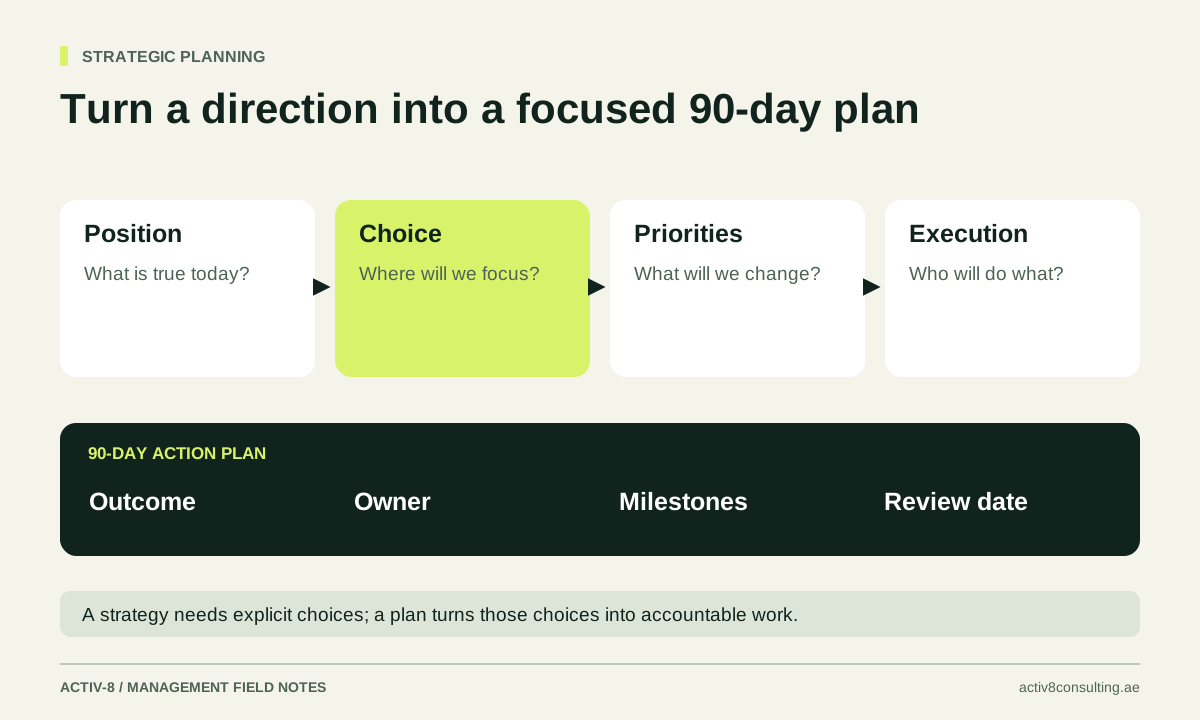
Our strategic planning guide explains how to make the choices. The operating plan begins after that work has produced sufficient direction. If leadership still disagrees about the customer or offer to prioritise, detailed monthly budgets can create an appearance of progress while the central decision remains unresolved.
Convert each choice into an observable outcome
Describe what should be different by the end of the planning period. An outcome should be specific enough to assess but not so narrow that it encourages the wrong behaviour. “Increase repeat purchases among eligible customers” is more useful when paired with a defined customer group, return window and margin guardrail.
Separate the outcome from the activity. Launching a customer programme is an activity; customers returning at a commercially worthwhile rate is an outcome. Both may appear in the plan, but they answer different questions. The activity can be completed even if the expected customer behaviour does not change.
Choose a baseline and an owner for each outcome. If reliable measurement does not exist, include a first-stage task to establish it. Do not invent a precise starting point merely to calculate an attractive improvement percentage. An honest measurement gap is something the operating plan can resolve; a false baseline undermines every later review.
Build the initiative sequence backwards
For each outcome, identify the initiatives required and the dependencies between them. A new recurring service might require offer design, delivery testing, pricing, sales training and reporting before promotion expands. Put those activities in an order that reflects what must be learned or decided, rather than launching all of them at once.
Define a minimum useful result for each initiative. “Complete CRM improvement” is too vague. “Give every active opportunity an owner, next action and expected decision date, then use that view in the weekly sales meeting” provides a testable result. Assign the work to a person who can coordinate the dependencies, not merely to a department name.
Estimate the effort needed from the rest of the business. The marketing initiative may require operations to validate capacity and finance to confirm contribution assumptions. Those supporting commitments should appear in the plan. Otherwise the initiative owner has responsibility on paper but no realistic access to the people needed to deliver.
Connect sales ambitions to delivery capacity
Translate expected sales into the work they create. If the plan assumes more customers, show the likely service mix and time required to fulfil it. Use practical capacity, including necessary non-delivery commitments, rather than treating every scheduled hour as available for customer work.
Consider an illustrative service business targeting 40 additional monthly jobs by the final quarter. If each job needs four delivery hours, the target adds 160 monthly delivery hours. If the current team can release only 60 hours through a tested process improvement, the plan still needs to explain the remaining 100 hours. More leads do not close that operating gap.
Decide whether the answer is additional capacity, a changed offer, different timing or a lower target. Show when the capacity becomes available relative to demand. A team member who joins after the sales campaign starts may not be productive immediately, so include the real preparation and learning required by the role.
Give the budget the same shape as the work
Map spending to the initiatives and the ordinary operation. Separate one-off implementation costs from recurring expenditure, and distinguish committed spending from options that depend on a later decision. This lets the team see what can be changed if the outlook weakens.
Use monthly timing where it affects cash or delivery. A full-year budget can conceal a large early payment or a period when expenditure rises before revenue follows. Link the revenue assumptions to customer volume, pricing and delivery capacity instead of entering a percentage increase with no operating explanation.
In a hypothetical plan, AED 30,000 of setup work plus AED 5,000 per month creates AED 90,000 of expenditure over twelve months of operation. If the recurring service starts in July and setup is also paid that year, the calendar-year outflow is AED 60,000: setup plus six monthly payments. Show the following year’s continuing commitment separately. The amount required by the plan depends on the dates, not just the annualised price.
Make quarterly reviews real decision points
A quarterly review should test whether the strategic assumptions still hold and whether resources need to move. It should not simply replay three months of departmental updates. Identify in advance the evidence that will support expanding, revising or stopping each major initiative.
For a new service, a first review might examine delivery quality and customer response before authorising wider promotion. A later review might examine contribution and retention before adding capacity. The exact sequence depends on the business, but each review should lead to a meaningful choice.
Maintain the distinction between the original target and the latest forecast. The target records the ambition and accountability agreed at the start. The forecast records what the evidence currently suggests will happen. Updating the forecast is useful management; quietly rewriting the target to match every new result makes performance harder to understand.
Use one plan to resolve competing demands
The operating plan should reveal when the same person is expected to deliver several initiatives at once. A sales manager cannot give full attention to a new offer, a CRM change and a team restructure simply because they sit on different departmental lists. Review the combined workload and choose the order.
Create a short list of work to stop, postpone or simplify. This makes capacity available for the strategy and demonstrates that leadership is making trade-offs. If no existing commitment changes, explain where the additional effort will come from. Enthusiasm is not a resource allocation method.
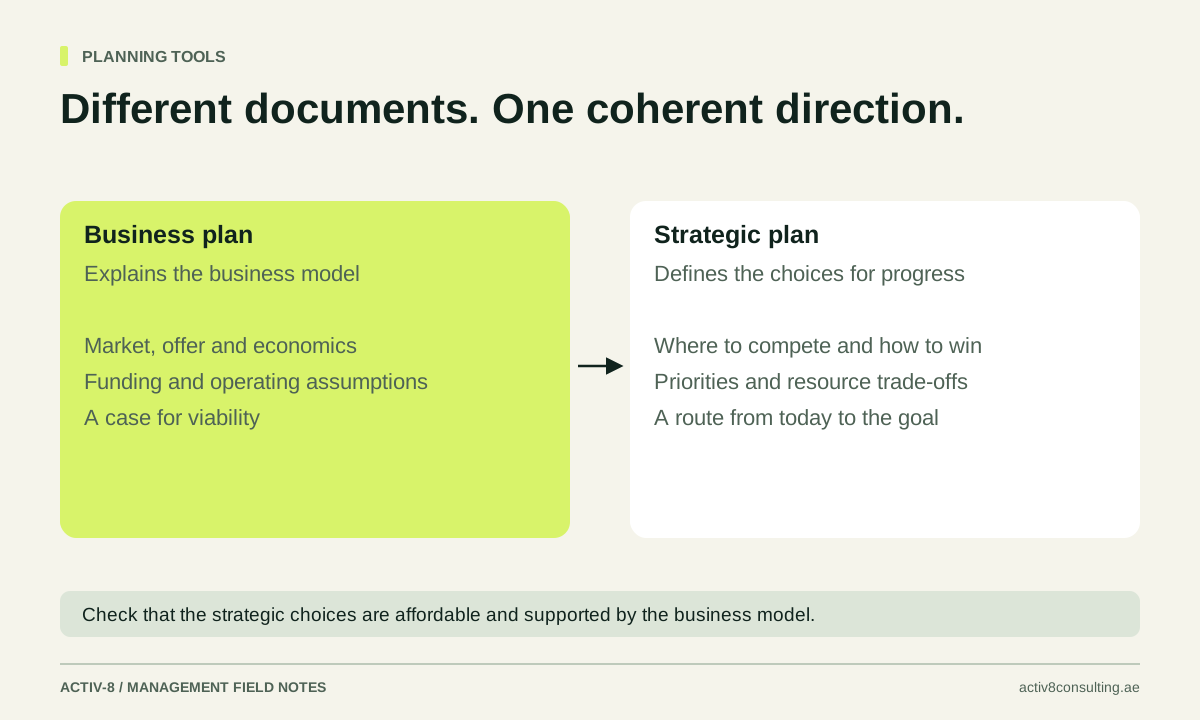
Our business plan versus strategic plan guide clarifies the purpose of different planning documents. Use the annual operating plan as the connection between strategic choices and weekly management, rather than creating another document with similar headings but no clear role in decisions.
Keep the plan usable throughout the year
The downloadable operating-plan worksheet provides fields for the strategic choice, outcome, baseline, initiative, owner, resources, timing and review trigger. Its illustrative row demonstrates the structure. Replace it with your business commitments and keep blank rows for work that has actually been approved, rather than filling the page with ideas to make it look substantial.
In monthly reviews, update progress, forecast timing and unresolved decisions. Preserve the reasoning behind major changes so managers understand why priorities moved. The plan should remain a shared reference for what matters now and what conditions would change the next step.
Activ-8's management consultancy services can help connect strategy, operating capacity and the financial plan. The useful result is a set of commitments the team can deliver and the owner can review, with enough flexibility to respond to evidence without losing the direction of the business.
PUT IT INTO PRACTICE
Annual operating plan worksheet
Begin with an agreed strategic choice. Add the outcome, baseline, initiative, accountable owner, capacity, spending timing and review trigger. Replace the illustrative row and add only work the team has agreed to resource.
Download the worksheetCSV file · Opens in Excel or Google Sheets · No sign-up required