THE STARTING POINT
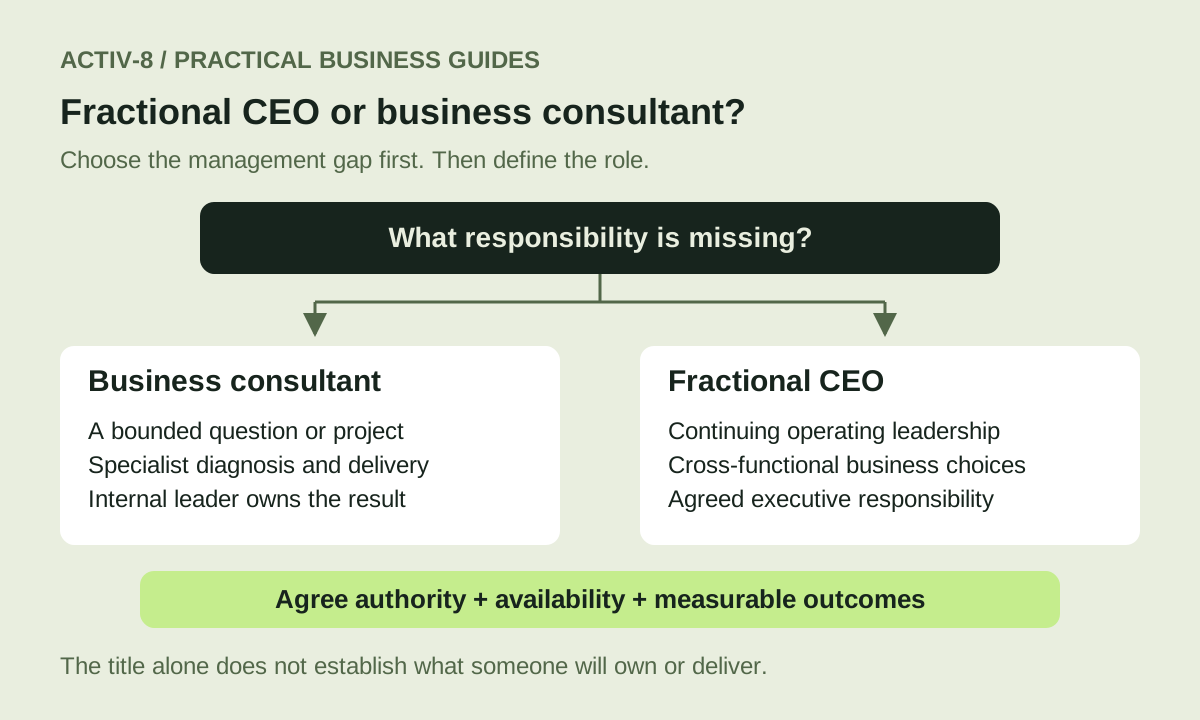
Choose the responsibility you need covered before choosing the title of the engagement.
Choose according to the responsibility you need covered
You need a fractional CEO when the business requires continuing senior leadership across priorities, people and commercial decisions, but you are not seeking a full-time appointment for that role. You need a business consultant when there is a defined question, project or capability to improve. The useful distinction is the responsibility being taken on, not the title on a proposal. Some engagements combine advice with ongoing operating leadership, so clarify the actual arrangement.
For a UAE owner, the decision often arises when growth has made informal management unreliable. You may still approve recruitment, resolve customer escalations, review marketing and chase department plans personally. Alternatively, your managers may be capable but need specialist help with a single constraint. Those two situations need different support even if both are described as “help scaling the business”.
Start by listing the decisions that are not happening properly. Then ask whether the gap is diagnosis, specialist delivery or sustained leadership. That question is more revealing than comparing day rates for two different services.
Look at the shape of the management gap
A bounded consulting assignment has a recognisable finish. It might redesign a handover process, build a management reporting pack or help the leadership team choose a growth strategy. The consultant investigates, develops options, supports implementation to the agreed extent and transfers the work to someone inside the business. The internal owner remains responsible for using the result.
A fractional CEO role usually spans several connected areas. The work might include setting priorities, reviewing performance, making trade-offs between marketing and capacity, supporting managers and keeping a financial plan connected to operational decisions. It has a continuing rhythm because the business keeps generating new decisions, exceptions and competing demands.
The same individual could perform either role. What changes is the agreement about ownership, access, authority and availability. A weekly advisory call does not automatically fill an executive leadership gap. Equally, a company with a strong general manager may gain little from adding another broad leadership layer when it needs a specific project completed.
Test whether someone inside can carry the decision
Ask who will make the trade-offs once the analysis is finished. If a consultant identifies that the sales team is selling work the delivery team cannot fulfil, someone must decide whether to change the offer, add capacity, adjust lead times or stop accepting certain jobs. A recommendation does not resolve those choices by itself.
When a capable internal leader has the time and authority to act, focused consulting can be effective. The adviser provides a sharper diagnosis and a practical method; the leader coordinates the business. When every cross-functional choice still returns to the founder, additional executive support may be needed before another improvement project will stick.
Consider the founder's willingness to share decisions as well as their workload. A fractional CEO cannot provide meaningful operating leadership if the owner privately reverses agreed priorities or retains every routine approval. Define the decisions that remain with the owner and those the role can make within agreed boundaries.
Use a concrete example rather than a job title
Imagine an illustrative Abu Dhabi services business with healthy demand but poor visibility of delivery capacity. The sales manager and operations manager are experienced, and a general manager already resolves competing priorities. The immediate need is a reliable capacity model and scheduling process. A focused consultancy project could provide those tools and support a pilot without creating another executive position.
Now imagine a different business preparing two new offers while rebuilding its customer systems and increasing marketing expenditure. The owner is simultaneously making pricing decisions, choosing systems and interviewing managers. Each choice affects the others, and nobody owns the whole operating plan. A fractional CEO arrangement may provide the coordination and decision cadence the business lacks.
These are hypothetical situations, not promises about which structure always performs better. The test is whether the proposed role removes the actual constraint. If the constraint is missing expertise, buy the expertise. If it is fragmented leadership across functions, agree a role capable of joining those functions together.
Compare costs on the same basis
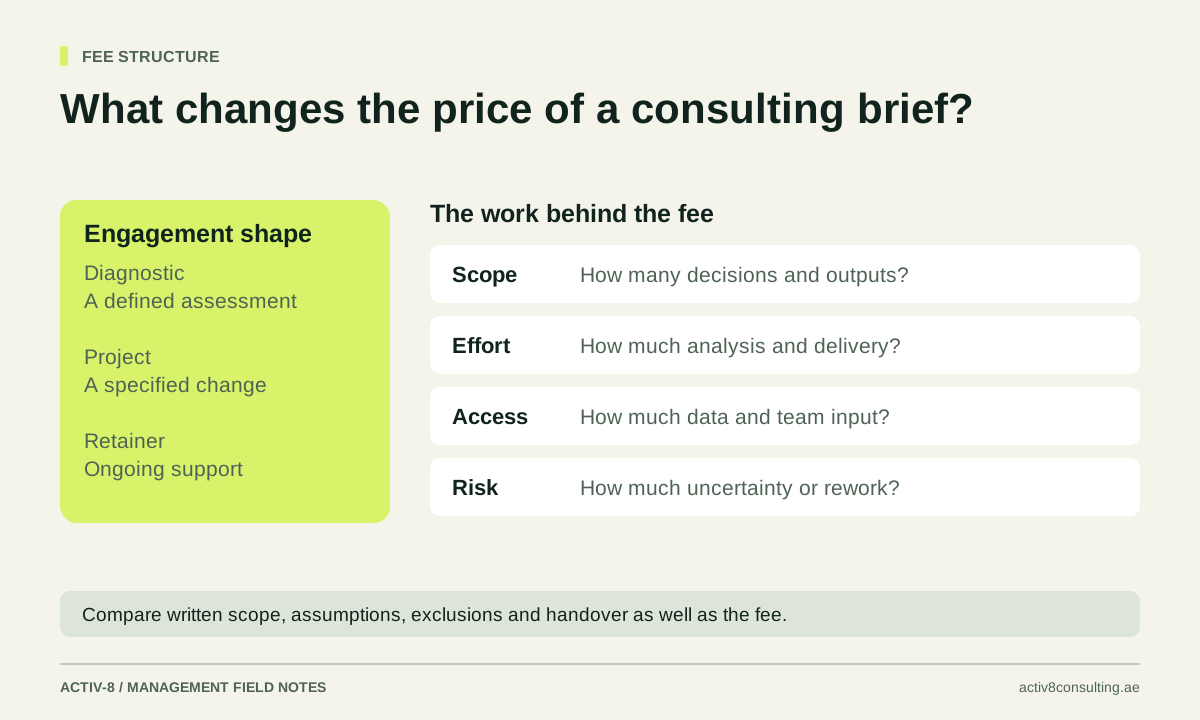
Compare the complete work required, not only the quoted fee. A consultant's proposal may include diagnosis and a plan but leave implementation with your team. A fractional leadership proposal may include weekly management reviews and coordination but exclude specialist system configuration or creative production. Neither omission is automatically a problem when it is explicit.
Build an illustrative cost view containing external fees, internal management time, specialist support, software and implementation expenses. Keep expected benefits separate from those costs. Released founder time can be valuable, but it does not become a cash saving merely because it has been assigned an hourly value. Decide what the founder will do differently with that time.
The management consultancy fees guide provides a way to compare engagement shapes without invented market averages. Request a clear review point and understand what is transferred back to the team if the engagement ends. Transition effort belongs in the decision as well as the opening month.
Set different success measures for different roles
For a consulting project, success may include a tested process, reliable baseline, adopted dashboard and a measurable improvement in the problem being addressed. Acceptance should establish that the team can use the work. A presentation delivered on time is a milestone; it is not proof that operating performance changed.
For a fractional CEO, measures should connect the agreed operating plan to decisions and results. Examples include the completion of a priority initiative, clearer accountability, forecast accuracy or contribution from a chosen growth route. Select measures relevant to the starting problem and record the baseline. Avoid assessing the role against a long list of numbers it cannot meaningfully influence.
Review external conditions alongside performance. A revenue increase can reflect pricing, demand, customer mix and many other changes. Discuss what decisions the role influenced and what evidence supports that explanation. Good accountability allows a frank account of what worked, what did not and what needs changing next.
Consider a staged engagement when the answer is unclear
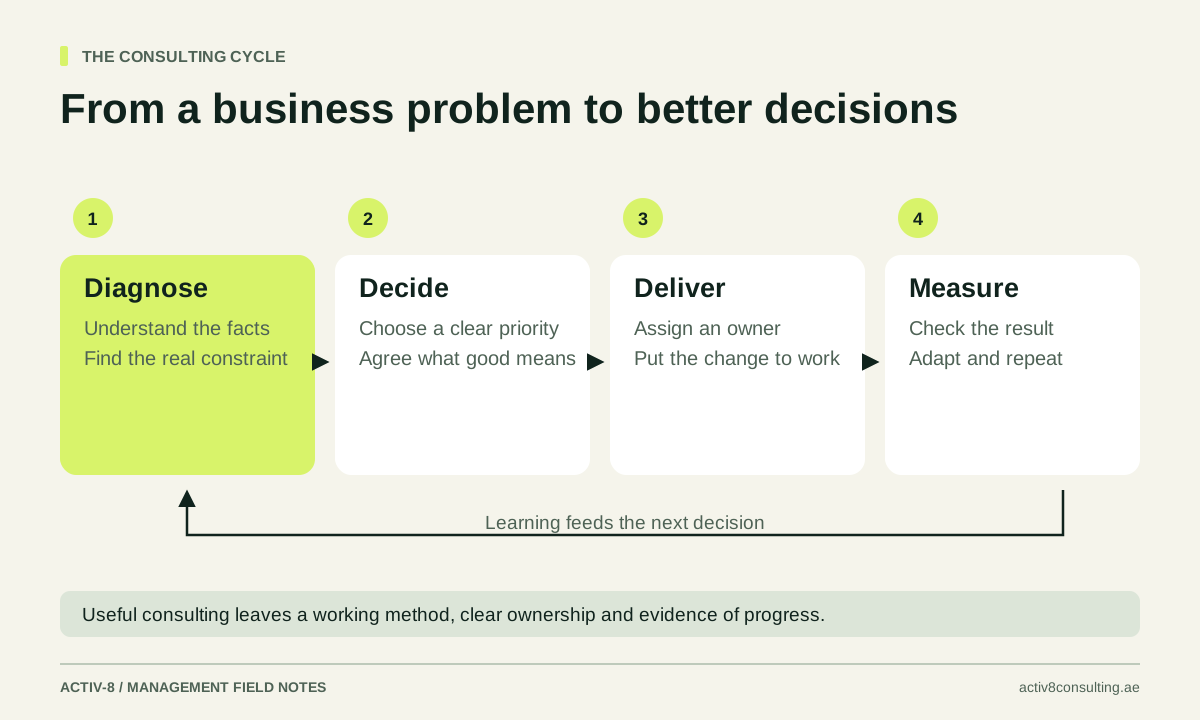
You do not have to choose a permanent arrangement before understanding the management gap. A bounded diagnostic can identify the operating constraints, map existing responsibilities and propose the support required. Its end point should be a decision about the next phase, rather than an automatic extension into a broad retainer.
A useful first phase might examine the owner’s decision queue, the management meeting rhythm and a sample of unresolved cross-functional issues. If the team mainly needs a stronger process, a project may be sufficient. If the owner is carrying continuing leadership responsibilities that nobody else can absorb, discuss fractional support with a clear remit.
Our explanation of what a management consultant does helps separate diagnosis, recommendations and implementation. Activ-8's AuthorityOS launch case study also shows how a fractional CEO brief can connect a product launch, commercial offer, customer systems and financial planning within one engagement.
Make the appointment around a written operating agreement
Before deciding, record the problem, desired result, named internal counterpart, decision boundaries, time commitment and review date. Ask the proposed adviser to explain what they will personally own and what your team must provide. Any major difference between those answers and your expectations should be resolved before the work starts.
If your priority is better executive decision-making, stronger management routines or support carrying a wider business plan, discuss Activ-8's leadership advisory services. The first conversation should establish the responsibility you need covered. A well-defined role gives you a basis for choosing the right level of support and for judging whether it remains useful as the business develops.