THE STARTING POINT
Separate wrap-up, travel and access time, then set the appointment promise using comparable observations rather than a universal Dubai buffer.
Set the buffer from your own journeys
There is no single reliable travel buffer for every customer appointment in Dubai. Set it from your team's completed journeys, separating the previous job's finish time, departure preparation, travel, access and readiness to work. Group comparable journeys by the areas served and the time window, then choose an arrival promise that reflects the variation you actually observe. Review both late arrivals and unused capacity before changing the allowance.
A scheduler needs a workable customer promise, not simply the shortest route estimate. A technician who reaches the building but still needs parking, entry clearance and equipment unloading is not necessarily ready for the appointment. The right buffer makes those steps visible. It should also avoid adding the same allowance several times under different names.
Define what the appointment time means
First agree whether a booking promises an exact start, an arrival window or a call before arrival. Write the definition in the scheduling process and customer confirmation. If the office treats 10am as arrival at the site while the customer expects work to begin then, apparently good scheduling can still create a poor experience.
Use separate timestamps for the previous job ending, the team leaving, arrival at the destination and readiness to begin. Record the customer promise alongside them. These distinctions help identify whether lateness comes from the previous job overrunning, travel variation or getting into the premises. Adding travel time will not solve an appointment that routinely overruns before the team leaves.
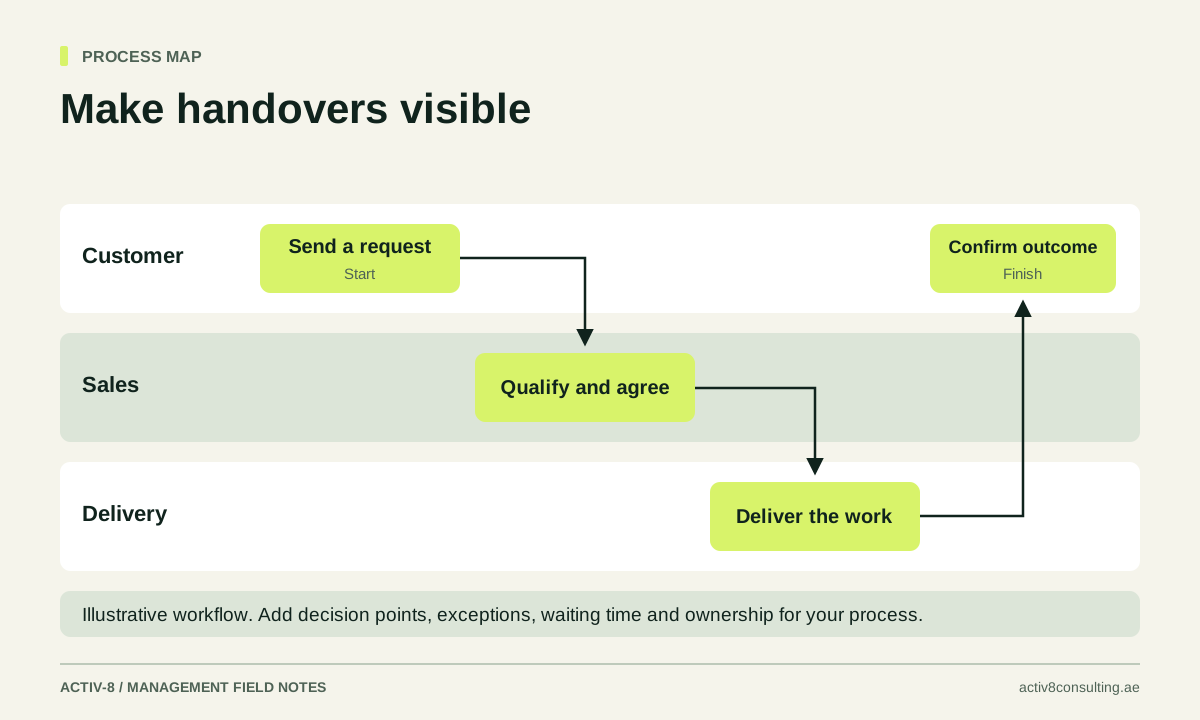
Map the handover using the principles in our business process mapping guide. Include the person who confirms access information, the person who assigns the next job and the person who tells a customer when the plan changes. A buffer cannot compensate for missing ownership of those steps.
Collect a small, usable journey record
Start with records your business can collect consistently. Capture departure and ready-to-start times, job areas, planned time window, team or vehicle type where relevant, and a brief explanation for unusual delays. Add the estimated journey time that the scheduler used at the point of booking, so the review compares the forecast with what actually happened.
Keep the record proportionate. You can often analyse service scheduling using approximate zones and timestamps rather than exposing customers' full addresses in a shared worksheet. Use information your business is authorised to handle. Do not create a parallel spreadsheet of unnecessary personal details just because the scheduling software can export them.
Mark genuinely unusual events instead of silently deleting them. A one-off breakdown should not be treated as normal journey time, but it may belong in a contingency discussion. Recurring parking or entry delays are different: if they happen repeatedly at a site, the schedule needs to account for them or the process needs to change.
Compare like with like
An average across every journey can conceal the pattern that matters. Split records into useful groups, such as nearby jobs within one service zone, journeys between zones, or bookings in different parts of the working day. Use the operational geography your business recognises rather than assuming that an emirate or district label describes a consistent journey.
Avoid creating so many categories that each contains only one example. Sparse records should be treated as provisional. If you have only a few comparable journeys, use a conservative initial allowance and review it as more observations arrive. The confidence attached to a number matters as much as the number itself.
Check whether different teams have different preparation requirements. A surveyor carrying a small bag and a maintenance crew unloading equipment may reach readiness at different times even on the same route. That does not mean one team is inefficient. Separate the work required from any avoidable delay before drawing conclusions about performance.
Build one appointment timeline
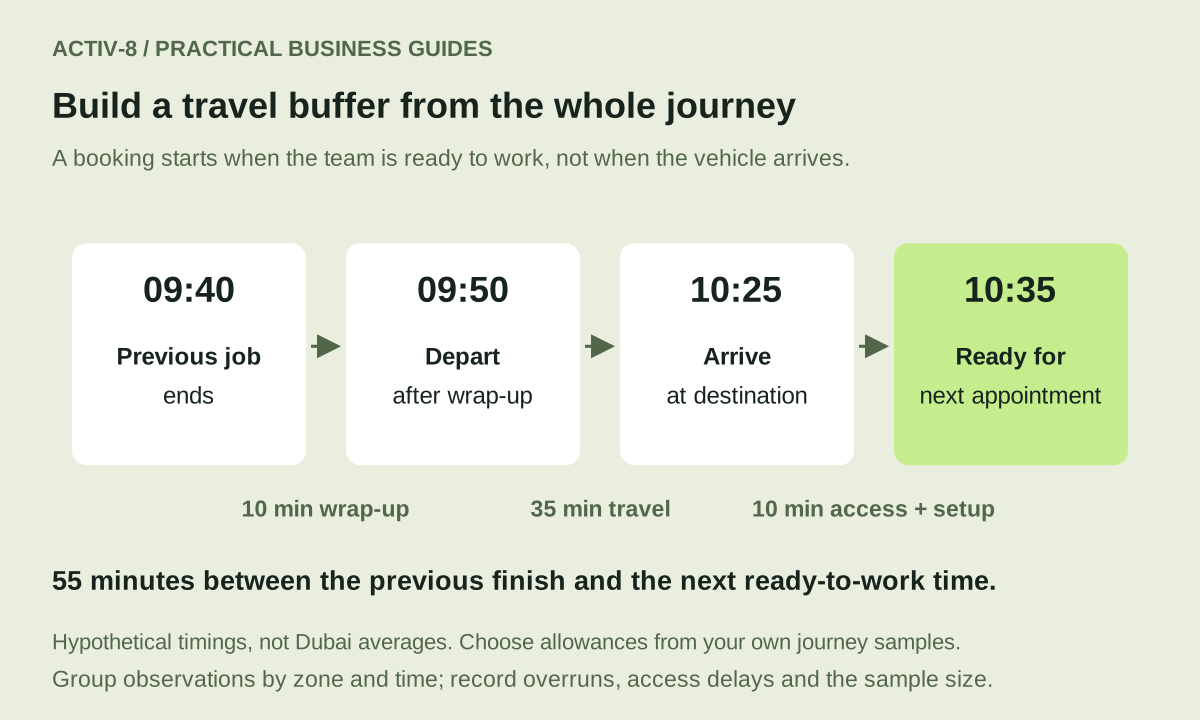
Here is a hypothetical scheduling example, not a Dubai travel-time benchmark. The preceding job is expected to finish at 09:40. The team needs 10 minutes to close the job, load equipment and depart. An allowance of 35 minutes is assigned to the journey, followed by 10 minutes for destination access and setup. The next appointment is therefore planned to be ready to start at 10:35.
The arithmetic is 09:40 plus 10 minutes plus 35 minutes plus 10 minutes. The gap between the earlier job ending and the next start is 55 minutes. Only 35 minutes of that gap is the journey allowance. Calling all 55 minutes “travel” would hide opportunities to improve closing, loading or access preparation.
The 35-minute figure might already include a reliability margin derived from comparable journeys. If so, do not add another generic travel buffer without explaining why. Conversely, if it represents only a typical journey, the scheduler still needs to decide how much uncertainty the customer promise can tolerate. Record which interpretation is being used.
Choose reliability explicitly
A median journey describes the middle observation; it does not describe a promise that nearly every appointment will meet. A higher percentile can be useful when there are enough comparable records. State the calculation method and sample size, especially when the dataset is small. A spreadsheet displaying a precise percentile does not make a weak sample representative.
The business must decide what degree of arrival reliability is appropriate for the service. A narrow appointment window may matter more when the customer must arrange access or stop production. A broader agreed window may be acceptable for another type of visit. Use the customer's practical constraints, not an arbitrary universal target, to make that choice.
Review the whole sequence of jobs. Several uncertain appointments arranged tightly can compound the risk of afternoon delays. A protected recovery gap at a sensible point may work better than attaching a large blanket allowance to every journey. Test that idea against the actual schedule before treating it as a general rule.
Measure the capacity cost honestly
Extra buffer uses time that could otherwise support work, but unused time is not automatically lost revenue. Suppose, purely for illustration, a schedule contains four transitions and each receives 15 additional minutes. That reserves 60 minutes a day. If the team can realistically earn AED 180 of contribution per billable team-hour during that period, the potential opportunity cost is AED 180 a day, or AED 3,960 over 22 working days.
That estimate assumes sufficient suitable demand and an hour that can actually be resold. It is contribution, not invoice revenue, and the hourly measure is for the team rather than each employee. If the gaps are fragmented or demand is weak, the cash opportunity may be much smaller. Avoid multiplying theoretical capacity by a sales rate and presenting the result as a certain loss.
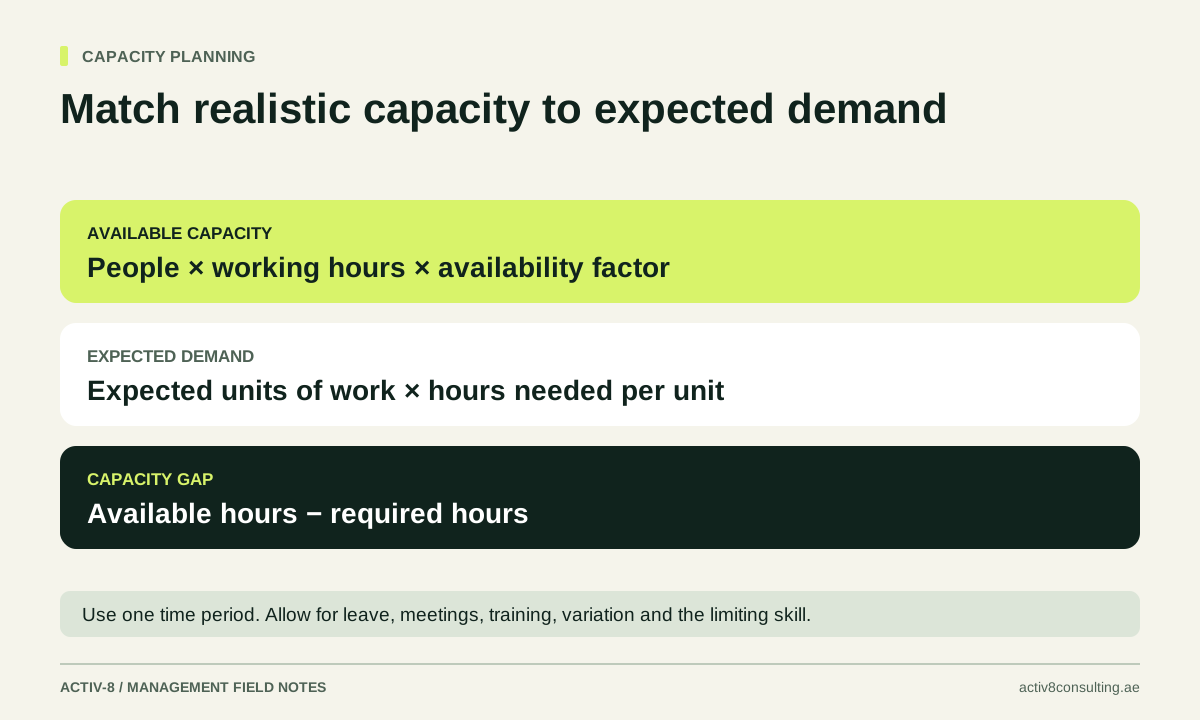
Balance the estimate against lateness, rebooking, overtime and customer inconvenience. Our capacity planning calculator can help frame the wider availability question. Keep this buffer decision focused on the transitions that cause trouble rather than reducing every gap to make the schedule appear fuller.
Test one scheduling change
Choose one comparable set of jobs and one clear change, such as a revised departure allowance or earlier confirmation of access arrangements. Keep a record of the previous approach. Monitor arrival within the promised window, minutes late, unused reserved time and any overtime or rescheduling that follows. Track service duration separately so that a changing job mix does not masquerade as a travel improvement.
Ask the technicians what happened on the exceptions. A customer who was not ready, an incorrect site detail and a longer-than-planned route need different responses. Agree when the office should warn the next customer and offer a revised window. Notification is part of service recovery; it does not erase the original missed promise.
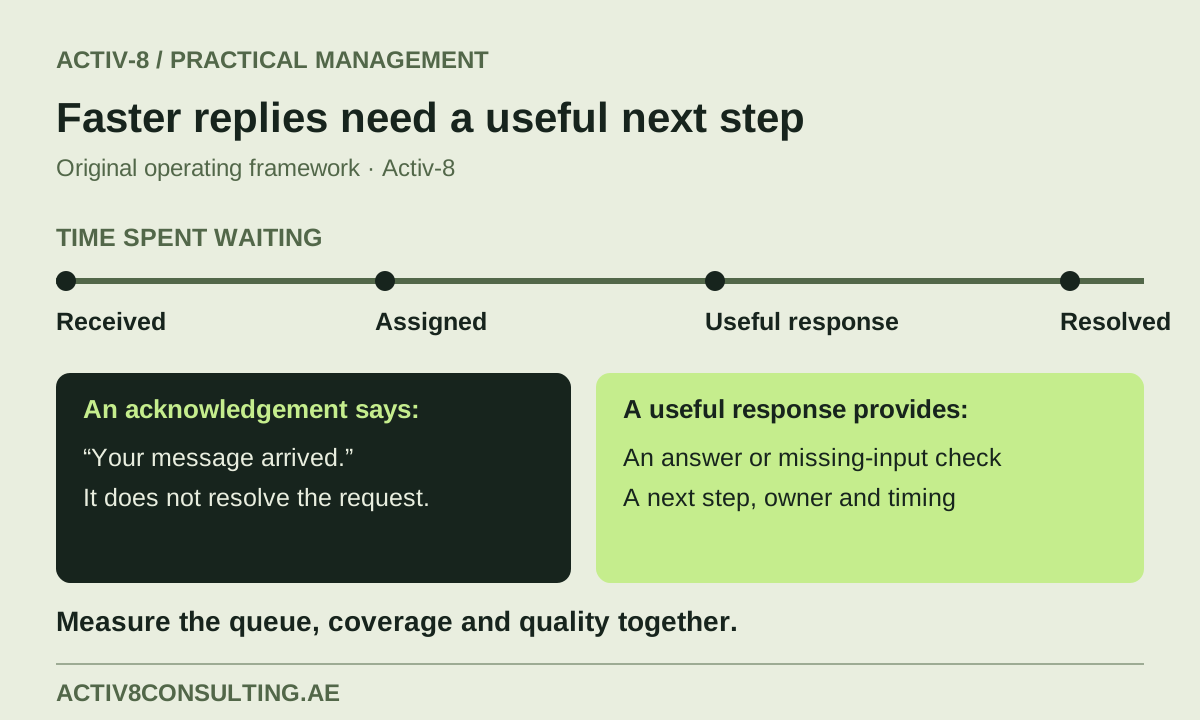
The related guide on reducing customer response time in Dubai addresses the earlier enquiry and communication process. Appointment punctuality needs its own measures. Keep a fast reply and an on-time visit as separate outcomes in the management report.
Turn the evidence into a repeatable rule
Use the downloadable appointment-buffer worksheet to record comparable journeys, proposed allowances, the customer promise and the review result. Include a person responsible for updating each rule. Revisit it when service areas, team requirements or the mix of jobs changes; do not assume an allowance stays suitable indefinitely.
For support, review your field-service schedule with Activ-8. Bring an anonymised set of planned and actual timestamps plus the customer promises behind them. That gives the discussion enough detail to improve reliability while protecting useful capacity, without pretending there is one correct buffer for every journey across Dubai.
PUT IT INTO PRACTICE
Appointment travel-buffer worksheet
Collect real completed journeys by relevant zone and time window. Record finish, departure, arrival and readiness separately; review reliability and unused capacity before selecting allowances.
Download the worksheetCSV file · Opens in Excel or Google Sheets · No sign-up required