THE STARTING POINT
Measure the first response that helps the customer act, then remove the waiting and capacity gaps that delay it.
Improve the first useful response
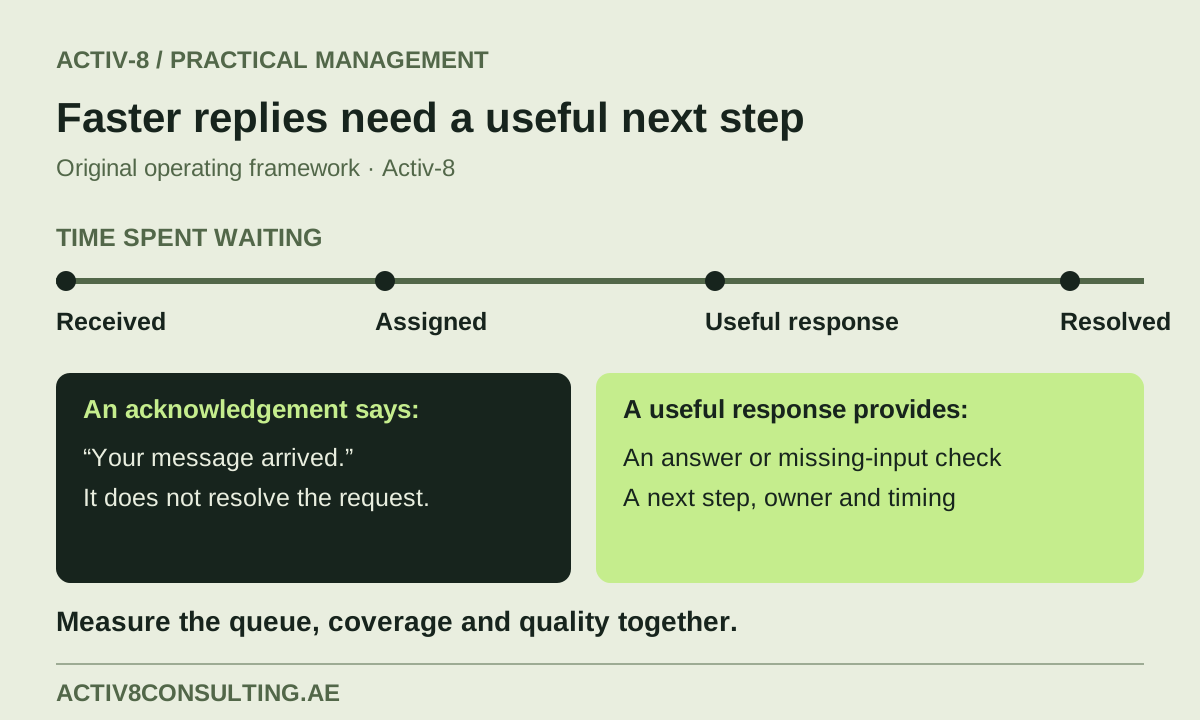
A Dubai service business can respond faster by measuring when customers wait, assigning each enquiry to an owner and matching capable staff to the busiest periods. Start with the first useful response, meaning a reply that answers the question or moves the request forward. An instant automated acknowledgement may reassure someone that their message arrived, but it does not establish whether your business can help, at what price or by when.
Define the reply the customer actually needs
Different enquiries need different responses. Someone asking whether a service covers their location may need a quick factual answer. Someone requesting a complex proposal may need a clear next step and a realistic time for a detailed quotation. Treating both as identical tickets can make the team's average response time look better while leaving valuable customers waiting.
Agree a useful first response for each common enquiry type. It might confirm availability, ask for one missing specification or book a scoping conversation. Include the information needed to make that response responsibly. Staff cannot give a confident date if availability lives in a private spreadsheet that only one manager can access.
Separate acknowledgement, first useful response and final resolution in your reporting. Keep customer opening hours and your stated service hours explicit. A request received outside those hours should not quietly disappear from the data, but it may need a different operational comparison. Publish only response promises your team can consistently support.
Trace the queue before adding more people
List where requests arrive: website, telephone, email, messaging and referrals may all feed the same team. Then follow a sample from receipt to assignment, first useful response and resolution. Record the waiting between steps as well as the time spent working. Ten minutes of productive handling can sit inside two days of waiting for an owner.
Look at arrivals by time block and day, not only the weekly total. A shared team may have enough hours overall but spend the busiest enquiry period in internal meetings. In a Dubai business working with customers and suppliers in different time zones, the timing of a handover may matter as much as the staffing total. Use the actual pattern in your records rather than assuming that every UAE business has the same peak.
Check reopened requests and duplicate messages. A customer who receives no useful reply may contact you through a second channel. Counting those as two new opportunities exaggerates demand and hides the original service failure. Link related contacts where your system allows, while keeping the original arrival time visible.
Give each request one accountable owner
A shared inbox needs an assignment rule. “The team will pick it up” often means that easy questions receive several replies while difficult ones receive none. Assign work by availability, skill or customer need, and show who is responsible for the next action. The owner does not have to solve everything personally; they do have to keep the request moving.
Build a clear route for questions that need another department. The original owner should tell the customer what happens next, retain visibility and follow up when the internal response is late. Otherwise an internal referral becomes a second queue that no one measures. Specify a backup owner for absence or shift changes.
Keep escalation simple. If a response needs a decision on an unusual price, delivery promise or technical exception, identify the authorised decision-maker. Repeated escalation of ordinary questions suggests a missing decision boundary or knowledge gap. Address that cause instead of making the customer wait for the same approval every time.
Use the demand pattern to plan coverage
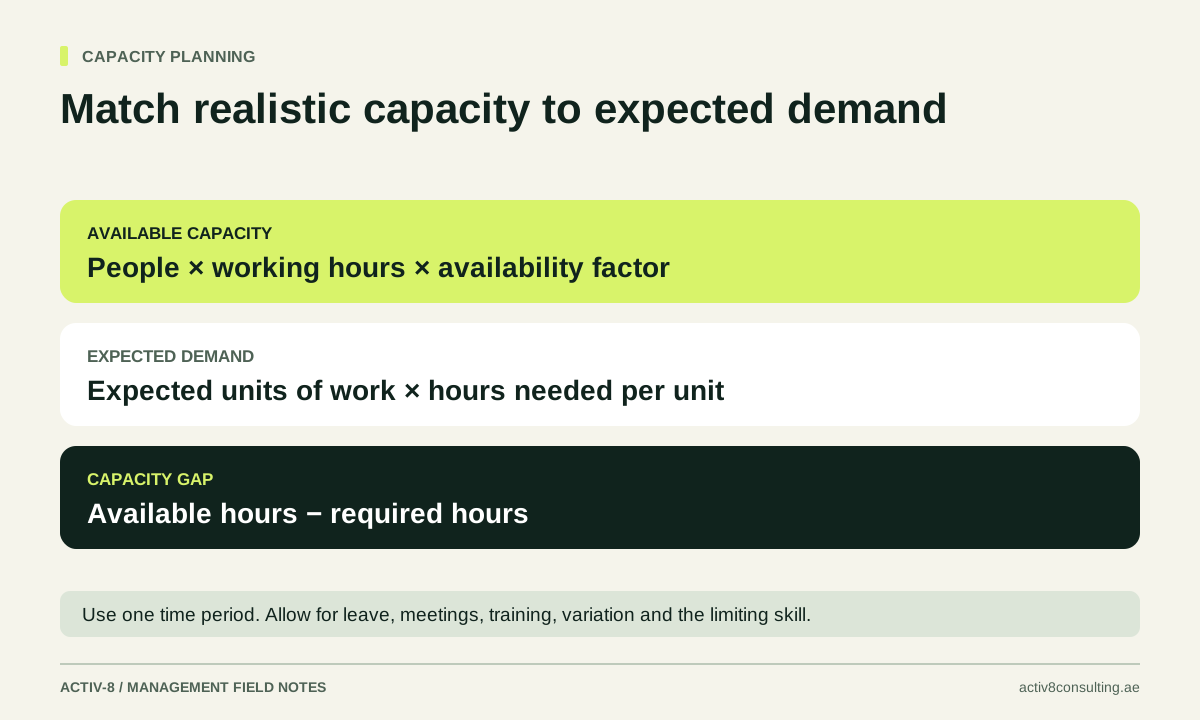
Estimate handling time for a comparable group of enquiries, including reading, checking, replying and updating the record. Multiply that by expected volume within the relevant period. Then compare it with the time appropriately skilled people can actually give to enquiries after their other responsibilities. An eight-hour presence is not automatically eight hours of response capacity.
Our capacity planning calculator helps make that comparison explicit. Run separate scenarios for normal demand and observed peaks. If the pressure lasts for a short part of the day, changing task timing or using a trained backup may be more effective than adding a full-time role immediately.
Also check the sequence of work. Some enquiries need input from a technician who is only available at certain points. A short, scheduled review of pending technical questions may remove a large queue. That is useful only if the promised customer response reflects the real review timetable. Moving a delay to another department does not eliminate it.
An illustrative Dubai enquiry desk
Imagine a small facilities service business receiving 90 comparable enquiries during a working day. Each requires eight minutes for a useful initial response and recording. Demand is therefore 720 minutes, or 12 staff hours. Two coordinators each have seven available hours, but only 70% of that time can go to enquiries after other work. Planned response capacity is 9.8 hours, leaving a daily gap of 2.2 hours.
At an illustrative internal capacity value of AED 85 an hour, that gap represents AED 187 of daily capacity. It is not proof that the business loses AED 187 in cash, nor that every unanswered enquiry would become a sale. The calculation identifies a resource mismatch that needs an operating decision.
Suppose a trial removes repeated information searches and reduces handling time to six minutes without weakening the reply. Demand becomes nine hours. The apparent daily surplus is then 0.8 hours, but management must still test the morning peak, complex requests and absence cover. A favourable daily average does not prove that every customer can receive the promised response.
Write reusable answers that still answer the question
Templates can help with repetitive information, but they should support judgement rather than replace it. Create short approved building blocks for service coverage, required information, next steps and known limitations. Let staff choose the relevant parts and adapt them to the customer's actual request. A fast irrelevant message creates another round of work.
Give each knowledge item an owner and review date. If the price, service area or availability process changes, update the source before asking staff to use it. Test the content with someone who did not write it. Can they answer an ordinary question correctly without asking the manager what a phrase means?
For multilingual enquiries, plan how you will obtain a reliable response in the language needed. Do not assume that an employee can handle technical or commercial wording simply because they speak a language conversationally. Use the skills you have confirmed, and provide a review path where clarity matters to the promise being made.
Check speed against quality and resolution
Report the proportion of enquiries receiving a useful response within your stated working window. Show the distribution or several time bands as well as the average, because a small number of very slow replies may be commercially important. Segment by enquiry type and channel where the process differs materially.
Pair speed with quality checks: was the answer accurate, did it address the question and was the next step clear? Monitor repeat contacts and unresolved requests. If response time improves while customers have to ask the same question again, the process is producing activity rather than progress. Use a small, consistent review sample and record the reason for failure.
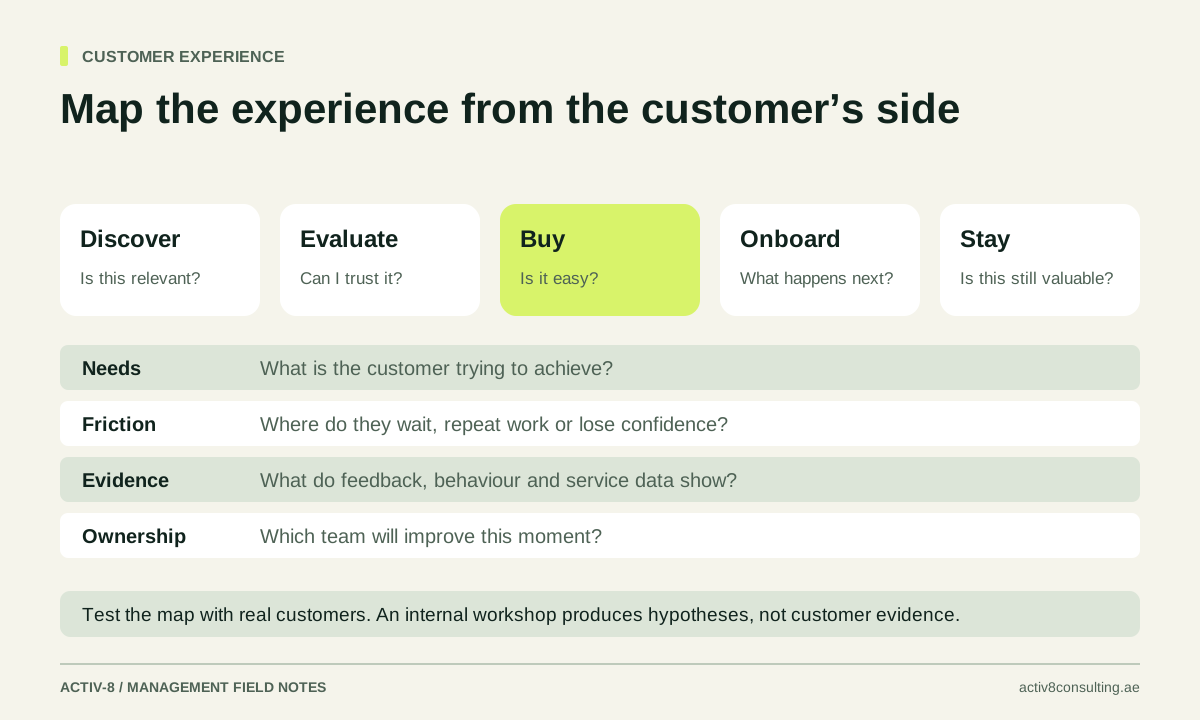
Our customer journey mapping guide helps connect the internal measures with the customer's experience. Review where customers become uncertain and which information would help them move forward. The best response improvement may be a clearer website explanation or order confirmation that prevents a predictable question from arising.
Run a focused response trial
Choose one queue and one clear customer promise. Establish the baseline, appoint the owner and change the most credible cause of delay. That might be a coverage adjustment, a simpler approval route or access to reliable information. Keep the other major conditions visible so you can interpret the result fairly.
At the end of the trial, compare similar enquiry groups and examine the cases that still waited too long. Decide whether to adopt, adapt or stop the change. Avoid turning an initial improvement into a permanent staffing assumption before you have checked busy periods and quality.
If your team is working hard but enquiries still stall, Activ-8 sales and customer experience consultancy can help connect customer expectations, queue ownership and practical capacity. The objective is a useful response customers can act on, delivered by a process the business can sustain.
Put the thinking into practice.
Explore sales and customer experience Discuss your business with Mark