THE STARTING POINT
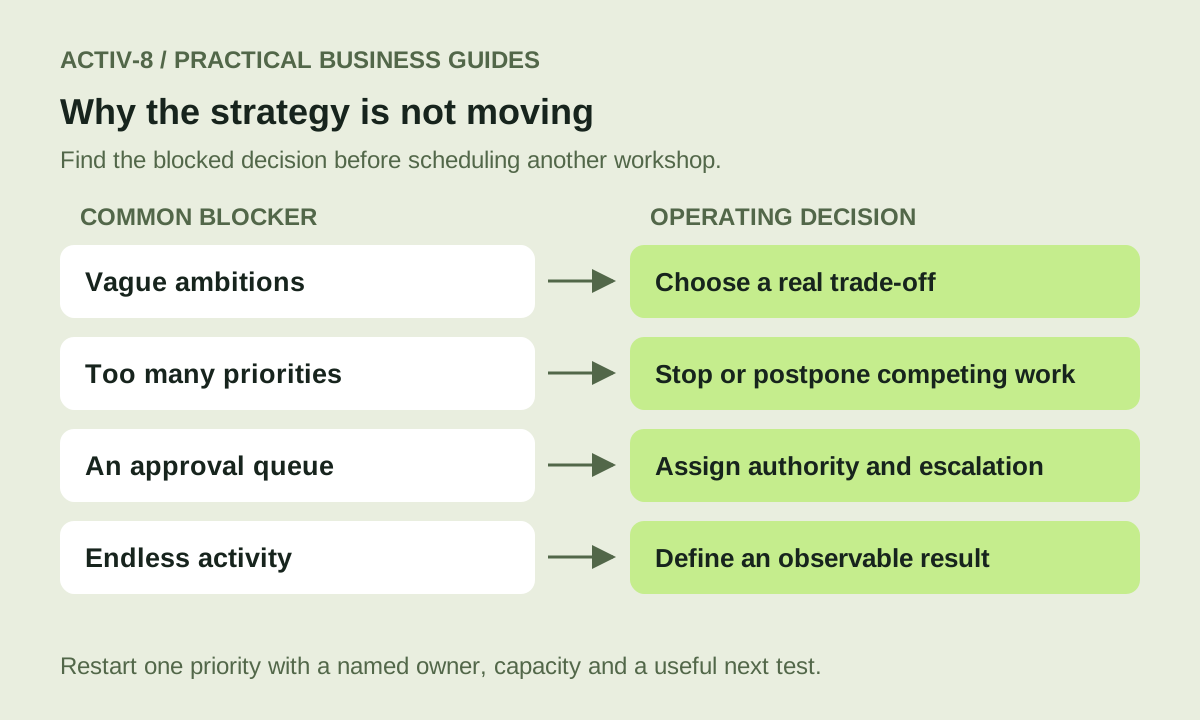
Execution restarts when the team has a clear choice, capacity, authority and an observable next result.
Find the missing operating decision
Business strategy often stalls after a workshop because the discussion produces ambitions without changing priorities, resources, decision rights or management routines. The team agrees with the direction, then returns to a workload that leaves no space to act. To restart execution, identify the specific choice or dependency that is blocked, assign an accountable owner and remove or postpone competing work. Another workshop will not solve a gap that now requires an operating decision.
The problem is not always a lack of commitment. Managers may be trying to deliver conflicting instructions, waiting for approval or working towards outcomes that nobody has defined clearly. Treat the stall as something to diagnose before assuming the team needs more motivation.
For a UAE business with several locations or functions, the gaps can sit between teams. Sales may believe the new offer is approved while operations is still waiting for its delivery specification. Both teams appear busy, yet the strategic change does not move.
Check whether the strategy contains a real choice
Read the agreed priorities and ask what the business will do differently because of them. Phrases such as “grow sustainably”, “improve customer experience” and “become more efficient” may express worthwhile aims, but they do not necessarily choose a customer, offer, process or investment. If every existing activity fits the strategy, the strategy may not be guiding a trade-off.
Write each priority as a choice with a consequence. For example, focusing on recurring business customers may change the offer, sales process and account management model. It may also mean postponing a consumer promotion that competes for the same team. The consequence is what makes the choice operational.
Check that leaders interpret the choice consistently. Ask them separately which customer or initiative should receive scarce capacity this month. Different answers reveal an unresolved decision that a polished strategy document may conceal. Resolve that difference explicitly before asking managers to create detailed implementation plans.
Look for overload disguised as a priority list
Count the initiatives competing for the same people. Then estimate the effort required alongside ordinary work. A manager may own three strategic priorities, two system changes and daily customer delivery. Calling all of them important does not create the time to complete them.
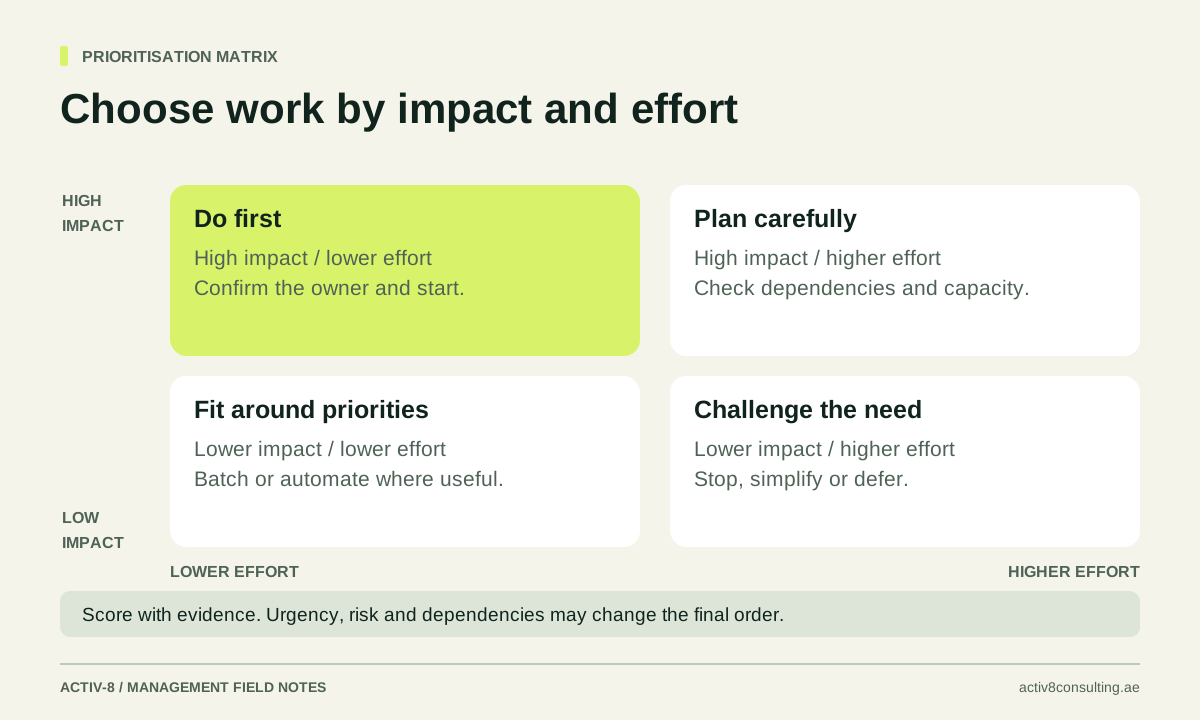
Use a simple sequence: identify the most important constraint, choose the initiative that addresses it and decide what will wait. Keep the reasoning visible so the postponed work does not return through informal requests from another director. Our business prioritisation matrix guide provides a way to compare impact, effort, confidence and dependencies without pretending the scores remove judgement.
Watch for work that has no strategic value but continues because nobody has stopped it. Reports, meetings and custom exceptions can absorb the capacity the strategy needs. Removing them requires a deliberate decision and a check that no important user or obligation is being overlooked. “Do more with less” is not a substitute for that review.
Make completion observable
An initiative called “improve the CRM” can remain active indefinitely because nobody knows what finished looks like. Replace it with an operating result that can be demonstrated. For example, the team might need every active opportunity to have an owner, next action and expected decision date, with managers using those records in the weekly review.
Define the first useful milestone as well as the final outcome. A large change becomes easier to manage when the team can test a small working part. The milestone should provide evidence, not just activity. Training delivered is different from the team correctly using the process on representative live work.
Assign someone to accept the result. That person should know the criteria and be available when the decision is needed. If the initiative owner is also the only person judging whether the work is complete, misunderstandings may remain hidden until a later team tries to rely on the output.
Trace the decision and dependency queues
Ask each initiative owner what they are waiting for. Common answers include pricing approval, a data definition, access to a system, an operations decision or a choice between conflicting customer promises. Put those dependencies in one visible list with an owner and a due date.
Distinguish a request for advice from a request for authority. A manager may know the sensible next step but lack permission to spend, change a process or stop work. More analysis will not resolve that gap. The relevant leader must make the decision or delegate it within clear boundaries.
Review the founder's queue as carefully as the team's workload. If every initiative waits for the owner, the strategy may have created more central dependency instead of a stronger management system. Decide which choices can move closer to the work and which genuinely need leadership involvement. Keep escalation rules clear so delegation does not become uncertainty about who is accountable.
Follow a hypothetical stalled launch
Imagine a Dubai services company agreeing to launch a recurring support offer. Marketing prepares a campaign, sales drafts a proposal and operations begins discussing service standards. Six weeks later, the launch has not happened. Each team reports progress, but nobody has approved the scope or checked whether the monthly service can be delivered profitably.
The immediate fix is not to ask everyone to move faster. The owner appoints one initiative lead, schedules a decision on the offer boundaries and asks finance and operations to test the delivery assumptions. The marketing launch date becomes conditional on a small pilot producing acceptable evidence about workload and customer understanding.
The company also postpones a separate promotion using the same sales team. That creates capacity for the pilot and makes the priority credible. This illustrative example shows how execution can restart through a few operating choices. The work moves because scope, ownership, sequence and capacity become clear, not because the strategy is rewritten in more inspiring language.
Create a meeting rhythm that removes obstacles
A strategy review should concentrate on decisions, evidence and exceptions. Ask what changed, what is blocked, what support is required and what the next test will establish. Avoid giving every initiative a long progress presentation when only one or two need leadership attention.
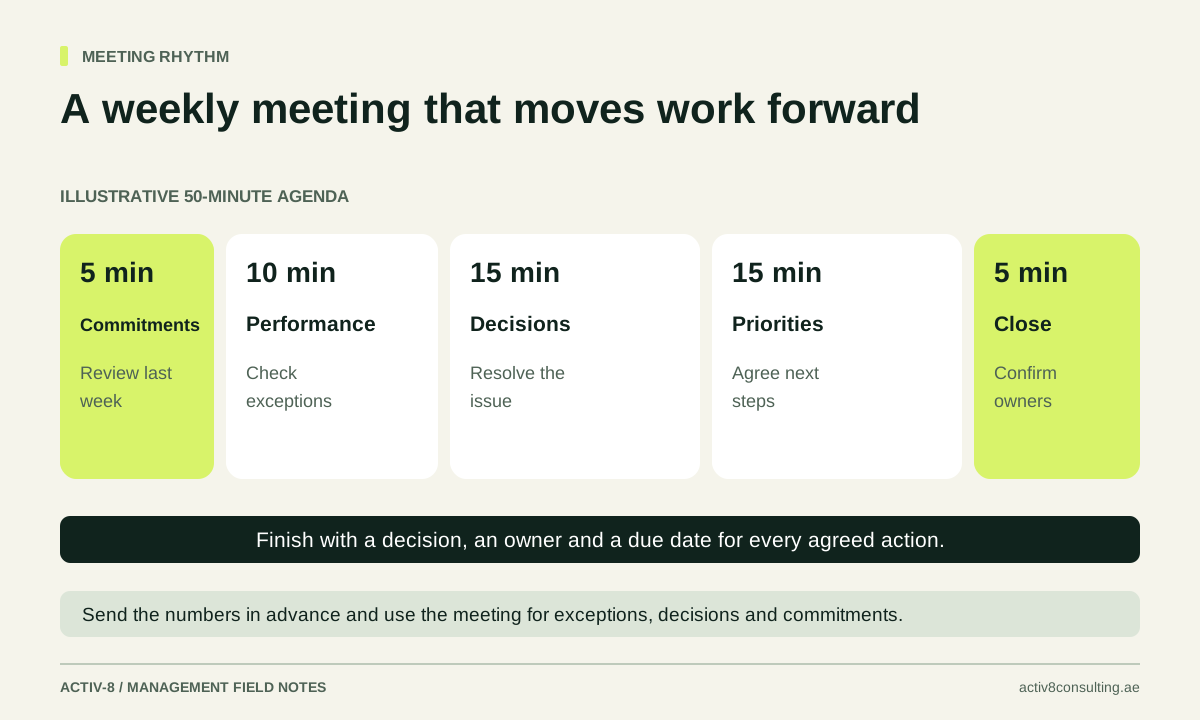
Use the weekly management meeting agenda to connect current performance with the priority work. The meeting should leave a short action record containing an owner, a due date and a clear completion condition. Check the previous commitments before adding new ones.
Keep the meeting proportional. A small team may need a short weekly review and a deeper monthly decision session. The exact frequency depends on the pace of the work. What matters is that unresolved decisions have a reliable route to resolution and that managers do not have to chase the founder through several separate conversations to obtain the same approval.
Use evidence to adapt without abandoning direction
An initiative may stall because early evidence contradicts the plan. The team should be able to raise that issue without being accused of resisting the strategy. A pilot that reveals weak demand or excessive delivery effort has produced useful information, even if it means the original approach should change.
Separate the strategic aim from the current method. The aim might remain stronger recurring revenue while the proposed offer changes. Record which assumption failed and what the revised test will examine. This prevents every obstacle becoming a complete restart, while avoiding the opposite mistake of continuing an ineffective method merely because it was approved at the workshop.
Keep actual results, targets and forecasts distinct. A missed target should prompt explanation and a decision. A revised forecast should reflect the latest evidence. Neither should be hidden inside an optimistic traffic-light status that makes the programme look healthy until the final deadline arrives.
Restart with a bounded execution reset
Choose one important stalled initiative. Write its intended result, current evidence, next decision, named owner, dependencies and required capacity on one page. Remove unnecessary scope and agree what competing work will pause. Set a review date close enough to maintain attention but long enough for the agreed test to produce evidence.
Ask the owner to report what the test established, including limitations. If the work remains blocked, identify the exact unresolved decision rather than accepting “still in progress”. Repeat the method across other initiatives only after the team has a routine it can maintain.
Activ-8's leadership advisory services help turn strategic direction into clear responsibilities and practical management decisions. A strategy starts moving when people know the choices, have the capacity and authority to act, and can use evidence to decide the next step.