THE STARTING POINT
A translated procedure works only when users can apply the same operational meaning and demonstrate the correct task.
Write for consistent execution
Write SOPs for a multilingual UAE team using short, observable instructions, consistent terminology and examples of acceptable work. Confirm understanding by watching people perform the task, rather than asking whether they have read the document. Where translation is needed, have the operational meaning reviewed by someone competent in both the language and the work. A procedure succeeds when the team can use it accurately under normal working conditions.
Start with the task and the people doing it
Choose one recurring task with a clear beginning and end. Observe how experienced team members perform it and where newer colleagues become uncertain. Ask which words, screens and decisions cause confusion. Language may be one factor, but missing access, conflicting instructions or an unclear approval boundary can produce exactly the same symptoms.
Identify the people who will use the procedure, their relevant experience and the working environment. A technician using a phone at a customer site needs a different presentation from a coordinator using two screens in an office. Do not infer literacy, technical knowledge or preferred language from nationality. Ask and test with the people concerned.
Record the intended outcome before drafting steps. For example, a completed service order may need the agreed scope, correct location and confirmed appointment recorded in one place. That outcome gives the procedure a purpose. Without it, the writer can produce an accurate description of button clicks that still fails to protect the customer promise.
Replace vague instructions with observable actions
“Check the details carefully” does not say what to check. “Compare the service address on the approved order with the scheduling record” gives the user an action and two clear sources. State the result required before the next step begins. Where a mismatch appears, explain who resolves it and whether work must pause.
Use one main action per sentence and name the same object consistently. If your system calls something a service order, avoid alternating between booking, job sheet and request unless those are genuinely different records. Define abbreviations once and remove jargon that does not help the task. A short glossary can prevent a familiar word from carrying several operational meanings.
Keep the level of detail appropriate to the user. Explain the decisions that cause errors, but do not bury them inside pages of obvious instructions. Someone who already knows how to open the scheduling tool may need a precise exception rule more than a screenshot of the login button. Test where extra detail improves accuracy and where it creates friction.
Build a small operational glossary
Create a shared list of important terms, each with a plain-language definition and an example. Start with words that affect the customer promise: approved, scheduled, dispatched, complete, cancelled and returned for clarification may all need distinct meanings. Agree the definitions with the teams that use them before translating them.
For each language version, preserve the operational distinction rather than choosing a convenient approximate word. A record marked complete must mean the same thing to sales, delivery and finance if the business uses that status to trigger another action. Ask bilingual reviewers to explain the translated instruction back in their own words and compare the meaning with the intended rule.
Avoid maintaining a sprawling dictionary nobody owns. Give the glossary an owner, keep it near the procedure and update it when the system or process changes. When a new term is introduced, check related documents as well. Consistency across a small set of frequently used instructions is more useful than perfection in one isolated document.
Show the decision, not just the screen
Use annotated examples of correct and incorrect outputs where they make a difference. A screenshot can show which field contains the approved date; a simple decision diagram can show what to do when that date is unavailable. Remove unnecessary customer information from training examples and make illustrative records clearly fictional.
Do not rely on colour alone to distinguish a correct result from an error. Add clear labels, shapes or text so the meaning survives printing, small screens or different visual needs. Keep diagrams readable at the size employees will actually use. A detailed desktop chart may be unusable on a phone beside the work.
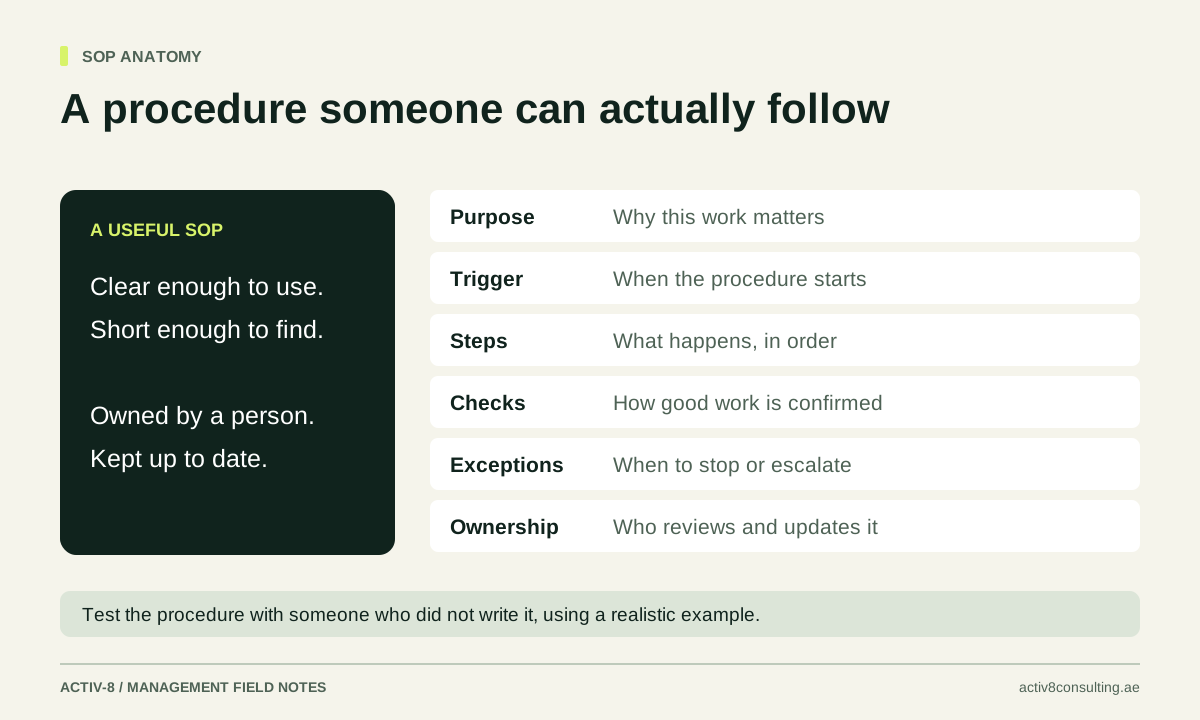
Our SOP template guide provides a structure for purpose, inputs, steps, exceptions and ownership. Use that structure selectively. The objective is a usable instruction, not a document with every possible heading filled. The downloadable worksheet on this page helps plan the language review and the evidence needed to approve your own procedure.
A hypothetical order confirmation example
Imagine a UAE equipment servicing business that receives orders in more than one language. Staff use “confirmed” both for a customer approving the quotation and for operations allocating a technician. The customer-facing team sometimes sends an appointment confirmation after the first event, although the second has not happened. This is an illustrative process problem, not a claim about any language group.
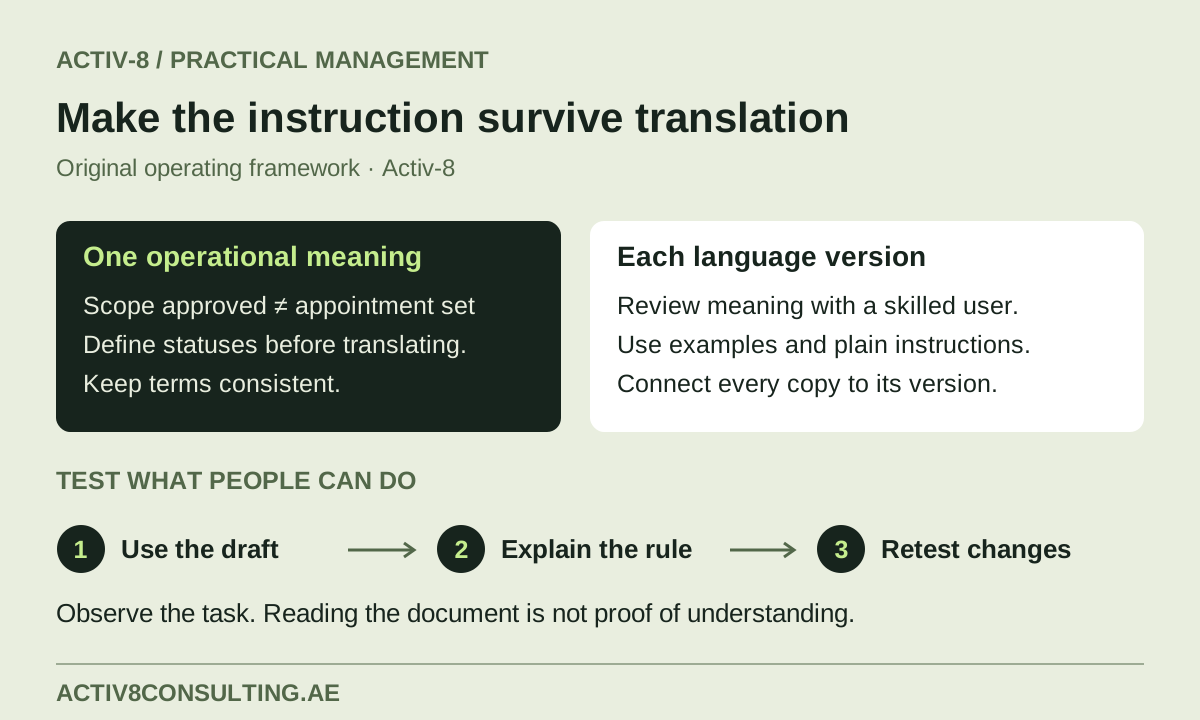
The business creates two distinct statuses: scope approved and appointment allocated. The procedure permits a final appointment confirmation only when both are recorded. Its glossary explains each status, and its example shows an order that must remain pending. Reviewers check that the distinction survives in each language version used by the team.
Suppose the existing ambiguity causes three separately paid return visits at AED 250 each in an illustrative month. That is AED 750 of direct additional cash cost. Six hours of existing staff coordination at an assumed AED 90 capacity value add AED 540 of capacity use, reported separately. The team tests whether the revised instruction reduces those specific failures rather than promising a universal return from translation.
Test through demonstration and teach-back
Ask a representative user to complete a realistic task using the draft while the author observes. Do not coach them through every uncertainty; the pauses and questions reveal where the instruction needs work. Include at least one ordinary exception. A procedure that works only when all inputs are perfect is not ready for everyday use.
Then ask the user to explain the decision rule in their own words. This is not an examination of their language ability. It is a test of whether the document communicates what the business needs. If several people interpret a phrase differently, revise the phrase before assuming that everyone needs more training.
Record the test case, observed difficulty, revision and retest result. If a bilingual review changes the meaning of a step, test the revised version operationally as well. Translation accuracy and process usability are related but different checks. Both matter when an instruction controls a customer commitment, cost or delivery sequence.
Keep every version connected to one owner
Give the procedure an identifier, owner, approval date and version. Keep a clear link between the master instruction and each language version. When the process changes, identify which versions require review before declaring the update complete. An old translated copy can be more misleading than no translation if staff reasonably believe it is current.
Make the current instruction easy to find at the point of work. Remove or clearly retire superseded copies from shared folders and printed reference points. For a small business, a controlled folder and simple version register may be sufficient. The important control is that a user can identify the approved version without asking around.
State how employees report a problem with the instruction. A practical feedback route lets the team flag an exception the author did not anticipate. Review the evidence and update the process where needed. Do not encourage staff to maintain private unofficial notes that gradually become a second operating system.
Introduce the procedure as a working change
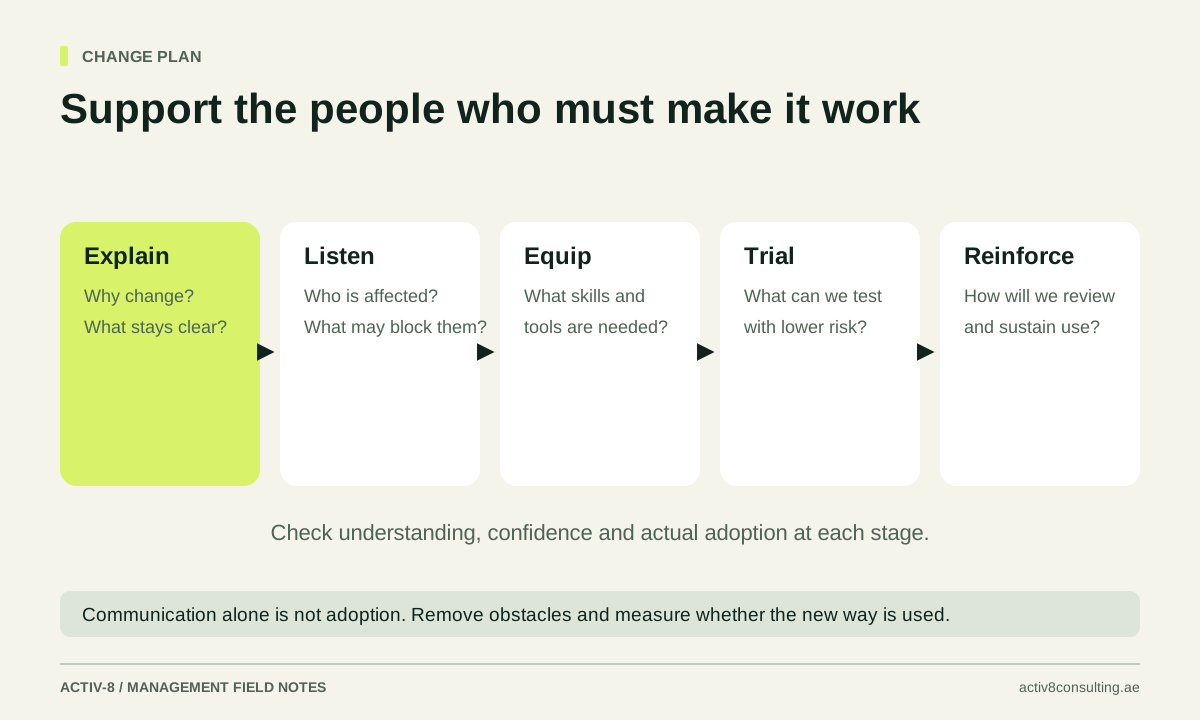
Explain what problem the new procedure solves and what employees should do differently. Demonstrate the task, allow practice and identify who can answer questions during the first working cycles. Our change management guide helps connect the written instruction with the support people need to adopt it.
Measure the relevant result: fewer ambiguous statuses, fewer rejected handovers or a higher proportion of correctly completed records. Also watch handling time and customer impact. If employees comply with the document but the work becomes unnecessarily difficult, revise the design. The aim is dependable execution, not signatures confirming that a document was distributed.
Activ-8 operations consultancy can help convert inconsistent working practices into tested procedures with clear ownership and useful examples. Start with one costly misunderstanding, prove the revised instruction works for the people using it, and then extend the approach to other tasks.
PUT IT INTO PRACTICE
Multilingual SOP review worksheet
Use one recurring task and list its critical terms and decision rules. Replace the illustrative row, name an operational reviewer for each language version, and record a demonstration test and the approved version before rollout.
Download the worksheetCSV file · Opens in Excel or Google Sheets · No sign-up required