THE STARTING POINT
Keep the desired target separate from the evidence-based forecast and explain the operating work required to close the gap.
Connect targets with an operating plan
Set realistic KPI targets by defining the measure, establishing a credible baseline and identifying the operating changes that could improve it. Then test whether your team has the capacity and authority to make those changes. A target expresses the result you want; a forecast describes what you currently expect. Keep those two numbers separate, and pair the main target with checks that prevent an apparent improvement from damaging quality, cash or customers.
Give the measure an exact definition
Before discussing the target, write down what the KPI counts, its denominator, reporting period and data source. “Conversion rate” could mean enquiries becoming appointments, quotations becoming orders or orders becoming collected revenue. Each answers a different question. A manager cannot improve a number reliably if its meaning changes between meetings.
Specify inclusions and exclusions. If duplicate enquiries, cancelled orders or internal test records are removed, record the rule and apply it consistently. State when the result is considered final and how later corrections will be handled. For a small UAE business using several systems, a modest reconciliation process can be more valuable than an elaborate dashboard built on inconsistent definitions.
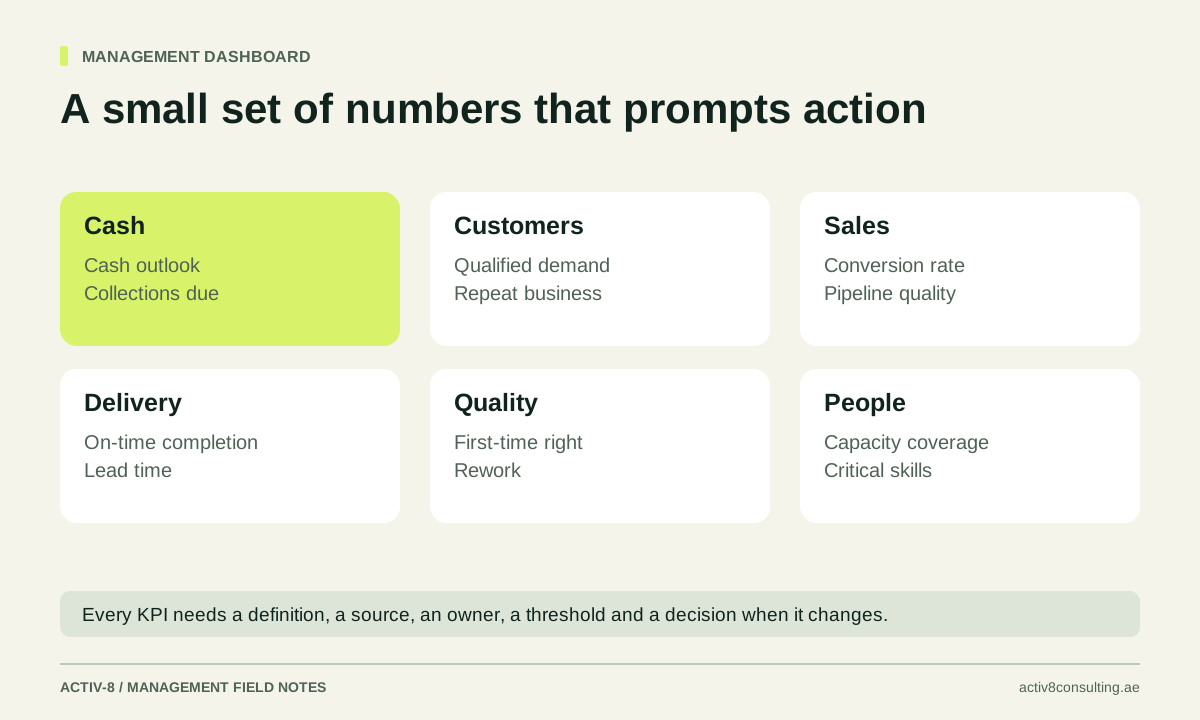
Our small business KPI dashboard guide explains how to choose a compact set of decision-useful measures. Begin with a question management needs to answer. Do not create a target for every available field simply because the software can display it.
Establish a baseline that represents the work
Use enough recent observations to understand ordinary variation and the mix of work. There is no universal number of weeks that makes every baseline reliable. A busy repeat-service business and a company completing a few large projects need different evidence. Show the volume behind a percentage so readers can judge whether a small change is meaningful.
Segment materially different activities before combining them. New and repeat customers, simple and complex jobs, or different service channels may have different operating patterns. If the mix changes, the overall result can move even when performance within each group does not. A baseline should make that possibility visible.
Check data quality with actual records. Select examples that should be included, examples that should be excluded and a few awkward cases. Ask whether another person applying the definition would produce the same result. Resolve missing dates, duplicated records and ambiguous statuses before turning the number into a commitment for the team.
Distinguish ambition from the current forecast
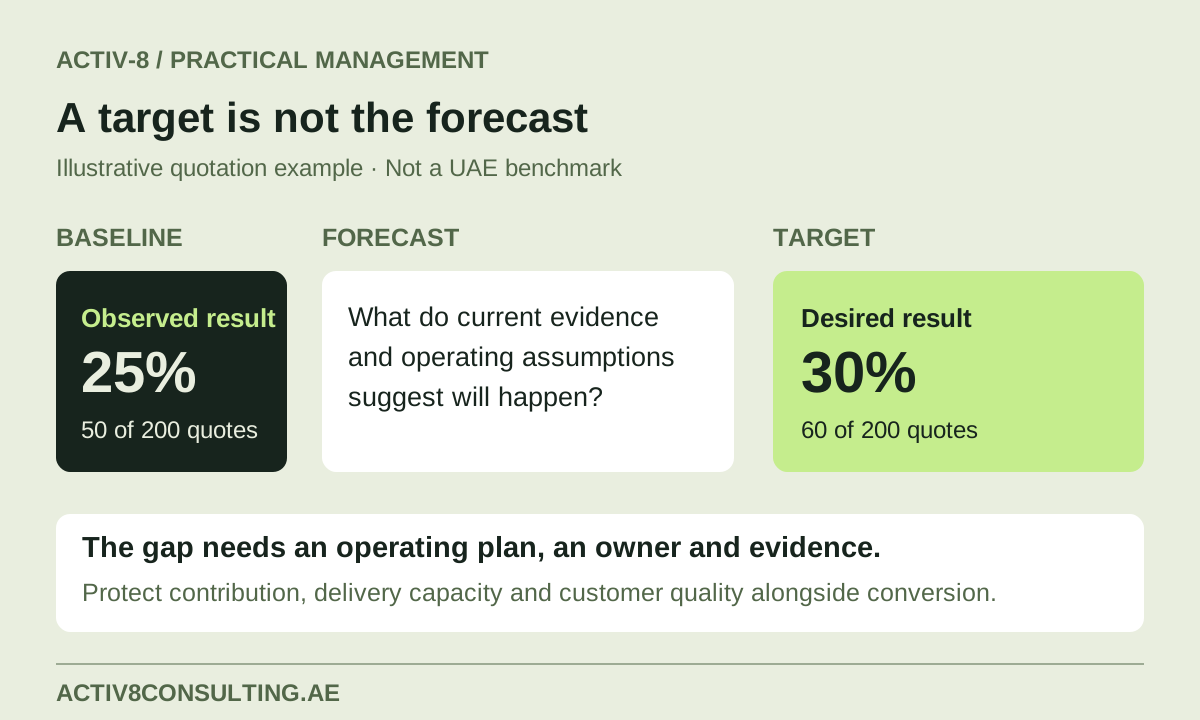
Suppose management wants a result to improve substantially but has not yet changed the process or resources. That ambition can be useful, provided the forecast does not automatically move to match it. Record what the team expects under current conditions, then show the actions and assumptions required to reach the target.
NIST's performance measurement guidance distinguishes intended goals from projections of expected performance. For an owner, the practical application is to keep the gap visible. A target above the forecast should prompt a delivery plan, not a cosmetic adjustment to the expected result.
Classify targets by purpose. A contractual or essential operating requirement is different from an exploratory improvement ambition. Do not apply the same tolerance or motivational language to every type. Explain what happens if the target is missed, what management will investigate and which decisions remain open as evidence develops.
Build the target from a plausible mechanism
Ask which inputs your team can change and how those changes should affect the outcome. Faster quotation follow-up, fewer incomplete orders or better appointment coverage may have a credible connection to a commercial KPI. “Work harder” is not a mechanism. State the proposed change, its owner and the evidence you will gather.
Estimate the likely effect using your own observations where possible. If the estimate is uncertain, present a range and a pilot rather than a false level of precision. Include the time needed for training, adoption and the result to appear. A process change introduced near the end of a month may not affect that month's completed sales materially.
Check capacity and dependencies. A sales target can exceed the delivery team's ability to fulfil orders, while a service-speed target can depend on a supplier the team does not control. A realistic target is demanding only where the operating plan can support it. Otherwise it creates pressure without a credible route to achievement.
An illustrative quotation target in AED
Imagine a UAE specialist service business reviewing 200 comparable quotations from a completed period. Fifty became orders, giving an observed quotation-to-order conversion of 25%. The average order value for those orders was AED 4,000. The resulting order value was AED 200,000. These are hypothetical figures, not a market benchmark or an Activ-8 result.
Management considers a 30% conversion target for another 200 comparable quotations. That would mean 60 orders and AED 240,000 of order value if the average value remained AED 4,000. The additional AED 40,000 is potential order value under the stated assumptions, not additional profit or cash already received. Delivery costs, timing and collection still matter.
Before accepting the target, the team checks whether ten additional orders can be delivered and why conversion should improve. A follow-up trial may provide evidence, but it cannot establish a universal five-percentage-point uplift in advance. If the mix of quotations changes, management should revisit the comparison rather than attribute every movement to the trial.
Add guardrails that protect the business
Pair the main target with a small number of checks for foreseeable trade-offs. A conversion target may need contribution, cancellation and delivery-quality checks. A response-time target may need accuracy and resolution measures. An output-volume target may need rework and customer-impact measures. Choose guardrails related to the way the result could be improved badly.
Give each guardrail a clear definition too. “Keep quality high” does not help a manager decide whether to continue a trial. An observed increase in corrections or a fall in contribution per job is more actionable. Avoid creating so many secondary measures that nobody knows which decision they support.
Review incentives and authority alongside the scorecard. If a team is judged entirely on new sales but cannot control discounts, delivery dates or customer qualification, the target may encourage behaviours management did not intend. Make the acceptable boundaries explicit and ensure employees can escalate conflicts rather than conceal them.
Choose a review cadence that matches the signal
Review leading operating indicators frequently enough to act, but allow outcome measures time to mature. A weekly view of follow-up completion may be useful even when the related sales cycle lasts longer. Treating every weekly fluctuation in a small sample as a performance verdict can lead to unnecessary changes and lost confidence in the data.
At each review, compare actual performance, the target and the current forecast. Explain the material gap using volume, mix, process and timing. Ask whether the planned action happened and whether the expected mechanism is visible. If the action was not adopted, the first problem may be implementation rather than the original target level.
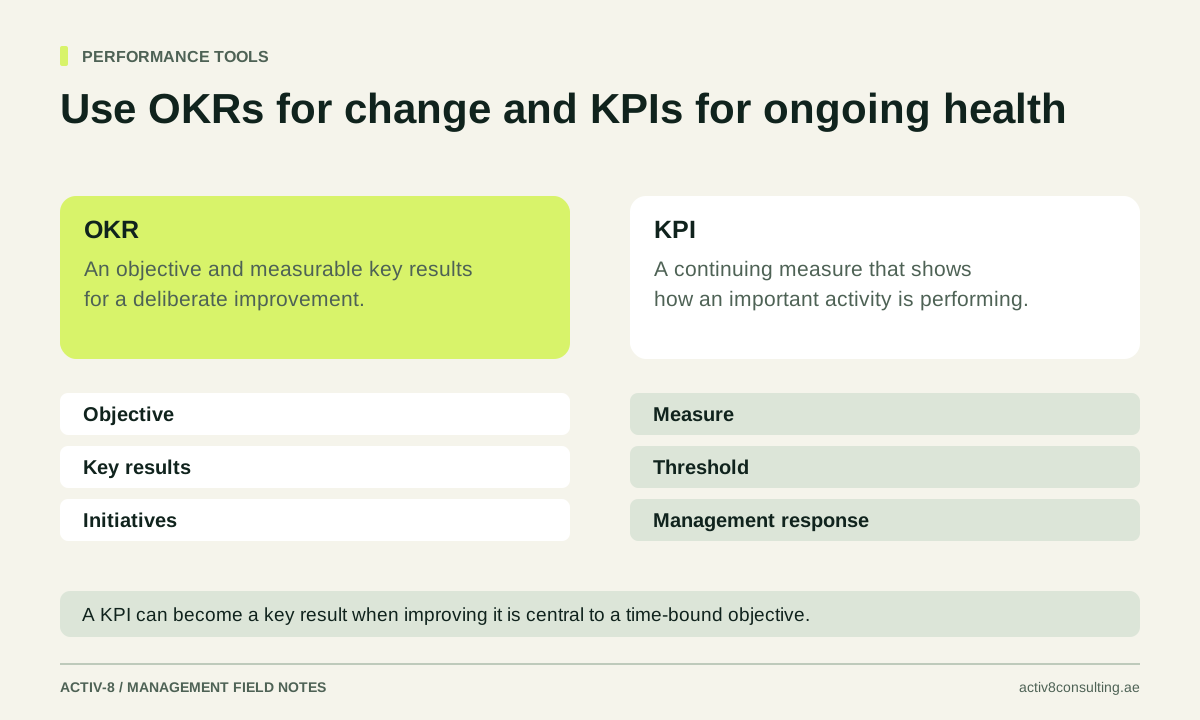
Our OKRs versus KPIs guide helps separate an ongoing health measure from a time-bound improvement objective. A KPI can continue monitoring the business after a project ends. The improvement work should still have a named owner, defined outcome and point at which management decides whether it has worked.
Change targets transparently when assumptions change
Do not quietly rewrite the target when performance becomes uncomfortable. Preserve the original commitment and explain any approved revision. A genuine change in scope, capacity or business direction may justify a new target, but management should be able to see the reason and its effect.
Equally, do not retain a target that has become meaningless simply to appear consistent. If the business changes its offer or data definition, establish a comparable baseline or show a clear break in the series. Explain what can and cannot be compared. Honest continuity is more useful than a smooth chart with incompatible numbers.
Activ-8 reporting and business intelligence consultancy can help define measures, establish baselines and connect targets with operating decisions. A useful KPI target should tell the team what matters, show how progress will be judged and leave management able to distinguish ambition from evidence.
Sources & further reading
Primary guidance behind the methods discussed. The examples, diagrams and tools in this article are original Activ-8 material.
Put the thinking into practice.
Explore reporting and business intelligence Discuss your business with Mark