THE STARTING POINT
A second branch needs evidence of additional demand and a business model the team can repeat.
Prove the operating model before copying it
Your UAE business is ready to consider a second branch when the first has repeatable economics, reliable delivery and management that works without your constant intervention, and when the new location has a credible demand case. A busy first branch is a useful signal, but it is not enough. You need to test whether a second location will create additional contribution after its own costs and the extra burden placed on the wider business.
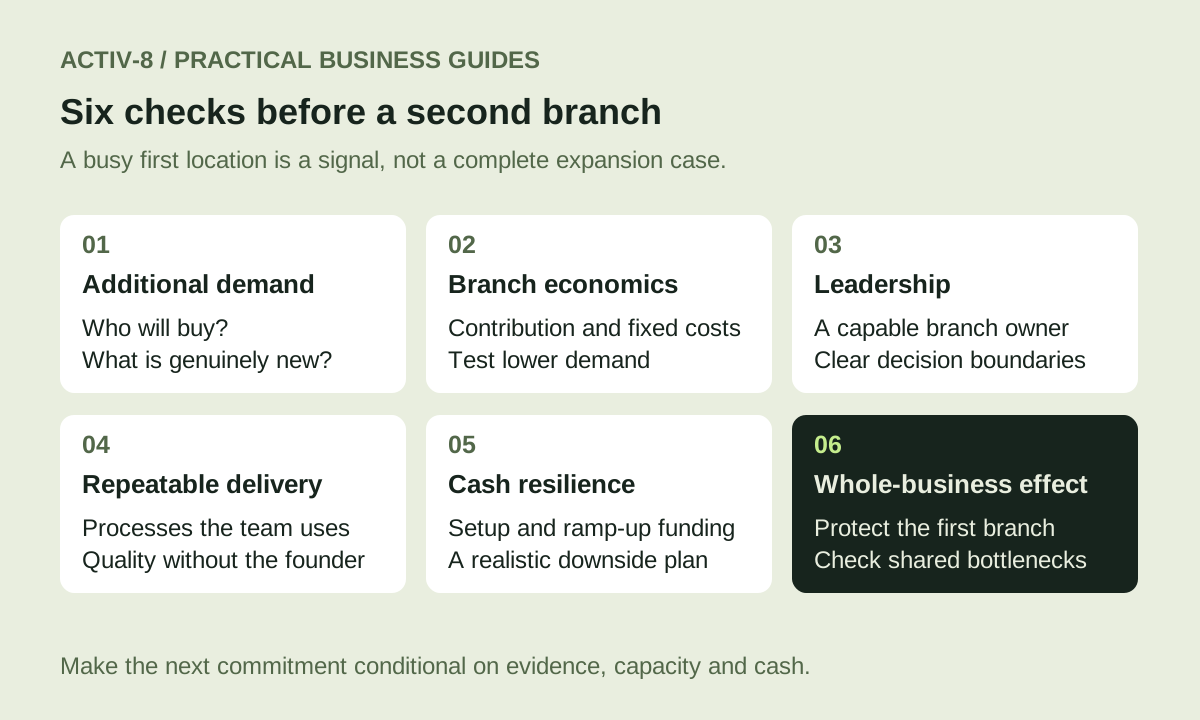
The decision has several parts: demand, unit economics, people, process, cash and management capacity. A weakness in one can undermine strength elsewhere. An attractive location cannot compensate indefinitely for a service model that only works because the founder personally fixes every exception.
This guide focuses on operating and commercial readiness. Use the relevant qualified advisers for location-specific formal requirements. The practical question here is whether your business can deliver and fund the expansion while protecting the operation that already supports it.
Check whether the first branch is genuinely repeatable
Look beyond the latest month's revenue. Examine the first branch across a period that includes normal variation in demand and costs. Separate unusual one-off sales, founder-led relationships and temporary cost advantages. You want to understand which parts of performance are likely to transfer and which depend on circumstances unique to the existing location.
Observe what happens when the owner is absent. Can the manager resolve routine customer issues, control the schedule and explain performance? Are the necessary records maintained? If decisions wait until the founder returns, a second branch may simply create another queue for the same person.
Document the minimum operating model: the offer, service standard, staffing pattern, key processes and reporting rhythm. This should be a working description used by the team, not an elaborate manual produced only for expansion. A branch is more reproducible when managers can explain how good performance is created and recognise early signs that it is slipping.
Establish whether the demand is additional
A second branch can attract new customers, improve access for existing customers or reduce delivery constraints. These are different reasons to expand. Identify which one supports your case and what evidence would validate it. Enquiries from an underserved area may be useful, but check whether they represent enough repeatable demand at an acceptable contribution.
Distinguish demand you can observe from demand you hope to create. Existing customer requests, unsuccessful bookings and tested local campaigns provide different strengths of evidence. A general statement that an emirate or neighbourhood is growing does not establish that your specific offer will win enough suitable customers.
Consider cannibalisation. Some customers may move from the original branch to the new one. That may improve convenience or release useful capacity, but the transferred revenue is not wholly new revenue for the company. Model the effect on both branches. Our business growth strategy guide helps compare expansion with other routes to serving demand.
Test the effect on the existing business
Add the consequences for the first branch. If opening the second moves a strong manager and two experienced team members, what happens to delivery and customer retention at the original location? Recruitment and training may be necessary before the new branch opens, even if the eventual headcount plan looks affordable.
Examine central bottlenecks as well. Finance, scheduling, marketing and customer support may already be near capacity. Two branches can require more coordination than simply twice the existing routine. Identify the extra tasks and assign owners, rather than assuming the head office can absorb them without consequence.
If sales shift between locations, calculate the contribution lost and any capacity released at the first branch. Released capacity is only beneficial if it has a useful purpose. A combined company forecast should reveal whether the second branch improves the whole business, not merely whether the new location can produce an attractive standalone sales figure.
Model the cash required before the branch settles
An operating profit forecast does not show all the funding needed. Initial setup expenditure, deposits, opening stock, training and a period of lower sales can create a cash requirement before the branch reaches a stable level. List the timing of payments and expected receipts rather than spreading everything evenly across a year.
Prepare a downside scenario with a slower ramp-up. Ask how long the business can fund the new operation without undermining the first branch or missing existing commitments. Identify a reserve for uncertainty and the decision points at which you would reduce spending, change the offer or reconsider the rollout.
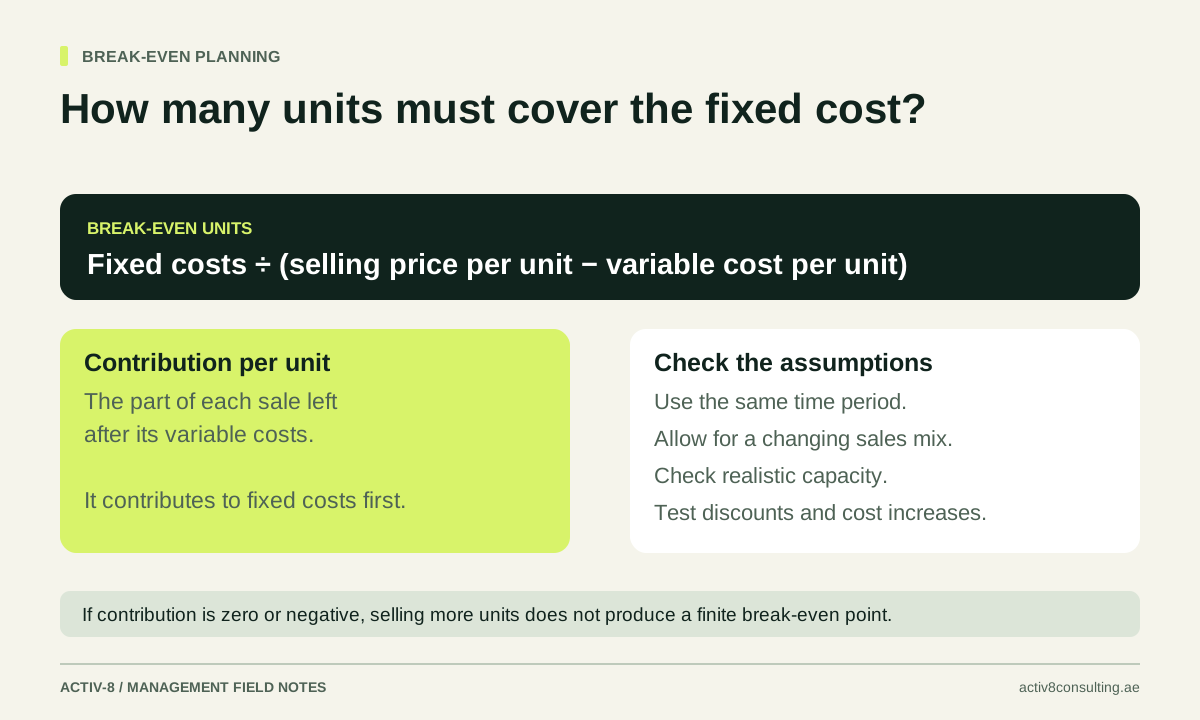
The break-even calculator guide helps connect fixed costs, contribution and required volume. Use it as one part of the decision, not as a demand forecast or a complete cash plan. Reaching a mathematical break-even point on paper does not prove that the market will provide the required work at the planned price.
Test the location model with the smallest useful pilot
Where the service allows it, explore a limited test before committing to the full operating footprint. A pilot could test customer demand from a new area, a restricted delivery schedule or a smaller service range. Choose a format that produces useful evidence about the proposed branch rather than a promotional event that cannot represent normal trading.
Define what the test must establish. You may need evidence about conversion, travel time, delivery cost, repeat demand or management coordination. Keep the costs and customer promises proportionate to the experiment. The pilot should reduce an important uncertainty, not simply give the team something to announce.
Be explicit about what does not transfer from the test. A small operation supported heavily by the founder may underestimate the cost of a permanent branch. A short promotion may attract customers who will not buy at the normal price. Record those limitations before deciding how much confidence to place in the result.
Give the second branch a manager and a review system
Name the person accountable for opening readiness and the person responsible for ongoing performance. They may be the same individual, but the responsibilities differ. Opening work involves dependencies and deadlines; ongoing management involves people, customers, quality and economics. Both need time and authority.
Create a concise branch review covering demand, contribution, service delivery, capacity and cash. Use consistent definitions across locations while recognising differences in maturity and customer mix. A new branch should not be judged against the same absolute volume as a mature branch without considering its ramp-up plan.
Set escalation rules. The manager should know when a cost overrun, staffing gap or service failure requires intervention. The owner should know which decisions can remain local. If every small exception travels through the founder, the operating model has not yet scaled even if the company now has two addresses.
Make expansion conditional on evidence
Write a readiness decision containing the demand case, economic scenarios, cash requirement, management plan and unresolved assumptions. Set conditions that must be met before the next major commitment. These conditions should be specific enough to verify, such as an appointed manager, a tested process or a funded downside plan.
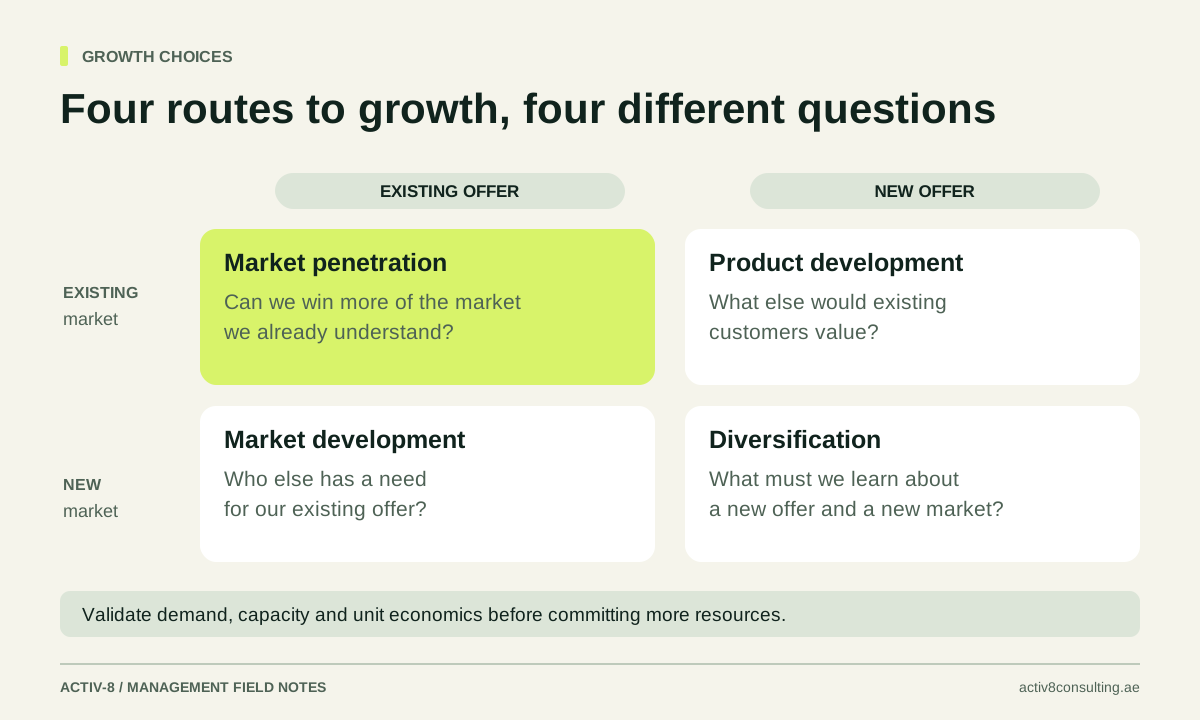
There is no obligation to expand simply because the first branch is busy. Improving pricing, increasing capacity at the existing site or serving a new customer segment may offer a better return with less operational complexity. Compare the alternatives against the same objective.
Activ-8's management consultancy services can help test the expansion case and translate it into a practical decision. A second branch should follow a business model you understand, supported by evidence that the additional demand and management capacity can sustain it.