THE STARTING POINT
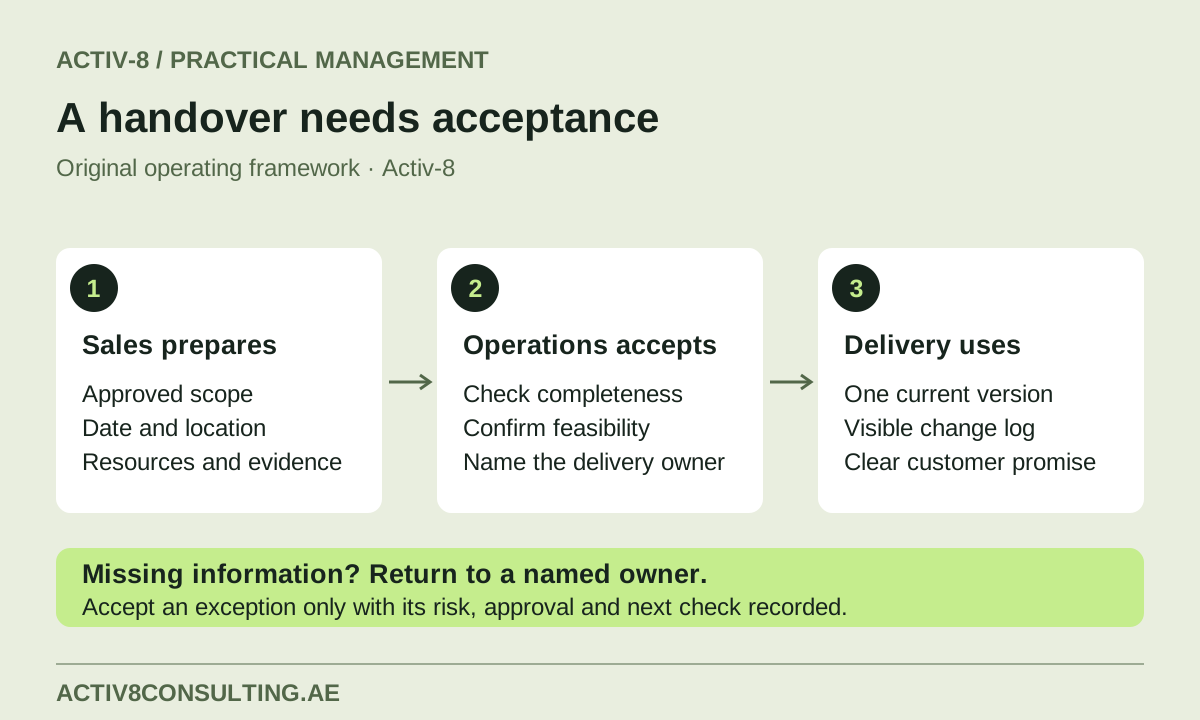
A handover is complete when the receiving team accepts a usable, current record and owns the next step.
Make the handover a controlled decision
Stop mistakes between sales and operations by agreeing what a complete order contains, who accepts it and what happens when something is missing. A longer checklist alone will not solve the problem. Your sales team must know which promises need operational approval, and your delivery team must acknowledge the version it can actually deliver. Start with one common order type, test the handover against real records and track first-time acceptance alongside customer outcomes.
Find the moment ownership becomes unclear
A customer rarely sees your departmental boundaries. They see a proposal, a promise and the service that arrives. Inside a UAE service business, however, the conversation may pass through a salesperson, a coordinator, a supplier and a delivery team. Each person can believe that somebody else checked the date, location or specification. The resulting mistake is often created between jobs rather than within one person's task.
Review a small, consecutive sample of completed orders, including straightforward ones and those that needed correction. Follow each order from the original request to delivery. Compare the quotation with the information operations received. Record where a detail changed, who knew and whether the change reached the person doing the work. Avoid starting with a list of people to blame. You need an observable failure pattern, such as instructions being copied from an outdated proposal.
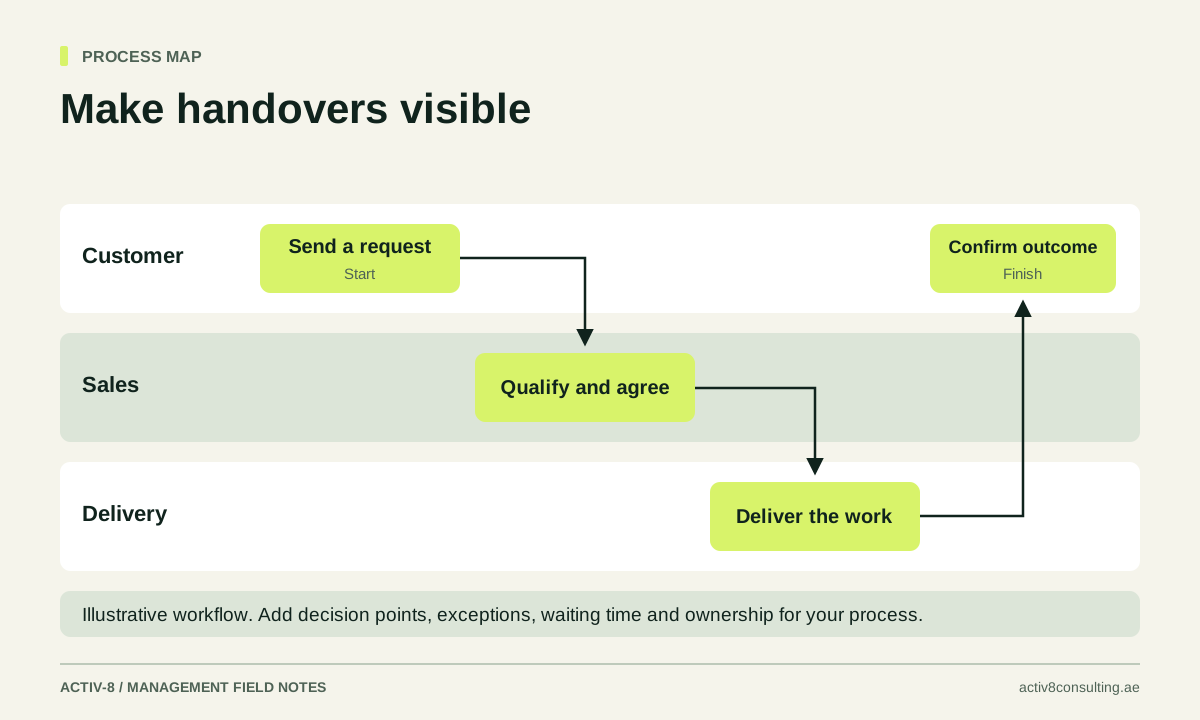
Use our business process mapping guide to draw these transitions. Mark the decision to accept an order separately from the activity of sending it. A message in a shared inbox is evidence of transmission, not evidence that somebody has taken responsibility.
Agree the minimum viable handover record
Build the record around delivery decisions. For a field service order, that may mean the customer contact, service address, scope, agreed exclusions, date, access arrangements, resource needs and the version of the approved quotation. Include the person responsible for resolving a commercial question. If billing arrangements affect when work can start, record the relevant confirmed status without putting unnecessary personal or payment information into a general team document.
Do not make every possible field compulsory. When a field is routinely completed with a dash or invented answer, the form has stopped providing assurance. Distinguish information that blocks scheduling from information that can be confirmed later. Give the latter an owner and a due point. A missing parking instruction might be resolvable before dispatch; an unknown equipment requirement might prevent accepting the job at all.
For each required item, state what counts as usable evidence. “Customer informed” is vague. “Customer approved revision three, including the reduced scope” is a meaningful handover fact. Store the reference to that approval where the relevant team can find it, subject to your normal access controls.
Make acceptance a visible decision
Operations needs three practical responses: accepted, returned for clarification, or accepted with a documented exception. Assign a named receiver for each work queue rather than assuming that everyone watching it shares responsibility. The receiver checks completeness and feasibility within an agreed working window. Sales remains responsible for resolving a returned commercial question; operations owns delivery once acceptance is recorded.
An exception should identify the uncertainty, its possible effect, the person approving it and the next check. It should not become a secret route around the rules. If urgent work repeatedly bypasses the record, investigate whether your normal process is too slow or whether the commercial promise is unrealistic. Both require a management decision.
Define what happens when the receiver is unavailable. A backup owner and a clear escalation point prevent an accepted customer deadline from sitting behind one person's absence. Keep this proportionate: a small team can use a simple status field and owner, provided there is one authoritative record and the next person can understand it.
A worked service order in AED
Consider a hypothetical Dubai office maintenance company quoting AED 12,000 for a scheduled service. The approved scope includes two visits, specified materials and work outside the customer's busiest operating hours. Sales forwards the quotation, but the scheduling note shows only one visit. The technician therefore arrives without the complete materials allocation. This is an illustrative example, not an Activ-8 client result.
The company records AED 450 in additional supplier transport and AED 350 for a separately paid return visit. It also spends four existing staff hours resolving the issue. At an assumed capacity value of AED 100 an hour, that is AED 400 of staff capacity. The direct additional cash cost is AED 800; the capacity value is a separate AED 400. Calling the entire AED 1,200 a cash saving would overstate what a better handover could immediately recover.
The revised record requires the number of visits, the material list reference and the approved service window before scheduling. The operations coordinator accepts the order against those items. This is a targeted control against the observed failure, rather than an attempt to capture every fact about every customer.
Control changes after the handover
A complete initial order can still fail when a customer changes it. Give each material revision a version and record its effect on price, timing and resources. The relevant team should acknowledge the changed instruction before work proceeds on the new basis. Avoid allowing the latest message in a conversation to silently replace an approved scope.
Decide which changes the coordinator can accept and which need renewed commercial approval. A corrected contact number is different from adding a second location or bringing delivery forward. Write boundaries in terms the team can apply. Where a change affects a customer commitment, assign one person to communicate the revised position and record what was agreed.
The practical aim is not to stop useful flexibility. It is to make the cost and consequence of flexibility visible. If every revision creates a new document that nobody reads, simplify the system. A clear change summary attached to the current order may be more usable than a chain of conflicting attachments.
Measure the quality of the transfer
Track first-time acceptance as accepted complete handovers divided by all handovers reviewed. Define whether an accepted exception counts as complete; ideally report exceptions separately so the figure cannot improve by relabelling incomplete work. Also record how long an order waits for acceptance and how many delivery problems can be traced to missing or contradictory instructions.
Break problems into a few actionable categories: scope, timing, access, resources and commercial approval. Review the category with the highest repeated operational consequence, not just the largest count. A rare missing specification can be more expensive than several harmless contact corrections. Include a brief description of the effect so that the number leads to a decision.
Do not reward first-time acceptance in isolation. A receiver who accepts everything can create an attractive score while passing defects into delivery. Check a sample of completed jobs and ask whether the accepted record matched what the customer expected. The measure should support reliable service, not merely fast administration.
Consider the customer communication at the boundary as well. If the order is waiting for clarification, the customer should know who is responsible and when the next update will arrive. Do not send a delivery confirmation merely because sales marked the opportunity as won. Use the operational acceptance event to trigger the appropriate message, and test that message against the actual service promise. This closes the gap between the internal status and what the customer reasonably believes has been agreed.
Roll out one order type before expanding
Choose a frequent, reasonably consistent service and test the record for two working cycles. Ask both teams to complete it using actual examples. Watch where they pause, duplicate information or seek clarification. Remove fields that do not support a decision, and strengthen fields that regularly hide an assumption. Record the agreed owner and effective version.
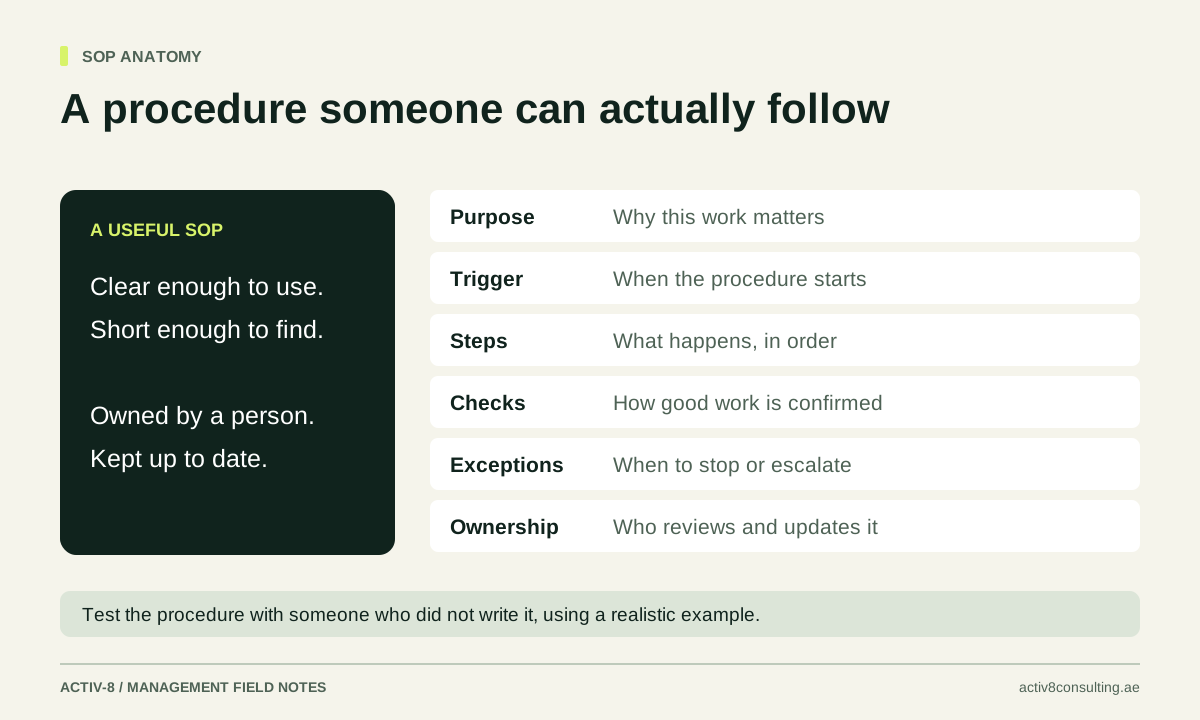
Our SOP guide explains how to turn the tested process into a usable instruction. Keep the instruction close to the work and show one good completed example. Train the sales and operations teams together so each can explain what the other needs and why.
Use the downloadable handover worksheet to test your first service. Replace its illustrative row, add the evidence references and agree the acceptance rule before introducing automation. If your commercial promises and delivery capacity need aligning, Activ-8 operations consultancy can help map the transfer, establish ownership and test whether the changes reduce avoidable errors.
PUT IT INTO PRACTICE
Sales-to-operations handover worksheet
Replace the fictional example with one common service order. Record the required evidence, receiving owner, acceptance decision and missing-item action. Keep sensitive customer information in your approved systems and use working references here.
Download the worksheetCSV file · Opens in Excel or Google Sheets · No sign-up required