THE STARTING POINT
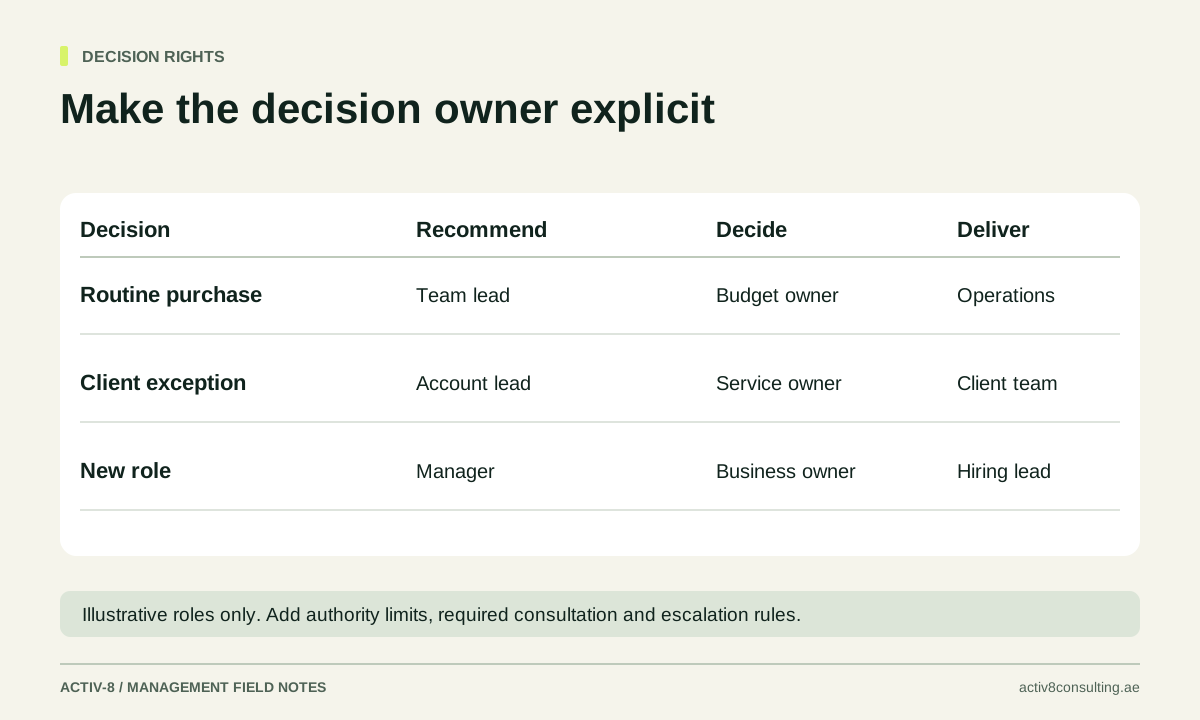
Assign participation to specific outputs, then keep decision authority and delivery dates explicit elsewhere.
Use RACI to clarify who contributes to each result
Use a RACI matrix by listing the project's meaningful outputs, identifying who does the work, naming one person answerable for each output, and deciding whose input or updates are needed. Keep the matrix small enough to use in actual decisions. A document that lists every person against every minor task usually creates more discussion than clarity.
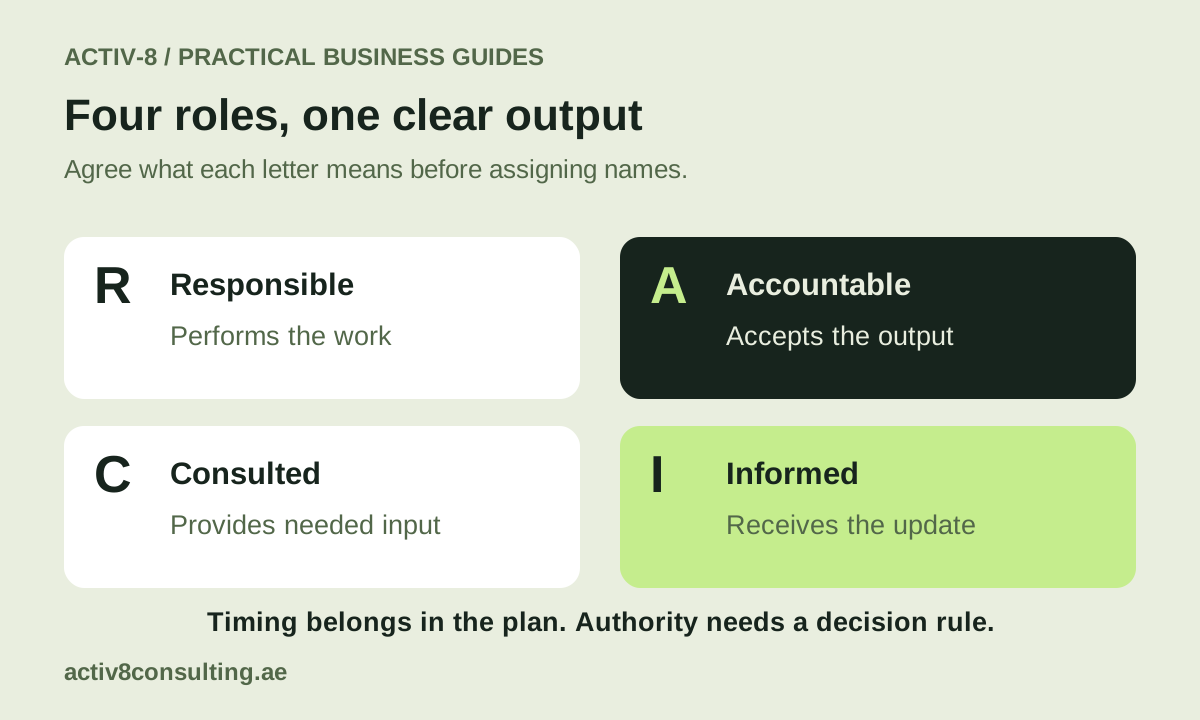
RACI stands for responsible, accountable, consulted and informed. In this guide, responsible means performing the work; accountable means owning acceptance of the output; consulted means providing input before completion; and informed means receiving an update. Agree these definitions with your team because businesses sometimes use the terms differently.
For a small UAE company, the main benefit is resolving gaps between functions. A customer onboarding project, for example, may involve sales, operations and finance without belonging neatly to one department. RACI helps those people understand their part. It does not establish spending authority, replace a delivery plan or give the project owner unlimited power over colleagues.
Start with outputs rather than job titles
Describe what the project must produce before discussing names. Useful outputs might include an agreed onboarding checklist, a tested sales handover and a customer welcome message. “Support the project” is too vague to assign. “Approve the minimum information operations needs before scheduling work” has a clear result that somebody can accept.
Choose a level of detail at which ownership could realistically be disputed. You do not need a separate row for arranging every meeting. You probably do need one for approving scope, accepting a tested workflow and deciding whether the new process is ready for use. Those outputs involve different judgements and participants.
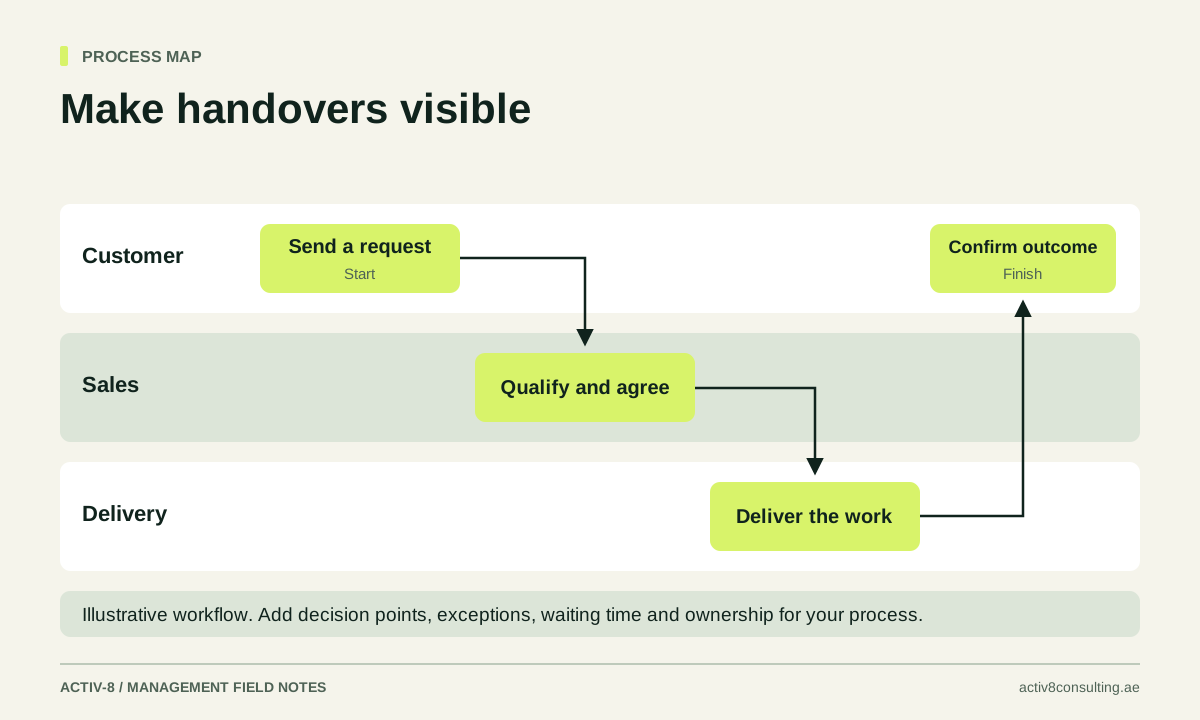
Map the sequence as well as the ownership. The business process mapping guide helps reveal where one output becomes another team's input. If the handover cannot be tested until the checklist is agreed, that dependency belongs in the project plan. The RACI tells you who participates, while the plan tells you when their contribution is needed.
Work through one original project example
Imagine an illustrative Sharjah business introducing a more consistent onboarding process for commercial maintenance customers. The project sponsor is the general manager. An operations manager coordinates the work, a sales manager represents the customer promise, and a finance lead checks the information needed for commercial administration. These are example roles, not a recommended organisation chart.
For the onboarding checklist, the operations manager drafts the content and is responsible. The general manager is accountable for accepting the agreed result. Sales and finance are consulted on the information needed. Staff who will later use the checklist are informed of the approved version and given an opportunity to practise it.
The assignments can change for another output. Sales may be responsible for drafting the customer welcome message, with operations consulted on service commitments. Do not assume one fixed arrangement applies to the whole project. Assign participation to each output according to the knowledge, work and acceptance decision it actually requires.
Give accountability a practical meaning
The accountable person should know what they are accepting and have a route to resolve material disagreements. Merely placing a senior person's name in that column adds little value if they never review the output. Define the acceptance evidence and the point at which their decision is required.
Prefer one clearly accountable owner per output. Where several leaders need input, make their consultation requirements explicit rather than using multiple accountable labels to avoid a difficult conversation. Some existing governance arrangements may require several formal approvals; record those requirements separately and keep a clear coordinator for obtaining them.
Accountability does not mean doing all the work. In the example, the general manager does not need to write every checklist item. Their role is to confirm that the finished process meets its purpose and that unresolved trade-offs have been addressed. This distinction prevents senior managers becoming an unnecessary production bottleneck.
Make consultation specific and finite
State what each consulted person is being asked to contribute. Finance might check whether the onboarding record contains the agreed billing contact and purchase reference where relevant. Sales might check that the welcome message matches the offer sold. A general invitation to “review everything” can produce broad late objections without resolving the important questions.
Give consultation a deadline linked to the project plan. If someone cannot provide input in time, the project owner needs to know early enough to change the sequence or seek another appropriate contributor. Do not silently interpret a missed response as approval unless your authorised process explicitly provides for that treatment.
Ask whether every proposed consultation is necessary for every case. A routine output may need fewer contributors than a non-standard one. Reducing unnecessary consultation can improve speed, but the test is whether a relevant decision would become less informed. The goal is proportionate participation, not excluding colleagues for the sake of a simpler diagram.
Separate being informed from being asked to approve
An informed person receives an update so they can coordinate their own work or understand what has changed. They are not automatically an additional approver. State what they will receive and when: a completion notice, the current document, a launch date or an exception that affects their team.
This distinction matters when a business relies heavily on group messages. Adding many people to a discussion can make everyone feel involved while leaving the actual decision unclear. A short update after a named owner accepts the output may be more useful than an open conversation in which nobody knows whether they are expected to respond.
Do not use the informed category to hide a change that materially affects someone's work. If the team has practical knowledge needed to design the process, consult them while there is still time to use it. Informing them only after launch may create avoidable rework and make the matrix appear disconnected from reality.
Test the matrix with a difficult scenario
Before rollout, ask what happens if the tested handover fails. Who records the problem, who revises the checklist and who decides whether the launch date should move? If the answer requires inventing a new chain of authority, the current matrix or project plan is incomplete.
Also test a disagreement. Suppose sales wants to accept a customer before all scheduling information is available, while operations considers the missing information essential. The matrix should identify the decision owner and the contributors. The commercial boundary itself belongs in the relevant decision rule, not in a single letter beside a person's name.
The delegation matrix guide explains how to document those boundaries. Use the tools together: RACI clarifies participation in an output, while delegation clarifies who can approve a decision under defined conditions. Neither replaces a conversation about what the business is trying to achieve.
Keep the working version small and current
Use the downloadable worksheet to describe a real output, its completion evidence and each role's contribution. The example rows are illustrative and should be replaced. Begin with the few outputs where ownership is unclear, then add detail only when it helps the team act. Blank roles can be appropriate where consultation or updates are genuinely unnecessary.
Review the matrix when scope or staffing changes. Confirm that named role holders know their assignments and have capacity to fulfil them. A project can look perfectly allocated on paper while the responsible person is unavailable for the next two weeks. Keep the RACI alongside the active plan rather than treating it as a one-off kickoff document.
Activ-8 leadership advisory can help a management team settle ownership across a practical project. Bring the outputs and the recent points of confusion, rather than a finished matrix that everyone is expected to endorse. The useful result is a shared agreement about work, input and acceptance that reduces hesitation when the project encounters a real decision.
PUT IT INTO PRACTICE
Project RACI worksheet
List meaningful project outputs and completion evidence. Assign the responsible, accountable, consulted and informed roles, then agree review timing. Replace the illustrative rows and confirm assignments with the people involved.
Download the worksheetCSV file · Opens in Excel or Google Sheets · No sign-up required