THE STARTING POINT
Explain the bank movement and the timing of receipts and commitments before deciding how to address a cash shortage.
Separate profit from cash timing
A profitable business can run short of cash because revenue, expenses, receipts and payments happen at different times. Customers may owe you money while suppliers and staff need paying now. Growth can increase that gap by tying up money in work, stock or equipment before the related cash arrives. To find the cause, reconcile the movement in your bank balance with operating activity and build a dated forecast of actual receipts and payments.
Start with the bank movement, not a general feeling
Choose a clear period and establish the opening and closing available cash balances using records you trust. Then list the major cash movements that explain the change. Keep internal transfers separate so they do not look like fresh income or spending. Where balances include money that is not freely available for ordinary operations, make that restriction visible in your management view.
Next, compare the cash movement with the profit figure for the same period. Do not expect them to match automatically. The purpose is to explain the difference with evidence, not to force the bank total into the profit report. Ask your finance team to resolve inconsistent dates, missing entries or differences in how the reports are prepared before drawing operational conclusions.
For a UAE service business, the issue may be a small number of large customer payments rather than a broad decline in trading. Identify the specific invoices and commitments driving the gap. An owner who knows which receipt moved and which payment cannot move has a more useful decision than an owner who only knows that cash feels tight.
Examine sales that have not become receipts
Separate revenue recorded from money received. Review unpaid invoices by customer, amount, agreed due date, current collection evidence and any dispute. A large overdue balance needs a different response from a recently issued invoice that remains within the customer's agreed payment schedule. Keep the commercial relationship and the actual evidence visible.
Check whether completed work is waiting to be invoiced or whether an invoice lacks information the customer needs to process it. A missing approval reference can delay payment even when the customer accepts the service. Operations, sales and finance may each hold one part of the information, so assign a person to resolve the complete issue rather than passing it between teams.
Avoid assuming that every issued invoice will arrive on its original date. For forecasting, distinguish confirmed payment information from an internal expectation. Record the source and date of the latest update. A promise repeated by your own team is not stronger evidence simply because it appears in several reports.
Find cash tied up before delivery
Some businesses pay for materials, supplier deposits or subcontracted work before receiving customer cash. Others carry stock or spend staff time on work that cannot yet be invoiced. Growth can increase these requirements even when each completed sale appears profitable. Map when money leaves and when it is expected to return for your main service types.
For project work, review the milestones between accepting an order, purchasing inputs, delivering, obtaining acceptance, invoicing and collecting. Identify where the business carries the cost longest. A change to scheduling, approval speed or the commercial structure may reduce the funding gap, but test its effect on the customer relationship and delivery process before adopting it.
Do not describe every amount tied up as permanently lost. The issue may be timing or recoverability, and those need different decisions. Slow-moving stock, unfinished work and a disputed invoice each require their own evidence. A management forecast should show when cash is expected, while the underlying issue has a named owner.
A simple illustrative cash bridge in AED
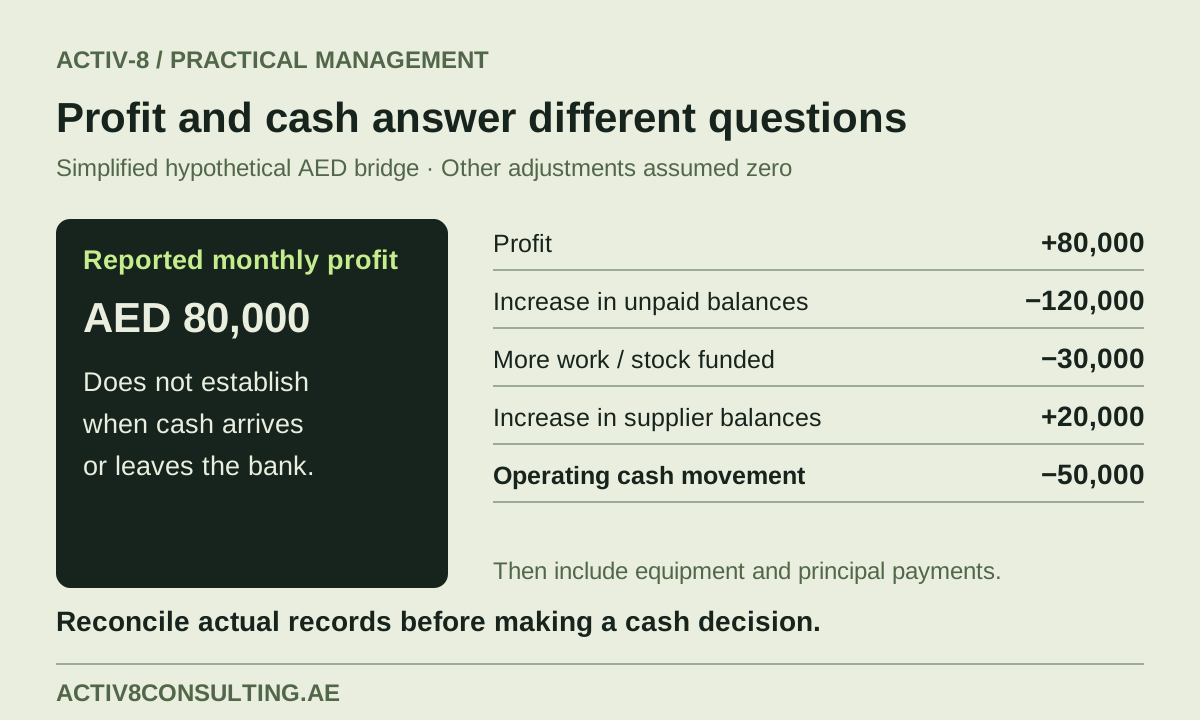
Imagine a hypothetical UAE service business reporting AED 80,000 of profit for a month. For a deliberately simplified management bridge, assume all other reconciling items are zero. Unpaid customer balances increase by AED 120,000, using cash relative to the profit figure. Work and stock paid for ahead of collection increase by AED 30,000. Amounts owed to suppliers increase by AED 20,000, temporarily retaining cash.
On those assumptions, the operating cash movement is AED 80,000 less AED 120,000, less AED 30,000, plus AED 20,000: an outflow of AED 50,000. The business also pays AED 40,000 for equipment and AED 15,000 of borrowing principal. The total cash reduction in this simplified example is therefore AED 105,000. With opening cash of AED 150,000, closing cash would be AED 45,000.
This illustration is not a complete accounting statement. It excludes other possible adjustments and assumes the categories have been consistently defined without overlap. Your finance team should reconcile the actual records. Its operational lesson is straightforward: a positive profit figure does not establish that enough cash will be available on the next payment date.
Separate recurring operations from other payments
List spending on equipment, debt repayments, owner withdrawals and other significant movements separately from ordinary operating receipts and payments. A business may be trading well while using cash for expansion or reducing borrowing. Combining everything into one expense total makes it harder to see whether the recurring operation is generating or consuming cash.
Also distinguish an exceptional payment from a cost likely to repeat. A one-off system implementation has a different planning implication from a supplier price increase affecting every future order. Record the timing and any remaining commitment. Paying the first instalment does not mean the cash requirement is finished.
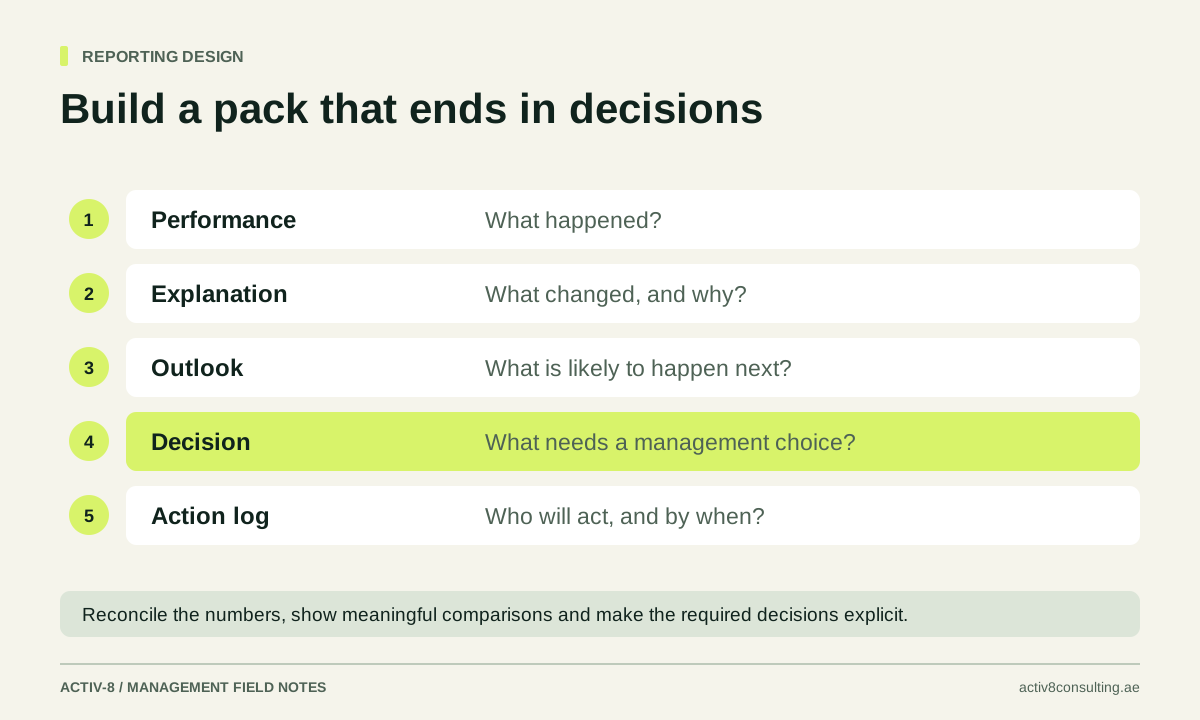
Use the management reporting pack guide to give the owner a connected view of trading performance, cash and operating commitments. The reports should explain one another. A strong revenue month alongside falling cash should lead to a specific explanation and action, rather than two disconnected presentations from different departments.
Build a forecast around dated evidence
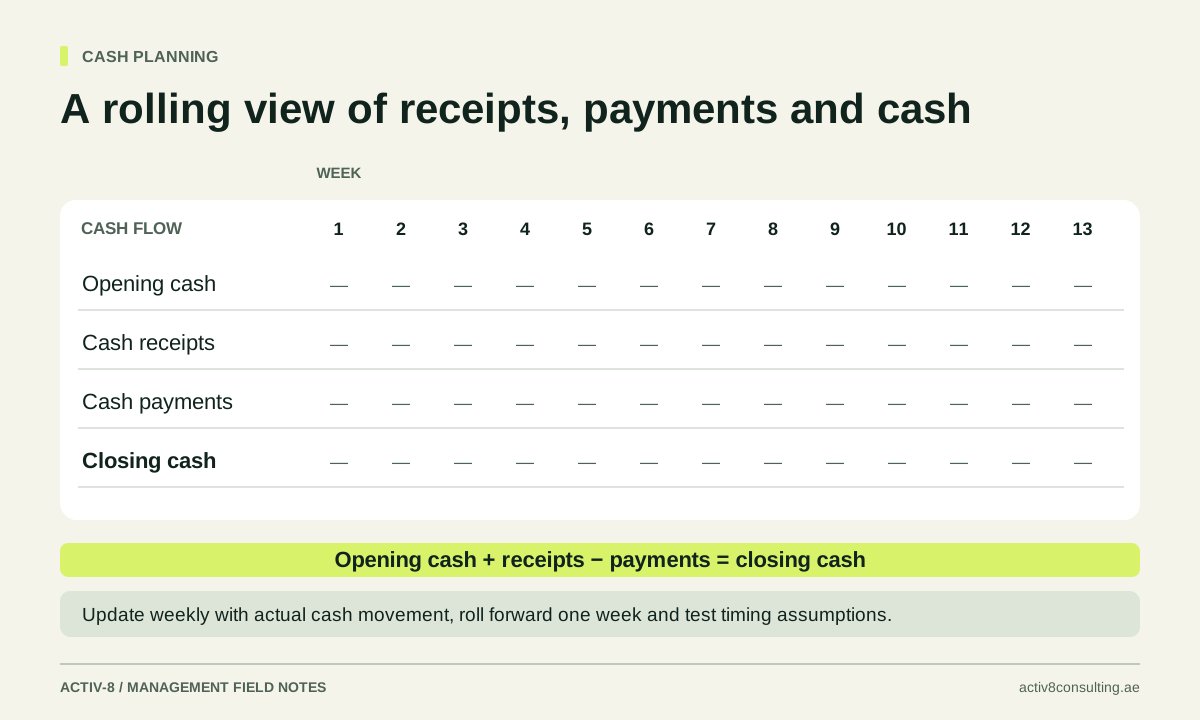
Create a near-term cash forecast with opening cash, expected receipts, planned payments and closing cash for each period. The 13-week cash flow guide provides a practical structure. Enter receipts by the date you reasonably expect collection, not simply the date the sale appears in the pipeline.
For material items, record the assumption behind the date. Is the work delivered, accepted and invoiced? Has the customer confirmed a payment? Does a supplier commitment depend on an order you have not yet won? These distinctions allow management to adjust the forecast intelligently when events change.
Review the lowest projected cash point as well as the ending balance. A forecast that finishes the quarter comfortably can still contain a shortfall halfway through. Keep committed payments and discretionary spending distinguishable so the team can discuss choices before a deadline. Any financing decision needs its own assessment rather than being treated as a plug that makes the spreadsheet balance.
Act on the cause of the shortage
If the problem is incomplete invoicing, improve the completion and approval handover. If customer receipts are late, assign collection actions and resolve disputes using evidence. If growth requires more upfront spending, assess the commercial and scheduling model before accepting additional commitments. Each cause needs a different response.
Be careful about solving today's bank balance by damaging next month's delivery. Delaying a necessary supplier payment may disrupt service; cutting follow-up capacity may slow collections further. Consider the operational effect alongside the immediate cash movement. Discuss changes with the responsible people rather than relying on a blanket instruction to spend less.
Set a decision trigger that reflects your real commitments and uncertainty. That might be a projected balance below an internally agreed buffer or a material receipt slipping beyond a critical payment date. The buffer is a management choice based on the business, not a universal percentage that applies to every company.
Make the cash discussion routine
Review the forecast at a cadence that matches how quickly the position changes. Compare actual receipts and payments with the previous forecast, identify the reason for material differences and update the next decision. Preserve a dated version so you can learn whether your assumptions are improving.
Give every major uncertainty an owner. Finance may maintain the forecast, but sales, delivery and purchasing often control the information that makes it reliable. A useful review ends with specific actions on the receipts, commitments and operating decisions affecting cash.
Activ-8 reporting and business intelligence consultancy can help connect operational plans with a clear management cash view. The aim is to understand why profit and cash differ, see pressure early and make informed decisions using records your finance team can reconcile.
Put the thinking into practice.
Explore reporting and business intelligence Discuss your business with Mark