THE STARTING POINT
Measure delivered work, adoption and business outcomes separately, then use the evidence to decide the next step.
Agree what progress would prove
You know a consultancy project is working when it produces the agreed change, the business can use that change and the relevant evidence improves against a credible starting point. Reports, workshops and completed tasks show delivery activity. They do not, on their own, prove a business result. Agree a small set of measures, acceptance tests and review decisions before the work begins, then use them consistently throughout the engagement.
For a UAE owner, this does not require a complicated evaluation department. A clear baseline, a named manager and a few reliable records can be enough for a focused project. The important point is to establish what would count as success before everyone has an incentive to describe the result favourably.
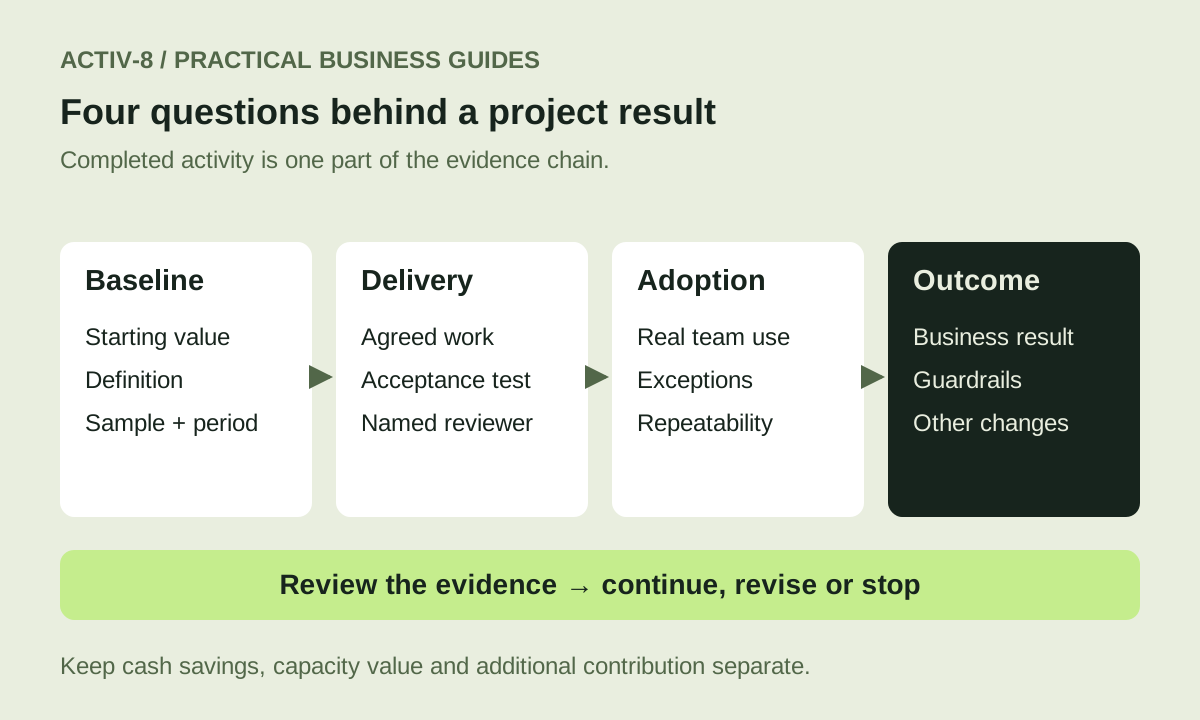
Separate three questions: did the consultant deliver the agreed work, did the team adopt it, and did the business benefit? Each needs different evidence. A project may pass the first question while still needing attention on the second and third.
Start with a baseline you can reproduce
Record the starting position using a definition someone else can repeat. If the problem is slow quotations, define the start and finish timestamps. Does the clock begin when an enquiry arrives or when the sales team has all required information? Does it end when a draft is prepared or when the customer receives a usable quotation? Different definitions create different answers.
Choose a period that includes enough representative work. Show the number of cases as well as the average. Segment where differences matter, such as standard and bespoke jobs, because a change in the mix can make an overall result look better without any process improvement. Note missing records rather than silently removing them.
Keep the baseline file and calculation method. A later comparison should not depend on reconstructing the starting position from memory. If the data is initially unreliable, an early project milestone can be establishing measurement. That is a useful deliverable, but it should be described as improved visibility rather than an operating performance gain.
Build an evidence chain from work to result
For each proposed activity, ask how it is expected to change behaviour and how that behaviour should influence the result. A clearer enquiry handover might reduce missing information. Fewer incomplete records might reduce clarification time. Faster preparation might then help more customers receive quotations while the need is still active.
This chain exposes weak assumptions. Faster quotations will not necessarily increase sales if the offer is uncompetitive or the business is attracting unsuitable enquiries. The project may need a guardrail around quality and margin, so that speed is not improved by sending incomplete or heavily discounted proposals.
Document the links you intend to test. You can then distinguish a failed intervention from a successful process change that did not produce the expected commercial benefit. That distinction matters because the next decision differs: revise the process in the first case, or investigate the commercial assumption in the second.
Use leading and lagging measures together
Leading measures show whether the intended behaviour is happening. They might include the proportion of enquiries assigned an owner, the proportion of jobs with complete handover information or the share of managers attending the new performance review. These measures can respond quickly, but they are only valuable when connected to a useful business outcome.
Lagging measures show the result after the work has passed through the process. They could include completion time, rework cost, contribution per job or repeat purchase. Some need a longer observation period. Do not force a retention project to show a meaningful repeat-purchase result before customers have had a realistic opportunity to return.
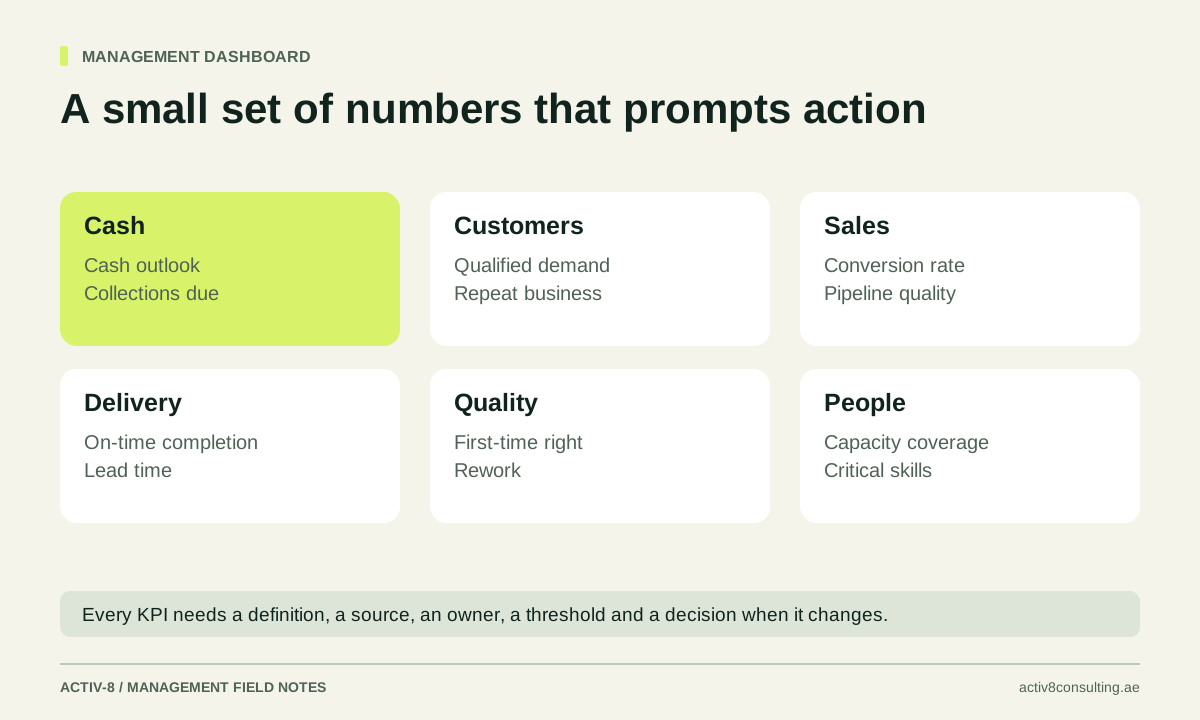
Choose only the measures needed to guide the decision. Our small business KPI dashboard guide explains how to define and assign metrics. A focused project scorecard should help the sponsor decide whether to continue, change or stop the intervention, rather than create a second reporting burden for the team.
Test the numbers with a hypothetical example
Imagine an illustrative Dubai service company reviewing 120 comparable quotations before a process change and 120 afterwards. Before the change, 72 were issued within the agreed time window. Afterwards, 96 met that window. The on-time proportion increased from 60% to 80%, a gain of 20 percentage points. It did not increase by 20%; the relative increase is about 33%.
That evidence supports a claim about quotation timeliness if the definitions, sample selection and job mix are comparable. It does not establish additional revenue by itself. The company should separately inspect quotation acceptance, discounts and delivery capacity. If more quotations were sent quickly but the extra accepted work required expensive overtime, the commercial result may be less attractive than the speed measure suggests.
The review should therefore present both the process improvement and the unresolved commercial questions. Precision in the claim makes the evidence more useful. It prevents a genuine operating achievement being weakened by an unsupported promise about profit.
Distinguish capacity released from money saved
Time saved can be valuable without immediately reducing expenditure. If a team spends fewer hours correcting records, those hours may become available for customer work, backlog reduction or better management. Payroll may remain unchanged. Do not multiply every released hour by a salary rate and automatically describe the total as a cash saving.
Identify how the capacity will be used and how that use will be observed. A team might handle more work within existing hours, avoid a planned temporary resource or complete previously neglected follow-up. These are different benefits with different evidence requirements. Keep them separate so they are not counted twice.
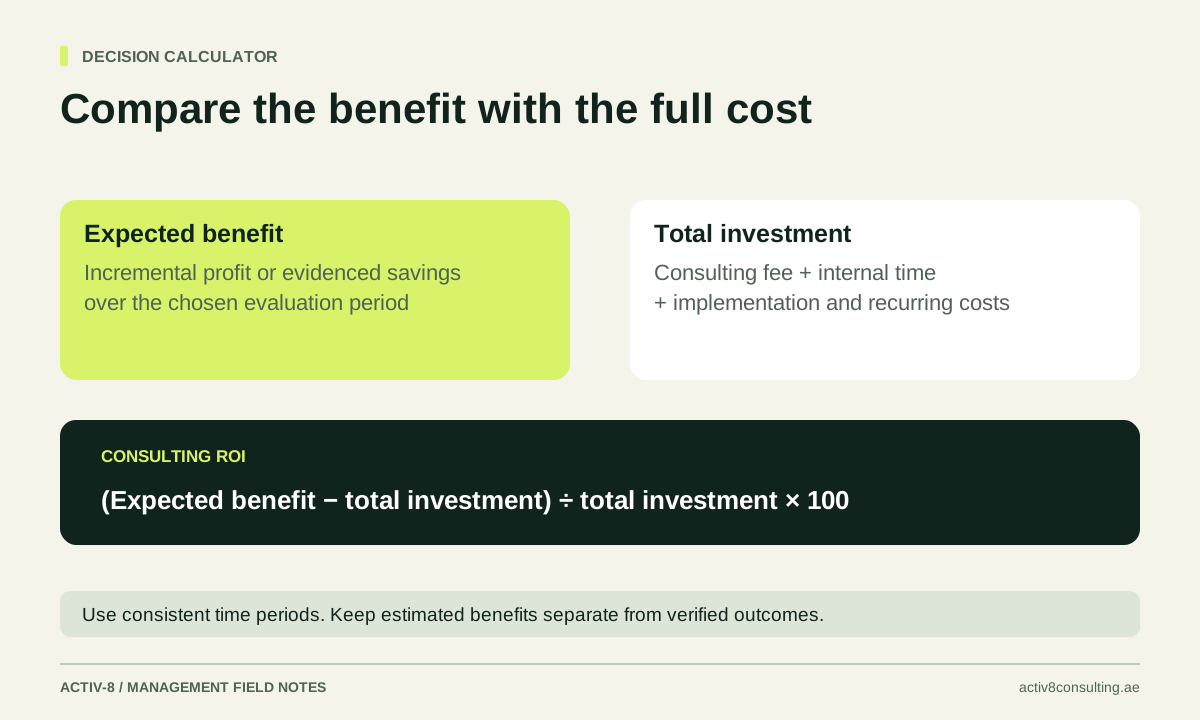
Our consulting ROI calculator guide provides a structured way to model benefits, costs and timing. Use conservative assumptions and compare them with actual results as the project develops. A forecast is a reason to test an investment; it is not proof that the projected return has already been earned.
Check other changes before assigning credit
A before-and-after comparison can be useful, but the business rarely stands still. Marketing spend may change, prices may rise, a major customer may return or the team may handle a different mix of work. Record these changes alongside the project timeline. Otherwise a good or bad month can be wrongly attributed entirely to the consultant.
Where practical, compare a pilot group with a similar group that has not yet adopted the change. Check whether they are sufficiently comparable before treating the difference as persuasive. A mature branch and a newly opened branch may have different customer bases and operating constraints, even when both use the same brand.
For many small businesses, perfect attribution is unrealistic. Be honest about the limit and still make a reasoned decision. You can say that adoption improved, the relevant process measure moved in the expected direction and other factors remain possible explanations for the commercial result. That is stronger than claiming certainty the evidence cannot support.
Make reviews lead to a decision
Set a review rhythm that matches the work. A live process pilot may need short weekly exception reviews, while a longer commercial outcome may be assessed monthly. Each review should examine the agreed measures, unresolved assumptions and actions needed before the next decision point. Avoid spending the whole meeting recounting completed activity.
Give each measure an owner and a source. Agree who checks the figures and who accepts the deliverable. If the consultant prepares the analysis, the internal manager should still understand how it was produced. Handover should include the ability to reproduce the measurement without continued dependence on the adviser.
The downloadable project evidence worksheet separates baseline, delivery evidence, adoption and outcome. Its illustrative row is a prompt, not a target for your company. Record actual dates and sample sizes, and use the decision column to state what the evidence changes. A scorecard with no resulting decision is reporting for its own sake.
Know when to revise or stop the project
A project needs adjustment when adoption remains weak, the intervention does not address the measured problem or the expected benefit no longer justifies the remaining effort. These are reasons to investigate and decide, not automatically reasons to blame an individual. The original diagnosis may have been incomplete, or the business conditions may have changed.
Agree stopping or redesign triggers before the review. For example, a pilot might pause if the new process increases customer errors, or expand only after a manager can maintain the records reliably. Such rules protect the business from continuing merely because time and money have already been spent.
Activ-8's management consultancy services connect diagnosis, implementation and practical measurement. Bring the problem and the evidence you already have. The aim is to establish a result the business can recognise, use and explain, with a clear account of the remaining uncertainty.
PUT IT INTO PRACTICE
Project evidence and results worksheet
Record a reproducible baseline, the agreed deliverable, adoption evidence and the business outcome separately. Add the sample, timing, other changes and the decision the evidence supports. Replace or remove the illustrative row.
Download the worksheetCSV file · Opens in Excel or Google Sheets · No sign-up required