THE STARTING POINT
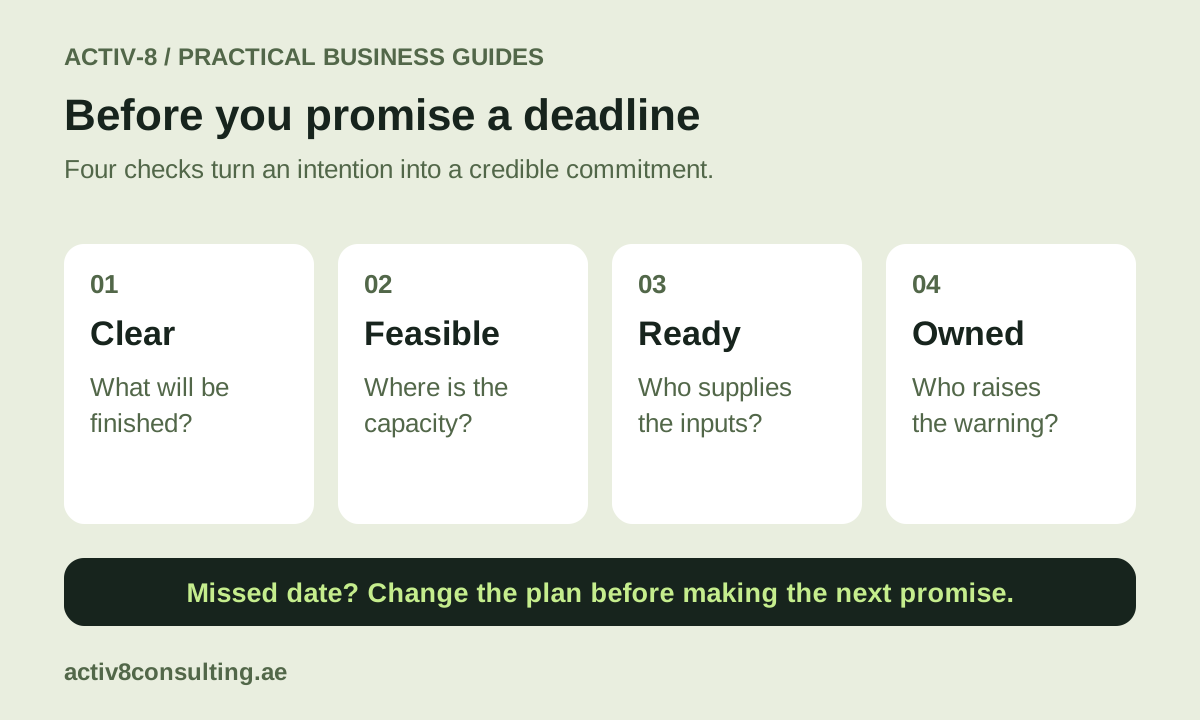
A credible commitment needs a defined result, available capacity, accepted dependencies and an early warning point.
Diagnose the promise before chasing the person
When managers repeatedly miss deadlines, first check whether the commitment was clear, feasible and within their control. Then agree a recovery decision and an earlier warning point. Repeated reminders alone rarely explain the underlying problem. You need to distinguish a manager who has not followed through from a delivery system that keeps producing promises it cannot support.
Start with three recent missed commitments rather than a general discussion about attitude. For each one, reconstruct what was agreed, who depended on whom, what else competed for the manager's time and when the first sign of delay appeared. This makes the conversation concrete and gives you evidence for changing the next commitment.
In a UAE business serving customers across several locations, the problem may sit between teams rather than inside one person's diary. A branch launch, new reporting pack or revised sales process can require finance, operations and commercial input. Naming one manager as owner does not remove those dependencies or automatically give them authority over every contributor.
Define what finished actually means
“Complete the new quotation process by Thursday” sounds specific but can hide several different expectations. The manager may mean that the document is written. The owner may expect approved pricing, a working customer template, staff training and evidence from a live quotation. Both can leave the same meeting believing there is an agreement.
Define completion through an observable result. For example, a revised process might be finished when the commercial owner has approved it, the team can find the current version, and two sample quotations pass the agreed checks. Decide which evidence proves completion without demanding a long presentation for a simple task.
Separate drafting, approval, rollout and adoption where these are genuinely different milestones. A draft can be on time while adoption is late. Combining them into one status label makes it difficult to see progress or locate the delay. It can also encourage a manager to mark work complete before colleagues are able to use it.
Check whether the plan fits available capacity
Ask the manager to show their current commitments, including routine responsibilities. A project that needs eight focused hours will not fit into four genuinely available hours because the owner considers it urgent. You must change the deadline, reduce the scope, remove other work or supply suitable capacity.
Consider an illustrative Abu Dhabi services team preparing a new customer reporting pack. The manager needs six hours for the first draft and two hours for review. An operational incident leaves only three hours free that week. The shortfall is five hours. Agreeing a late-night rescue might solve one deadline but does not create a repeatable operating plan.
Make the trade-off explicit. If the reporting pack is the priority, name what moves and tell the people affected. If another commitment is more important, change the promise before it is broken. Managers should not have to guess which of several supposedly non-negotiable deadlines the owner would prefer them to miss.
Find the dependency that controls the date
A deadline often depends on a predecessor: receiving source data, agreeing a price, testing a process or getting a decision from another manager. Write that dependency into the commitment, with its own owner and latest useful date. “Waiting for finance” is too vague to manage after the overall deadline has passed.
Distinguish a request from an accepted commitment. Sending a colleague an email does not establish that they have capacity or understand the required output. For important dependencies, obtain a clear agreement on what will be supplied and when. The project owner should know which assumptions remain unconfirmed.
Choose an escalation trigger that leaves time to act. If data is needed on Tuesday for a Friday delivery, discovering its absence on Friday afternoon is too late. The trigger might be Tuesday midday, together with a decision about a smaller first release or an alternative source. Early escalation should change the plan, not merely report the eventual failure sooner.
Hold a useful recovery conversation
Begin with the evidence: the agreed output, date and current state. Ask the manager what happened and listen for causes that can be tested. Avoid accepting “too busy” as a complete explanation, but also avoid treating every delay as a motivation problem. You are trying to improve future reliability and recover the work that matters now.
Agree a specific recovery choice. This could be delivering the essential section first, removing an unnecessary feature, assigning a contributor or securing a missing decision. Record the new commitment with its completion evidence and dependencies. A revised date without a changed plan is often just the same unsupported promise repeated.
Discuss the behaviour expected next time. The manager may need to flag a capacity conflict before accepting work, challenge an unclear brief or escalate a dependency earlier. These are observable actions. “Be more proactive” is difficult to act on unless you describe what a timely warning would have looked like in this particular case.
Use a weekly commitment review
Keep one shared list of material management commitments. Each entry needs an owner, a defined output, a due date, a next checkpoint and any unresolved dependency. Do not turn it into a record of every email or routine activity. The list should help the leadership team decide where intervention is needed.
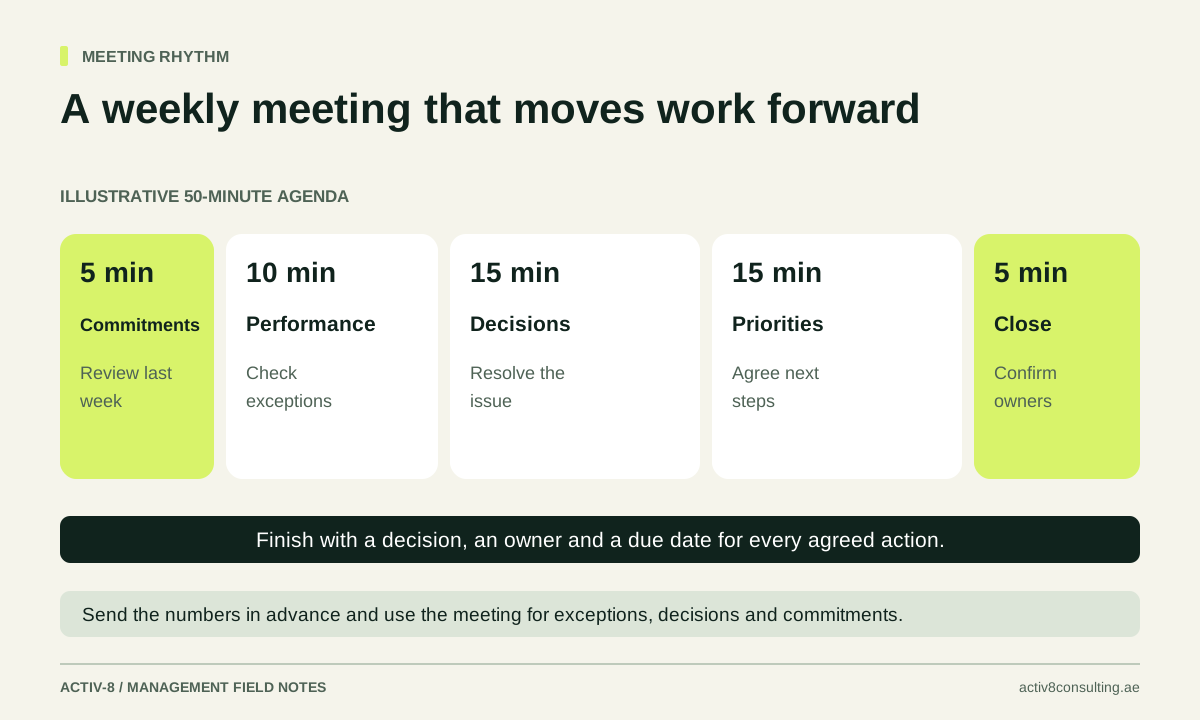
At the weekly review, focus on changes since the previous meeting. Ask what is likely to slip, why and what decision would improve the outcome. The weekly management meeting guide explains how to connect this review with the wider performance discussion without allowing the meeting to become a sequence of lengthy status reports.
The downloadable worksheet includes an illustrative commitment and blank rows. Replace the example with current work, and write completion evidence in plain language. Keep the original promised date visible when a date changes. Otherwise repeated rescheduling can make the list look healthy while customers or colleagues experience continuing delay.
Measure reliability without rewarding easy promises
A simple measure is the share of commitments completed by their original agreed date. Interpret it alongside scope changes and the significance of the work. Completing ten minor tasks does not cancel out missing one critical customer commitment. Neither should a sensible, early decision to stop unnecessary work be treated as a delivery failure.
Review the reasons for misses across several weeks. Repeated missing approvals suggest a decision problem. Repeated data corrections suggest an upstream quality problem. Repeated surprise urgent work suggests that the operating plan lacks realistic space for interruptions. A pattern is more useful than a league table of managers with different workloads.
Watch for defensive behaviour. If managers respond by setting distant dates or refusing worthwhile stretch work, your measure is shaping the wrong outcome. Reward realistic planning and early transparency alongside delivery. The aim is credible promises, not attractive percentages achieved by avoiding difficult responsibilities.
Know when it is an accountability problem
Sometimes expectations are clear, capacity is available and the manager still repeatedly fails to act or warn others. At that point, a process redesign is not enough. State the gap directly, confirm the support available and agree the observable improvement required. Keep the discussion focused on work and evidence rather than assumptions about character.
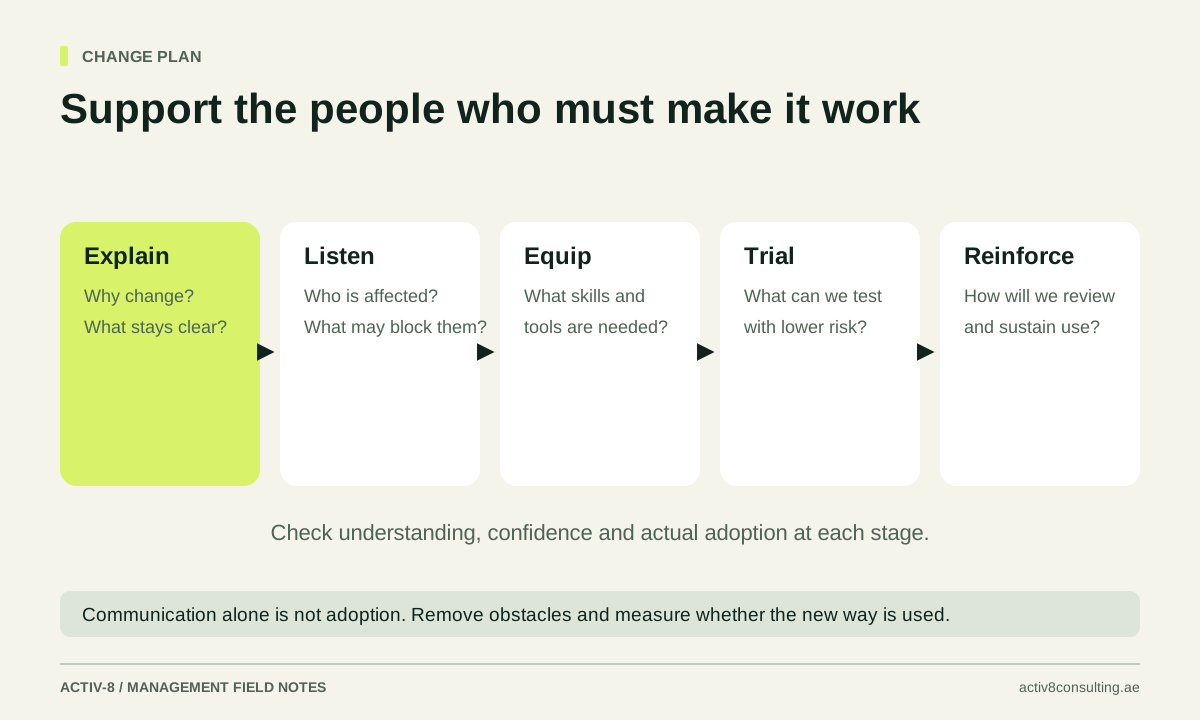
If you are introducing a new planning rhythm, explain it to the whole team and allow people to practise it. The change management guide can help you make the new behaviour part of ordinary work. A tracker that nobody reviews will quickly become another administrative demand with little effect on delivery.
Activ-8 leadership advisory helps owners connect priorities, management capacity and accountability. A useful first engagement starts with actual missed commitments and the decisions behind them. The outcome should be a team that makes fewer unsupported promises, spots trouble earlier and knows how to recover important work before the deadline becomes a surprise.
PUT IT INTO PRACTICE
Management commitment review worksheet
Define each output and its completion evidence. Keep the original promised date visible, record dependencies and agree the earliest useful warning point. Replace the illustrative row and use the blank rows for current commitments.
Download the worksheetCSV file · Opens in Excel or Google Sheets · No sign-up required