THE STARTING POINT
Released capacity creates value only when it can be used for profitable demand or another useful outcome.
Find usable capacity before adding more demand
You can grow a UAE business without hiring more staff when the existing team has capacity that can be released, work that can be simplified or a more valuable mix of demand to serve. Start by measuring the constraint, removing avoidable rework and matching incoming work to available delivery time. The approach has a limit: if the critical team is already working sustainably at capacity, growth may eventually require more resources or a different operating model.
The aim is not to ask everyone to work faster indefinitely. It is to make more of the team's time useful and ensure that the additional work is worth doing. More revenue can make the business weaker if it brings poor margins, unreliable promises and a backlog that damages customer relationships.
Before increasing marketing, establish which service or process limits delivery. A company can appear to have spare hours overall while one specialist, vehicle, approval step or customer support queue is already overloaded.
Measure capacity in the unit the work consumes
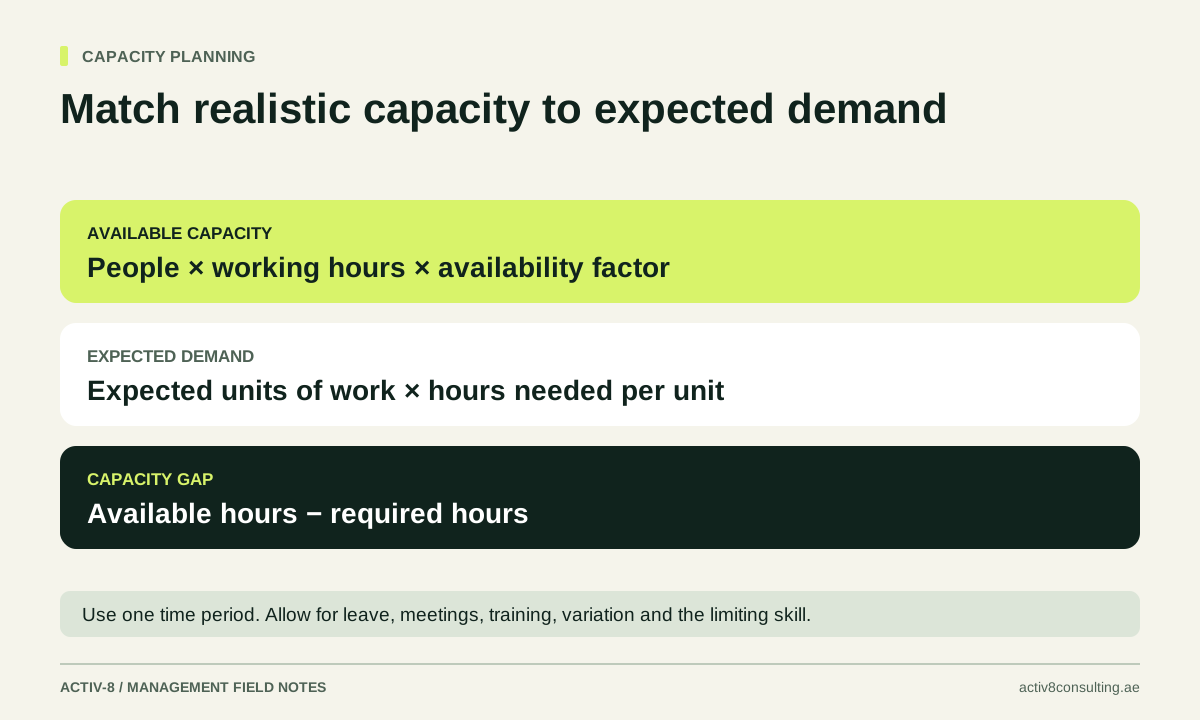
Choose a practical unit such as productive hours, available appointments, completed jobs or a specific machine slot. Use the unit that reflects the actual bottleneck. Total headcount is often too broad because employees do different work and have different responsibilities. Ten people on payroll does not mean ten people can deliver every service.
Separate paid hours from available productive hours. Meetings, necessary administration, leave, travel, training and other commitments reduce the time available for the work you are modelling. These activities are not automatically waste. Some are essential to quality and continuity, so an improvement plan should not remove them simply to produce an attractive utilisation figure.
Record demand in the same unit. If one standard job needs two hours and a bespoke job needs five, counting both as one job hides the workload. An average can be useful, but check the mix and the range. Our capacity planning guide explains how demand and practical capacity fit together.
Separate four different routes to more output
The first route is removing unnecessary work. Examples include duplicate entry, repeated clarification and reports nobody uses. The second is reducing rework by getting the required information right earlier. The third is smoothing demand so work moves into available periods. The fourth is changing the service mix or delivery method so the constrained resource supports more contribution.
These routes need different evidence. Removing a duplicate report should show that the report had no necessary user and that its removal did not create another problem. Reducing rework requires a before-and-after view of errors. Smoothing demand requires customers to accept different timing. A new service mix requires an understanding of contribution and customer demand.
Do not put every improvement under “automation”. A shared definition, a clear owner or a better handover may solve the problem more reliably than another tool. Technology is useful when it supports an understood process, but it can also make an unclear process move faster in the wrong direction.
Work through an illustrative monthly hours model
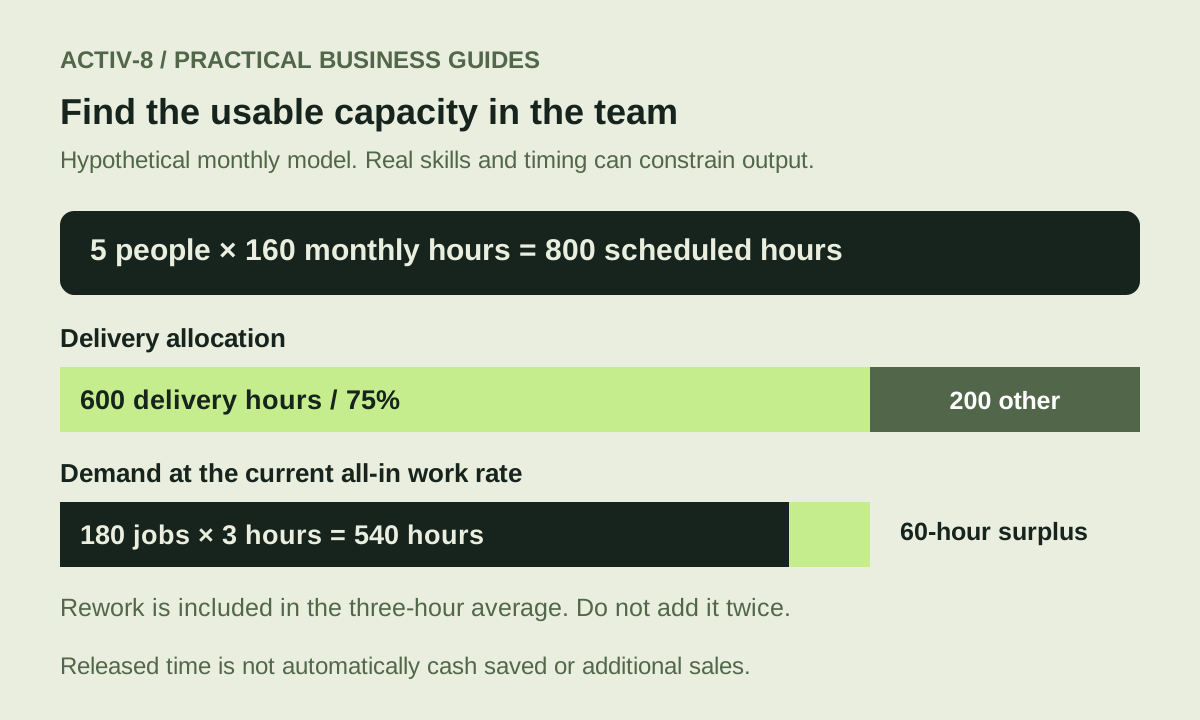
Imagine a hypothetical service team with five people, each providing 160 scheduled hours per month. That gives 800 scheduled hours. If 25% is reserved for necessary non-delivery commitments, practical delivery capacity is 600 hours. At an all-in average of three hours per job, including its share of rework, the model suggests capacity for 200 jobs, before allowing for variation and any further constraints.
Suppose the team currently delivers 180 jobs, consuming 540 all-in hours, of which 30 are spent correcting avoidable handover errors. Do not add those 30 hours again. If a tested improvement removes 20 of them, the same 180 jobs require 520 hours, averaging about 173.33 minutes each. The improvement releases 20 hours beyond the original 60-hour surplus. Using the original conservative allowance of three hours per additional job, those released hours could support about six more complete jobs. That depends on usable scheduling and specialist availability.
If each additional job contributes an illustrative AED 450 after genuinely variable delivery costs, six additional jobs could contribute AED 2,700. That is a scenario to validate, not a guaranteed monthly benefit. The team still needs suitable demand and consistent delivery.
Use the calculator to challenge the assumptions
Use the capacity calculator on this page with one consistent period. For the monthly example, enter five people, 160 available hours per person, a 75% share available for delivery, 180 expected work units and 180 minutes per completed unit. The remaining 25% is time unavailable for that delivery activity, not a judgement that it has no value. You can model a week instead, provided hours and demand use the same period.
Run at least a current scenario and a changed scenario. For the changed version, adjust only the input supported by the proposed improvement. If you expect less rework, do not simultaneously assume higher demand, shorter job duration and fewer absences without explaining each change. Otherwise you will not know which assumption creates the apparent benefit.
Check the model by role where the work requires different skills. Spare capacity in administration cannot automatically fill a specialist delivery gap. The calculator is a starting model using averages for your chosen period. Compare its result with the actual weekly schedule before promising more customer work.
Turn released time into an operating decision
Time released is not the same as money saved. If the team remains employed on the same terms and hours, payroll does not fall merely because a process takes less time. The business may still benefit by handling more demand, improving response times or avoiding a future capacity purchase. Name the intended use before counting the benefit.
Assign the released capacity deliberately. A manager could reserve it for overdue customer follow-up, a backlog of billable work or more thorough quality checks. If it remains scattered in small fragments, it may not be usable for the intended activity. Ten minutes saved across twelve people is different from two uninterrupted hours available to the bottleneck specialist.
The operational efficiency calculator guide helps distinguish time value from cashable savings. Keep those measures separate in your business case. This prevents the same improvement being counted once as reduced cost and again as extra revenue without the necessary operating change.
Smooth demand and improve the work mix
Look for work that can move to quieter periods with the customer's agreement. Planned maintenance, recurring reviews or scheduled deliveries may be easier to distribute than urgent requests. The opportunity depends on the service and customer need. Do not assume every customer will accept a different appointment simply because it suits your capacity model.
Review the contribution generated by scarce time. A service with high revenue may consume so many specialist hours that another service produces more contribution per constrained hour. Use consistent direct cost assumptions and include the practical effect on customer relationships. The calculation informs a commercial decision; it should not become an excuse to abandon commitments.
Standardisation can help where customers genuinely need similar outcomes. Define a clear standard offer and a priced route for exceptions. This reduces the hidden effort created when every job becomes bespoke. Test whether customers understand the boundaries and whether the team can deliver the standard consistently before expanding promotion.
Protect quality while testing the change
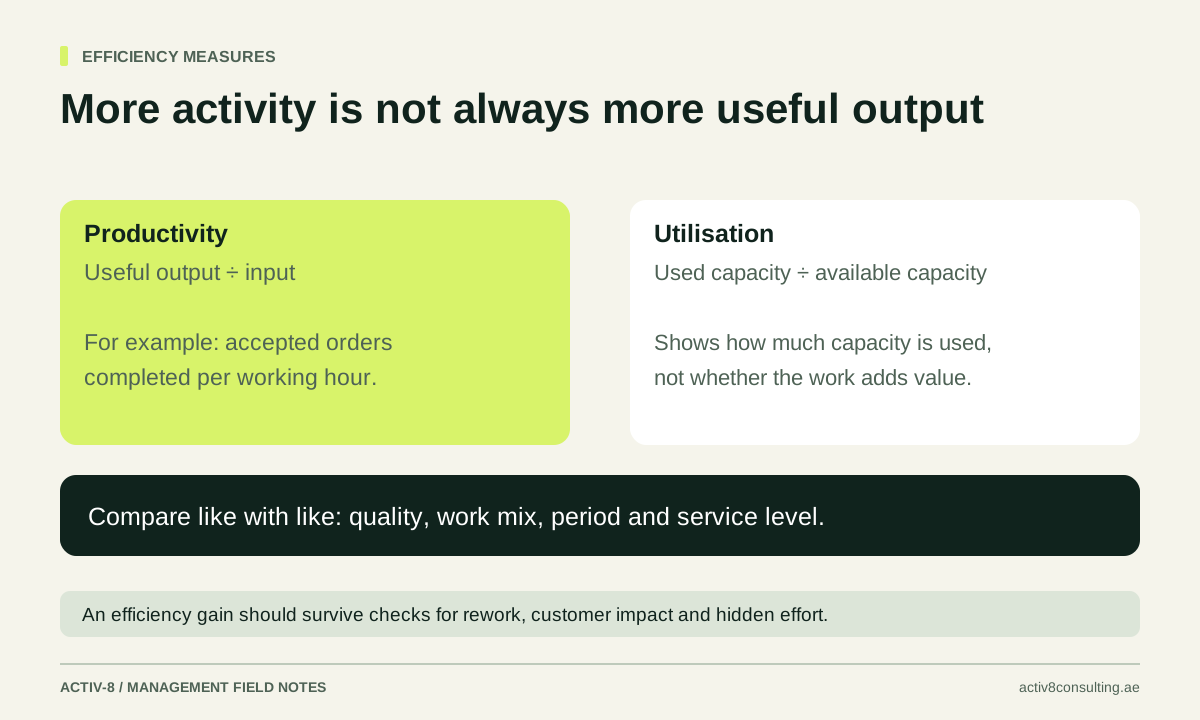
Choose a small pilot with a defined start, owner and review date. Measure output alongside errors, customer response and workload. If output increases while complaints and overtime rise, the change may be borrowing capacity from quality or recovery time rather than creating a sustainable improvement.
Ask the team where work has moved. Eliminating a step in one department can create a larger burden elsewhere. A shorter sales form may save sales time but leave operations repeatedly contacting customers for missing details. Follow the whole customer job to check whether the total effort has fallen.
Keep a practical buffer for variation. A monthly model with every available hour allocated leaves no room for urgent work, complex cases or absence. The right buffer depends on the volatility of your operation. Use your own observed variation rather than borrowing a universal utilisation target from an unrelated industry.
Know when additional capacity is the right answer
If demand remains profitable, the process is stable and the critical resource is consistently full, delaying all recruitment can become the expensive choice. The cost may appear as lost customers, longer lead times or management time spent handling avoidable exceptions. A capacity exercise should reveal that decision, not force a predetermined conclusion that hiring is always unnecessary.
Compare the next options: change the offer, change timing, develop existing capability, use external support or add internal capacity. Include the management effort each option requires. Growth should strengthen the operating model as well as the top line.
Activ-8's operations consultancy services help identify the constraint, test improvements and connect capacity to commercial choices. Start with the work the team actually performs and the demand you want to serve. That is the foundation for deciding how far the business can grow with its existing people.
TRY IT WITH YOUR NUMBERS
Capacity planning calculator
Compare one team and a comparable type of work over one consistent period, such as a week.
Averages cannot reveal every skill bottleneck, deadline or demand peak. Check the real schedule and quality requirements before making a staffing decision.
How this calculation works
Delivery capacity = people × available hours per person × delivery share. Demand hours = work units × minutes per unit ÷ 60.
Your inputs stay in this page and are not sent to Activ-8. Download the scenario if you want to keep it.
Discuss what this means for your business ↗