THE STARTING POINT
Redesign the reason work waits for you, then check that the bottleneck has not simply moved to someone else.
Find the queue that keeps returning to you
To stop being the bottleneck in your UAE business, identify the recurring work that waits for your attention and redesign the reason it waits. That might mean clarifying a decision boundary, supplying missing information, improving a standard offer or creating a management role. Simply telling everyone to be more independent will not remove a queue that your operating model still sends to you.
Begin with a short record of your interruptions. For each request, note what the person needed, how long the work waited and why only you could resolve it. Include the quick messages you answer between meetings. Individually they can feel harmless; together they may explain why you never have uninterrupted time for planning or important customer work.
The aim is not to disappear from the business. Some decisions deserve the owner's judgement. The question is whether your time is being used on those decisions or consumed by avoidable repetition. A useful redesign preserves access for material issues while allowing ordinary work to progress without your constant presence.
Distinguish four reasons work gets stuck
First, people may lack authority. They know the sensible choice but need your approval because nobody has defined what they can decide. Second, they may lack information, such as a current cost, service promise or capacity view. Authority without that information only moves the uncertainty to someone else.
Third, the process itself may be ambiguous. Every unusual customer request becomes a fresh negotiation because the offer has no clear boundaries. Fourth, the organisation may be missing a role that coordinates work across teams. If you are the only person who can reconcile sales priorities with delivery capacity, that responsibility has not actually been assigned elsewhere.
Classify your interruptions by cause before choosing a solution. Hiring an assistant can help organise requests but will not necessarily remove the underlying decision load. A new manager can also become another person asking for approval if the role has responsibility without the information and authority required to act.
Measure waiting time as well as your handling time
An owner may spend only five minutes approving a quotation, while the team waits a full working day to receive the answer. The commercial cost lies partly in that wait. Record when the request became ready for decision and when the decision was made, rather than measuring only how long you spent reading it.
Consider an illustrative Dubai services company with eight standard quotations awaiting the founder each week. Each takes six minutes to review, so the visible owner workload is forty-eight minutes. But if each quotation waits a day, the customer experience may be much worse than that small time total suggests. The example does not establish a lost-sales figure; it identifies a delay worth investigating.
Look at the shape of the queue. Are requests arriving in batches because nobody knows when you are available? Do incomplete requests require several rounds of clarification? Does one decision hold up several colleagues? These details help you choose between an approval window, a better submission format and genuine transfer of authority.
Standardise the recurring exception
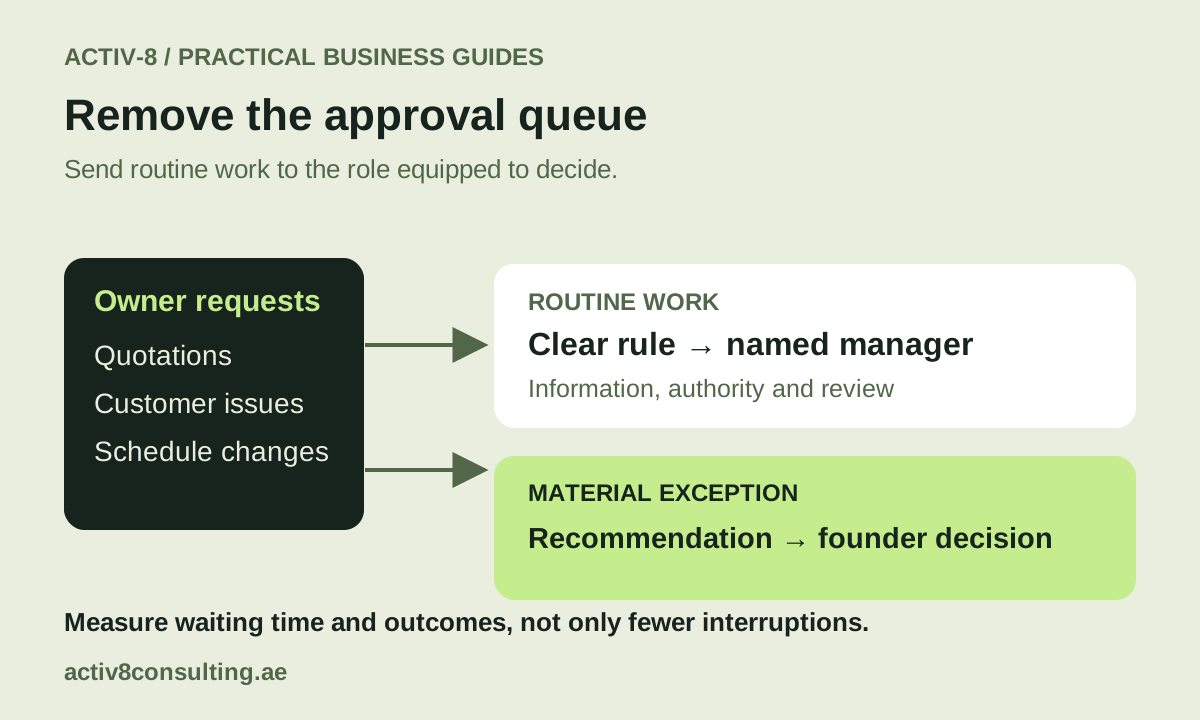
Some businesses call the same issue an exception every week. A customer wants a minor scope variation, a salesperson needs a price for a common add-on, or operations needs permission to move an appointment within an acceptable window. Repeated exceptions are candidates for a clearer standard offer or rule.
Choose one common case and describe the acceptable response. Include the commercial conditions, information required and circumstances that still need your decision. Test the rule against recent examples. If it covers most of them safely, you can remove a recurring category from your queue without trying to anticipate every possible situation.
Keep a route for new exceptions. Standardisation should not force staff to squeeze an unusual request into an unsuitable package. Ask them to explain what makes the case different and what decision they recommend. Over time, the exception record becomes evidence for refining your offer and operating model.
Create a management layer only where the work justifies it
A management role should own a meaningful set of outcomes, not simply pass messages between you and the team. Define which recurring coordination problems it will solve. This might include balancing workload, resolving ordinary customer issues and ensuring that agreed actions happen across two connected functions.
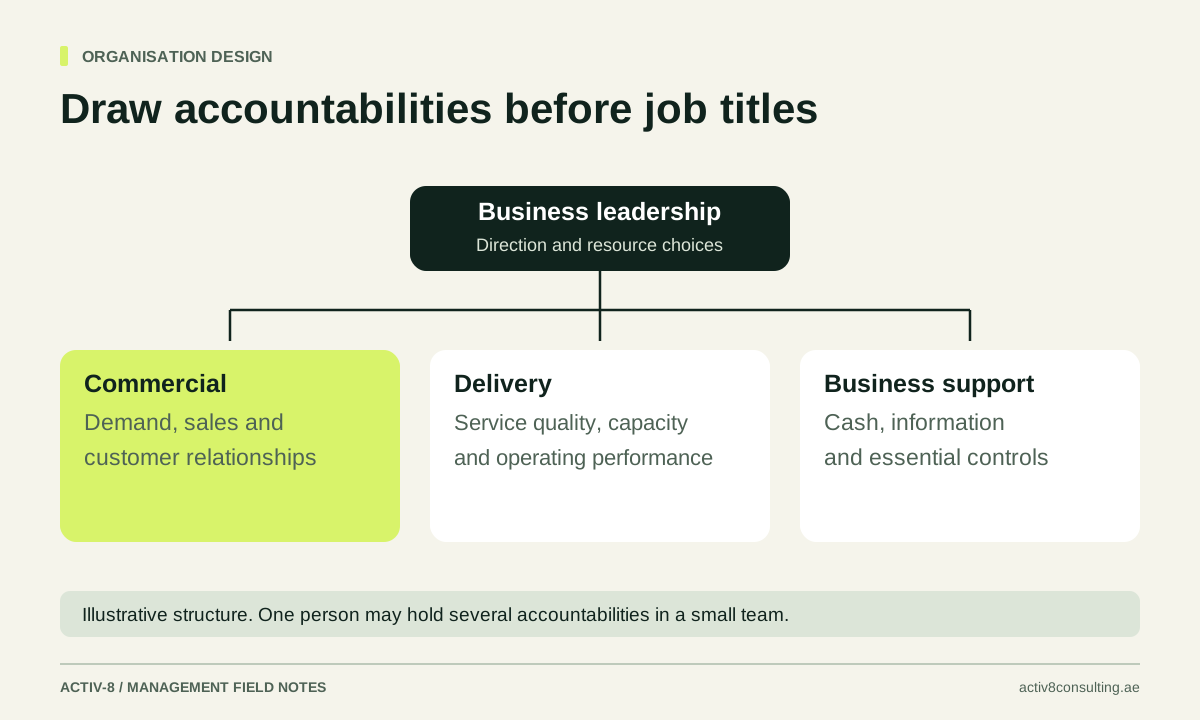
Assess the actual demand for that role. A small business might need a clear team lead responsibility before it needs another full management position. A larger or more complex operation may need dedicated leadership. The organisational structure guide helps connect roles to the work instead of starting with an impressive-looking chart.
Be clear about what will leave your own role when the new responsibility begins. Owners sometimes add a manager but continue running the same meetings, reversing routine decisions and directing the team independently. That creates competing instructions and leaves the new role unable to demonstrate whether it can operate effectively.
Run a bounded two-week experiment
Choose a frequent, manageable decision category and name the person who will handle it. Agree the boundary, required evidence and escalation route. For the next two weeks, let that person act inside the boundary while you review a sample at an agreed time. The duration is a practical experiment, not a promised transformation timetable.
Tell the affected team how requests should now flow. If colleagues continue sending the same decisions directly to you, redirect them consistently to the agreed owner. Exceptions should follow the defined route rather than whichever route produces the quickest informal answer. This is where the operating change becomes real.
Keep the experiment reversible. If an important condition is missing, pause that category, clarify the rule and restart. Avoid treating the first awkward case as proof that delegation cannot work. The purpose is to learn whether the person, information and boundary are sufficient, and to improve them using actual decisions.
Protect owner time for a named purpose
Removing interruptions creates an opportunity, not an automatic business benefit. Decide what you will do with the time released: review a major growth decision, improve a key relationship, develop the leadership team or address a recurring commercial problem. Without a purpose, the space will quickly fill with new routine activity.
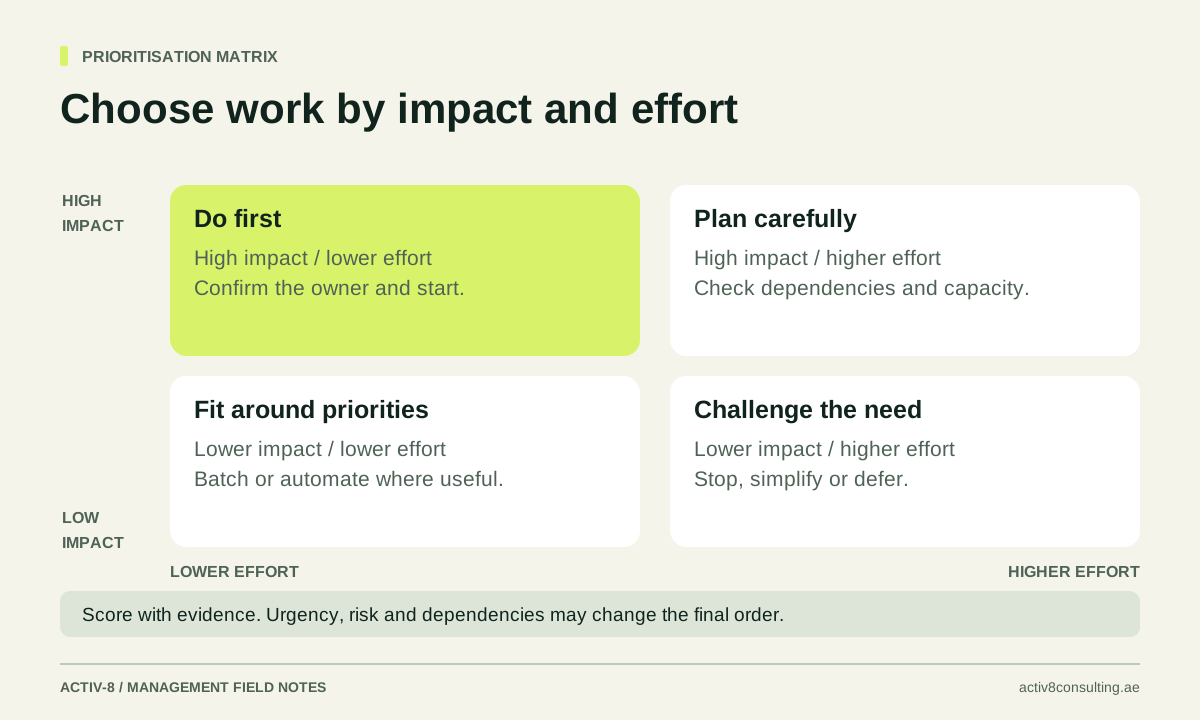
Use a visible priority list to make the choice. The business prioritisation guide can help distinguish valuable work from work that merely feels urgent. Be realistic about how much uninterrupted time the experiment can create. A small reduction in daily interruptions may still be useful without justifying a grand financial return calculation.
Keep a limited, predictable route for ordinary questions and a separate route for genuinely urgent matters. Staff should not have to guess whether they can interrupt you. Clear access makes it easier to protect focused time while remaining available for decisions where delay would materially affect the business.
Check whether the bottleneck has moved
At the review, compare waiting time, escalation frequency and the quality of decisions. Ask the new decision owner which inputs were missing and whether their own workload has become unsustainable. Moving every request from the founder to one overloaded manager does not solve the operating problem.
Inspect customer and colleague outcomes as well as your calendar. Faster approvals are useful if promises remain deliverable and errors do not rise. Where a problem appears, trace the cause before changing the whole arrangement. You may need a clearer rule, a better report or a different division of work rather than a return to founder approval.
Activ-8 leadership advisory helps owners redesign the decisions, roles and management rhythm that keep a business dependent on them. Start with a week of real interruptions and the work delayed behind them. That evidence gives you a practical route towards a business that can progress reliably while you focus on the responsibilities only you should hold.