THE STARTING POINT
Bring a focused question and a few useful examples rather than every file in the business.
Prepare a small evidence pack and a clear question
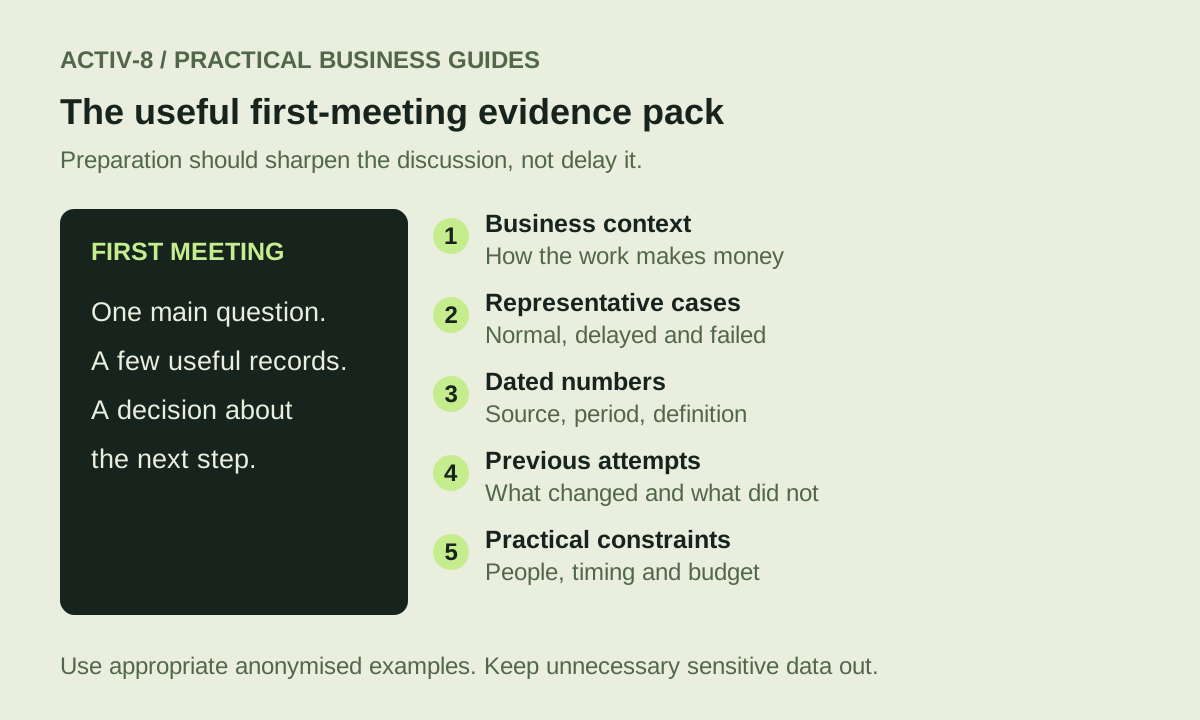
Before meeting a business consultant in Dubai, prepare a short description of the business, the problem you want to discuss, a few representative records and the decision you need help making. You do not need a perfect presentation or every file the company owns. A focused evidence pack makes the first conversation more useful and helps the adviser identify what is known, what remains uncertain and whether a project is appropriate.
The meeting should leave you with a clearer view of the next step. That could be a defined engagement, a small diagnostic, a request for additional evidence or a decision to handle the issue internally. It should not depend on the consultant immediately agreeing with your initial explanation of the problem.
Allow the person closest to the work to contribute where practical. The founder’s view is important, but someone managing the daily process may explain a recurring difficulty that never appears in the management summary.
Write the business context in plain language
Start with how the business makes money. Describe the main services or products, customer types, operating locations and approximate scale of the relevant activity. Explain whether demand comes through referrals, recurring contracts, direct enquiries or another route. The adviser needs enough context to understand the problem, not a complete corporate history.
For a UAE operation, mention the practical factors that shape delivery. These may include work across several emirates, teams on different shifts, multilingual customer communication or coordination with an overseas office. Include them because they affect the work, not because every UAE company shares the same challenges.
State what has changed recently. Growth, a new manager, a new service or a change in customer mix can explain why a process that once worked now creates friction. Put dates against these changes. A timeline often reveals useful relationships that a list of complaints misses, while still leaving room to test whether one event actually caused another.
Choose one main question for the meeting
Write the question you most want answered. “Why are we busy but unable to improve our margin?” is a starting point. “Which part of our enquiry-to-delivery process should we fix first?” is another. A specific question gives the conversation a centre and makes it easier to judge whether the adviser has understood the issue.
List other concerns separately rather than turning the opening meeting into a tour of every problem. Some may be connected, but that connection should emerge from evidence. If late quotations, overtime and complaints all increased together, the consultant can investigate whether they share a capacity constraint instead of proposing three unrelated projects.
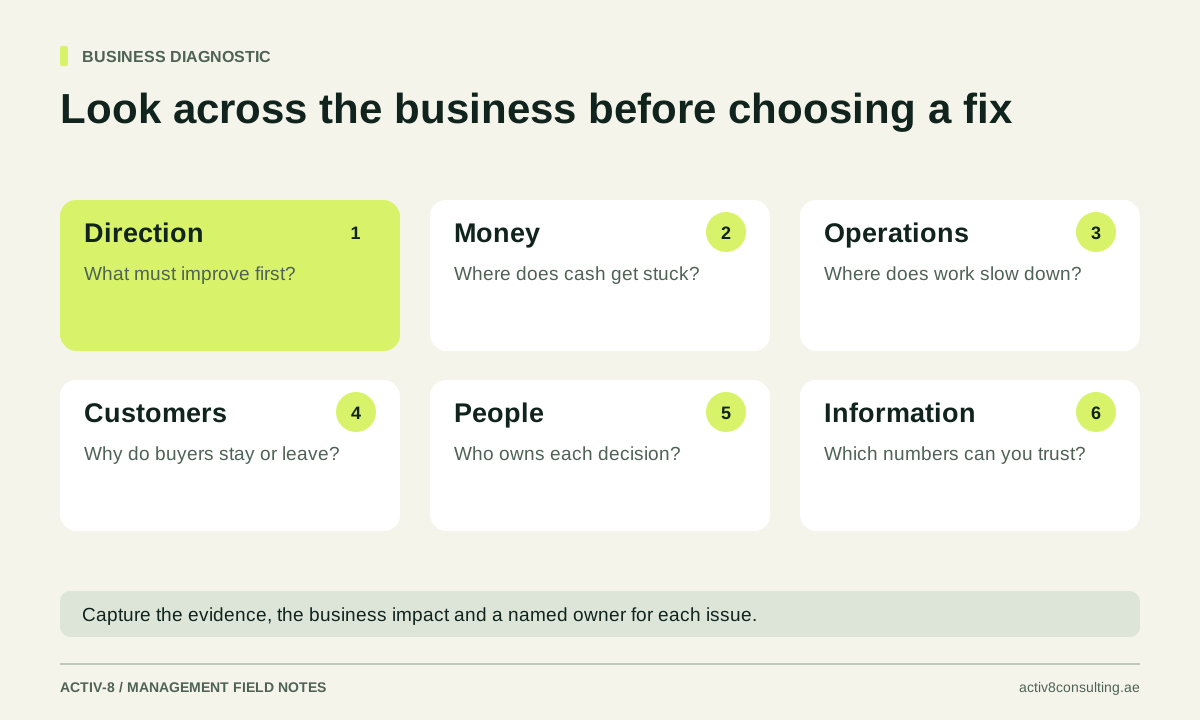
Use our business diagnostic checklist if the main question is not yet clear. Work through the prompts briefly and highlight the areas where evidence is weak. Do not complete a large exercise merely to appear prepared. The purpose is to sharpen the discussion, not to do the proposed consultancy work in advance.
Bring examples that show the normal and the difficult
Select a small sample of real situations. For a customer process, bring an example that went well, one that was delayed and one that failed. For management reporting, bring a report that led to a decision and one that created confusion. Explain why each example was selected and whether it is typical.
Remove identifying or sensitive details that are not needed for the first discussion. You can describe a customer as “recurring corporate account” and replace names in a sample record. Keep original records under your control. An initial enquiry does not require sending passwords, full customer databases or unrestricted access to business systems.
A sample should retain enough structure to be useful. If the issue concerns handover timing, preserve the relevant sequence and intervals even when names are removed. If it concerns profitability, distinguish revenue from direct delivery cost. Anonymisation should protect information without making the example impossible to understand.
Bring numbers with their definitions attached
A few trustworthy figures are more valuable than a large pack nobody can explain. Depending on the problem, useful numbers could include monthly revenue, contribution, enquiry volume, quotation acceptance, delivery time or repeat purchase. State the period, source and definition for each. Mark estimates clearly and identify gaps rather than filling them with optimistic assumptions.
Avoid presenting numbers from incompatible periods as though they form one picture. This month's enquiries and last quarter's sales may be useful separately, but they do not automatically produce a valid conversion rate. Similarly, cash received is not interchangeable with invoiced revenue. The adviser should know which number they are looking at before interpreting it.
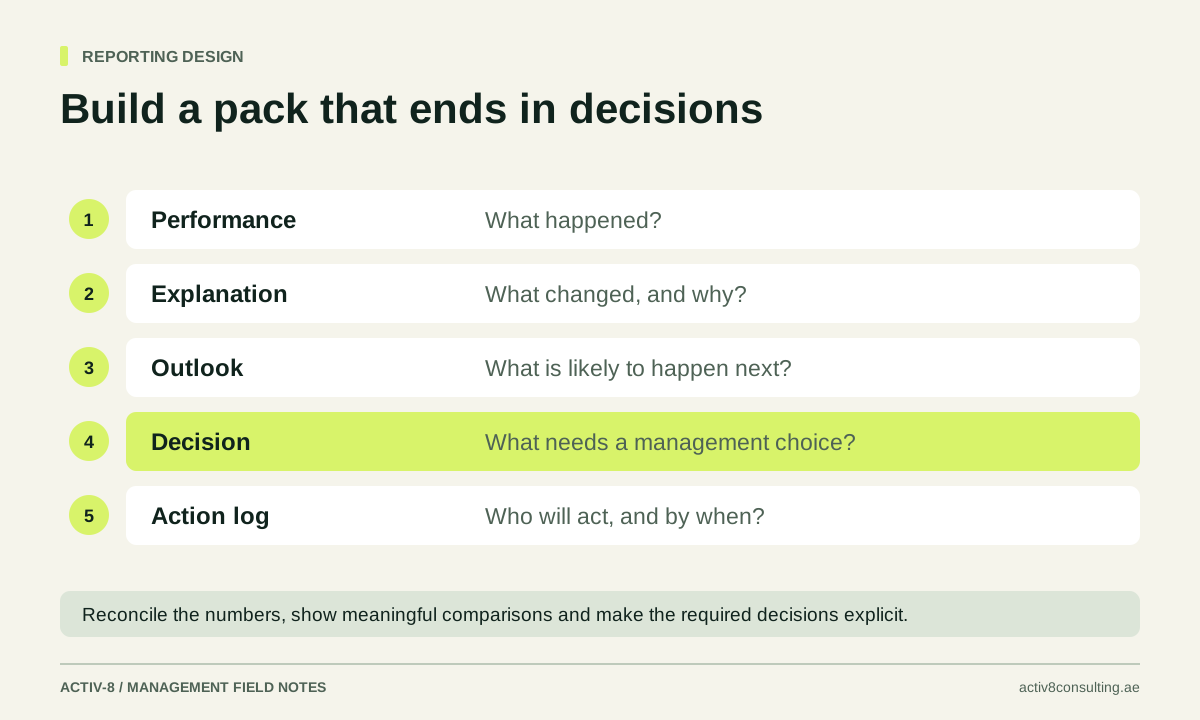
Our management reporting pack guide explains how to organise a small set of decision-focused measures. You can use its structure to prepare the meeting, but do not delay seeking help because the reporting is incomplete. Unreliable information may itself be part of the business problem.
Explain what has already been tried
List previous actions and what happened afterwards. Perhaps the team introduced a shared inbox, changed a manager, purchased software or added a weekly meeting. Explain who used the change, how long it ran and what evidence exists about its effect. “We tried that” is less informative than a short account of the actual implementation.
Separate an unsuccessful idea from an incomplete test. A follow-up process that only one employee adopted tells you something different from a process used consistently by the whole team with no improvement. The first raises an adoption question; the second raises a question about the method or the original diagnosis.
Include useful work already completed by employees or other advisers. The first meeting should build on it where possible. This helps avoid paying to recreate a process map or baseline that already exists, while allowing the new adviser to challenge assumptions that may no longer fit the business.
Make the constraints explicit
Tell the consultant what cannot change easily. You may have a fixed customer commitment, limited management time, a system that must remain in place or an investment ceiling. Explain the reason behind each constraint so the adviser can distinguish a genuine boundary from a preference that might be reconsidered.
If there is a budget range, say what it includes. An amount reserved for advice is different from an amount covering advice, software and implementation. If the budget is not yet agreed, explain who will decide and what evidence they need. You are not required to invent a number simply to complete a briefing form.
Be realistic about internal capacity. If the operations manager can spare one hour a week, a proposal requiring several days of their attention is unlikely to work. The consultant can suggest a smaller pilot or a different sequence when the constraint is visible. Hidden constraints usually reappear later as missed deadlines.
Use the meeting to test how the adviser thinks
Ask what they would investigate before recommending a solution. Listen for questions about evidence, customers, economics, ownership and implementation. A useful adviser should be able to explain what might change their initial view. Immediate certainty can be less valuable than a disciplined account of what needs to be checked.
Ask who would do the work and how the team would be involved. Discuss the distinction between recommendations and implementation support. If the adviser proposes a report, ask what decision it should enable. If they propose a system change, ask how they would establish that the current process and ownership are clear enough to support it.
You can also ask for a comparable example without requesting confidential client information. The interesting details are the starting problem, the approach, the person's contribution and the limits of the result. A recognisable client name alone does not establish that the adviser is right for your situation.
Finish with a written next step
Reserve the final part of the meeting for a short recap. Confirm the problem as currently understood, the main unknowns and the next action. If a proposal is appropriate, agree what it should cover and when you expect it. If more information is needed, name the person responsible for providing it and keep the request proportionate.
Write down any assumptions you want the proposal to test. Do not let a casual discussion become an implied commitment to a broad programme. The next step should be specific enough that both sides can recognise whether it has been completed and what decision follows.
To discuss an operating challenge with Activ-8, review our management consultancy services and prepare the question, a few examples and your main constraints. A useful first meeting begins with an honest picture of the business, including the things you have not yet been able to measure.