THE STARTING POINT
A discount must be justified by contribution, genuinely additional demand and the capacity to deliver it.
Calculate the contribution you give away
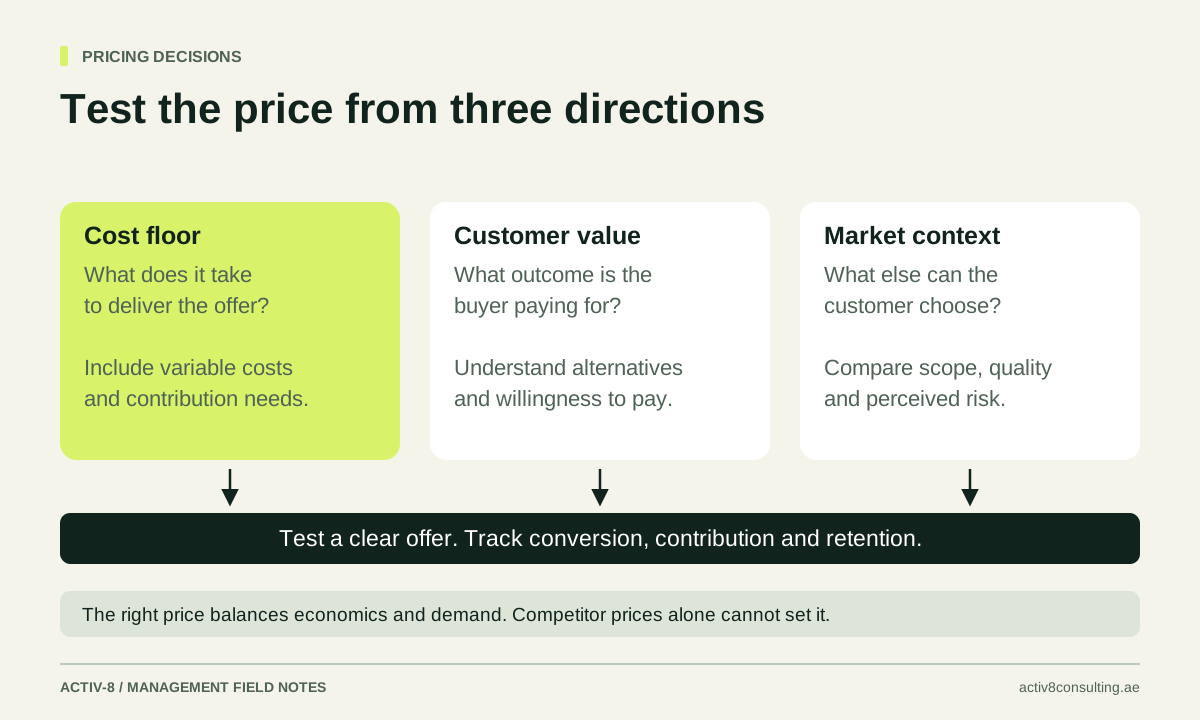
The discount you can afford depends on the contribution left after variable delivery costs, the extra sales the discount might generate, and whether you have capacity to deliver them. There is no universal safe percentage. A small reduction in selling price can remove a much larger share of contribution, especially when delivery costs already consume most of the price.
Start with one clearly defined service unit: a visit, package, project stage or other comparable sale. Record its normal selling price and the costs that increase when you sell one more unit. Keep fixed costs separate for this calculation, while remembering that the remaining contribution must ultimately help cover those costs and your required return.
For a UAE service business, the decision is also operational. A discounted appointment that fills unused capacity can differ from one that displaces a full-price booking at the busiest time. The arithmetic is a starting point. You still need to test demand, timing, scope and the effect on customers who would have bought without the discount.
Work through the basic AED example
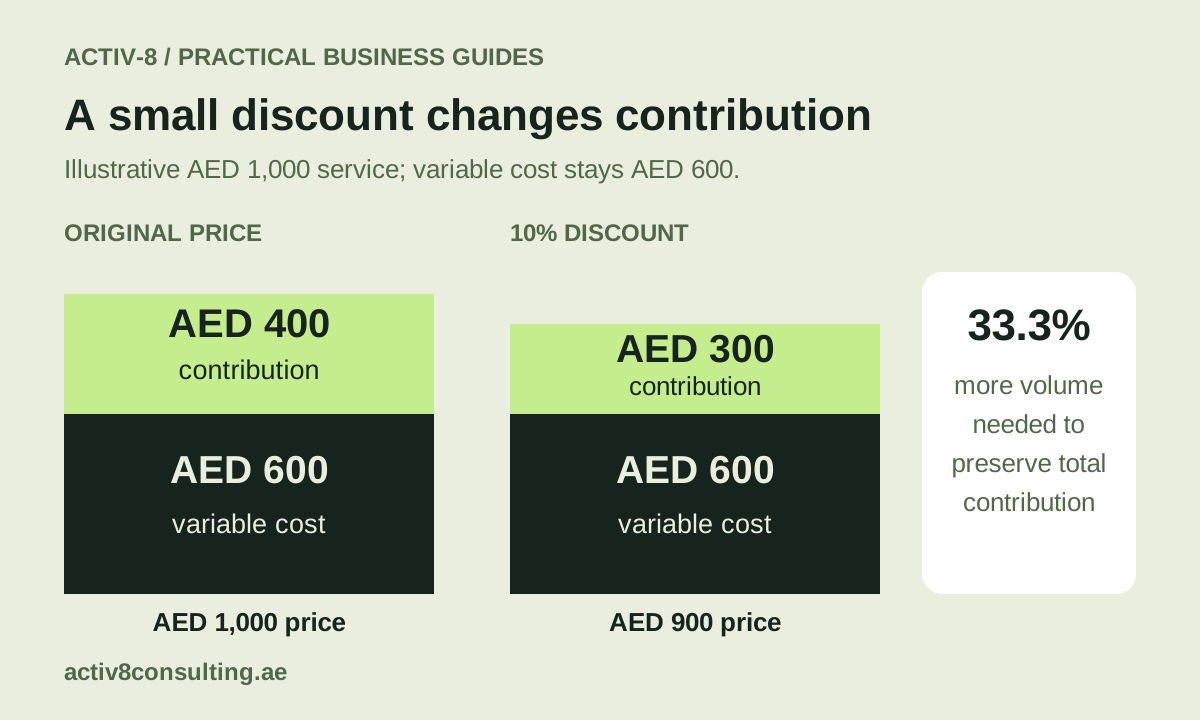
Suppose an illustrative service sells for AED 1,000 and has AED 600 of variable cost. Each sale contributes AED 400 before fixed costs. A 10% discount reduces the selling price to AED 900. If the service scope and variable cost remain unchanged, contribution falls to AED 300.
The selling price has fallen by 10%, but contribution has fallen by 25%. To preserve the original total contribution, you need one-third more sales: AED 400 divided by AED 300, less one, is approximately 33.3%. If you originally expected thirty sales, you now need forty equivalent discounted sales to produce the same AED 12,000 contribution.
This does not mean the promotion will generate forty sales. It tells you what would have to happen under the assumptions. If the team can deliver only thirty-five, or the additional demand is unlikely, matching the original contribution may be impossible within that period. Separate the required volume from your demand forecast.
Use the calculator without confusing contribution and profit
The calculator below uses original price, variable cost per unit and the proposed discount. It shows the new selling price, original and discounted contribution, discounted contribution margin and the additional volume needed to preserve contribution. Enter AED values consistently if you want the monetary outputs to represent dirhams.
The model holds service scope and variable cost constant. It excludes new fixed costs, such as an additional team required once demand passes a capacity threshold. It also does not estimate how customers will respond to the offer. You must supply that commercial judgement separately, using your own evidence rather than interpreting the output as predicted sales.
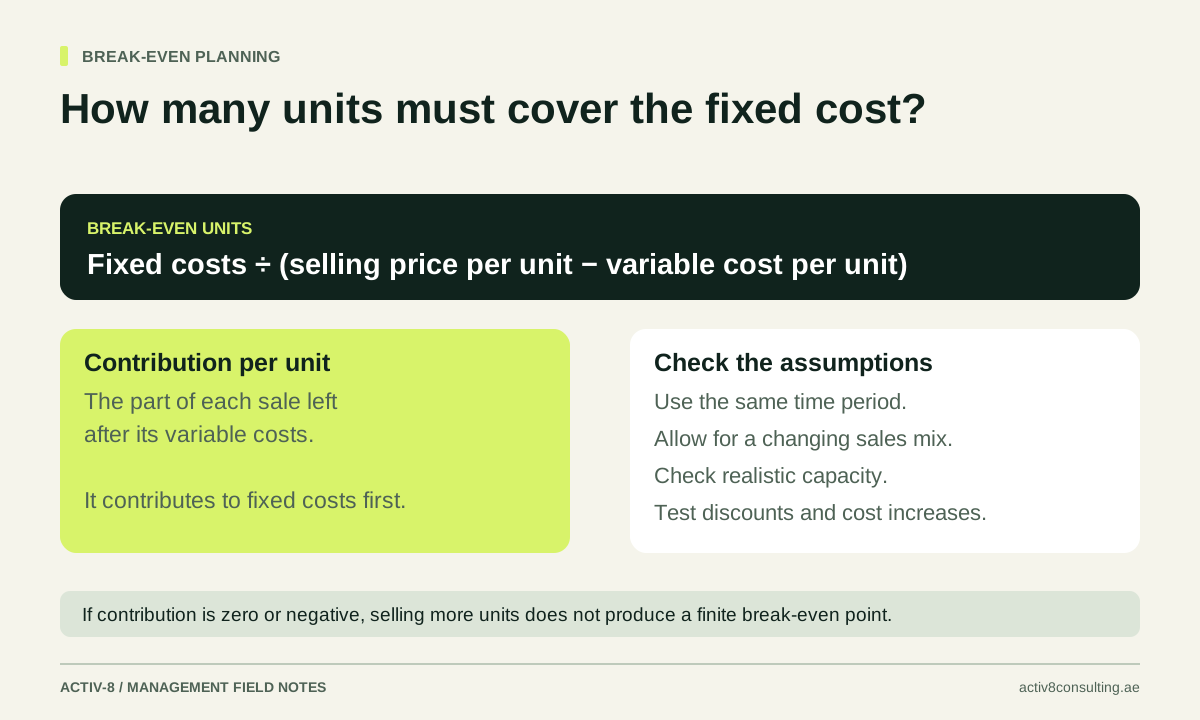
If discounted contribution is zero or negative, no finite positive increase in volume restores the original positive contribution under this model. More sales either add nothing towards fixed costs or make the position worse. An undefined percentage is a signal to change the economics, not a software invitation to choose a larger sales target.
You can also work backwards from a minimum contribution. With an AED 1,000 normal price, AED 600 variable cost and a desired AED 250 contribution per sale, the minimum price is AED 850. That permits a 15% discount under those specific assumptions. It still does not establish that the remaining contribution is sufficient for the whole business.
Check that your variable cost is complete
Include costs that genuinely rise with the extra sale. Depending on the service, these might include materials, outsourced delivery, transaction costs or incremental travel. Use the cost of the proposed sales, which may differ from the average cost of existing work. A remote location or difficult appointment time can change the economics.
Be careful with employee time. A salaried team may have spare paid capacity in one period, while additional demand in another requires extra paid hours or another resource. The relevant incremental cost depends on the actual delivery plan. Do not assume that all staff time is either completely free or fully variable in every decision.
Keep an explanation beside uncertain inputs. If you are unsure whether additional demand will require a new resource, calculate both situations. The break-even guide helps examine how contribution interacts with fixed costs. A discount decision that looks attractive before a capacity step can look different after that step is included.
Ask which sales are truly additional
A promotion can increase the number of discounted transactions without increasing total demand by the same amount. Some customers may have purchased at full price anyway. Others may bring forward a purchase they would have made next month. Both effects matter when assessing whether the discount creates new contribution over your chosen period.
Consider an illustrative offer that attracts ten bookings, but six customers would probably have bought the same service without the offer. You cannot treat all ten as incremental success. The lost contribution on those six full-price purchases belongs in the evaluation alongside the contribution from genuinely additional business.
Use a practical comparison where possible, and record the limits of what you can know. Customer responses, booking history and similar periods can help, but none automatically establishes a perfect alternative outcome. A modest trial with a clear evaluation window is more informative than a large campaign justified by optimistic assumptions about incremental demand.
Consider alternatives to cutting the headline price
You may be able to change the offer without reducing the price of the same work. A smaller scope can create a lower-priced entry option. A flexible delivery window might fit spare capacity. A clearly priced bundle can make a useful combination easier to buy. Each option still needs its own cost and delivery check.
Avoid adding extras whose cost is invisible to the customer but substantial to the team. “Free” support, additional revisions or priority scheduling can consume scarce capacity. Define the limits so that the offer remains commercially understandable and the delivery team knows what has been promised.
The pricing strategy guide explains how pricing connects positioning, customer need and service design. A discount should have a specific purpose within that approach. Using it automatically whenever a prospect hesitates can conceal a problem with the offer, the explanation of value or the type of customer being targeted.
Set a commercial boundary before the offer goes live
Write down the eligible service, customer group, delivery period, discount and any capacity limit. Identify who can approve exceptions. This prevents a targeted offer from becoming an open-ended expectation that applies to every customer and every busy appointment slot.
Agree the maximum exposure you are prepared to test and the evidence you will review. That could include the number of genuinely additional bookings, contribution after delivery, the share of purchases that displaced full-price work and the effect on service quality. Choose measures that explain the economics rather than reporting only redemption counts.
Make sure sales and operations understand the same offer. A promotion that promises faster delivery while assuming ordinary delivery costs contains a hidden contradiction. Review the customer wording against the actual service plan before launch, and give staff a clear answer for requests outside the offer's boundaries.
Review the whole period before repeating the discount
At the end of the test, calculate the contribution from completed work using actual delivery costs where available. Include refunds, rework and additional resources that arose because of the offer. A booking total can look successful before the business has delivered the work and discovered its real cost.
Check what happened in the following period as well. If customers simply moved purchases forward, the initial uplift may be followed by a shortfall. Also review whether repeat customers now expect the discounted price. These effects do not automatically make the promotion wrong, but they belong in the next decision.
Activ-8 marketing strategy support helps connect offers to contribution, demand and delivery capacity. Bring one service with its price, variable cost and recent sales pattern. We can use that evidence to assess a specific discount or design an alternative offer, with the assumptions visible before you commit to a wider campaign.
TRY IT WITH YOUR NUMBERS
Discount and contribution calculator
See how a discount changes unit contribution and the volume needed to preserve it. This assumes unchanged variable cost and service scope.
This holds variable cost and scope constant and excludes new fixed costs. Check that the additional demand exists and can be delivered. Contribution is before fixed costs.
How this calculation works
Contribution = price − variable cost. Required volume increase = (original contribution ÷ discounted contribution − 1) × 100.
Your inputs stay in this page and are not sent to Activ-8. Download the scenario if you want to keep it.
Discuss what this means for your business ↗