THE STARTING POINT
Transfer one recurring decision with clear conditions, useful information and a review of outcomes.
Keep control through boundaries and evidence
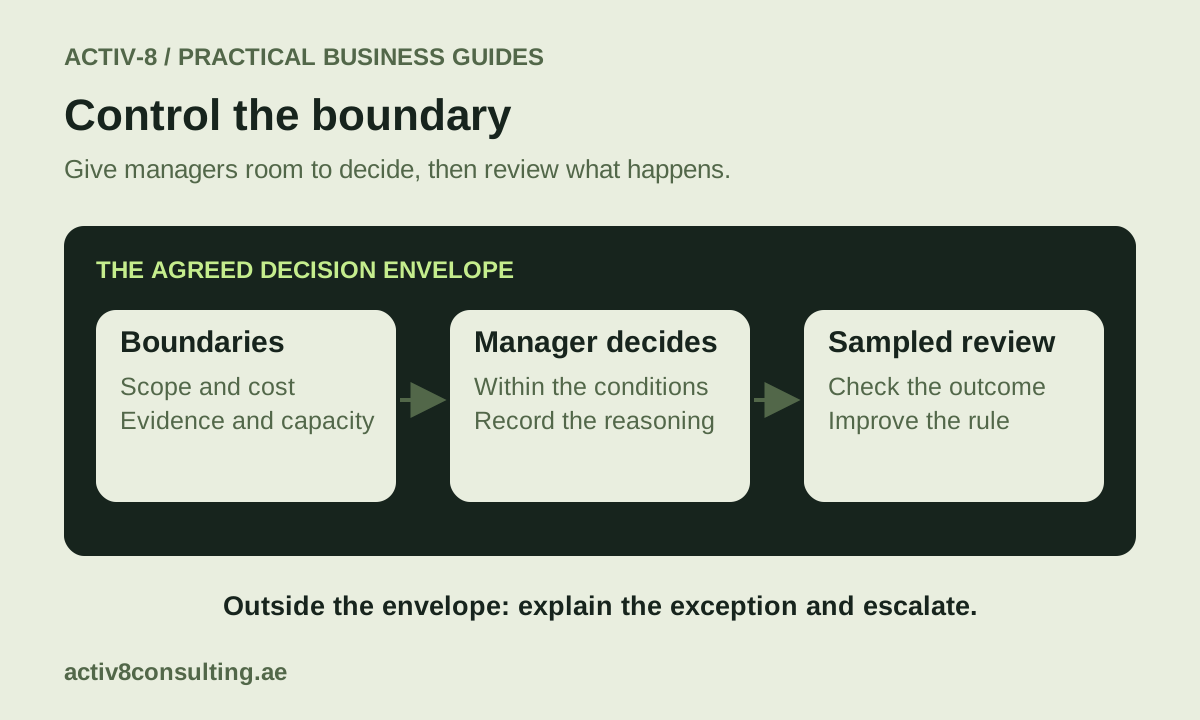
You can delegate decisions without losing control by agreeing the limits before the decision, giving the manager the information to act, and reviewing a sample of outcomes afterwards. The owner keeps control of direction and acceptable exposure. The manager gets genuine authority inside those boundaries. If every decision still needs your approval, you have delegated preparation rather than the decision itself.
For an owner of a growing UAE service business, the difficult part is often confidence. You know why one quotation is sensible and another is dangerous, but that judgement may live entirely in your head. The next step is to make enough of that reasoning visible for someone else to use. You do not need to transfer every decision at once.
Start with one recurring choice that causes interruptions and has a manageable downside. Standard customer recovery, routine supplier orders or scheduling adjustments may be suitable. Define the actual decision narrowly. “Run the Dubai operation” is a role description. “Approve a replacement visit within the agreed service recovery budget” is something you can explain, practise and review.
Separate your discomfort from the business exposure
Write down what could go wrong if you did not approve the decision personally. Be specific about the consequence, its size and how quickly you would notice. A costly, irreversible commitment needs different control from a reversible choice about next week's appointment slots. Treating both as equally sensitive fills the owner's diary without necessarily protecting the business.
Then ask why you normally intervene. Is the manager missing cost information, unclear about the commercial objective, inexperienced with exceptions or expecting you to overturn their choice? Each cause needs a different response. More training will not fix a missing report. A higher spending limit will not fix inconsistent expectations about customer promises.
There may also be preferences that you have mistaken for essential rules. You might choose a different wording or meeting format without improving the outcome. Decide which standards protect the customer and the economics, and which simply reflect your personal working style. Delegation becomes possible when another competent approach can be acceptable.
Build a decision envelope around one real example
Consider an illustrative Dubai maintenance business. A service manager can authorise a return visit costing up to AED 600 where the original job did not meet its agreed scope. The manager must confirm the issue, check available capacity and record the cause. A request that adds new work, promises an unusual completion date or exceeds the budget needs a separate decision.
The AED 600 figure is only an example, not a recommended approval limit. Its purpose is to show that a financial boundary sits alongside conditions about scope, evidence and capacity. Without those conditions, several individually small commitments could create an expensive schedule or an expectation the business cannot fulfil.
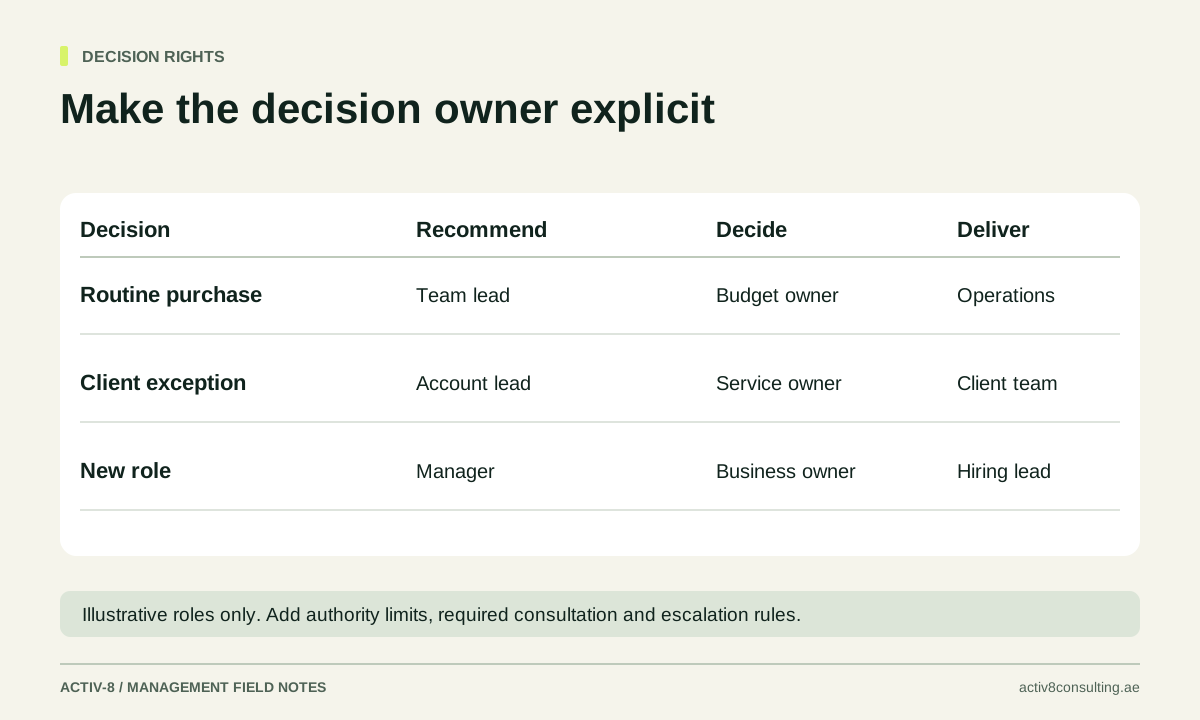
Describe the envelope in ordinary language that the manager can apply while working. Include what they can decide, what they must check, what they must record and the point at which they escalate. The delegation matrix guide provides a structure for documenting those decision rights once you have chosen the category to transfer.
Practise judgement before increasing the limit
Take several recent decisions and ask the manager to work through them without first hearing your answer. Include an ordinary case, a borderline case and one that clearly belongs outside the envelope. Discuss the evidence and reasoning. A different conclusion can be useful if it reveals that the written boundary is ambiguous.
Use a short supported period in which the manager recommends a decision and explains it. Make clear that this is temporary practice, with a date for moving to independent decisions if the agreed conditions are met. Otherwise the rehearsal quietly becomes a permanent approval process with more administration than before.
Do not equate confidence with competence. A cautious manager may understand the risk well but need reassurance that a reasonable decision will be supported. A confident manager may overlook an important condition. Review how they use evidence, identify exceptions and recognise uncertainty, rather than judging their readiness by presentation style alone.
A useful practice case also includes your own absence. Ask the manager what they would do if the normal approver could not respond before the customer needed an answer. This exposes a fragile dependency before it affects a live commitment.
Make escalation useful and time bounded
An escalation should help the owner decide quickly. Ask for the situation, the available options, the manager's recommendation and the latest useful decision time. This avoids a chain of messages in which you gradually discover the details. It also makes the manager's developing commercial judgement visible.
Provide a route when you are unavailable. That might be another authorised decision maker or a holding action that avoids creating a new commitment. The route should fit the service. A customer waiting for an appointment needs a clear update, even if the final exception cannot yet be approved.
Separate advice from approval. The manager can ask a colleague for perspective and still own the decision inside their envelope. If every consultation transfers responsibility upwards, delegation will collapse into informal permission seeking. The team should know who is contributing information and who is actually deciding.
Review decisions without taking them back
Agree the review rhythm before handing over authority. A small weekly sample may be more useful than reading every routine transaction. Include successful cases and awkward exceptions, not just complaints. Otherwise the review becomes a search for errors and teaches managers to minimise exposure rather than make sensible decisions.
If a manager acted within the agreed boundary but the outcome disappointed you, inspect the boundary and the available evidence. You may need to change the rule. That is different from pretending the manager should have anticipated an unwritten exception. Explain the learning and update the arrangement for future decisions.
If the manager ignored a clear condition, address that directly. Establish what happened, whether the condition was understood and what must change before the same authority continues. Support and accountability belong together. Delegation does not require accepting repeated avoidable mistakes, but it does require distinguishing them from honest judgement under uncertainty.
Expand only when the first category works
Look for evidence that decisions are moving faster without worsening customer outcomes, rework or commercial exposure. Count routine escalations and inspect why they still happen. A reduction in messages is useful only if the work is actually progressing, rather than managers avoiding difficult choices or leaving exceptions unresolved.
After the first category settles, extend the approach to an adjacent decision. For example, authority over standard recovery visits might precede authority over a broader service improvement budget. Do not increase every limit simultaneously. Controlled expansion makes it easier to understand which change produced a benefit or introduced a problem.
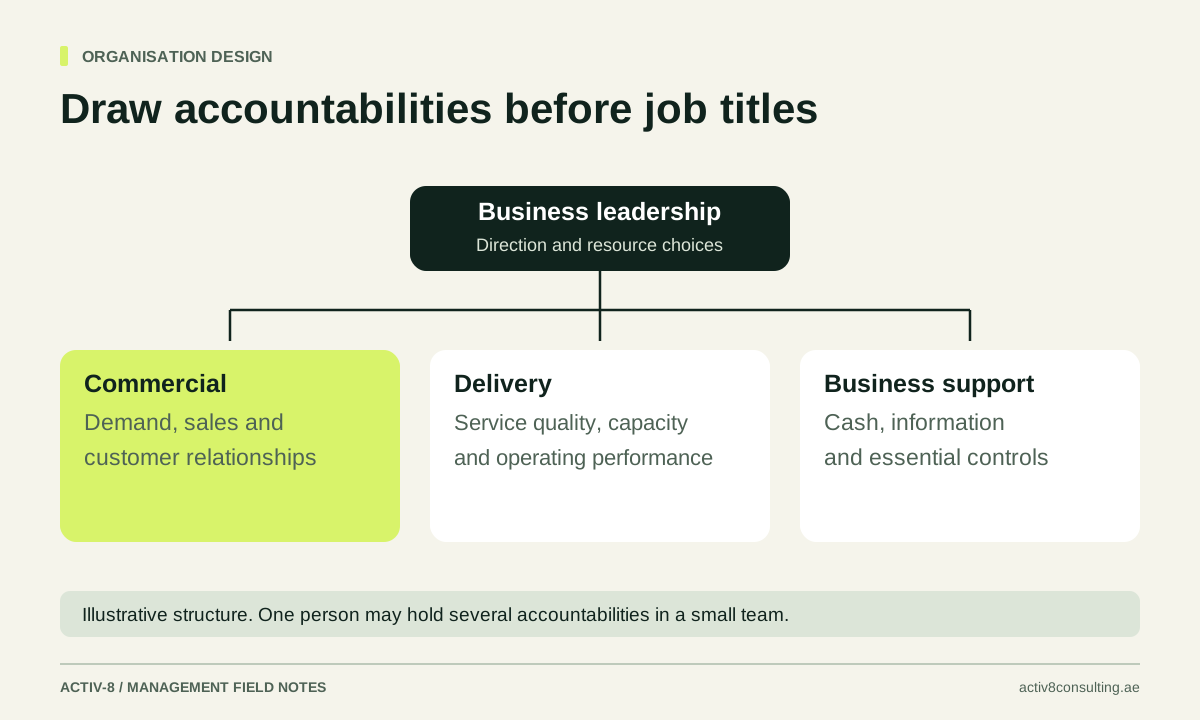
A growing business may eventually need clearer management roles as well as individual decision boundaries. The organisational structure guide helps connect authority to the wider business. Activ-8 leadership advisory can help you turn owner knowledge into usable decision rules, supported managers and a review rhythm that preserves commercial control while freeing your time.