THE STARTING POINT
Follow the same eligible starting customers through a relevant return window; keep new acquisition outside that denominator.
Measure whether the right customers return
Improve customer retention by defining which customers could reasonably return, choosing a meaningful return window, and fixing the service problems or missed next steps that prevent them doing so. Sending more offers is not a substitute for understanding why people leave. In a UAE service business, the right measure depends on what the customer buys and how often they need it.
A monthly support customer and a customer purchasing a one-off office move do not belong in the same retention calculation. One may reasonably be expected to continue each month; the other may have no immediate reason to purchase again. Treating both as lost after thirty days produces a number with little value for decisions.
Start with one repeatable service and one customer group. Define the promise, the normal next need and the evidence that a customer has continued or returned. Then follow the same starting group through the chosen window. This gives you a clearer view of the existing customer relationship than comparing total customer counts at two dates.
Choose a return window that fits the service
Use your service design and observed purchase history to choose the window. A recurring monthly service might be assessed through continuation into the next period. A periodic maintenance service may need a longer window based on the agreed service cycle. Do not copy a standard interval simply because it makes a dashboard easier to produce.
Write down the eligibility rule before looking at the outcome. You might include customers with an active recurring service at the start, excluding people whose planned one-off project had already ended. Keep exclusions explicit and consistent. Removing every dissatisfied customer from the denominator would make the result meaningless.
Allow each group enough time to complete its observation window. A customer who joined yesterday has not had the same opportunity to return as someone who joined three months ago. If you compare groups with different maturity, apparent changes in retention may reflect timing rather than a better or worse service.
Use the calculator with a starting cohort
The calculator below takes the number of eligible customers at the start and the number of those same customers retained by the end of your chosen window. Retention is retained starting customers divided by eligible starting customers. Lost customers are the difference, and churn is the lost share of that same starting group.
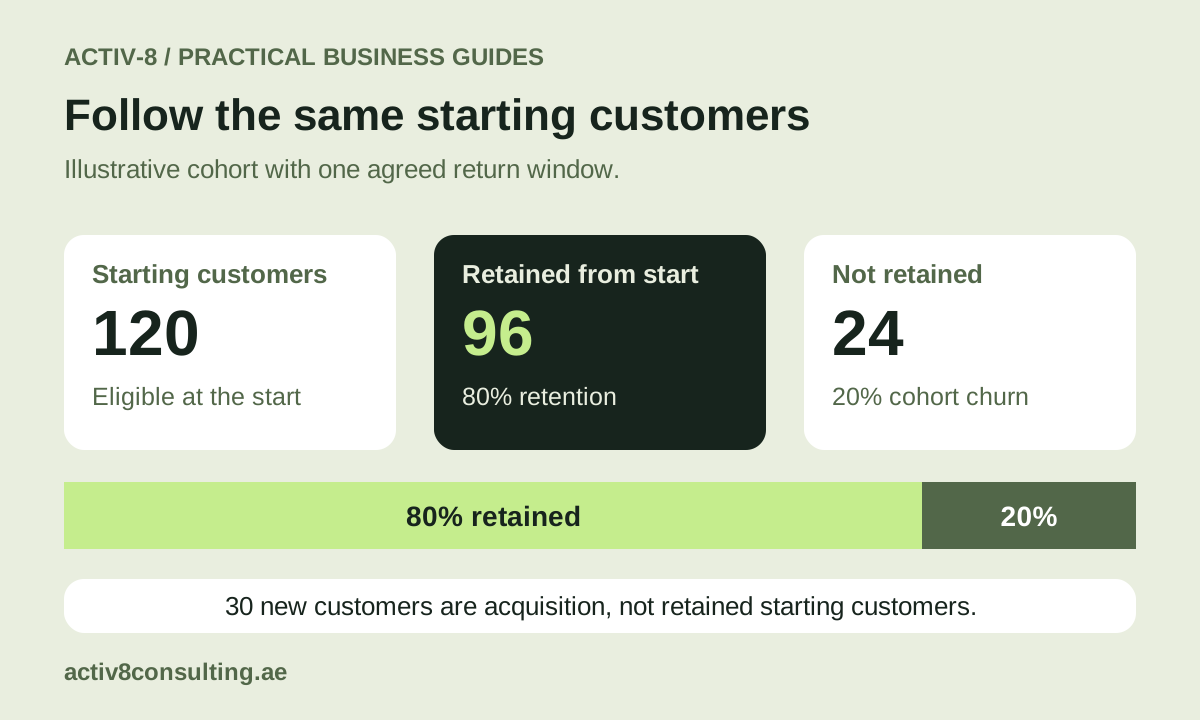
For an illustrative Dubai business, suppose 120 customers begin a quarterly observation window and 96 of those customers make the relevant repeat purchase. Retention is 80%, twenty-four customers have not returned within the defined window, and cohort churn is 20%. These figures illustrate the method; they are not a benchmark for UAE service companies.
If thirty new customers arrive during the quarter, do not add them to the ninety-six retained customers. Acquisition is valuable but answers a different question. With zero eligible starting customers, the retention percentage is undefined rather than 0%. Check customer identities as well as totals so that new and existing customers cannot be mixed accidentally.
Separate the number from the reason
A retention calculation tells you what happened to a defined group. It does not tell you why. Review a sample of customers who continued and those who did not, using service records and appropriate direct feedback. Avoid assuming that price caused every departure just because it is the easiest explanation to discuss.
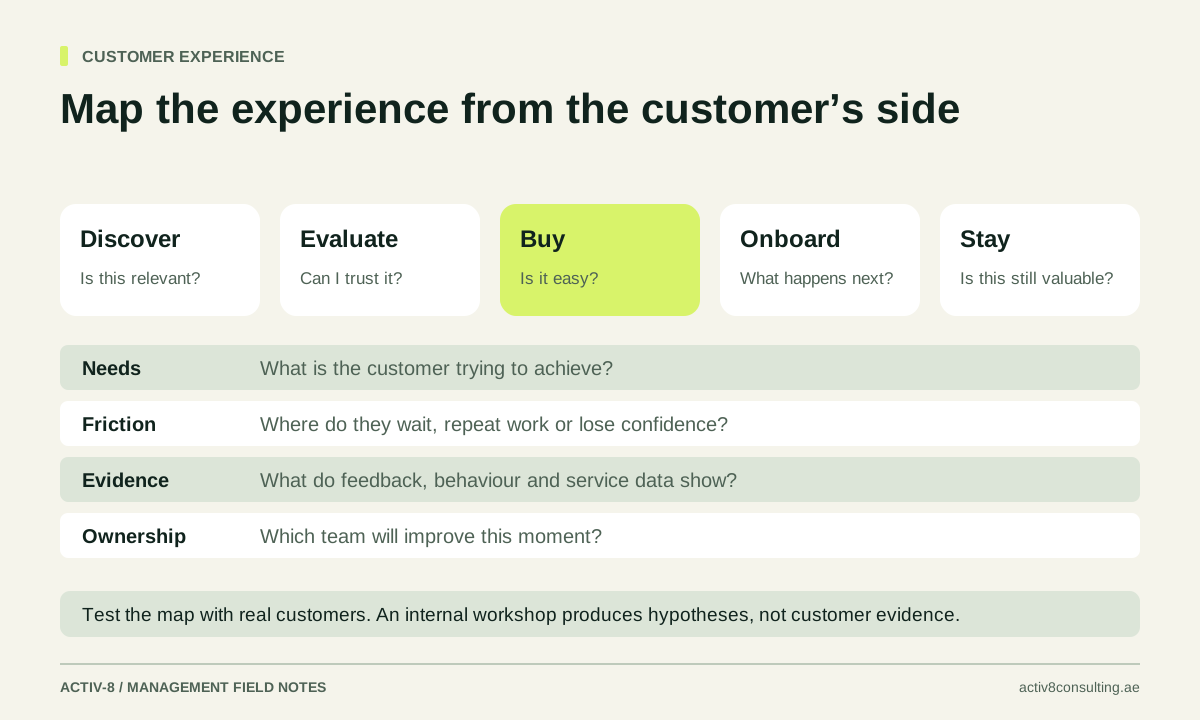
Look for points where expectations and delivery diverged. Was the initial promise clear? Did the customer know what would happen next? Was a service issue resolved? Did the business recognise an upcoming need in time? The customer journey mapping guide helps organise those questions around actual customer experiences.
Keep reasons specific and allow an unknown category. “Unhappy” gives you little to improve. “Could not obtain an appointment within the required week” identifies a possible availability issue. Equally, a customer whose need has genuinely ended should not automatically trigger a discount or repeated sales messages.
Fix the experience before adding an incentive
Choose a recurring problem that the business can influence. If customers repeatedly need to chase confirmation, improve the confirmation process. If a promised follow-up is missed, assign ownership and a due date. These changes address the reason trust is lost rather than paying customers to tolerate the same problem again.
Give the team a clear route for resolving service issues. The person receiving the complaint should know what they can do, when to escalate and how to confirm that the customer received the agreed resolution. A case marked closed internally may still feel unresolved to the person who raised it.
Inspect the commercial effect of recovery. An illustrative AED 150 return visit may be sensible in a particular case, but that does not establish a universal recovery budget. Consider the original service promise, the cause, the relationship and the direct cost. Record the reasoning so recurring defects are addressed rather than repeatedly compensated.
Build a relevant next step into the service
Where a repeat need exists, make the next step easy to understand. Confirm when the service is likely to be needed again, what information the customer should retain and how they can arrange it. The timing should follow the service need rather than a generic campaign calendar.
Use the customer's stated communication preferences and the appropriate permissions for your process. A useful reminder has a clear purpose and a straightforward action. Avoid treating retention as permission to contact people indefinitely or through every available channel. Irrelevant repetition can undermine the relationship you are trying to preserve.
Do not promise continuity that operations cannot provide. If repeat customers are encouraged to book a preferred time, check how that capacity will be managed. Commercial messages and delivery planning need to agree. A successful retention offer can create a service problem if the business sells more of a constrained appointment slot than it can fulfil.
Connect retention to contribution and capacity
Retaining more customers is not automatically better if the retained work consistently loses contribution or blocks more suitable demand. Review the economics of the service alongside the customer count. Separate revenue, variable delivery cost and the capacity required to serve the group well.
Consider an illustrative repeat visit priced at AED 700 with AED 420 of variable delivery cost. Its AED 280 contribution is before fixed costs and any additional retention activity. If a proposed incentive reduces the price by AED 100, the remaining contribution is AED 180 before other changes. More repeat visits must be assessed against that reduced amount and available delivery time.
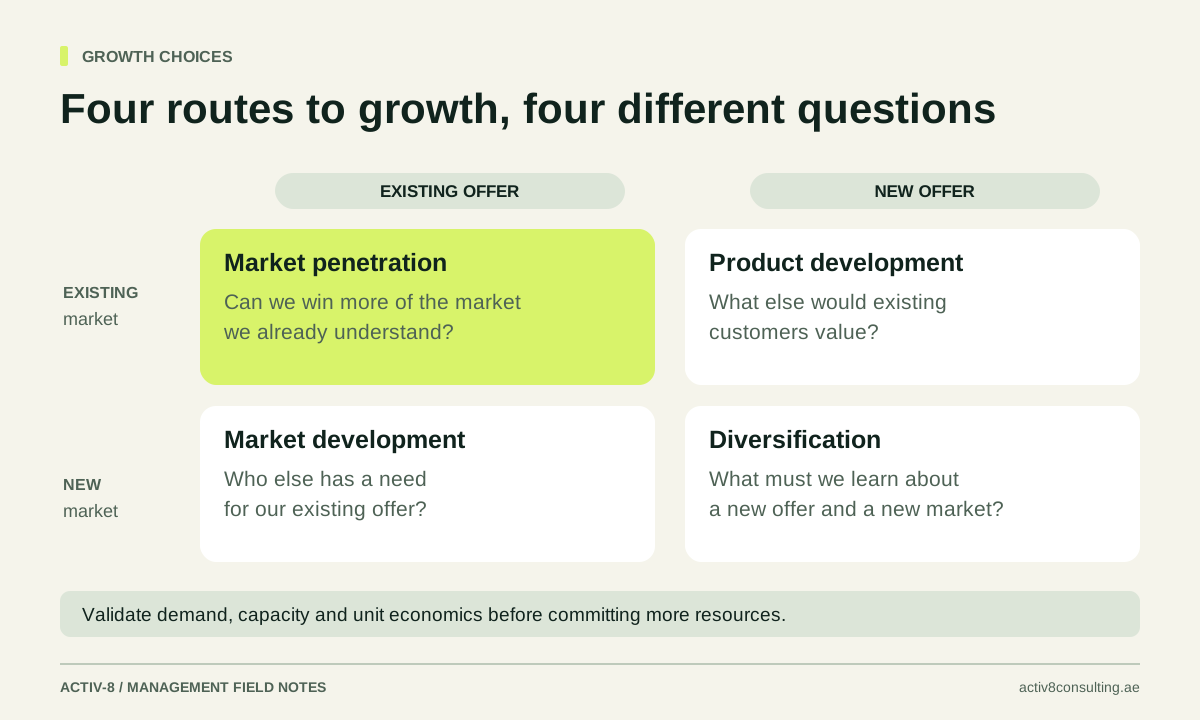
The business growth strategy guide helps connect existing customer development to your wider choices about growth. A retention programme should support a service you want to deliver, not keep every account at any cost. Segmenting by service and commercial fit can make the action more useful than one company-wide percentage.
Test one improvement and follow the next cohort
Choose a change with a clear explanation, such as a better completion check or a timely invitation to arrange the next service. Define the customer group, observation window and expected behaviour before launch. Keep a record of other changes that might affect the result, including price, availability and the mix of customers acquired.
Compare like with like and inspect the underlying records. A small group can produce a large percentage movement from only a few customers, so report the counts alongside the rate. Do not attribute every improvement to the new activity merely because the dates overlap. Use customer feedback and process evidence to test the explanation.
Activ-8 sales and customer experience support can help you define a useful retention measure and improve the journey behind it. Bring one service, a starting customer list and examples of customers who did and did not return. That is enough to begin a focused commercial investigation without pretending that a single retention target fits every UAE business.
TRY IT WITH YOUR NUMBERS
Customer retention calculator
Follow the same eligible starting customers over a clearly defined return or renewal period. Exclude new customers acquired during the period.
This measures customer counts, not revenue retention. Define eligible customers and a sensible return or renewal window before comparing periods. New customers do not belong in the retained count.
How this calculation works
Retention = retained customers from the starting cohort ÷ eligible starting customers × 100. Lost customers = starting customers − retained customers. No retention rate exists for an empty starting cohort.
Your inputs stay in this page and are not sent to Activ-8. Download the scenario if you want to keep it.
Discuss what this means for your business ↗Put the thinking into practice.
Explore sales and customer experience Discuss your business with Mark