THE STARTING POINT
Measure whether the CRM supports ownership and timely follow-up, rather than counting logins or notes.
Make the CRM useful at the moment of work
If your team is not using the CRM properly, investigate whether the system helps them complete their real work, whether the required information is proportionate, and whether managers actually rely on it. Low adoption is not automatically a training problem. People may understand the software perfectly and still see it as a second record they maintain after the useful work happens elsewhere.
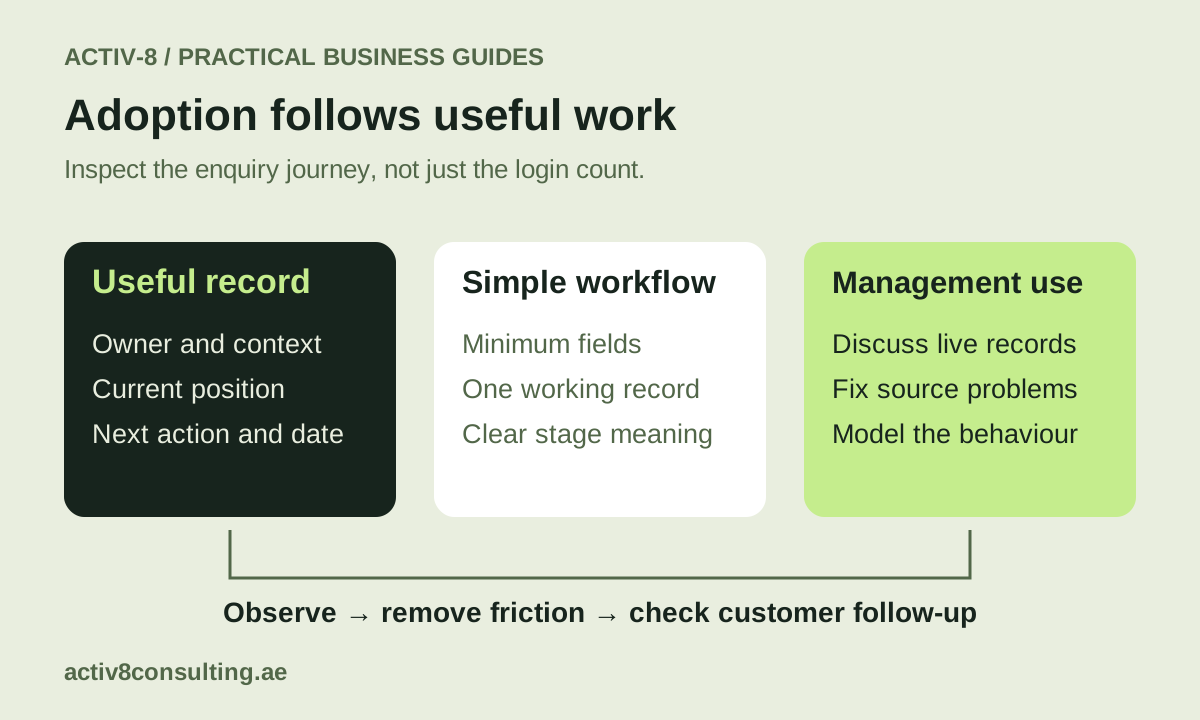
Start by observing a few genuine enquiries from arrival to outcome. Ask the person handling each one to show where they record the customer's need, the agreed next action and the latest commercial position. Follow the work rather than asking only whether staff like the system. That reveals the exact point where the official process becomes inconvenient or unclear.
For a UAE business receiving enquiries through calls, email and messaging, the issue may be fragmentation. A salesperson can be responsive to the customer while leaving colleagues unable to see the commitment. Your objective is a reliable shared customer record and timely follow-up. Logging in every day is only a weak proxy for that outcome.
Define the minimum useful record
Decide what another person needs to continue the conversation without asking the customer to repeat everything. That normally includes who the enquiry belongs to, what the customer needs, the current stage, the next action and its date. Additional fields should earn their place by supporting a clear decision or essential operating requirement.
Review each compulsory field with the people entering it. Ask who uses the information, when they use it and what would go wrong if it were absent. A field collected “just in case” can create friction on every enquiry while providing little practical value. Remove duplication before adding more reminders about incomplete records.
Keep the minimum appropriate to the stage. A new enquiry may not yet have a confirmed budget or delivery date. Requiring invented certainty encourages guessed entries that make reports look complete but less trustworthy. Allow a clear unknown status, then specify when the information should reasonably become available.
Locate the break between the process and the screen
Walk through common actions using the team's normal device and working conditions. Count how many places the person must update to record a call, send a quotation or set the next action. Do not judge the workflow only from an administrator's view, where access and familiarity may be very different.
An illustrative Dubai installation business asks staff to record the same scope in a spreadsheet and a CRM, then send it separately to operations. A salesperson dealing with twelve enquiries may postpone the third update. The useful fix is to decide which record is authoritative and how the handover works, rather than increasing the number of fields marked compulsory.
Look for interruptions that explain apparently careless behaviour. Perhaps the next-action field is hidden, ownership is unclear when an employee is away, or a stage name means different things to sales and operations. These are small design decisions with consequences for the quality of the shared record.
Make managers use the same information
If the weekly sales meeting relies on a separate spreadsheet, the team learns where management attention really sits. Asking for the CRM to be current while requesting another report encourages parallel systems. Agree which questions the CRM should answer and use its underlying records to discuss those questions.
This does not mean trusting every report immediately. Start by checking a sample against actual enquiries. Where the report is wrong, trace the error to its source: missing information, an unclear stage definition, duplicated customers or the way the report groups records. Correct the cause rather than silently repairing a separate management copy.
Managers must also keep their own commitments visible. If an owner makes a pricing exception or promises a customer a date, that information needs to reach the person responsible for the record. Adoption becomes harder when senior staff expect everyone else to follow a process that their own decisions regularly bypass.
Measure adoption through useful behaviours
Select measures that match the operating problem. You might inspect the share of active enquiries with an owner and a future action, the share of completed calls with a useful outcome, or the age of records waiting for a decision. Use a defined sample and explain what counts as complete.
Avoid treating the number of notes as the objective. A long record can still omit the promised next step. Equally, a short note may be enough to support the next person. Review whether the information helps someone act, and combine record quality with customer follow-up evidence rather than rewarding volume of administration.
The downloadable adoption worksheet supports a small observation exercise. Record the task, the friction observed, the effect on the customer or colleague and a proposed change. Its sample row is illustrative. Begin with a few real examples and review the same task after the change; do not draw company-wide conclusions from one unusual case.
Fix one workflow before launching more features
Choose the point with the clearest consequence, such as quotations being sent without a follow-up date. Simplify the required record, agree ownership and test the revised routine with a small team. Set a short review date so staff can identify what still gets in the way before the process spreads.
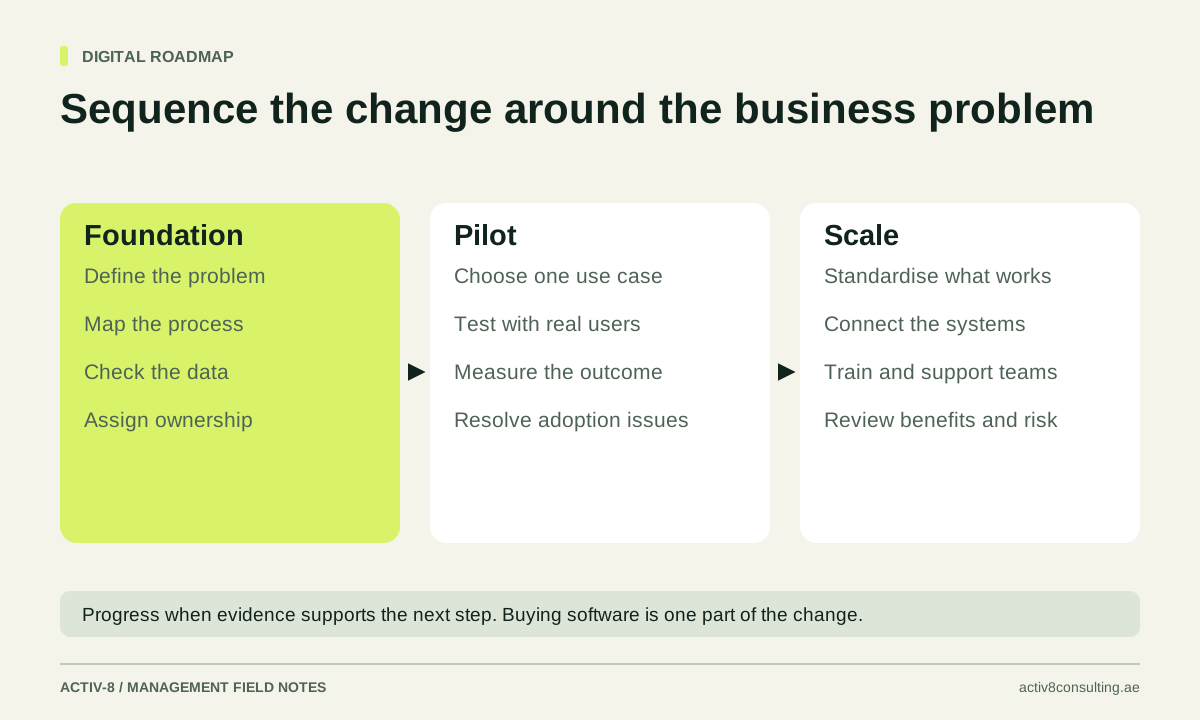
Keep a list of requests that can wait. Additional dashboards, scoring rules and automation may be attractive, but they depend on reliable inputs. Expanding functionality while basic stages remain ambiguous can make poor information travel faster. The digital transformation roadmap helps sequence broader work around business outcomes and practical dependencies.
A pilot should examine both adoption and usefulness. If record completion rises but customers still receive inconsistent follow-up, investigate the gap. Perhaps staff have learned to populate fields without changing the action itself. The purpose is a better customer and management process, not a successful compliance exercise inside the software.
Maintain the behaviour after the initial push
Give someone responsibility for stage definitions, field changes and recurring data issues. Without ownership, small exceptions accumulate until the process becomes difficult to understand again. Review requests for changes against the decisions the CRM is meant to support, and explain why a request is accepted or postponed.
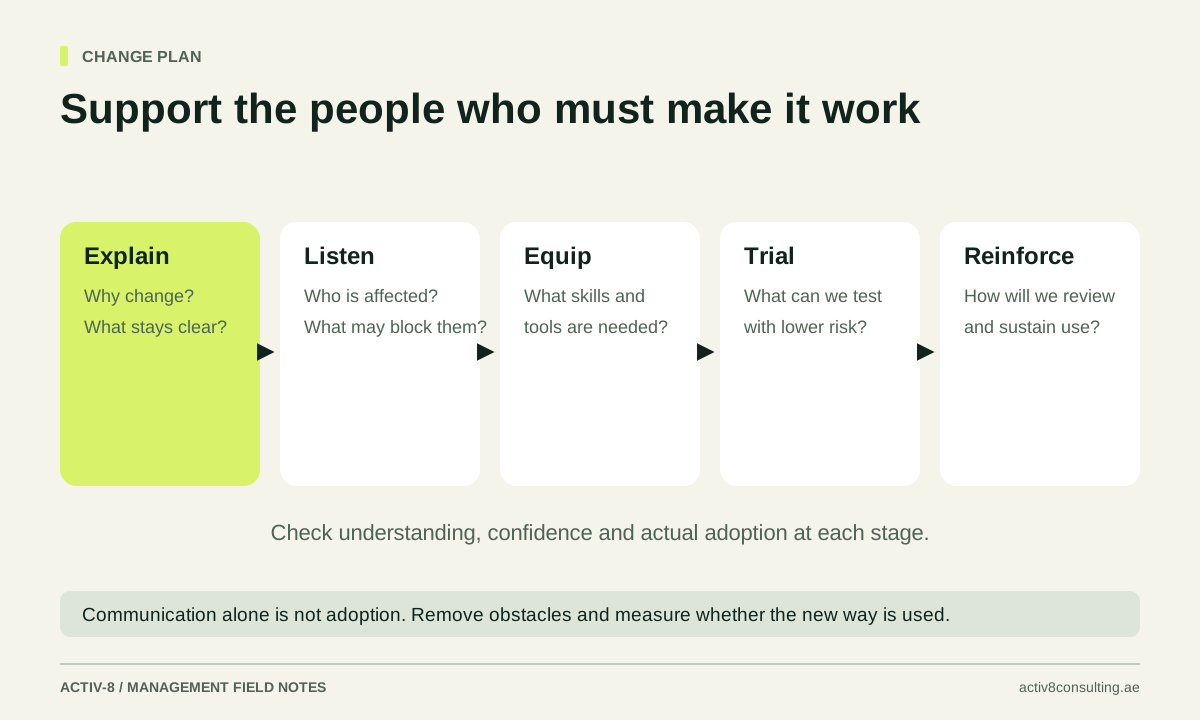
Include the working method in manager reviews and new starter practice. The change management guide shows how to make a change part of everyday routines. Continue listening to the people entering the information. They often see a broken handover or redundant field before it appears as a problem in a management dashboard.
Activ-8 CRM and sales systems support connects the system to how your team acquires, follows up and serves customers. Start with an enquiry that was mishandled or a report nobody trusts. Following that example through the actual workflow usually produces a more useful improvement brief than asking for a generic CRM upgrade.
PUT IT INTO PRACTICE
CRM adoption observation worksheet
Observe real customer work, describe the friction and record its consequence. Define one change and compare the same behaviour afterwards. Replace the illustrative example; do not include confidential customer records.
Download the worksheetCSV file · Opens in Excel or Google Sheets · No sign-up required