THE STARTING POINT
Understand your delivery economics, investigate customer value and test a clear offer with real purchasing decisions.
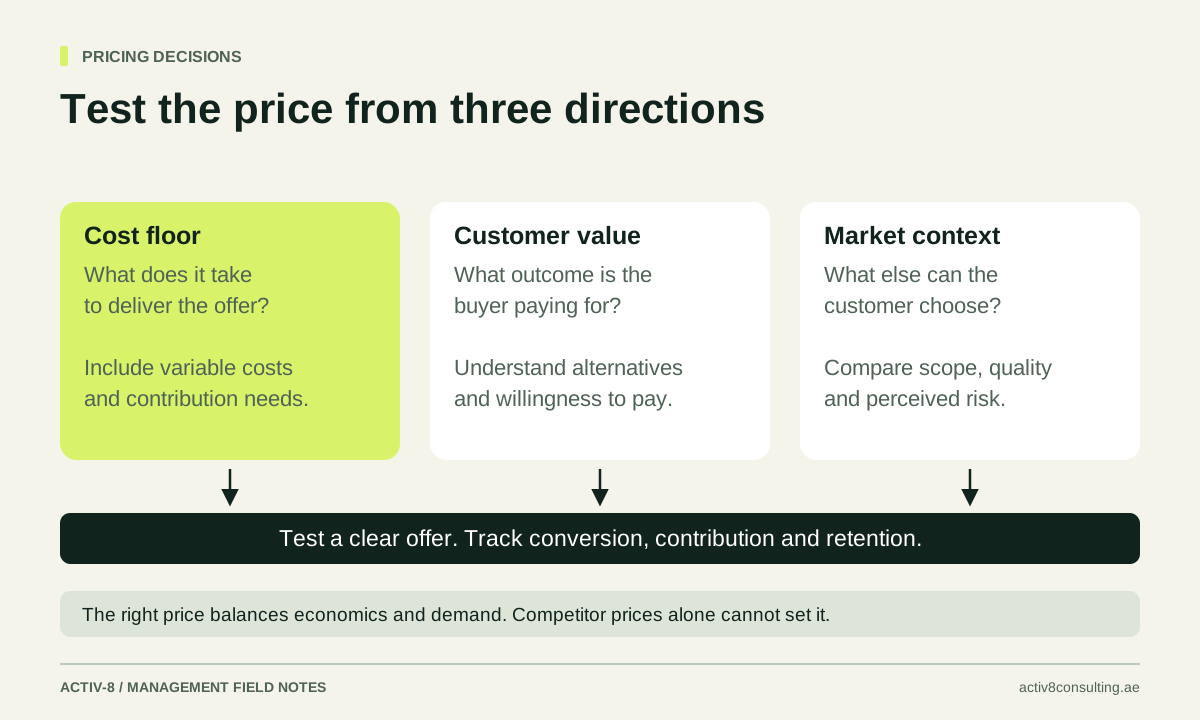
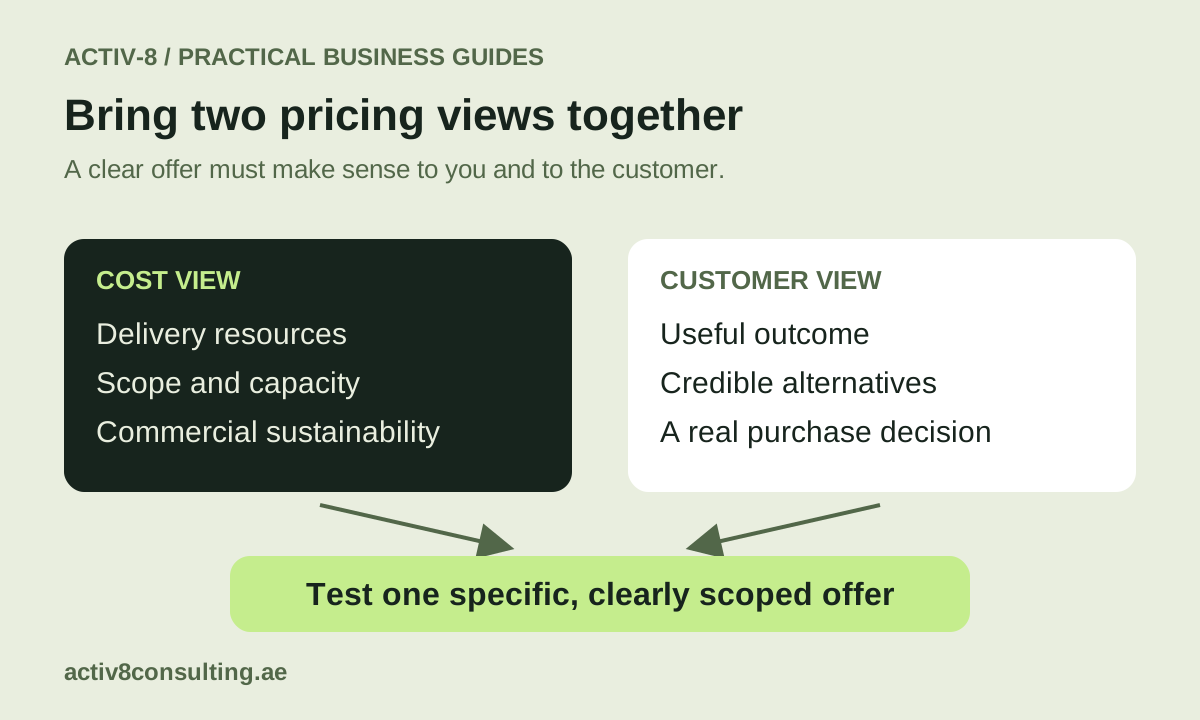
Use costs as a floor and customer value as a test
A UAE service business can use both cost-plus and value-based thinking. Cost analysis shows what the work requires and whether the proposed price supports a viable business. Value-based thinking examines the outcome the customer wants, the alternatives available and what they are willing to pay. Neither method removes the need to test an actual offer with suitable customers.
Cost-plus pricing starts with a defined cost base and adds an amount or percentage. Value-based pricing starts with the usefulness of the outcome to the customer and the differences between available options. The risk of cost-plus is ignoring what the offer is worth. The risk of value-based pricing is inventing a value story that customers do not believe or cannot justify.
Start with one service and a clear scope. Comparing pricing methods while the deliverable keeps changing produces confusion. Define the work, the customer responsibility, the completion evidence and the important exclusions. Then examine the cost and value of that same offer before deciding how to position and price it.
Build a transparent cost base
Include the resources required to deliver the service at the expected quality. Depending on the work, this might involve specialist time, materials, subcontractors, travel and a sensible allocation of shared operating costs. Keep direct variable costs separate from allocated overhead so you understand both incremental contribution and the wider sustainability of the price.
Consider an illustrative Dubai business offering a defined operations review. It budgets AED 1,200 of direct variable delivery cost and allocates AED 800 towards shared operating capacity and overhead. Its planning cost base is AED 2,000. That allocation is an assumption for pricing; it is not automatically an additional cash payment caused by each sale.
If the business adds a 30% markup to the AED 2,000 cost base, the price is AED 2,600. The AED 600 amount above the cost base represents approximately 23.1% of the selling price. Markup and margin are different calculations. Confusing them can produce a price that falls short of the intended commercial target.
Check whether the cost-plus offer is commercially sensible
A mathematically correct cost-plus price can still be wrong for the market or the business. Customers may have credible alternatives with a different scope or a lower price. Equally, an efficient provider may create substantial customer value while a simple markup rewards that efficiency with a lower selling price.
Inspect the assumptions behind the cost base. If the service regularly requires more review rounds than budgeted, the problem may be unclear scope or inaccurate time estimates. Raising the markup can conceal that issue without fixing it. Review completed jobs before assuming the cost of the next one will match the original estimate.
The pricing strategy guide helps connect cost information with positioning and offer design. Cost-plus can provide a useful reference point, especially where work is relatively standard. It should not become a reason to avoid asking why a particular customer would choose your service at the proposed price.
Check the assumed number of jobs behind any overhead allocation. Dividing the same shared cost by an ambitious sales target can make the planned unit cost look low. If that demand does not materialise, the business still has the shared cost to cover. Review volume assumptions alongside the markup instead of treating the cost base as a fixed fact.
Identify value through the customer's decision
Ask what problem the customer is trying to solve and what a satisfactory outcome would change. They may value reduced management effort, clearer decisions, a more reliable service or faster implementation. Do not assume the highest theoretical financial benefit is the amount they are willing to pay.
Use the customer's own situation to make the discussion specific. In the illustrative operations review, one business might need a practical diagnosis before deciding whether to open another location. Another may want a general check of its current process. The same underlying work can matter differently because the decision and alternatives are different.
Avoid turning uncertain benefits into promised savings. You can explain how the service supports a decision without claiming that every customer will achieve a specific financial result. The customer also considers credibility, delivery risk, internal effort and whether they can act on the recommendations. Value is broader than a spreadsheet containing optimistic benefits.
Translate value into a clear offer
A value-based offer still needs boundaries. Describe the output, the participation required from the customer and what happens after delivery. If the proposed price includes implementation support or additional reviews, make those differences visible. Otherwise a higher price may simply appear arbitrary when compared with a narrower alternative.
You might create distinct options for customers with different needs, such as a focused diagnostic and a more involved implementation engagement. Each option should stand on its own with a coherent scope and economic model. Do not add vague premium features merely to make another option look attractive.
Price each option against its actual delivery requirements. If an illustrative expanded service is offered at AED 4,500, that price alone does not prove a better margin than the AED 2,600 diagnostic. The additional scope may require more specialist time or ongoing support. Rebuild the cost estimate before comparing the commercial outcomes.
Test willingness to pay through real decisions
Discuss a concrete proposal with suitable prospects and record what happens. Did they understand the outcome? Did they consider the scope appropriate? Which alternative did they compare it with? A polite statement that the idea sounds valuable is weaker evidence than a purchase decision at a clearly stated price.
Use a consistent record for enquiries, quotations, objections and outcomes. Separate price resistance from poor fit, timing or an unclear business need. If customers do not understand what they receive, reducing the price may increase confusion rather than solve the problem. Improve the explanation before drawing a firm conclusion about willingness to pay.
A small number of quotations will not establish a universal demand curve. Treat early results as evidence to refine the offer, and avoid overreacting to one rejection or one enthusiastic buyer. Look for patterns within comparable customer groups and service scopes before making a broad pricing change.
Protect scope when the conversation becomes bespoke
Service businesses often negotiate more than price. A customer may ask for additional locations, a shorter delivery timetable or more revisions. Each change affects cost, capacity or delivery risk. Record the changed scope and reconsider the price rather than assuming the original value argument absorbs every extra request.
Make the process for changes understandable from the start. Staff should know when a request is part of the agreed service and when it requires a new commercial decision. Clear boundaries support the customer relationship because both parties can see what has changed and why the proposal needs to be updated.
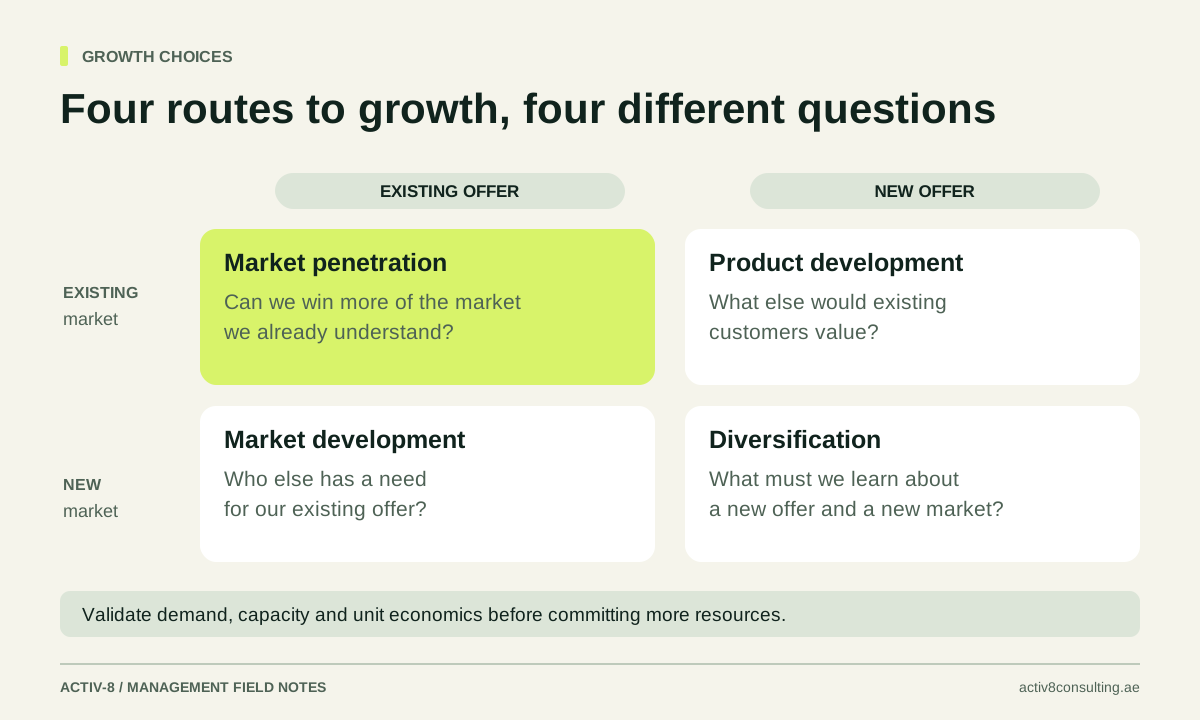
The business growth strategy guide can help you decide which bespoke opportunities fit the business you want to build. Accepting every unusual request may generate revenue while making delivery harder to repeat. Pricing should support your chosen operating model, including the types of work you deliberately decline.
Review the method against completed work
After delivery, compare the original cost estimate with actual resource use and compare the promised output with what the customer received. Use that evidence to improve the next proposal. A price accepted by the customer is not automatically a good price if the work repeatedly exceeds its planned resources.
Review customer feedback and repeat demand alongside the economics. A healthy margin on one transaction may not support a durable offer if customers feel the outcome was unclear or difficult to use. Equally, high satisfaction does not compensate indefinitely for a service that consumes more capacity than its price supports.
Activ-8 marketing strategy support can help you bring cost, value and positioning into one pricing decision. Start with a real service, recent delivery evidence and examples of accepted and rejected proposals. That gives the pricing discussion a commercial foundation and lets you test a clearer offer without relying on an arbitrary markup or an unsupported claim about customer value.