THE STARTING POINT
Keep direct cash, existing staff capacity and unpriced service consequences separate, and count each effect only once.
Count the consequences of correction
Measure the cost of rework by counting correction events, recording the extra time and cash they consume, and separating those costs from lost capacity or unproven lost sales. Start with one process and one period. A mistake that takes ten minutes to fix may also create a return visit, delayed invoice or customer complaint. The useful figure is the cost of those observed consequences, without counting the same effect twice.
Define rework before counting it
Rework is additional activity needed because the original output did not meet the agreed requirement. Correcting an inaccurate quotation, repeating a service visit or rebuilding a report from inconsistent inputs can qualify. A customer buying a genuinely new scope is different. If those categories are mixed, the business may label legitimate revenue-generating work as failure.
Choose a clear unit of work, such as an order, invoice or completed service visit. Define the point at which it should be correct and the defects you want to observe. An order can contain several defects but be one affected order, so keep the number of affected units separate from the number of correction events. This prevents a misleading rate above or below what management thinks it is reading.
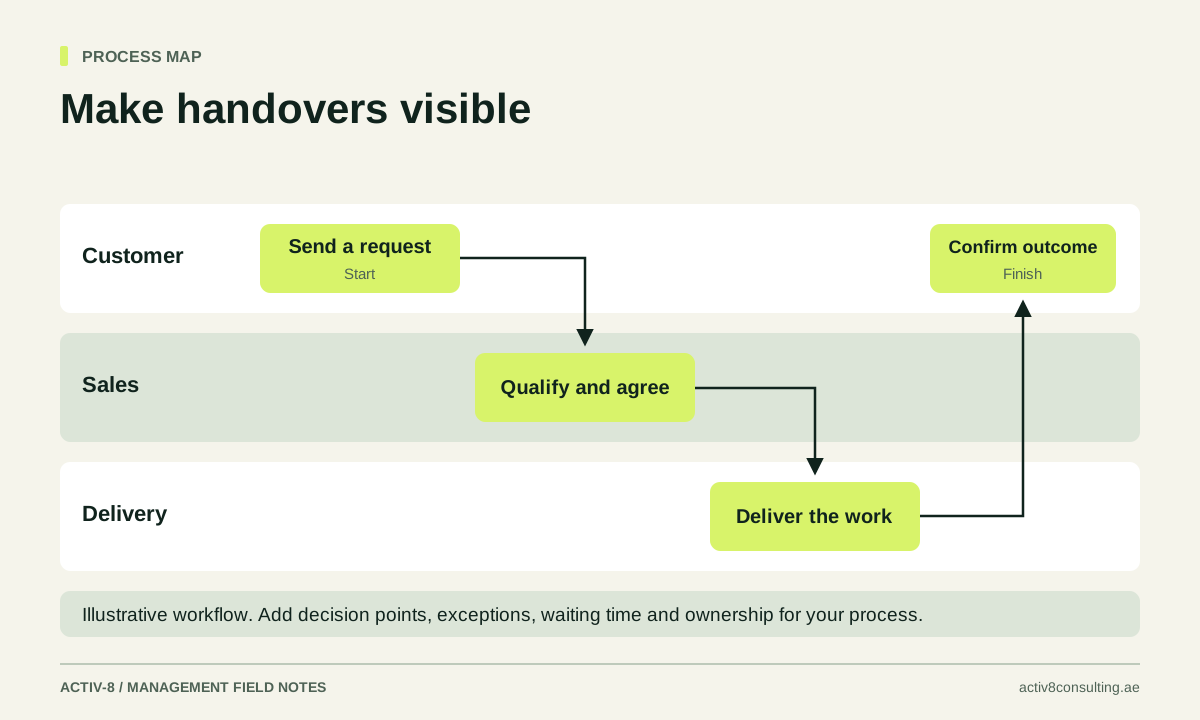
For a UAE service business, follow the actual journey across office staff, field teams and suppliers. A correction may be logged by one team while most of its cost falls elsewhere. Use our business process mapping guide to find the handovers where consequences become separated from their original cause.
Build a short correction log
Record the work reference, defect type, discovery point, correction steps and people involved. Add extra supplier charges, replacement materials, transport or separately paid labour where applicable. Record existing staff time in minutes. Include enough context to distinguish a recurring design problem from a genuinely unusual exception, but avoid turning the log into a burdensome investigation of every minor typo.
Use a few consistent categories. Scope error, missing information, incorrect entry, scheduling conflict and failed quality check may be sufficient for an initial review. Let staff add a short factual description rather than forcing every problem into a category that does not fit. Review unclassified cases and refine the categories when there is a useful pattern.
Explain that the log is intended to improve the process. If employees believe every recorded correction will count against them, the data may describe willingness to report rather than actual quality. Validate the log against a sample of completed work, returned records or complaints so management can assess how complete it is.
Separate four kinds of consequence
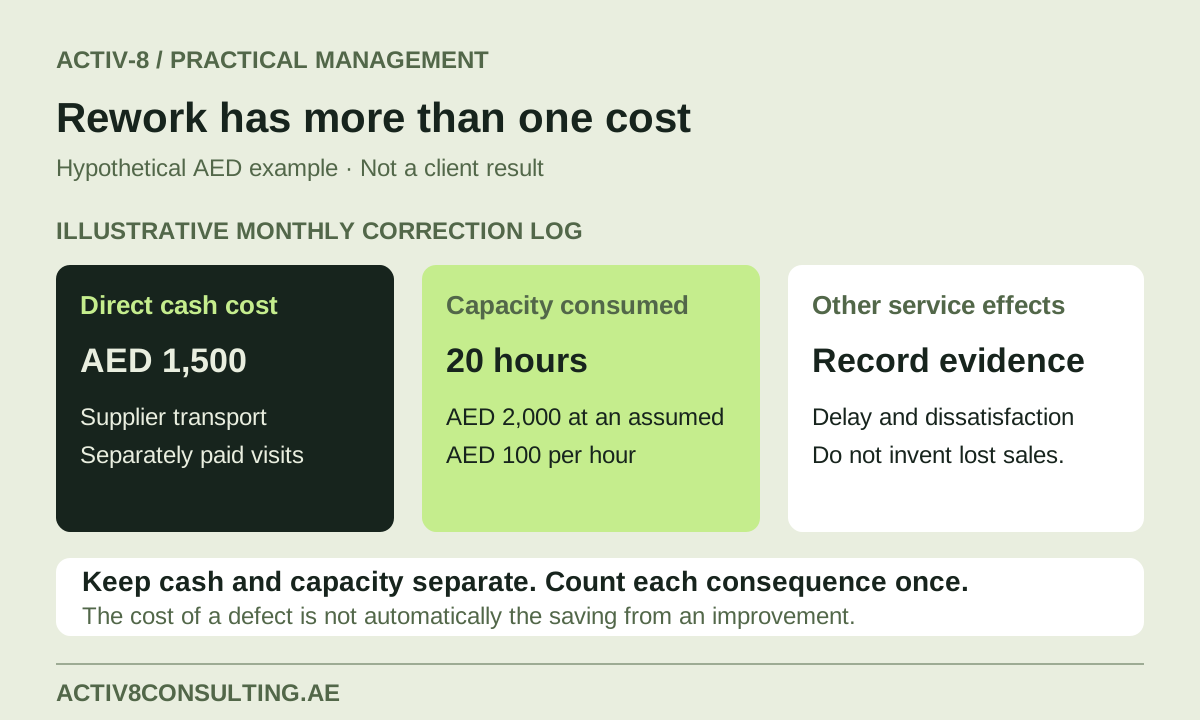
First, identify direct additional cash cost: money actually spent because of the correction. Second, identify existing staff capacity consumed. Third, record customer concessions, refunds or credits on a consistent basis with the relevant finance records. Fourth, describe service effects such as delay or dissatisfaction that you cannot yet value reliably.
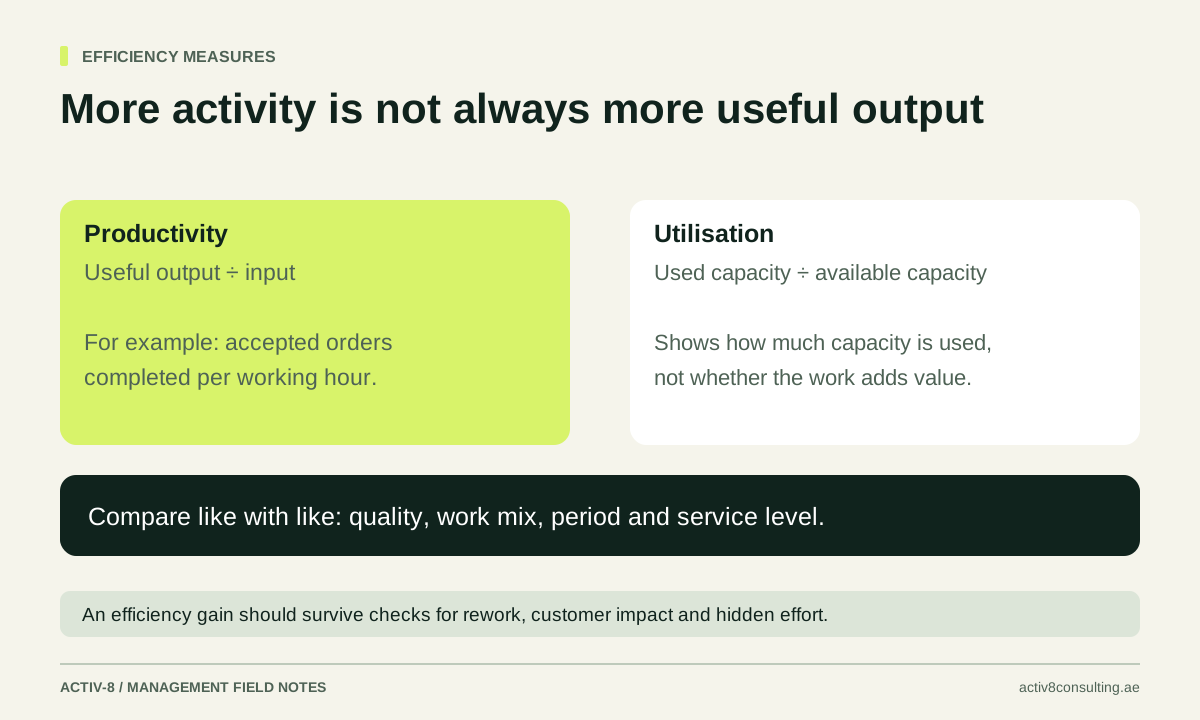
Do not assume every hour of rework is overtime. If salaried staff correct work during their normal hours, the immediate consequence may be reduced capacity for other useful tasks. That is economically relevant, but it becomes a cash saving only when a spending decision changes. State the assumed hourly value and how you intend to use any released time.
Be especially careful with lost revenue. A complaint does not prove that a customer would otherwise have spent a particular amount. If you have evidence of a cancelled order, record the actual consequence and distinguish revenue from contribution. Keep speculative future losses outside the measured total while noting them as risks worth investigating.
An illustrative monthly rework calculation
Consider a hypothetical UAE maintenance coordinator processing 240 orders a month. Forty-eight orders need correction, with an average of 25 additional minutes each. That is 1,200 minutes, or 20 staff hours. At an illustrative capacity value of AED 100 an hour, the monthly rework capacity is valued at AED 2,000. This is a planning value, not an automatic reduction in payroll.
The log also shows AED 900 of additional supplier transport and AED 600 in separately paid return visits. Direct additional cash cost is AED 1,500. If the business includes the AED 2,000 capacity value in a broader management estimate, it should label the combined AED 3,500 clearly and retain the two components. It must not later count those same return-visit costs again under a separate complaint total.
The affected-order rate is 48 divided by 240, or 20%. That is an invented example for the calculation, not an industry benchmark or an acceptable target. The next question is which defect creates the greatest avoidable consequence and whether its cause can be changed at reasonable cost.
Find the repeatable cause before buying a solution
Group the correction log by the point where the defect was created and where it was detected. A late discovery can be expensive even when the initial error is simple. Missing access information discovered before scheduling may require a short call; discovered at the customer site, it may require another journey and a new appointment.
Ask what made the incorrect action possible or reasonable at the time. Was the current specification unavailable? Did two systems disagree? Was someone expected to guess a missing value? “Human error” is usually too broad to guide an improvement. A stronger diagnosis identifies the information, decision or control that needs to change.
Test the proposed cause against several cases, including examples where the process worked. If the same missing field appears in both good and bad outcomes, it may not explain the difference on its own. Avoid introducing a new approval layer until you understand whether that layer would have detected the actual defect.
Compare the full improved process
Use the operational efficiency calculator on this page to compare current and proposed time per task, including checking and exceptions. Enter monthly task volume, current minutes, proposed minutes, the share adopting the method, an hourly capacity value and running costs. The result estimates released hours and their capacity value. It does not convert that value into cash saved.
For example, suppose all 240 orders currently average 30 minutes including their share of correction work. A tested proposal averages 26 minutes including the new check. At 75% adoption, released time is 240 multiplied by four minutes and 75%, divided by 60: 12 hours a month. At AED 100 an hour, that is AED 1,200 of capacity value. A monthly running cost of AED 300 leaves AED 900 of net capacity value.
These figures are a separate hypothetical improvement scenario. Do not add its AED 1,200 capacity value to the original AED 2,000 rework total as though both were savings. The calculator compares alternative processes. Our operational efficiency guide explains the distinction between capacity released and cashable benefit.
Include prevention costs and unintended effects
A new check takes time, and an automated control may require maintenance. Include those costs in the proposed process rather than displaying only the minutes removed. Track whether errors move to another step or become harder to detect. A faster system that sends incorrect information directly to customers can be worse than a slower process with an effective review.
Choose a pilot with a baseline, defined scope and comparable work. Keep volume and complexity visible when comparing before and after. If the pilot handles only simple orders, do not apply its average time saving to every order in the business. Record exceptions and learn which conditions the improvement actually supports.
Decide what will happen to released capacity. It might absorb growth, reduce a queue, improve service or avoid a planned additional expense. Assign that use to an owner and check whether it occurs. Otherwise the business may report an attractive theoretical saving while customers and cash remain unchanged.
Turn the findings into a management decision
Review the highest-consequence repeatable defect, the evidence for its cause and the smallest credible intervention. Give the action an owner and a date for checking results. Retain a measure of correction frequency, direct cost, capacity and customer impact so that one improved number cannot conceal a worse outcome elsewhere.
Continue logging long enough to see whether the change holds under ordinary pressure. Once the process is stable, simplify routine monitoring and investigate exceptions. Measurement should become a useful operating habit, not a permanent administrative burden larger than the problem it addresses.
If errors keep recurring across departments, Activ-8 operations consultancy can help trace the cost, test the cause and design an improvement that your team can sustain. Start with evidence of one recurring failure and a clear distinction between money spent, time consumed and benefits still to be proven.
TRY IT WITH YOUR NUMBERS
Operational efficiency calculator
Compare the full current and proposed process, including checking and exceptions. Capacity value is not automatically cash saved.
Released time is not automatically a cash saving. Show how it will reduce spending, absorb demand or support another useful outcome. Include quality, exceptions and maintenance in your review.
How this calculation works
Hours released = task volume × (current minutes − proposed minutes) × adoption ÷ 60. Net capacity value = hours released × hourly value − running cost.
Your inputs stay in this page and are not sent to Activ-8. Download the scenario if you want to keep it.
Discuss what this means for your business ↗