THE STARTING POINT
A useful consultancy brief names the decision, the evidence and the conditions for accepting the work.
Start with the decision you need to make
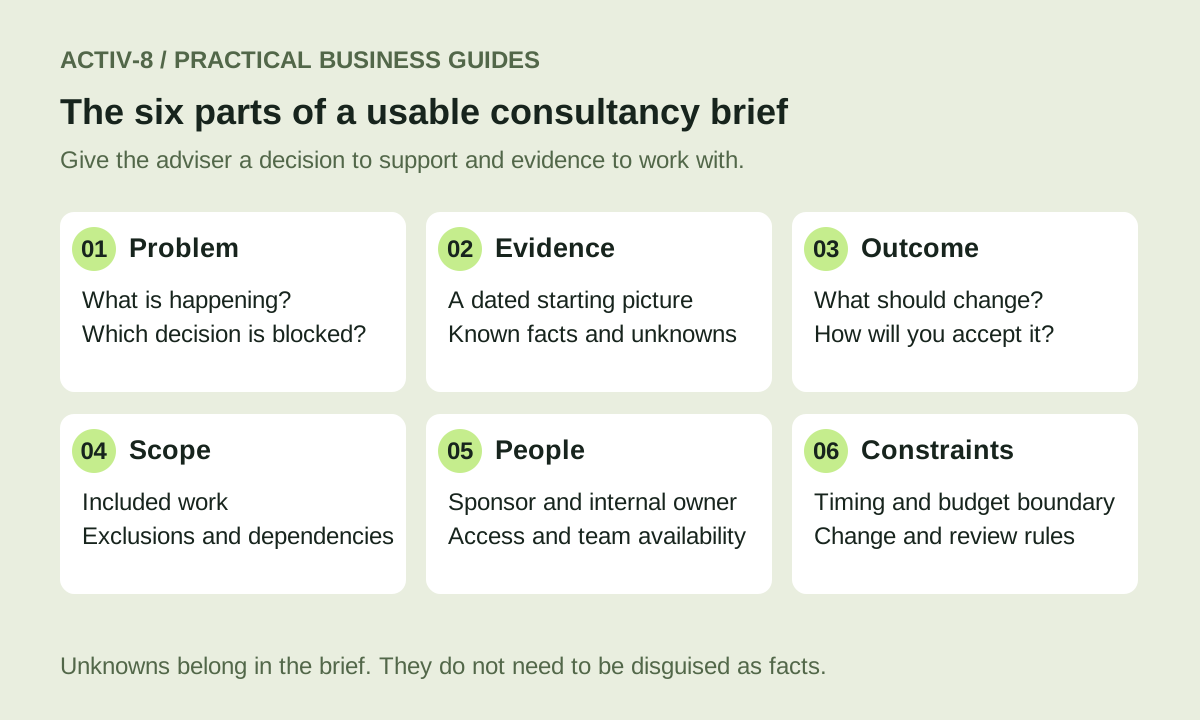
Write a consultancy brief by describing the business problem, the evidence behind it, the decision you need help making and what a usable result would look like. Add the boundaries, available people, timing and budget. You do not need to diagnose everything before seeking help. You do need to distinguish what you know from what you suspect, so a consultant can propose work that addresses the right question.
For a UAE business, a useful brief also explains the operating setting. Include the emirates you serve, your customer types, working languages and any practical need for site visits. These details matter when they affect how the work will be delivered. A consultant cannot estimate the effort to observe a delivery process if the brief omits three operating locations and different shift patterns.
Keep the main document short enough for a busy manager to read. Put supporting evidence in an appendix or a separate controlled folder. The brief is a buying and delivery tool, not a company brochure.
Describe the symptom without locking in a solution
A weak opening says, “We need a new CRM.” A stronger opening says, “Enquiries reach four inboxes, nobody owns the unanswered queue, and we cannot reliably tell which quotations receive follow-up.” The second version leaves room to investigate whether the answer is a system change, clearer ownership, better working routines or a combination.
State when the problem occurs, who experiences it and what it prevents the business from doing. Replace general frustration with a small number of examples. If you believe missed follow-up is reducing sales, label that as a hypothesis until the records support it. Do not present an estimate as a measured loss merely to make the project seem urgent.
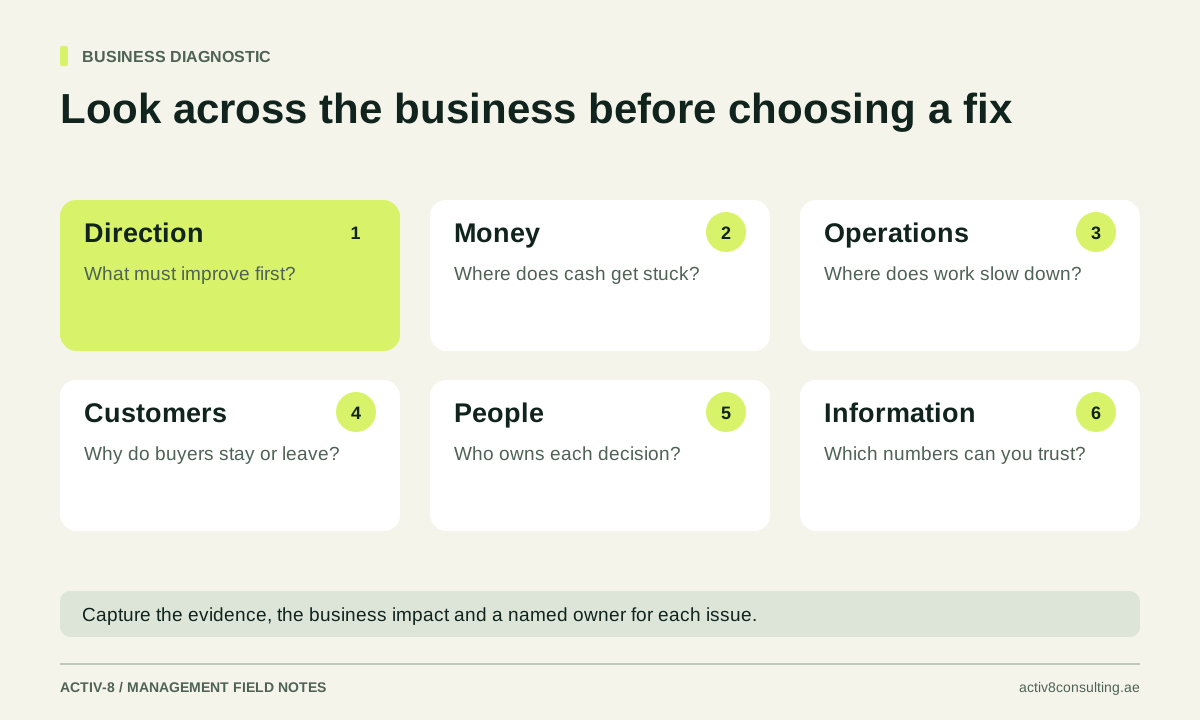
Our business diagnostic checklist helps organise symptoms across customers, money, operations, people and information. Use it to widen the initial view, then narrow the brief around the problem worth addressing first. A brief covering every weakness in the company is difficult to price or complete.
Give a representative starting picture
Describe how the business makes money and how the relevant work happens today. A service company might explain its average enquiry volume, main services, quotation process and delivery capacity. Include the period behind each figure. A monthly average without a date range can conceal a recent change in demand or a particularly unusual month.
Choose a few sample records that reveal the problem. For an enquiry project, these could be anonymised examples of a quick conversion, a lost opportunity and an unanswered request. For an operations project, use a normal job, a delayed job and a job requiring rework. Explain why you chose each example so the consultant does not mistake an exception for the standard process.
List known gaps alongside the evidence. “We have reliable invoice totals but inconsistent enquiry source data” is useful information. It allows the first phase to include a sensible measurement plan instead of building a recommendation on a false sense of precision.
Specify the change and the acceptance evidence
Write outcomes in language the business can test. “Improve efficiency” is too broad. “Give the operations manager a single weekly view of jobs awaiting scheduling, with a named owner and an agreed next action” describes a practical change. The acceptance evidence could be the manager using that view in two consecutive planning meetings.
Separate the outcome from the deliverables. A process map, training session or dashboard may help achieve the outcome, but producing those items does not prove the problem has improved. Ask the consultant to explain the connection between proposed deliverables and the desired behaviour or business result.
For each important deliverable, define who accepts it and what they will check. A forecast should have understandable assumptions and reconcile to its starting figures. A new handover process should work for representative exceptions as well as the easiest transaction. Agreement at this stage prevents the final review becoming a disagreement over what “finished” meant.
Make the boundaries visible
Include an explicit scope and an explicit list of exclusions. A quotation follow-up project might include enquiry capture, ownership, pipeline stages and management reporting. It might exclude redesigning the website, changing advertising campaigns and migrating historic records. These exclusions do not mean the other work lacks value. They protect the attention and resources needed for this assignment.
Describe interfaces with other projects. If a website rebuild is already underway, identify who controls its forms and when changes can be made. If another supplier manages the CRM, explain how access and technical questions will be handled. A consultant should not discover midway through delivery that a crucial system is controlled by someone outside the agreed working group.
Set a change rule: proposed additions should identify the benefit, extra effort, cost and effect on the completion date. The sponsor can then make a conscious trade-off instead of accepting a gradually expanding project by default.
Name the people and access required
A brief should identify an internal sponsor with authority to resolve priorities. It should also name the person who understands the day-to-day process and the manager who will own the result after handover. These can be different people. Naming only the founder can create a project in which every detail waits for an already busy owner.
Estimate the time your team can provide. Four one-hour working sessions with a decision-maker are different from unlimited availability that exists only on paper. Mention known periods of absence and operational peaks. For teams spread across Dubai, Abu Dhabi and other locations, agree which sessions must happen together and which can be handled through reviewed working documents.
Provide only the access needed for the agreed work. Initial examples can often be anonymised. The brief should explain what information exists and how authorised access will be arranged, without attaching every customer record to a general enquiry email.
Put budget and timing in context
If you have an investment limit, explain whether it covers advice alone or also software, implementation and internal project time. An illustrative AED 35,000 allowance for the full change is a different constraint from AED 35,000 reserved for the consultant, with implementation funded separately. There is no useful comparison between proposals that assume different cost boundaries.
Give the reason behind the deadline. A fixed launch date, a planning cycle and a preferred completion month create different scheduling pressures. State any immovable date and the minimum useful result required by then. This lets the adviser propose phases rather than promising a large transformation in an unrealistic window.
Ask for assumptions to be priced openly. The proposal should explain what happens if records need cleaning, access is delayed or a wider pilot is required. A clear assumption is more useful than a low headline fee that quietly depends on conditions your business cannot provide.
Work through an illustrative brief
Imagine a Dubai maintenance business receiving 240 enquiries a month. Its owner sees frequent complaints about slow quotations but has no reliable response-time report. The brief should not promise a particular sales uplift. It could request a diagnosis of the enquiry-to-quotation process and a pilot that gives every new enquiry a recorded owner, status and next action.
The initial evidence pack could contain four weeks of anonymised enquiry timestamps, a sample of quotations and interviews with sales and scheduling staff. The scope might cover one service line first. Acceptance could require the team to reconcile the pilot queue to the incoming enquiries and demonstrate that exceptions are visible to the manager.
The sponsor would decide whether to expand the process after reviewing adoption, response time and missed records. That is a decision a consultant can support with evidence. It is much more concrete than asking for “a complete sales transformation” without boundaries or an operating baseline.
Send a brief that invites useful questions
Use the downloadable worksheet to draft the problem, baseline, scope, acceptance evidence, dependencies and budget. Its example is illustrative; replace it with your own situation and leave unknowns clearly marked. Ask a colleague close to the work to review the draft before sending it. They may spot a missing dependency that changes the assignment substantially.
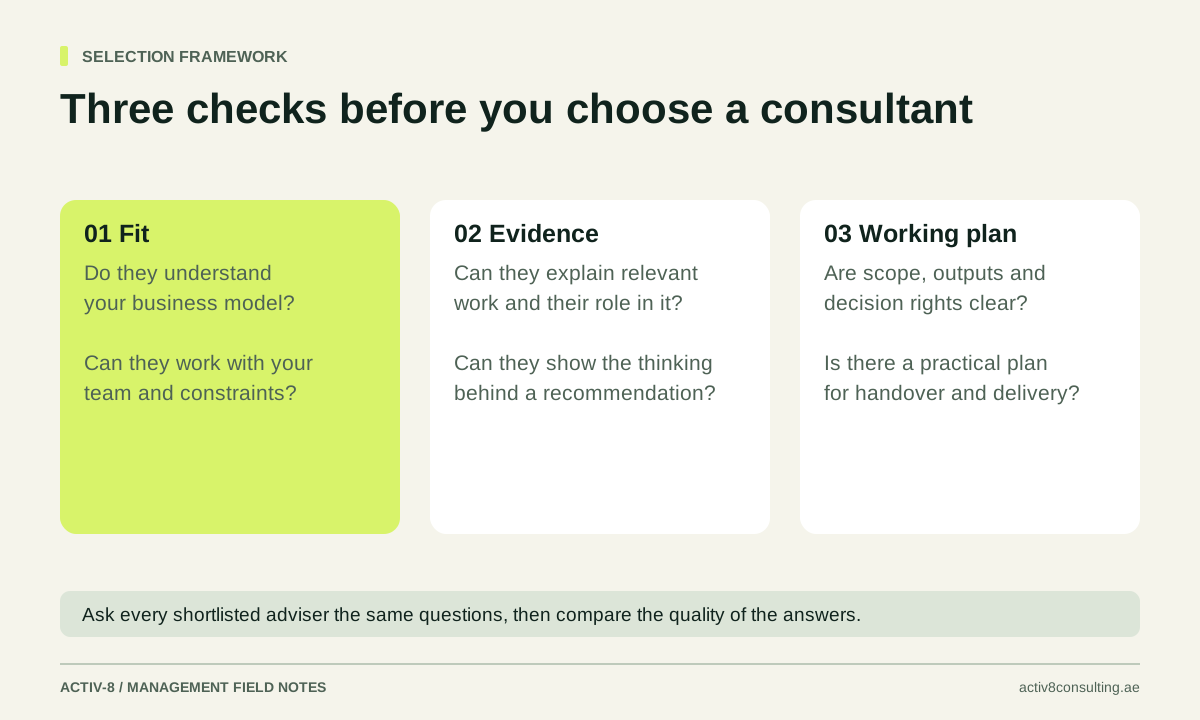
Invite advisers to challenge the diagnosis and explain what they would investigate first. Then give shortlisted firms the same updated brief so comparisons remain fair. Our guide to choosing a management consultant in the UAE explains how to evaluate the people and proposals once the requirement is clear.
If you want help turning an operational problem into a focused engagement, explore Activ-8's management consultancy services. Bring the decision, the available evidence and the constraints. That is enough to begin a productive discussion without pretending the answer is already known.
PUT IT INTO PRACTICE
Consultancy brief worksheet
Replace the illustrative row with your problem and available evidence. Define the scope, acceptance test, owner and constraints before sharing a brief. Keep unknowns visible and use only appropriate anonymised examples.
Download the worksheetCSV file · Opens in Excel or Google Sheets · No sign-up required