THE STARTING POINT
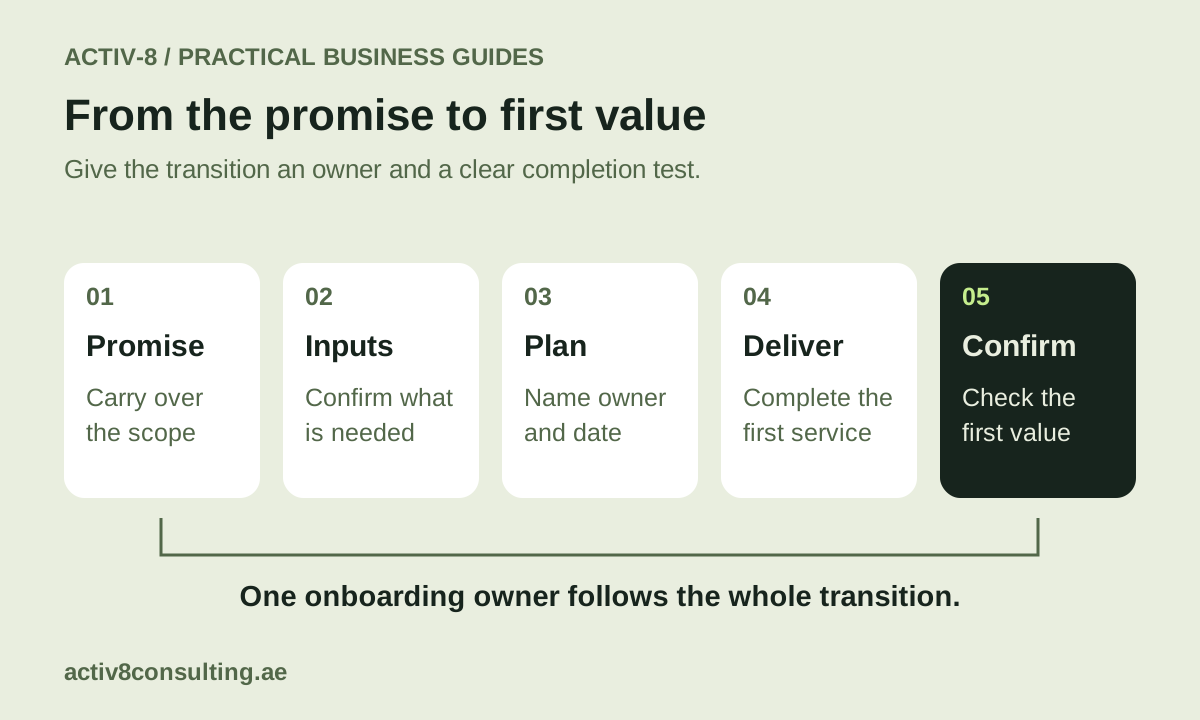
Carry the customer promise into delivery with a named owner and a clear definition of the first useful outcome.
Define the route from agreement to first value
Build a client onboarding process by identifying what must happen between an agreed purchase and the customer's first useful outcome. Specify the information required, the person who owns the transition, the first delivery milestone and the evidence that both sides are ready. A welcome message is part of onboarding, but it is not the whole process.
For a UAE service business, the weak point is often the transition from sales to delivery. The customer believes the business understands the promise, while operations receives only a name and a brief description. Onboarding should carry the agreed scope and expectations across that boundary so the customer does not have to start the conversation again.
Choose one service to design first. A one-off installation, recurring support agreement and consultancy engagement have different inputs and first outcomes. You can share a common structure, but forcing every service through an identical checklist may create irrelevant questions and omit information that a particular team genuinely needs.
Decide what first value means for this service
Describe the first result the customer can recognise, rather than an internal administrative milestone. For a reporting service, it might be an agreed initial dashboard with verified source data. For a maintenance service, it might be a completed first visit with a clear record of the work and any next action.
Keep this first outcome separate from the entire contract result. A long project may take time to deliver its full benefit, but the customer should understand what happens first and why it matters. That helps you set a realistic onboarding sequence and avoid leaving the relationship in an indefinite “getting started” state.
Make success observable. “Client fully onboarded” is difficult to test. “Required access received, scope confirmed, first delivery scheduled and customer given the named contact” provides a clearer operational definition. The precise conditions should fit the service and should not become unnecessary hurdles for work that can safely begin earlier.
Create a minimum sales handover
The handover should contain the agreed service, important scope boundaries, commercial reference, customer contacts, promises made and any known delivery constraints. Include the latest agreed version of the proposal or equivalent record. A link to a long message history is rarely enough for someone trying to understand what they must deliver next.
Ask operations which information is necessary before accepting the handover. Separate essential inputs from useful details that can follow later. If every field is compulsory regardless of the service, staff may enter guesses simply to move the record forward. If nothing is required, the customer carries the cost of repeated clarification.
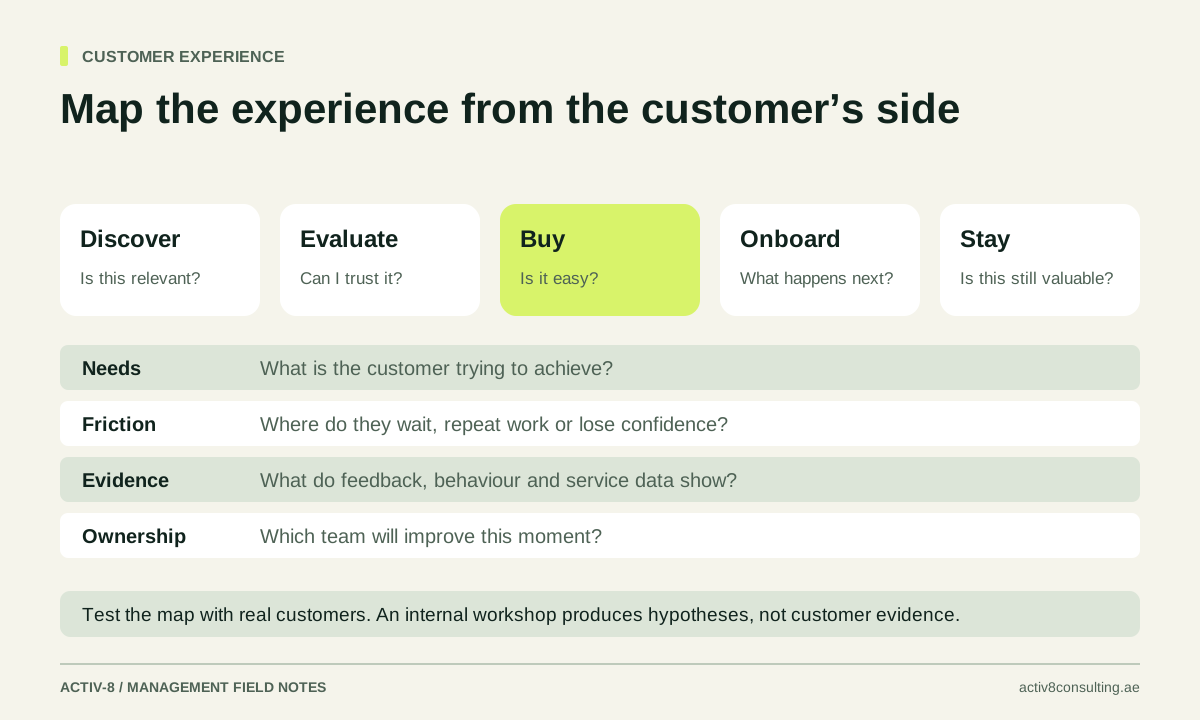
The customer journey mapping guide helps examine this transition from the customer's perspective. Pay attention to promises that do not appear in the standard proposal, such as a preferred appointment time or a particular reporting format. Those details can shape the experience even when they seem minor to the salesperson.
Name an owner for the transition
Give one person responsibility for making sure onboarding progresses. They do not need to perform every task, but they should know the current state, unresolved dependencies and next customer communication. Without that ownership, each department can complete its own step while the overall relationship remains stuck.
Define when ownership passes to the ongoing service team. This might occur after the first visit, an accepted implementation milestone or another clear event. Avoid a handover based only on elapsed time if important inputs are still unresolved. The receiving owner should know what remains outstanding and who is dealing with it.
Provide cover for absence and an escalation route for blocked cases. The customer should not be left waiting because the only person who knows the context is unavailable. A concise shared record of decisions and next actions makes continuity possible without requiring everyone to read every previous conversation.
Sequence requests so the customer can respond
Ask for information when it is needed and explain what it enables. A long initial form can be reasonable for some services, but it can also delay work by combining essential and optional questions. Group requests around the next delivery decision rather than the structure of your internal departments.
Use plain wording and show an example where a request may be ambiguous. “Provide the site contact” is clearer when you explain that this is the person who can coordinate access for the first visit. Check how the request appears on a phone if customers commonly respond while away from a desk.
Keep the record secure and proportionate to the service. Do not ask customers to send sensitive credentials in an ordinary onboarding worksheet. Use your approved access and information-handling process where required. The worksheet below is for planning responsibilities and readiness, not for collecting passwords or confidential customer records.
Build a practical example before automating
Consider an illustrative Dubai commercial cleaning provider onboarding a new office customer. Sales confirms the agreed areas, frequency and service scope. The onboarding owner arranges the operational review, identifies the customer's day-to-day contact and confirms what must be ready before the first scheduled service.
Operations checks the delivery plan and records any unresolved constraint. The customer receives a clear summary of the first service date, the named contact and the process for raising an issue. After the first service, the owner checks whether the agreed scope was delivered and whether a correction or clarification is needed.
Suppose incomplete handovers cause two additional forty-five-minute coordination calls on each of eight new accounts. That is twelve hours of coordination in the illustrative month. It is a capacity issue worth investigating, not an automatic cash saving. An improved checklist creates value only if the time is actually released and used productively.
Define how exceptions will be handled
Some customers will not supply every input on time. Decide which missing items prevent work starting and which can be resolved in parallel. The rule should reflect the service, the promise and the consequences of proceeding. Staff need a clear decision route instead of choosing between silent delay and an unsupported commitment.
Record any change to the initial plan and tell the customer what it means. If the first delivery date moves because an essential input is missing, explain the dependency and the next available step. Avoid treating a revised date as an internal system update that the customer is expected to discover for themselves.
Where a customer requests extra scope during onboarding, use the agreed commercial change process. Enthusiasm at the start of a relationship can lead teams to accept additional work without discussing resources or price. A clear, helpful explanation of options is usually more sustainable than an undefined promise to include everything.
Measure readiness and the first outcome
Track the time from agreed purchase to readiness and from readiness to first delivery separately. That distinction helps reveal whether delay comes from missing inputs, internal scheduling or execution. Record the reason for important waiting periods instead of combining every case into one average.
Inspect the quality of the first outcome as well as speed. A fast start followed by corrections, repeated questions or a disappointed customer may not represent good onboarding. Review a small sample of completed cases and ask whether the customer understood what would happen, received the agreed first result and knew how to get help.
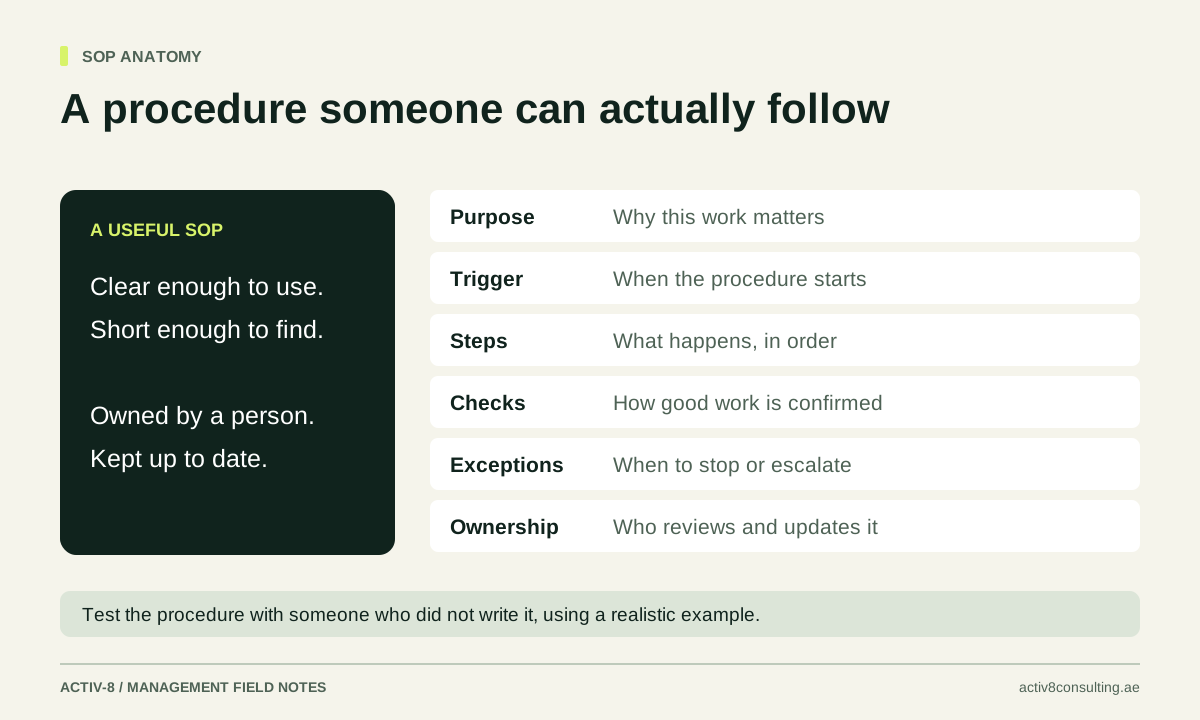
Use the downloadable worksheet to map steps, owners, required inputs and completion evidence. Its example is illustrative. Once the process works in practice, the SOP guide can help turn it into a clear working instruction. Avoid documenting an ideal process that the team cannot actually follow.
Improve the transition using real cases
Review several recent onboardings with sales and delivery together. Identify the recurring question, missing promise or late input that created the most friction. Fix that issue first and examine the next cases. A focused improvement can be more useful than introducing a large collection of automated messages around an unresolved handover.
Activ-8 sales and customer experience support helps connect the customer promise to a reliable delivery start. Bring one service and a few completed onboarding records. We can use those examples to define ownership, remove unnecessary requests and make the first useful outcome clear to your team and your customers.
PUT IT INTO PRACTICE
Client onboarding design worksheet
Map one service from agreement to first value. Identify each owner, required input, readiness check and exception route. Replace the illustrative example. Use this to plan the process, not to collect passwords or confidential customer data.
Download the worksheetCSV file · Opens in Excel or Google Sheets · No sign-up required
Put the thinking into practice.
Explore sales and customer experience Discuss your business with Mark