THE STARTING POINT
Show which receipt or timing assumption changes the cash decision, then give its evidence and response a named owner.
Forecast uncertainty explicitly
When monthly sales are unpredictable, forecast cash using separate scenarios for the amount and timing of receipts, then connect each scenario to a management action. Keep contracted work, probable opportunities and speculative sales distinguishable. Begin with available cash and commitments you can identify, rather than forcing uncertain revenue into a single confident-looking number. Update the forecast as evidence changes and preserve earlier versions so you can learn from the differences.
Start with the decisions the forecast must support
Ask what management needs to decide over the next few weeks or months. Can the business commit to a supplier order, add capacity, maintain its marketing spend or wait for a customer decision? The forecast should make those choices clearer. A detailed model that does not change any action may be less useful than a simpler model focused on the next funding pressure.
Define the period, the cash balances included and the treatment of transfers. Agree which payments are already committed and which remain optional. In a UAE project or service business, a small number of customer decisions may have a large effect on the timing of cash. Make those dependencies visible rather than smoothing them into an average monthly sales line.
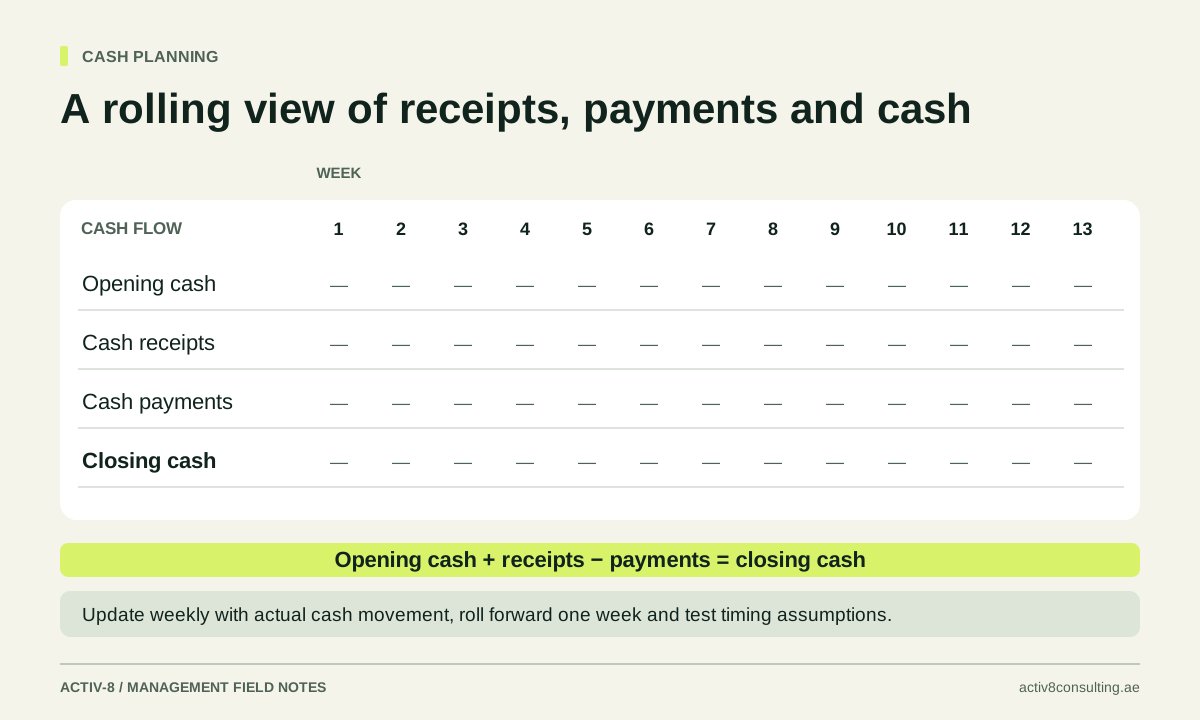
Our 13-week cash flow guide covers the basic forecast structure. This article focuses on uncertainty within that structure: which receipts to include, when they might arrive and what management should do if the evidence moves against the plan.
Sort receipts by the evidence behind them
Create practical evidence categories that your team can apply consistently. For example, an invoiced amount with confirmed payment information is different from contracted work awaiting completion, which is different again from a proposal that has not been accepted. The categories should describe the current position, not imply that any receipt is guaranteed.
For each material item, record the customer or opportunity reference, amount, expected receipt period, current evidence and next check. If your customer has not approved the work, do not describe the related receipt as committed simply because the salesperson is confident. Likewise, an invoice can still carry timing or dispute uncertainty that deserves attention.
Avoid putting the same receipt into both an existing invoice line and a new sales assumption. When an opportunity becomes an order, move its representation through the forecast rather than adding another copy. A clear reconciliation from opening pipeline to contracted work and invoices helps prevent optimistic double counting.
Separate amount uncertainty from timing uncertainty
A receipt may be uncertain because the sale might not happen, because the amount may change or because payment may arrive later than expected. Those are different risks. Reducing every uncertain amount by an arbitrary percentage can hide a timing problem that matters more than the final value.
For a large customer payment, record an earliest plausible date, a central planning date and a later scenario supported by the circumstances. Explain what would make the date move. If the work has not been accepted, the dependency may be operational. If the invoice is being processed, the next useful evidence may come from the customer's payment contact.
Do the same for payments where timing is genuinely flexible, but do not move a committed payment simply to improve the forecast. A scenario should reflect a feasible operating choice or plausible event. Keep obligations, proposed negotiations and discretionary decisions visibly different so management understands what it can actually control.
Build scenarios around a few material drivers
Choose the variables that could materially change the cash position: one large receipt, a project start date, a supplier deposit or the level of new work converted. Use a central planning case and a plausible downside, adding an upside only if it supports a real decision. More scenarios are not automatically more informative.
Describe each scenario in words before changing the numbers. For example: the customer approval moves two weeks later, so the related receipt moves beyond the supplier payment date. That causal statement is easier to challenge than a spreadsheet where every revenue cell is reduced by 20%. Use assumptions your team can explain.
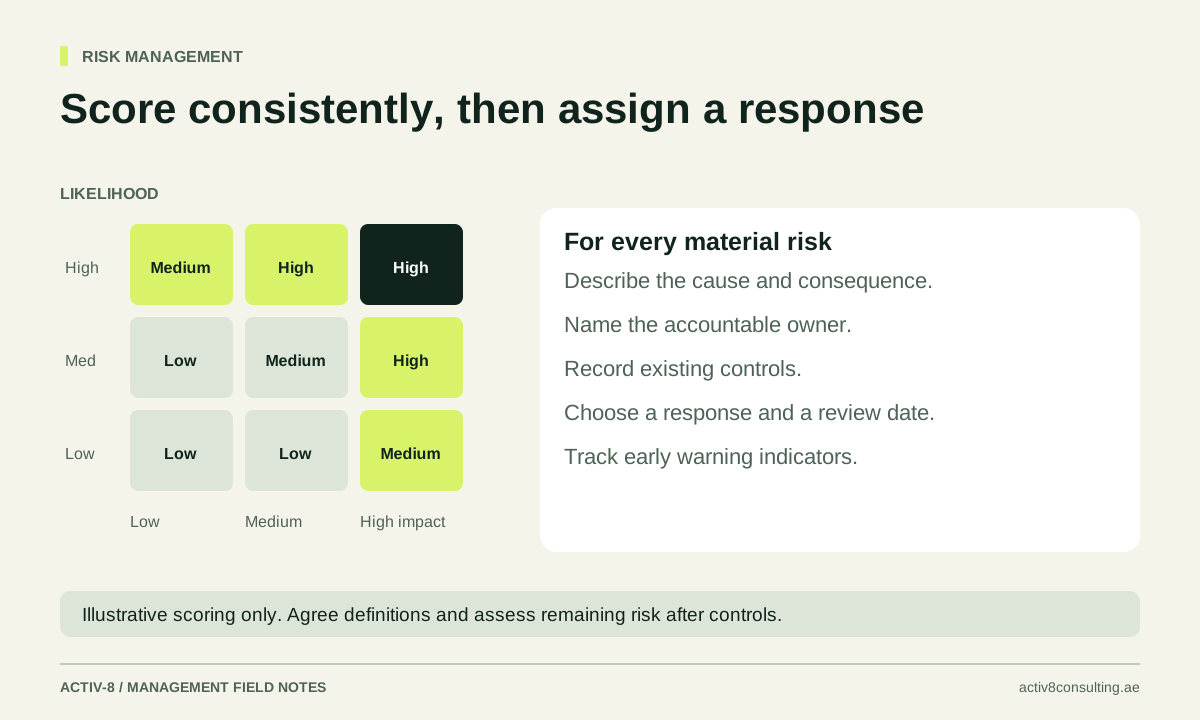
Link the forecast to your business risk register. The register can hold the uncertainty, owner and response, while the cash forecast shows its timing effect. Keep them connected so a risk is not discussed in one meeting and forgotten when the next spending decision is made.
A hypothetical four-week cash decision
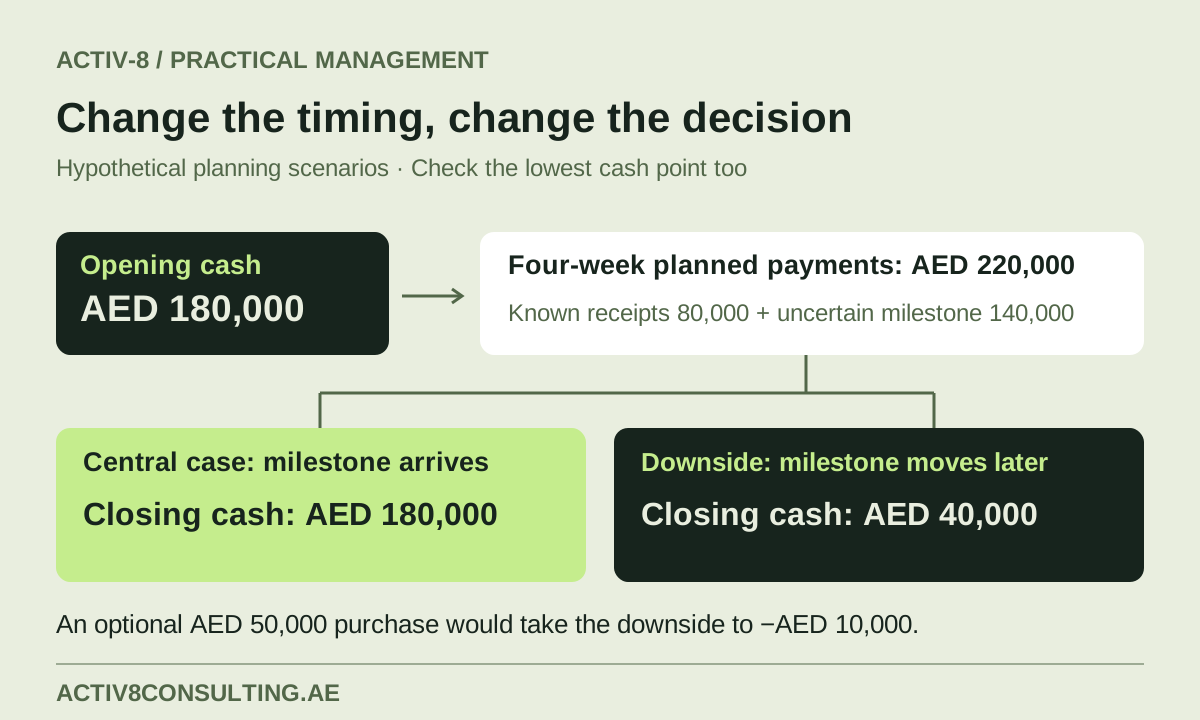
Consider an illustrative UAE service company with AED 180,000 opening cash and AED 220,000 of planned payments over four weeks. It expects AED 80,000 from issued invoices with current collection evidence. A further AED 140,000 relates to a project milestone whose acceptance date is uncertain. For simplicity, assume there are no other cash movements in this example.
In the central case, both receipts arrive within the four weeks. Closing cash is AED 180,000 plus AED 80,000 plus AED 140,000 less AED 220,000, giving AED 180,000. In a timing downside, the milestone receipt arrives in the following period. Closing cash is then AED 40,000. The difference is AED 140,000 of timing, not evidence that the business has lost that revenue.
Suppose management is also considering an optional AED 50,000 equipment purchase. That would reduce the downside closing position to a negative AED 10,000 if all other assumptions held. The forecast creates a concrete decision: confirm the receipt, change the feasible spending timing or assess another funding option before committing. It should also show individual payment dates because the lowest cash point may occur before period end.
Use ranges without pretending they are probabilities
A range can communicate uncertainty more honestly than a single value, but explain what its endpoints mean. A downside scenario is not automatically a statistical confidence limit. Unless you have the evidence and method to estimate a probability distribution, describe the scenarios as planning cases rather than claiming a precise chance of running short.
Where you use observed conversion or payment patterns, state the sample and whether the current work is comparable. A few unusually large projects can make an average unrepresentative. Keep new offers, different customer types or changed terms separate until you have enough evidence to judge them sensibly.
Do not let a probability-weighted total replace a scenario for a single large receipt. If an invoice either arrives or does not arrive before a critical payment, half its value may be a useful mathematical expectation but not a cash amount the business can spend. Test the actual timing alternatives as well.
Set triggers before pressure arrives
Agree what event would change management's action. Examples include a milestone not being accepted by a particular date, a receipt slipping beyond a payment run or projected cash falling below the business's chosen operating buffer. Give each trigger an owner and a decision deadline.
Connect actions to what can realistically change. Accelerating an internal approval may be possible; assuming a customer will pay early without agreement is not a dependable response. Review the service, relationship and cost consequences of deferring spending or changing delivery. A cash action that damages fulfilment can create another problem shortly afterwards.
The downloadable uncertainty worksheet helps record a receipt, its evidence, central and downside timing, trigger and owner. Its example is deliberately fictional. Replace it with your own working references and keep sensitive customer details within the systems and access controls appropriate to your business.
Learn from forecast changes
Keep a dated forecast at each review, then compare it with actual cash movements. Categorise material differences as value, timing, missing information or changed management decision. This reveals whether the model needs better sales assumptions, stronger collection evidence or a more reliable record of commitments.
Do not punish the team simply because uncertainty becomes visible. A forecast that becomes more cautious when evidence changes can be more useful than one that stays optimistic until the bank balance forces a correction. Reward timely updates and clear explanations of the next decision.
Activ-8 reporting and business intelligence consultancy can help build a forecast that connects uncertain demand with practical actions. The objective is not to eliminate uncertainty from sales. It is to see the consequences early enough to manage the commitments your business makes.
PUT IT INTO PRACTICE
Cash-flow uncertainty worksheet
Replace the fictional receipt with a working reference. Record the evidence, central and downside receipt periods, next check, trigger and owner. This is an assumption register to use beside your cash forecast, not a calculated forecast itself.
Download the worksheetCSV file · Opens in Excel or Google Sheets · No sign-up required
Put the thinking into practice.
Explore reporting and business intelligence Discuss your business with Mark